



Narwhal
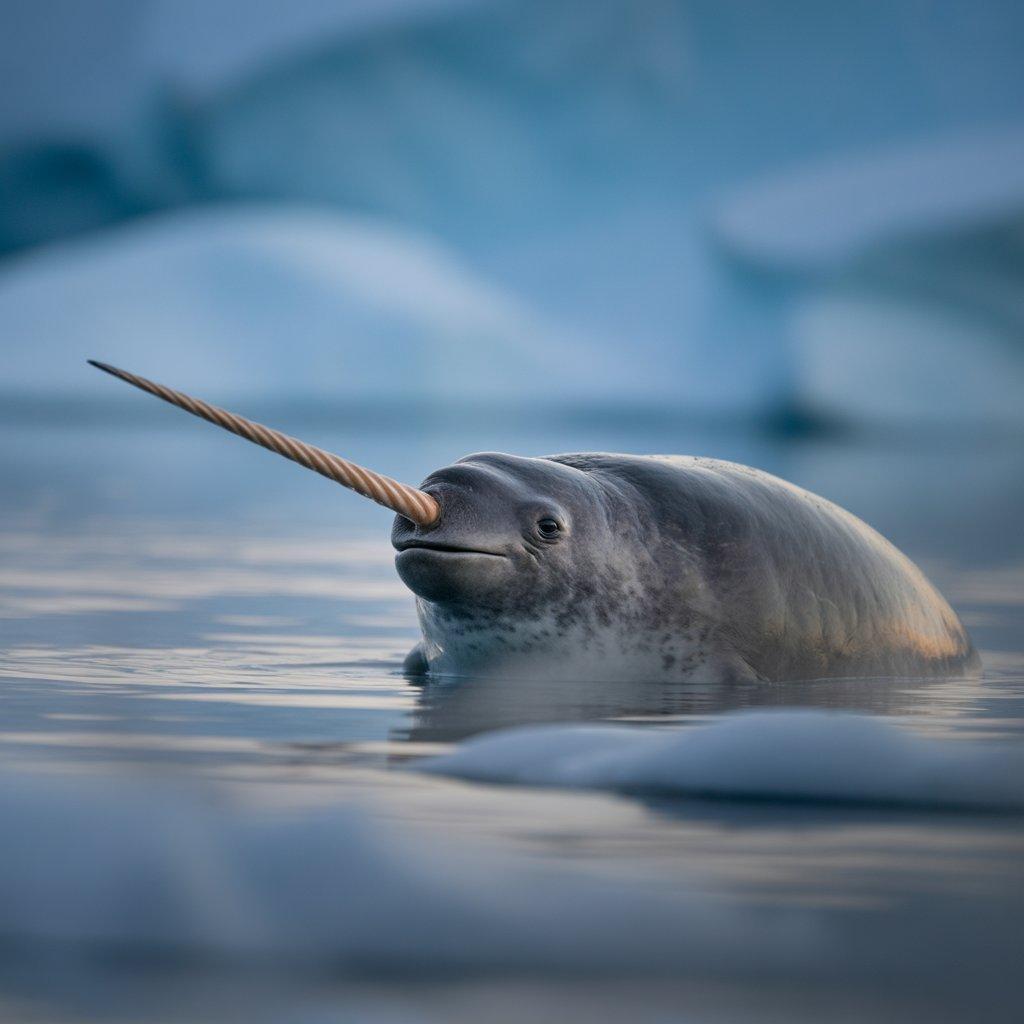
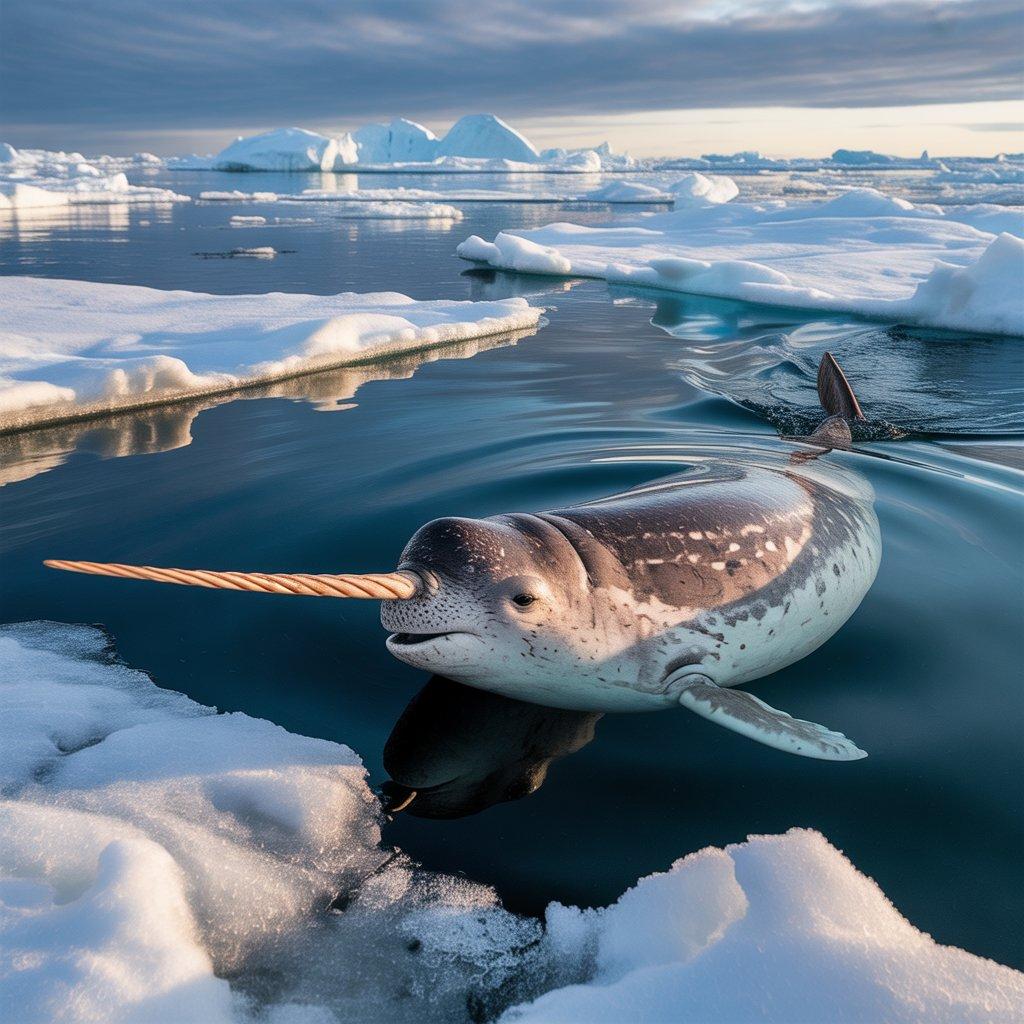
The narwhal (Monodon monoceros) is an intriguing marine mammal belonging to the whale family, inhabiting the cold waters of the North Pole. Thanks to their strong and streamlined bodies, they can swim easily through icy waters and perform deep dives.
The most distinctive feature that sets them apart from other whale species is the long, spiral tusk that emerges from the heads of males. These tusks can reach up to three meters in length and have earned narwhals the nickname “unicorns of the sea.”
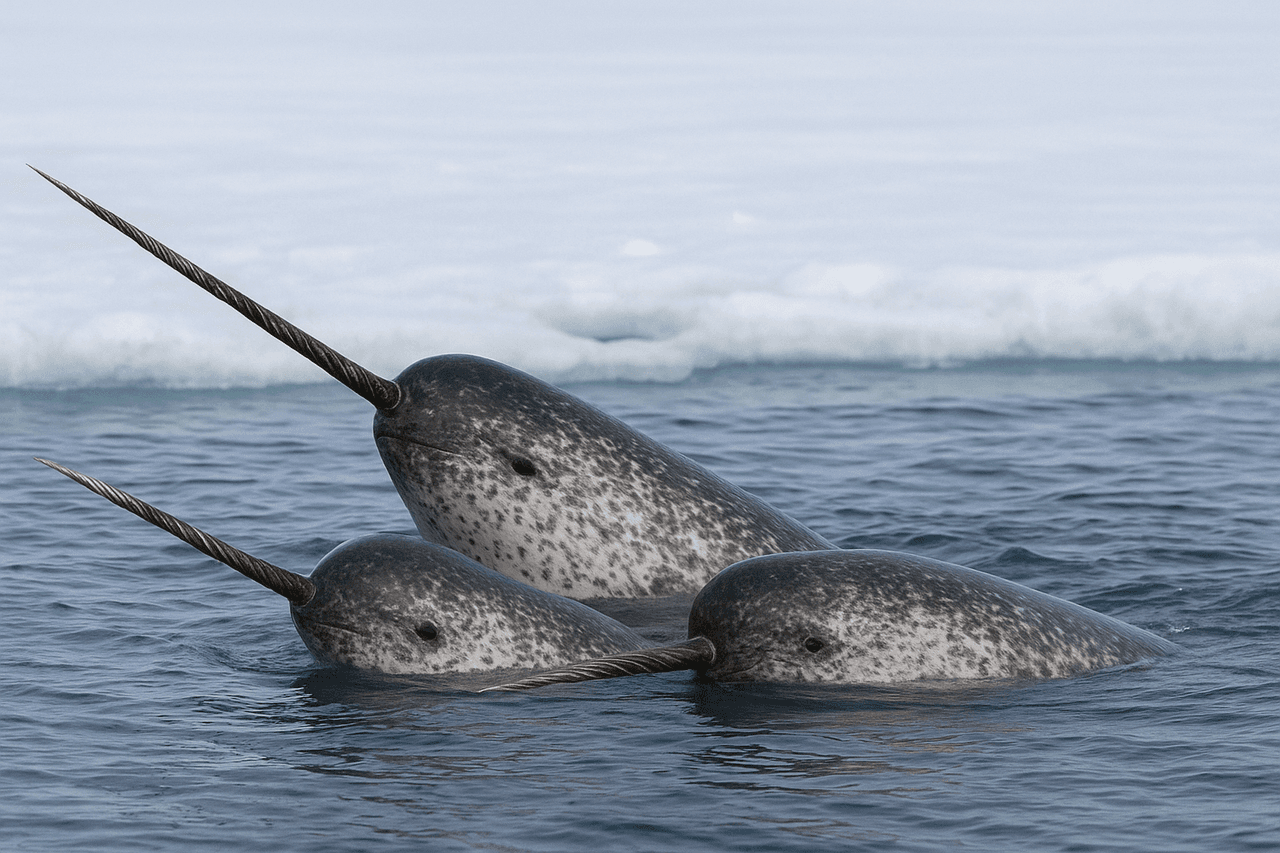
Narwhals (Generated by Artificial Intelligence)
What Is Their Social Structure?
Narwhals typically live in groups known as “pods.” During winter, these groups are smaller, consisting of 2–10 individuals, but in summer, hundreds or even thousands of narwhals may gather together.
What Do They Look Like?
The body color of narwhals varies with age and region. Young narwhals are usually dark gray with more spots on their backs. Adults have a dark grayish-black back and a lighter, almost white belly. As they age, the spots on their bodies decrease and their overall color becomes lighter.
Narwhals (Generated by Artificial Intelligence)
How Large Do They Grow?
On average, narwhals can live for about 50 years. Their body length typically ranges from 4 to 6 meters, and their weight varies between approximately 800 and 1,600 kilograms—equivalent to that of a bus!
What Do They Eat?
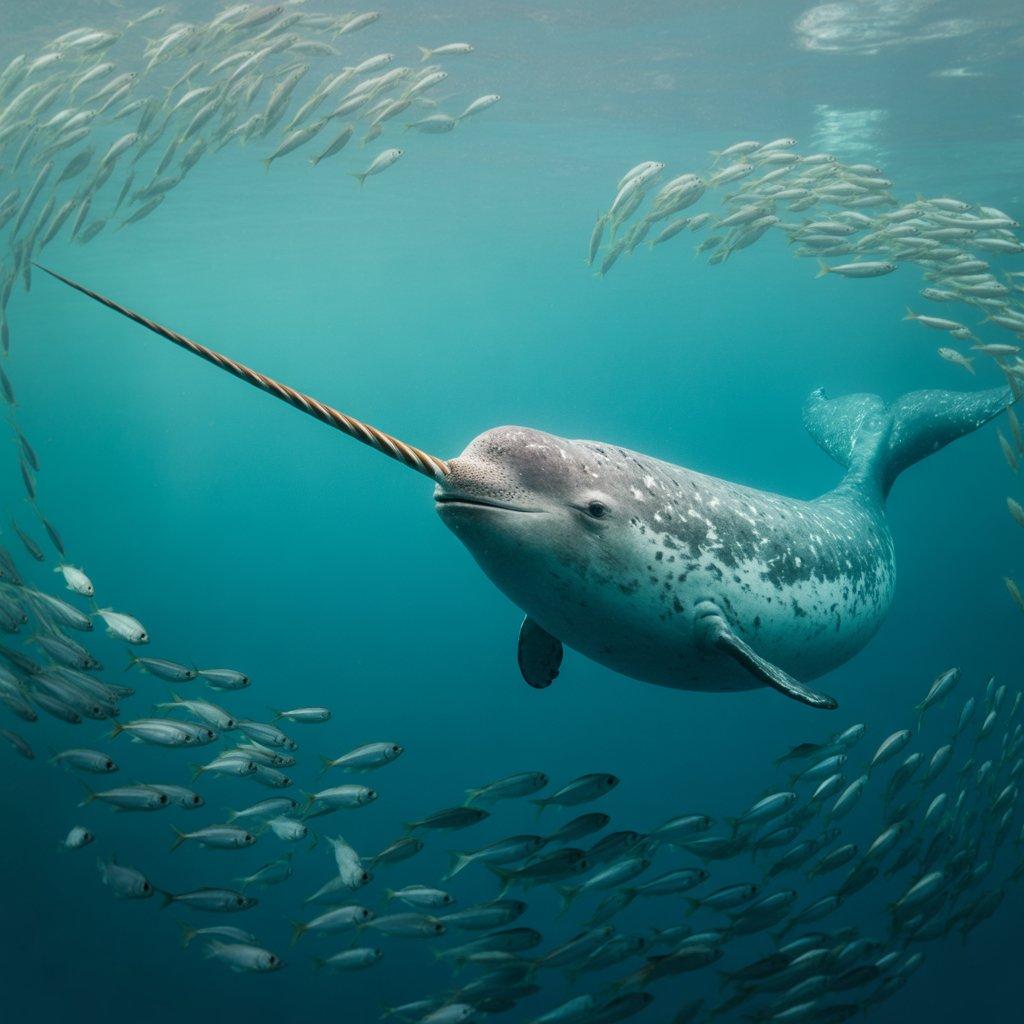
In winter, they feed on bottom-dwelling fish, while in summer they prey on species found closer to the surface. These include Greenland halibut, polar cod, squid, and shrimp. They prefer halibut and polar cod the most.

Narwhals (Generated by Artificial Intelligence)
Where Do They Live?
Narwhals primarily inhabit the cold waters of the North Pole. They are most commonly found in northern Canada, Greenland, and the Arctic coasts of Russia. During summer, they migrate to ice-free coastal waters, while in winter they survive in narrow channels beneath thick sea ice.
Contributions to the Ecosystem
Narwhals are an important part of the food chain. By preying on fish and other marine animals in mid and deep waters, they help maintain balance within the ecosystem. Additionally, they serve as a food source for predators such as polar bears and killer whales, supporting the continuity of the Arctic marine ecosystem.
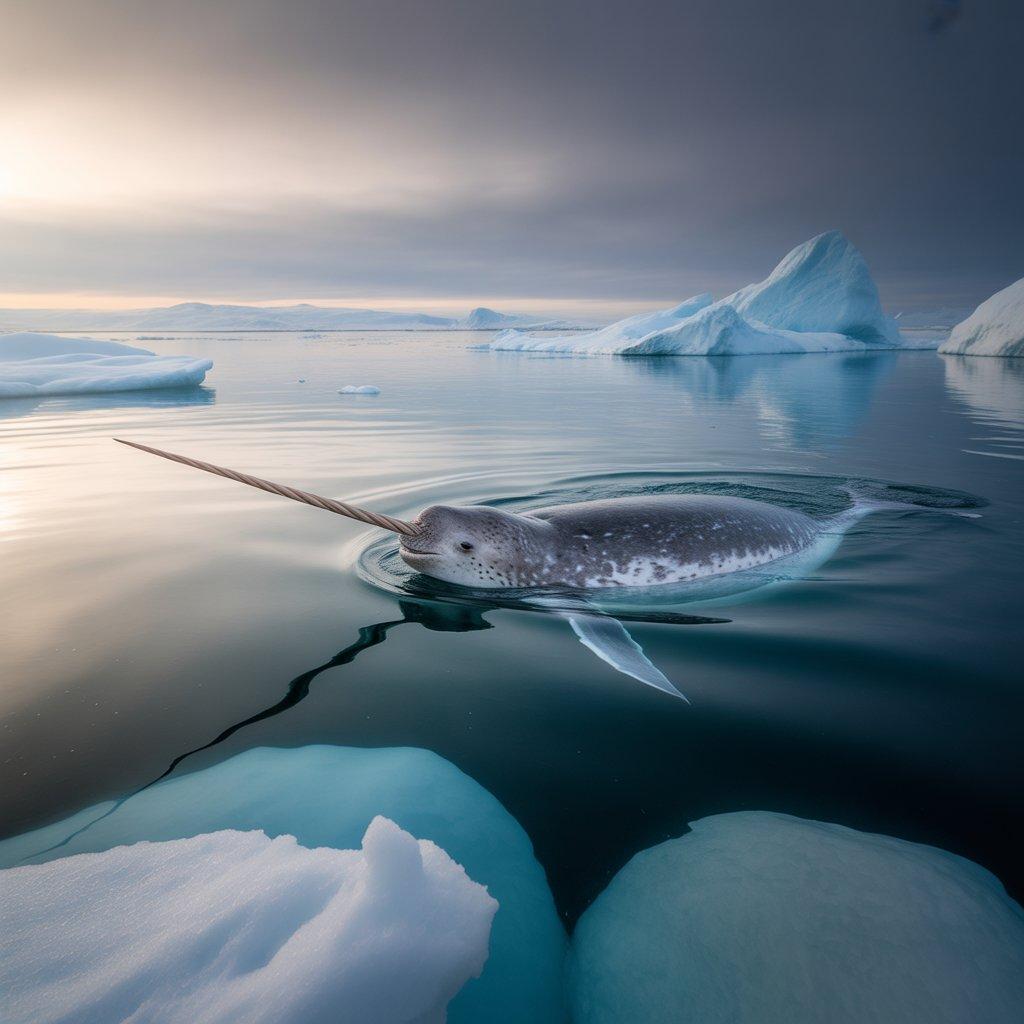
Narwhals (Generated by Artificial Intelligence)
Conservation Status
The narwhal is classified as “Least Concern” by the International Union for Conservation of Nature (IUCN), indicating that its overall population is not currently at risk. However, factors such as climate change, melting sea ice, and human-induced noise pollution may negatively affect narwhal habitats and population numbers in the long term.