

Bu içerik Türkçe olarak yazılmış olup yapay zeka ile otomatik olarak İngilizceye çevrilmiştir.
The 2026 Russian State Duma elections are a parliamentary election held over three days from 18 to 20 September 2026 in the Russian Federation to elect the 450 members of the State Duma, the lower house of the Federal Assembly of Russia, for a five-year term. This is the first State Duma election since Russia launched its full-scale military operation against Ukraine in February 2022.【1】 Voting takes place on the nationwide United Voting Day (Yedinıy Den Golosovaniya), which falls on the third Sunday of September each year, concurrently with gubernatorial elections in 11 regions and regional legislative assembly elections in 39 regions.【2】
The term of office for the 9th convocation of the State Duma will last until September 2031.【3】 Approximately 111 million people are eligible to vote.【4】 As of the date this article was prepared, the voting process is still ongoing and no final or official results have been announced by the Central Election Commission of Russia (CEC).【5】
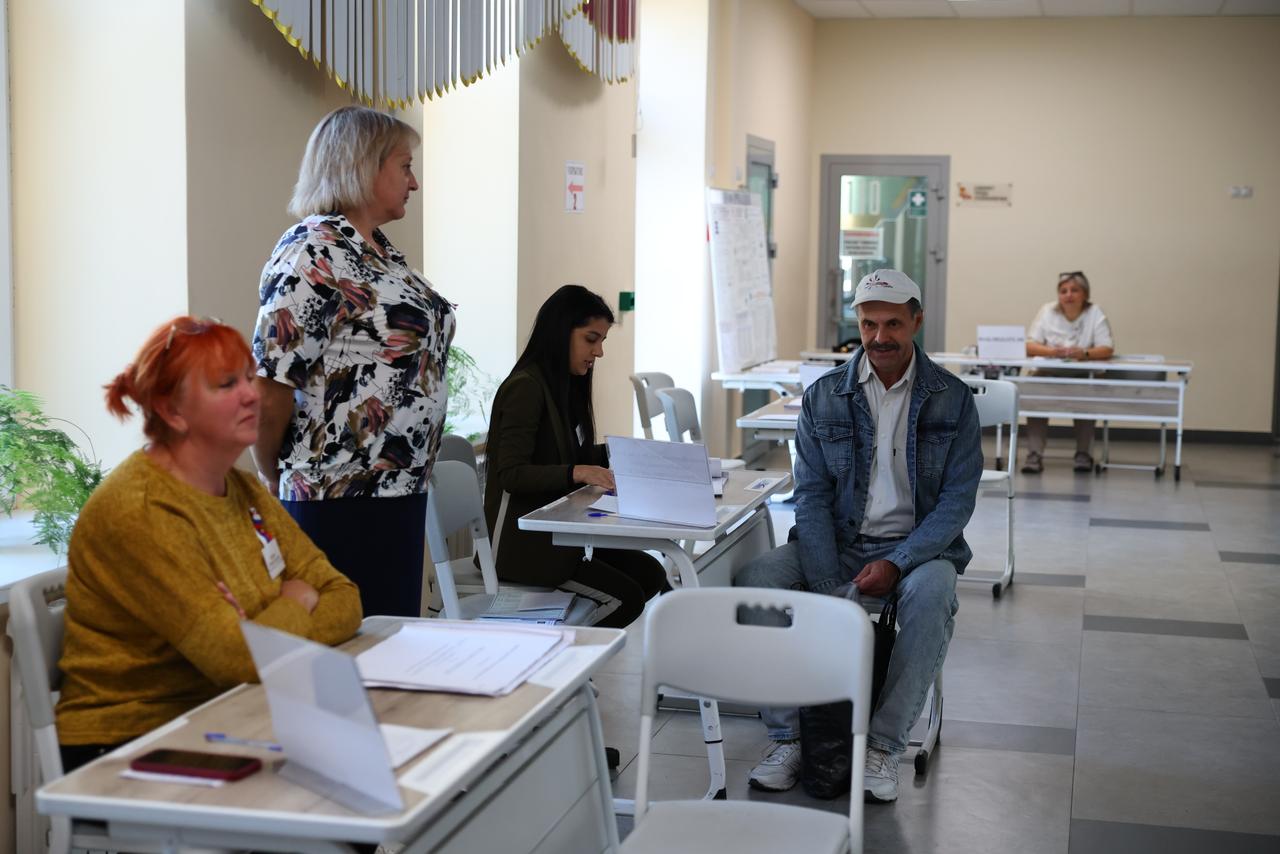
Voting took place on 18 September 2026 in the Belgorod region of Türkiye to determine the governor of Belgorod Oblast and members of the 9th term of the State Duma of the Russian Federation (Anadolu Ajansı)
United Voting Day was established by a legal amendment adopted in 2005 to create a common voting date for elections at different levels across Russia.【6】 The first United Voting Day was implemented in 2006. Until 2012, elections were held twice annually; from 2013 onward, this practice was reduced to once per year. A total of 27 election campaigns have been conducted under the United Voting Day framework to date.【7】
In November 2015, a decision by the State Duma merged the previously December-held federal parliamentary elections into United Voting Day, effective from 2016, setting the date for parliamentary elections to the third Sunday of September. Starting in 2020, a legal amendment citing the coronavirus pandemic extended the voting period from one day to three days.【8】
For the first time under the 2026 United Voting Day, residents of the Donetsk and Luhansk People’s Republics and the Kherson and Zaporizhzhia regions participated in legislative elections for the State Duma. The decision to hold the United Voting Day for the 9th convocation of the State Duma from 18 to 20 September was signed by the President of Russia and published on the official legal information portal in mid-June.【9】
Of the 450 seats in the State Duma, 225 are filled through a proportional representation system based on party lists nationwide, and the remaining 225 are filled through a first-past-the-post system in single-member constituencies.【10】 In party list voting, parties must surpass a five percent electoral threshold to enter the Duma.【11】
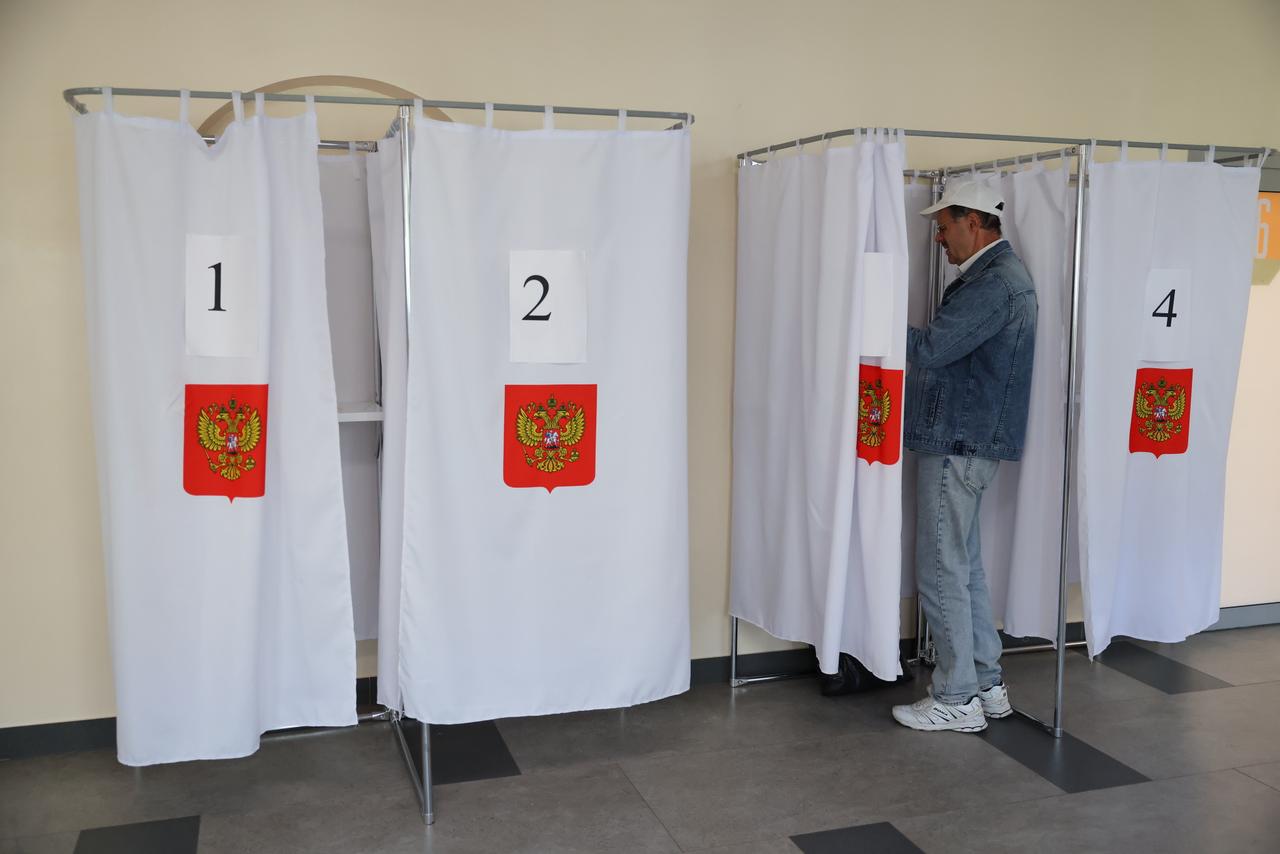
Voting took place in the Belgorod region of Russia on 18 September 2026 to elect the Governor of Belgorod Oblast and members of the 9th convocation of the State Duma of the Russian Federation (Anadolu Ajansı)
Seat allocation follows the Hare method, developed by British jurist Thomas Hare in 1855. Under this method, the total number of votes received by each party is divided by 225 to determine a base value; the integer portion of the quotient for each party determines the number of seats it receives, and any remaining seats are allocated to parties with the largest fractional remainders. In single-member constituencies, the candidate with the simple majority wins; in the event of a tie, the candidate who registered first is declared the winner.【12】
The Central Election Commission of Russia (CEC) is responsible for organizing and conducting the elections, registering candidates, verifying compliance with legislation, and compiling voting results. The CEC is chaired by Ella Pamfilova.【13】
Following the completion of the party registration process by the Central Election Commission of Russia (CEC) in August 2026, a lottery determined the order of parties on the ballot. The lottery placed United Russia, Yabloko, and Liberal Democratic Party of Russia (LDPR) in the first three positions. These were followed by Party of Direct Democracy, Greens, A Just Russia, Rodina, Communist Party of the Russian Federation (CPRF), Pensioners Party, and Russian Communists; the New People Party ranked 11th.【14】
A total of 11 political parties participated in the election. Of these, United Russia, CPRF, LDPR, A Just Russia, and New People are parliamentary parties with factions in the State Duma. The other six parties lack parliamentary factions. The five parties with parliamentary factions were exempted from the signature collection requirement to qualify for the ballot.
As of the updated list published on 18 September 2026, the number of participating parties is listed as 10. This list includes United Russia, CPRF, LDPR, New People, A Just Russia, Pensioners Party, Russian Communists, Rodina, Party of Direct Democracy, and Green Ecology Party. Yabloko’s absence from the updated list is linked to the termination of its participation in the party list vote in August 2026.【15】
United Russia, the ruling party formed in 2001 through the merger of pro-Kremlin parties, has supported President Vladimir Putin and dominated parliament since its founding.【16】 In the 2021 election, the party won more than two-thirds of the Duma seats, holding 321 of the 450 seats.【17】
The top of United Russia’s candidate list features Foreign Minister Sergey Lavrov and Moscow Mayor Sergey Sobyanin. Third on the list is war correspondent Yevgeny Poddubny, who was seriously injured in a Ukrainian drone attack.【18】 Also among the first five candidates are war veteran and Yunarmiya (Young Army) movement chairman Vladislav Golovin and Children’s Rights Commissioner Maria Lvova-Belova. The party’s official leader and former president Dmitry Medvedev does not appear in the top five.【19】
Communist Party of the Russian Federation (CPRF) has been one of the leading political forces in the Federal Assembly since the 1990s and has been led for over thirty years by 82-year-old Gennady Zyuganov. Throughout Vladimir Putin’s more than 25 years in power, the party has criticized certain aspects of government policy while avoiding direct criticism of Putin and supporting Russia’s war in Ukraine.
During the previous Duma term, Zyuganov stated that all political parties had voted in favor of the 170 laws supporting the “special military operation” and that there was complete consensus in the Duma on this issue.【20】
Liberal Democratic Party of Russia (LDPR) is an ultranationalist force that has maintained a significant presence in the legislature since the early 1990s, staunchly supporting the war and including numerous war veterans among its members.【21】
A Just Russia — For Truth is a social-democratic party that has been active in Russian politics for two decades, competing with the CPRF among older and middle-aged voters nostalgic for the Soviet era, while also supporting the war.【22】
New People Party, established shortly before the 2021 election, positions itself as a liberal political party representing young voters and technocrats. The party won slightly more than five percent of the vote in 2021, securing enough support to form a parliamentary faction in the State Duma.
The party has gained attention for its criticism of internet restrictions, tax increases, and anti-abortion measures, and has brought issues such as mortgages, support for small businesses, and domestic violence onto the political agenda.【23】
In its early candidate list announced in March 2026, the party included party leader Alexey Nechayev, Deputy Speaker of the State Duma and former presidential candidate Vladislav Davankov, and Member of Parliament Sardana Avksentyeva.【24】
Yabloko, one of Russia’s registered political parties opposing the war, was initially approved by the Central Election Commission of Russia (CEC) in July 2026 as one of the 11 parties eligible to participate in the parliamentary elections. In August, the Russian Supreme Court blocked Yabloko’s participation in the party list vote following a lawsuit filed by the nationalist Rodina Party.【25】 The ruling took effect on 10 August 2026.
The Supreme Court’s decision stated that Yabloko’s anti-war stance was deemed equivalent to calling for the violation of Russia’s territorial integrity.【26】
Yabloko MP Lev Shlosberg was prosecuted in the Pskov region for his statements on the war and sentenced to over 11 years in prison. Yabloko’s deputy chairman and former member of the Moscow City Duma Maxim Kruglov was convicted in June of spreading false information about the military and sentenced to seven years in prison.【27】
The election takes place four and a half years after the start of the war in Ukraine, amid financial pressures on the Russian economy. Long-range Ukrainian drone attacks on Russian oil refineries and logistics facilities have disrupted fuel supplies. Fuel shortages peaked in June 2026, briefly eased, then resurged in August and September. Attacks on warehouses of online retailers such as Wildberries and Ozon have caused numerous individual sellers to lose their inventory.【28】
The election was also held in Russian-controlled portions of Crimea, which Russia annexed in 2014, and the Donetsk, Luhansk, Zaporizhzhia and Kherson regions, which Russia declared annexed in 2022 but does not fully control. For the first time, residents of these areas voted in State Duma elections. Voting was initiated early in some areas for security reasons.【29】
Ukrainian authorities have declared the voting in these regions illegal and have called on foreign governments and international organizations not to recognize the elections or their results. The Ukrainian government also warned that individuals involved in organizing the vote could face criminal liability.【30】
European Commission spokesperson Christian Wigand stated that voting in occupied Ukrainian territories constitutes a violation of international law and affirmed that the European Union will not recognize the elections or their outcomes. Wigand argued that the conduct of the elections exacerbates concerns about the erosion of democracy in Russia and that the Kremlin is limiting voters’ genuine ability to choose their country’s future.【31】
Wigand also noted Russia’s failure to invite observers from the Organization for Security and Co-operation in Europe (OSCE). He affirmed that the European Union will continue to support civil society organizations, human rights groups, and independent media in Russia.
Remote electronic voting (DEG) was implemented in 33 regions during the 2026 State Duma elections. In most of these regions, voting was conducted via the federal electronic voting platform, requiring voters wishing to participate to register by 14 September on the Gosuslugi (State Services) portal. Voters residing in Moscow could vote electronically via the mos.ru portal between 08:00 on 18 September and 19:59 on 20 September.【32】 According to data from the Russian Ministry of Digital Development, the potential electorate for DEG is projected to reach 48.4 million.
In Moscow, voters using the online system or electronic voting terminals instead of paper ballots received monetary incentives in the form of reward points. The electronic voting system has been the subject of controversy due to criticisms regarding its transparency.
Voting began on Friday, 18 September 2026 across Russia’s 11 time zones, with the Far Eastern regions being the first to cast ballots.
Before voting, President Vladimir Putin addressed the public via television, reiterating that the Russian people would demonstrate their unity behind their soldiers and their shared values, historical memory, and patriotism through their votes.
A state television advertisement encouraging voters to participate featured images of historic Russian military commanders followed by footage of Russian soldiers raising flags after a battle in Ukraine. It was also reported that bone remains attributed to the medieval Russian prince Alexander Nevsky, who defeated the Mongols, had been sent to the Ukrainian front prior to voting.
President Putin cast his vote online from his office in the Kremlin. This marks Putin’s sixth use of electronic voting. He first voted electronically during the 2021 State Duma elections, then in the 2022 municipal elections, the 2023 Moscow mayoral election, the March 2024 presidential election, and the September 2024 Moscow City Duma election. For the 2024 presidential election, he voted from the Kremlin; for the September 2024 election, he voted from his residence at Novo-Ogaryovo. During this election, Foreign Minister Sergey Lavrov, Patriarch Kirill of Moscow and All Russia, and United Russia parliamentary group leader Vladimir Vasilyev also voted.
CEC Chair Ella Pamfilova announced that polling stations across Russia opened as scheduled in the morning. In Krasnodar Krai, one polling station was relocated to a backup building after a drone damaged its windows; in the Luhansk People’s Republic, 14 polling stations were connected to alternative power sources due to damage to electrical lines.
Partial results are expected to begin being released on Sunday, 20 September at 18:00 Greenwich Mean Time, with the majority of results anticipated on Monday, 21 September.
Al Jazeera. “Russia’s Parliamentary Election: Who’s on the Ballot, and Why It Matters.” Accessed September 18, 2026.https://www.aljazeera.com/news/2026/9/18/russias-parliamentary-election-whos-on-the-ballot-and-why-it-matters
BBC. “Rosenberg: Russia's Elections Will Have Few Surprises, but for the Kremlin They Matter.” Accessed September 18, 2026.https://www.bbc.com/news/articles/ck62m0r4r1y3o
CNN. "Empty Podiums, Prizes for E-Voting, No Opposition: Russians Head to the Polls Amid Intensifying War in Ukraine." Accessed September 18, 2026.https://edition.cnn.com/2026/09/18/europe/russia-parliamentary-elections-2026-ukraine-intl
Izvestia. “State Duma Elections-2026: Who Is Participating and How the Voting Will Take Place.” Accessed September 18, 2026.https://en.iz.ru/en/2143875/marina-marokhovskaia/state-duma-elections-2026-who-participating-and-how-voting-will-take-place
KSAT. “Russians Begin 3 Days of Voting in a Parliamentary Election Set to Cement the Kremlin's Power.” Accessed September 18, 2026.https://www.ksat.com/news/world/2026/09/18/russians-begin-3-days-of-voting-in-a-parliamentary-election-set-to-cement-the-kremlins-power/
Reuters. “Russia's Parliamentary Election: What You Need to Know.” Accessed September 18, 2026.https://www.reuters.com/world/what-know-about-russias-upcoming-parliamentary-election-2026-09-15/
Reuters. “Russians Vote in Election That Putin Sees as Gauge of Support for His War.” Accessed September 18, 2026.
TASS. “FACTBOX: Single Voting Day in Russia.” Accessed September 18, 2026.
The Moscow Times. “Russia Is Gearing Up for Nationwide Elections. This Is What You Need to Know.” The Moscow Times. Accessed September 18, 2026.https://www.themoscowtimes.com/2026/07/02/russia-is-gearing-up-for-nationwide-elections-this-is-what-you-need-to-know-a93142
The Sunday Guardian. "Russia Parliamentary Election 2026: Three-Day Voting Begins for 450-Seat State Duma as Putin-Backed United Russia Seeks to Retain Dominance." Accessed September 18, 2026.https://sundayguardianlive.com/world/russia-parliamentary-election-2026-three-day-voting-begins-for-450-seat-state-duma-as-putin-backed-united-russia-seeks-to-retain-dominance-287460/
The Washington Times. “Russia Votes in Wartime Parliamentary Election Set to Secure the Kremlin’s Power.” Accessed September 18, 2026.https://www.washingtontimes.com/news/2026/sep/17/russia-votes-wartime-parliamentary-election-set-secure-kremlins-power/
Vedomosti. "Путин проголосовал на выборах в Госдуму онлайн." Vedomosti. Accessed September 18, 2026.
Vedomosti. “В Москве миллион избирателей проголосовали через ДЭГ.” Accessed September 18, 2026.
[1]
Reuters. “Russians Vote in Election That Putin Sees as Gauge of Support for His War.” Reuters. Erişim 18 Eylül 2026. https://www.reuters.com/world/europe/voting-begins-russian-parliamentary-election-which-putin-has-cast-barometer-2026-09-18/
[2]
Izvestia. “State Duma Elections-2026: Who Is Participating and How the Voting Will Take Place.” Izvestia. Erişim 18 Eylül 2026. https://en.iz.ru/en/2143875/marina-marokhovskaia/state-duma-elections-2026-who-participating-and-how-voting-will-take-place
[3]
Izvestia. “State Duma Elections-2026: Who Is Participating and How the Voting Will Take Place.”
[4]
KSAT. “Russians Begin 3 Days of Voting in a Parliamentary Election Set to Cement the Kremlin’s Power.” KSAT. Erişim 18 Eylül 2026. https://www.ksat.com/news/world/2026/09/18/russians-begin-3-days-of-voting-in-a-parliamentary-election-set-to-cement-the-kremlins-power/
[5]
Reuters. “Russians Vote in Election That Putin Sees as Gauge of Support for His War.”
[6]
TASS. “FACTBOX: Single Voting Day in Russia.” TASS. Erişim 18 Eylül 2026. https://tass.com/politics/2189299
[7]
TASS. “FACTBOX: Single Voting Day in Russia.”
[8]
TASS. “FACTBOX: Single Voting Day in Russia.”
[9]
Izvestia. “State Duma Elections-2026: Who Is Participating and How the Voting Will Take Place.”
[10]
Reuters. “Russia’s Parliamentary Election: What You Need to Know.” Reuters. Erişim 18 Eylül 2026. https://www.reuters.com/world/what-know-about-russias-upcoming-parliamentary-election-2026-09-15/
[11]
Izvestia. “State Duma Elections-2026: Who Is Participating and How the Voting Will Take Place.”
[12]
Izvestia. “State Duma Elections-2026: Who Is Participating and How the Voting Will Take Place.”
[13]
The Moscow Times. “Russia Is Gearing Up for Nationwide Elections. This Is What You Need to Know.” The Moscow Times. Erişim 18 Eylül 2026. https://www.themoscowtimes.com/2026/07/02/russia-is-gearing-up-for-nationwide-elections-this-is-what-you-need-to-know-a93142
[14]
Izvestia. “State Duma Elections-2026: Who Is Participating and How the Voting Will Take Place.”
[15]
TASS. “FACTBOX: Single Voting Day in Russia.”
[16]
Al Jazeera. “Russia’s Parliamentary Election: Who’s on the Ballot, and Why It Matters.” Al Jazeera. Erişim 18 Eylül 2026. https://www.aljazeera.com/news/2026/9/18/russias-parliamentary-election-whos-on-the-ballot-and-why-it-matters
[17]
The Moscow Times. “Russia Is Gearing Up for Nationwide Elections. This Is What You Need to Know.”
[18]
Al Jazeera. “Russia’s Parliamentary Election: Who’s on the Ballot, and Why It Matters.”
[19]
The Moscow Times. “Russia Is Gearing Up for Nationwide Elections. This Is What You Need to Know.”
[20]
The Moscow Times. “Russia Is Gearing Up for Nationwide Elections. This Is What You Need to Know.”
[21]
Al Jazeera. “Russia’s Parliamentary Election: Who’s on the Ballot, and Why It Matters.”
[22]
Al Jazeera. “Russia’s Parliamentary Election: Who’s on the Ballot, and Why It Matters.”
[23]
The Moscow Times. “Russia Is Gearing Up for Nationwide Elections. This Is What You Need to Know.”
[24]
Al Jazeera. “Russia’s Parliamentary Election: Who’s on the Ballot, and Why It Matters.”
[25]
The Washington Times. “Russia Votes in Wartime Parliamentary Election Set to Secure the Kremlin’s Power.” The Washington Times. Erişim 18 Eylül 2026. https://www.washingtontimes.com/news/2026/sep/17/russia-votes-wartime-parliamentary-election-set-secure-kremlins-power/
[26]
Al Jazeera. “Russia’s Parliamentary Election: Who’s on the Ballot, and Why It Matters.”
[27]
Reuters. “Russians Vote in Election That Putin Sees as Gauge of Support for His War.”
[28]
The Washington Times. “Russia Votes in Wartime Parliamentary Election Set to Secure the Kremlin’s Power.”
[29]
Reuters. “Russia’s Parliamentary Election: What You Need to Know.”
[30]
KSAT. “Russians Begin 3 Days of Voting in a Parliamentary Election Set to Cement the Kremlin’s Power.”
[31]
KSAT. “Russians Begin 3 Days of Voting in a Parliamentary Election Set to Cement the Kremlin’s Power.”
[32]
Izvestia. “State Duma Elections-2026: Who Is Participating and How the Voting Will Take Place.”

Henüz Tartışma Girilmemiştir
"2026 Russian State Duma Elections" maddesi için tartışma başlatın
United Voting Day and Historical Background
Election System and Seat Allocation
Parties Participating in the Election
Party Profiles and Candidate Lists
Exclusion of Yabloko from the Party List
War and Economic Context
Voting in Russian-Controlled Ukrainian Regions
Electronic Voting (DEG)
Start of Voting and Developments on 18 September 2026