

Bu içerik Türkçe olarak yazılmış olup yapay zeka ile otomatik olarak İngilizceye çevrilmiştir.
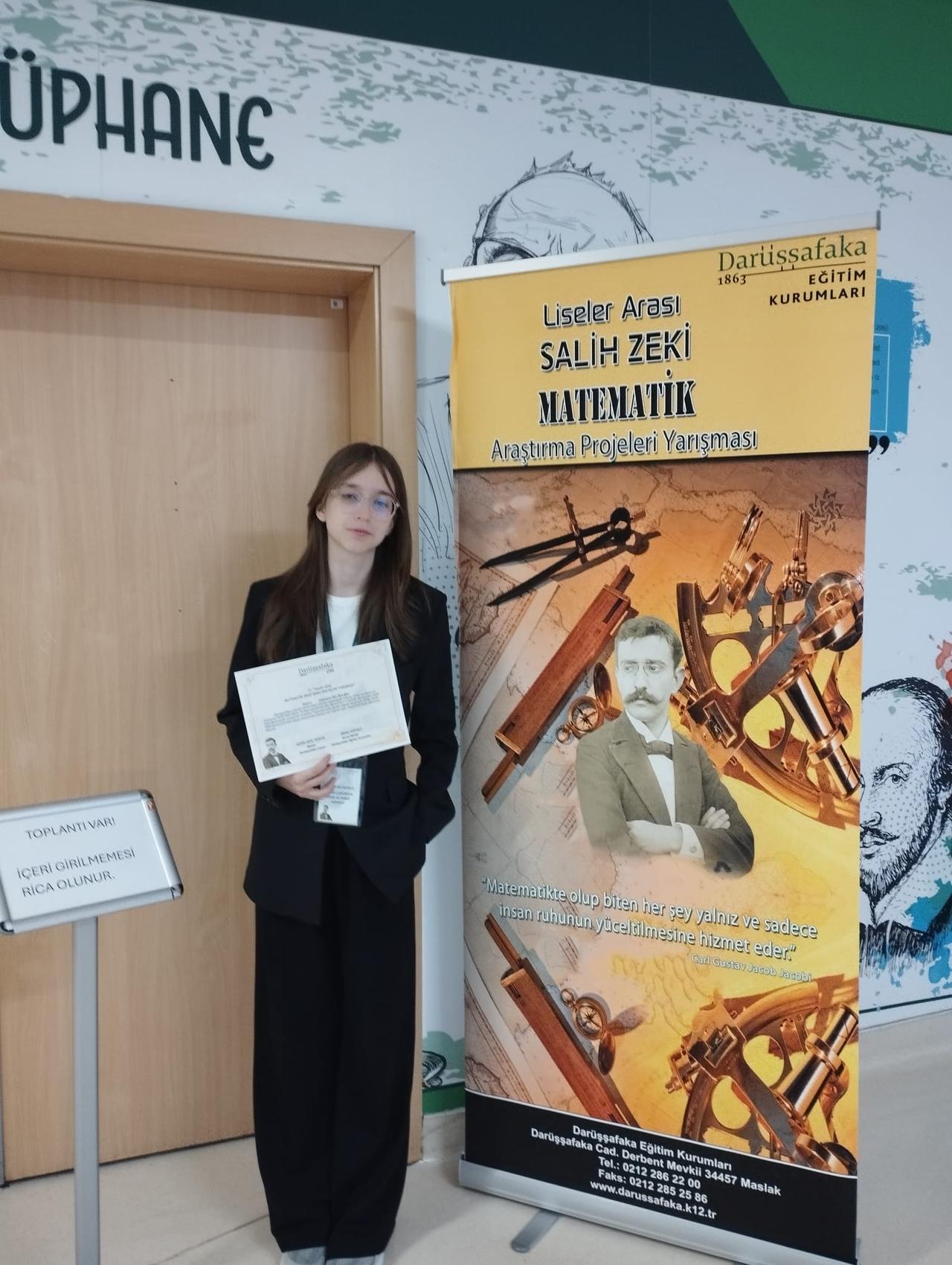
We were live during the online semifinal presentation. When it came time for the prototype demonstration, every eye on screen turned toward us. The system we had tested meticulously over days and that had functioned flawlessly suddenly failed to respond at the very moment it was supposed to work. As the allotted presentation time ticked away, the jury watched us with growing curiosity. My teammates and I exchanged glances. In those few seconds, we faced two options: try to explain why the prototype was unresponsive, or find the source of the problem and restart the system.
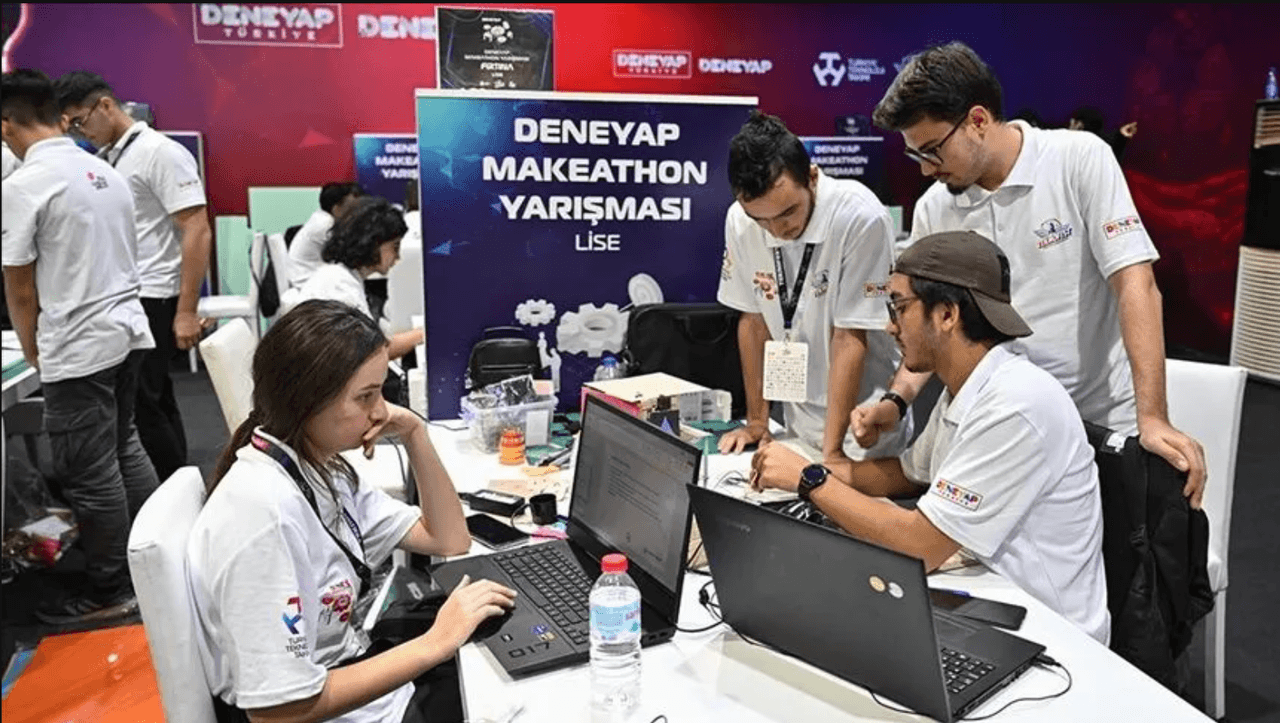
TEKNOFEST İzmir DENEYAP Fikir Maratonu’nda projeleri üzerinde çalışan genç yarışmacılar (Anadolu Ajansı)
We quickly divided the tasks. One of us checked the connections, another monitored the software data, while I tried to keep the presentation flowing. At that moment, we realized our team’s coordination was far stronger than we had expected. We had no time to breathe in relief after fixing the issue and restarting the system—because immediately afterward, the jury asked a question not covered in our slides.【1】When we completed the semifinal presentation that day, what we gained was more than just acompetitionresult. We learned that a prototype working properly is not enough to produce technology; true competence lies in knowing what to do when the system fails. TEKNOFEST did not merely offer us a platform to compete with our ideas and technologies—it created a learning environment that helped us grow into young people capable of thinking under uncertainty, sharing responsibilities, defending our knowledge, and restarting when necessary.The National Technology Initiativebecomes visible through unmanned aerial vehicles in the sky, satellites in space, machines in factories, and systems developed in laboratories. Yet there is another, less visible element at the foundation of all these technologies: the people who develop them.
Is a country’s technological independence measured only by the tools it develops and the innovations it achieves—or by its ability to cultivate the people capable of producing those tools? In my view, it is impossible to separate these two goals. Behind every technology we now regard as a great success lie years of learning, research, and repeated trials. The final product is merely the visible part of this story. The people who contributed to its development and grew through this process are often overlooked.
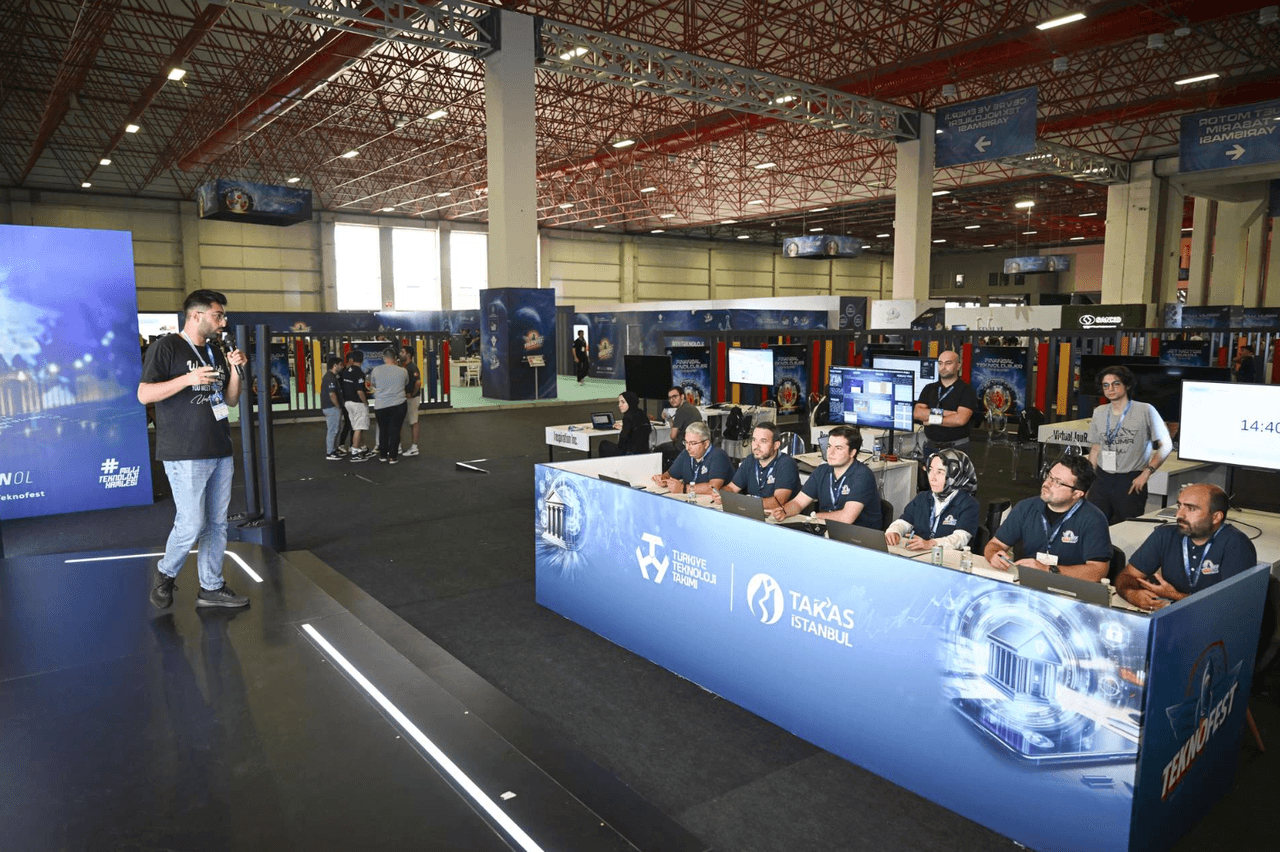
TEKNOFEST teknoloji yarışmalarında projesini jüri karşısında sunan bir yarışmacı (T3 Vakfı)
The National Technology Initiative cannot be viewed merely as an industrial effort aimed at developing specific technologies within Türkiye’s borders. In the publication Millî Teknoloji Hamlesi: Toplumsal Yansımaları ve Türkiye’nin Geleceği, issued by TÜBA, this initiative is described as a multidimensional movement in technology and innovation spanning fields from healthcare and transportation to defense, education, industry, and space. Scientific research, R&D activities, and human capital are presented in the publication as essential components of this process. From this perspective, technological independence is not only about where a product is manufactured, but also about who developed the knowledge underlying it. There is a significant difference between using a technology and developing it. When using a product, we benefit from a ready-made solution to a specific problem. When developing technology, however, we must first understand the problem itself, conduct research, test alternative approaches, and often abandon our first idea when it fails. For this reason, it is crucial that young people approach technology not only as users but as creators. T3 Foundation’s emphasis on the goal of “A Turkey That Develops Technology” and its aim to actively involve youth in this process clearly demonstrate the central role of human development within the National Technology Initiative. TEKNOFEST technology competitions are among the arenas where young people can turn this mindset into practice. A project that begins with an idea requires research, planning, the development of a technical system, and defending the outcome before a jury. Not every project will place in the competition, and some prototypes may never be used again. Yet a young person who works on a project is no longer the same person they were at the start—they have learned to evaluate problems, generate solutions, and apply their knowledge. Becoming an individual who produces technology and joining the ranks of tomorrow’s engineers cannot be achieved merely by acquiring technical knowledge. Sometimes the most lasting learning begins when a plan fails.
We succeeded in restarting the prototype, but the next question from a jury member placed us in a completely different situation. This time, there was no connection to check or data stream to monitor. The answer was not in our prepared slides. We needed to quickly synthesize our knowledge, understand what the question was truly challenging, and clearly communicate our reasoning to the jury.
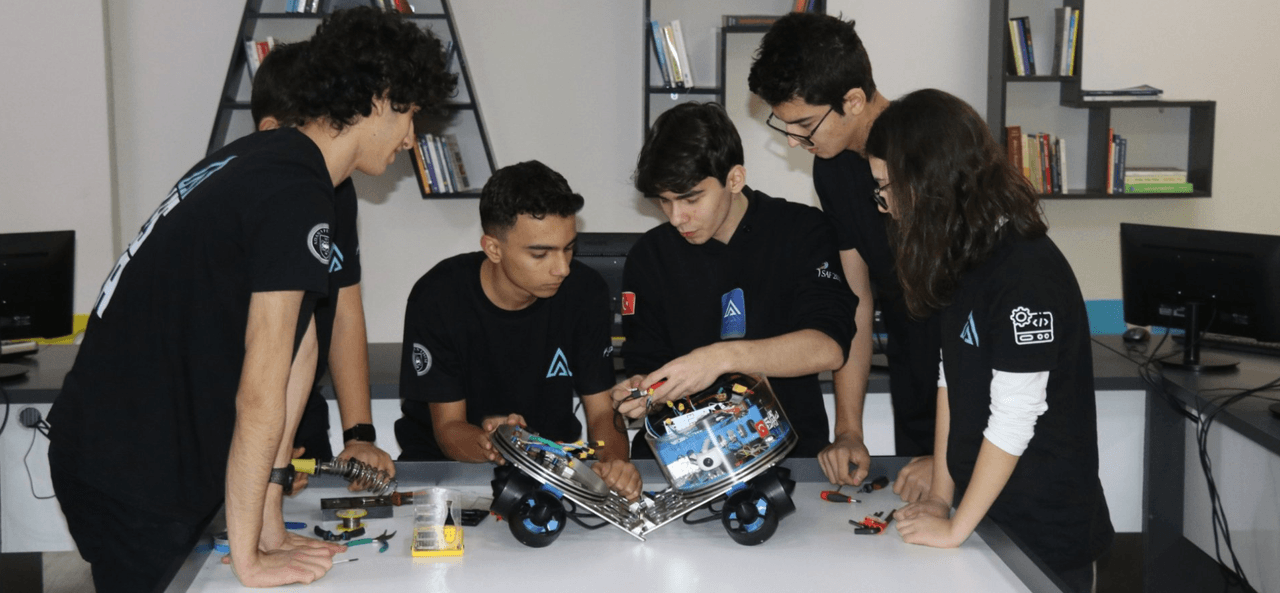
TEKNOFEST’te başlayan çalışmalarını uluslararası yarışmalara taşıyan ALESTA Takımı ve geliştirdikleri otonom su altı aracı (Millî Eğitim Bakanlığı)
Throughout the project development process, we had encountered many questions: Was our idea feasible? Why was our chosen method superior to alternatives? How would our system perform under real-world conditions? To answer these, we sometimes had to conduct research, test different approaches, or admit that our first solution did not work and start over.【3】A study examining the skills gained through project-based learning evaluated 168 academic publications from Türkiye between 2000 and 2018. Of these, 85 were master’s theses, 54 were academic articles, 26 were doctoral dissertations, and 3 were conference papers. The fact that a significant portion of these studies were conducted in science and technology fields makes their findings particularly relevant to technology projects. The research found that the most frequently identified outcomes in these publications were communication, collaboration, and research skills. Communication appeared as an outcome in 61.3% of the studies, collaboration in 60.7%, and research skills in 58.3%. These were followed by productivity and efficiency, innovation and creativity, critical thinking, responsibility, and problem-solving. Decision-making, active participation, and time management were also identified as outcomes linked to project-based learning.【4】These percentages do not prove that every student achieved the same outcomes at the same level, but they clearly show that project development is not a learning method limited solely to the final product. One of the most important lessons I learned during this process was that not every problem has only one correct solution. A small detail noticed by one of my teammates revealed a problem we had all overlooked; the jury’s critiques enabled us to reevaluate our ideas. In such moments, changing our perspective was not a failure—it was part of improving our project. Engineering is not merely about implementing an initial idea; it is about understanding why that idea failed and adapting our knowledge to develop a better solution under new conditions. The most important lesson TEKNOFEST taught me was this: when facing a problem, don’t give up—keep trying until you find the right solution.
To see what this journey, still in its early stages, might one day give me, I had to look far ahead. Ömer Raif Özoğlu, captain of the ALESTA team that placed second in the Basic Category of theTEKNOFEST 2023 Unmanned Underwater Systems Competition, is now pursuing engineering studies at one of the world’s leading technical universities abroad. In a previous interview, Ömer Raif Özoğlu described how his journey, which began at TEKNOFEST, continued in the following years: “Thanks to the success we achieved at TEKNOFEST, we were selected for the National Technology Teams Support Program. This program gave us the opportunity to represent our country in international competitions in Azerbaijan and Singapore. We won first place in Azerbaijan and fifth in the world in Singapore, and we received the Fastest AUV Award. So the story that began at TEKNOFEST evolved into a much larger journey, one in which we represented our country internationally.”【5】This experience clearly showed that when competition results are announced, everything is not over. The second-place finish at TEKNOFEST was an important achievement for that day, but the technical knowledge, team management experience, and collaborative production habits gained during the competition continued to open doors to new opportunities. The underwater vehicle developed for TEKNOFEST first led to international competitions and later became one of the key starting points in the team members’ engineering journeys.
When we consider the few minutes I experienced during the semifinal alongside Ömer Raif Özoğlu’s multi-year, cross-border journey, we see different stages of the same idea: even when a competition ends, the learning process that began within it can continue. Therefore, the future of the National Technology Initiative must be sought not only in the tools developed today but also in the young people who grew while developing them.
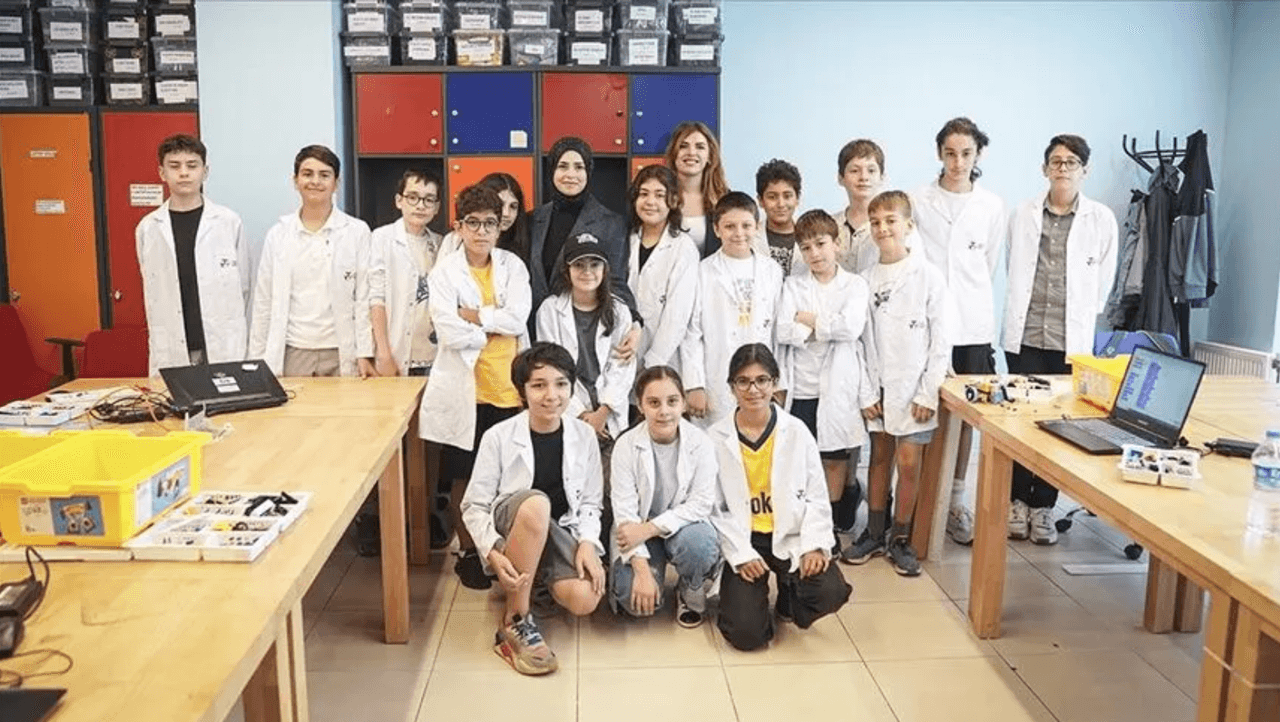
DENEYAP Teknoloji Atölyesi’nde proje geliştiren öğrenciler ve eğitmenleri (Anadolu Ajansı)
Of course, a few-day competition alone cannot complete an engineer’s entire education. A technology competition can serve as the first step for a high school student to research a problem, design a solution to it, and turn that design into a prototype. Even if the prototype does not perform as expected or the project does not place, the student gains the rare opportunity to experience firsthand how a technology they previously only consumed is developed. Technological independence requires long-term accumulation. The first experience gained in a competition team today can be transferred tomorrow to a university laboratory, a research center, or a technology startup. The young people who gain this experience can share their knowledge and skills with new teams, pushing the starting point for future generations further ahead. In this way, the National Technology Initiative ceases to be the success of a single project or generation and becomes a continuous, shared process driven by the transmission of knowledge and experience. Sometimes the most important outcome of a competition is not the announced ranking, but the question a participant asks themselves: “Can I do this?” When this curiosity, sparked by that question, leads to new projects and deeper investigations, the National Technology Initiative no longer remains confined to the duration of an event—it persists as a learning desire passed from generation to generation.
As the final seconds of our presentation time ran out, our prototype came back to life, and we answered the jury’s question to complete our presentation. At that moment, it seemed all that remained was waiting for the competition results. But for me, what truly mattered were the lessons learned in those few minutes. For the first time, I clearly saw what it meant to think calmly under pressure, to trust my teammates, and to defend our ideas together. Today, I am a tenth-grade student. There is still so much I need to learn, many questions I must answer, and likely many more prototypes that will not work on the first try. I no longer see a prototype failing on its first attempt as mere failure. Sometimes, a non-functional prototype is the first sign pointing to something we did not yet know. What matters is continuing to learn and try again when we face a problem.
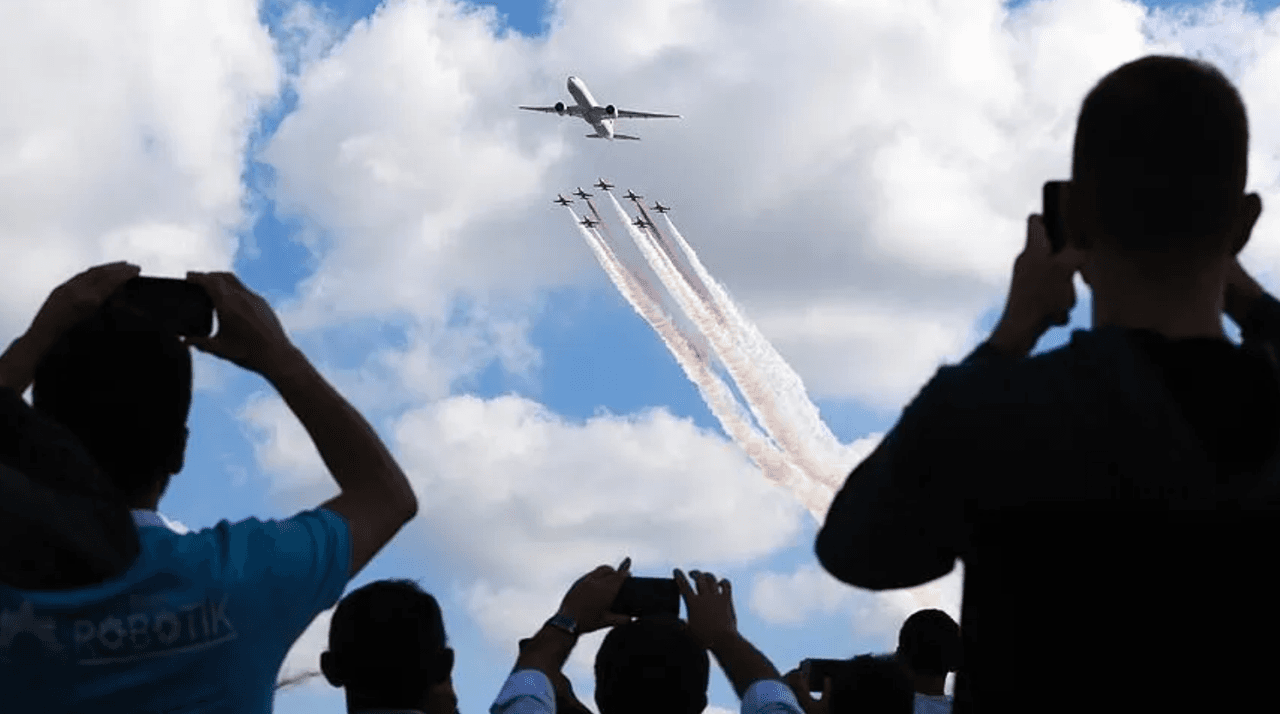
TEKNOFEST’te gerçekleştirilen hava gösterisini izleyen ziyaretçiler (Anadolu Ajansı)
In the future, I want to receive a strong engineering education—not to merely use existing technologies, but to develop solutions for the problems my country faces. I am aware that my contribution to the National Technology Initiative is not yet a completed project or a flawless prototype. For now, this contribution consists of learning, researching, attempting to create, and progressing a little further with each attempt. The time allotted for our semifinal presentation ended. But the desire for learning and creation it ignited within me continues. Perhaps a competition does not end on the date marked on the calendar, but when we stop chasing the questions it raised. My competition has not ended yet—it has only just begun.
Bayraktar, Selçuk. “Yediden Yetmişe Toplumsal Seferberlik: Millî Teknoloji Hamlesi.” *Millî Teknoloji Hamlesi*, edited by Mehmet Fatih Kacır, Muzaffer Şeker, and Mürsel Doğrul, pp. 9–26. Ankara: Türkiye Bilimler Akademisi Yayınları, 2022. Accessed September 4, 2026.https://doi.org/10.53478/TUBA.978-625-8352-16-0.ch01
Güngör, Mustafa. “TEKNOFEST İzmir’deki ‘Deneyap Fikir Maratonu’nda Final Başladı.” Anadolu Ajansı, September 29, 2023. Accessed September 4, 2026.https://www.aa.com.tr/tr/teknofest/teknofest-izmirdeki-deneyap-fikir-maratonunda-final-basladi/3003821
Günyol, Abdulkadir. “DENEYAP Atölyesi Yaz Tatilinde de Eğitimlerine Devam Ediyor.” Anadolu Ajansı, Accessed September 4, 2026.https://www.aa.com.tr/tr/bilim-teknoloji/deneyap-atolyesi-yaz-tatilinde-de-egitimlerine-devam-ediyor-/3653644.
Ministry of National Education. "Adana Fen High School Students Will Compete in Singapore with Autonomous Underwater Vehicle 'ALESTA'." Accessed September 4, 2026.https://www.meb.gov.tr/adana-fen-lisesi-ogrencileri-otonom-su-alti-araci-alesta-ile-singapurda-yarisacak/haber/32909/tr
Türkiye Bilimsel and Technological Research Council. "TÜBİTAK Başkanı Prof. Dr. Hasan Mandal Visits Rocket Competition Teams." Accessed September 4, 2026.https://tubitak.gov.tr/tr/haber/tubitak-baskani-prof-dr-hasan-mandal-roket-yarismasi-takimlarini-ziyaret-etti
Türkiye Teknoloji Takımı Vakfı. “TEKNOFEST Antalya’nın İkinci Gününde Gelecek Tasarlanmaya Devam Ediyor.” Accessed September 4, 2026.https://t3vakfi.org/tr/haberler/teknofest-antalyanin-ikinci-gununde-gelecek-tasarlanmaya-devam-ediyor
Türkiye Teknoloji Team Foundation. "Hakkımızda." Accessed September 4, 2026.https://t3vakfi.org/tr/hakkimizda/biz-kimiz/
Uysal, Ömer. “Proje Tabanlı Öğrenme ile Kazanılan 21. Yüzyıl Becerilerine Yönelik Bir Nitel Araştırma.” *Uluslararası Bilim ve Eğitim Dergisi* 4, no. 2 (2021): 85–110. Accessed September 4, 2026.https://doi.org/10.47477/ubed.952556.
Özoğlu, Şebnem Nil. “Teknoloji Yarışmasından Fazlası: TEKNOFEST’le Mavi Vatan’ın Genç Mühendisleri.” KÜRE. August 7, 2026. Accessed September 4, 2026.https://kureansiklopedi.com/tr/detay/teknoloji-yarismasindan-fazlasi-teknofestle-mavi-v.
[1]
Selçuk Bayraktar, “Yediden Yetmişe Toplumsal Seferberlik: Millî Teknoloji Hamlesi,” Millî Teknoloji Hamlesi içinde., ed. Mehmet Fatih Kacır, Muzaffer Şeker ve Mürsel Doğrul (Ankara: Türkiye Bilimler Akademisi, 2022), Erişim 14 Eylül 2026. https://doi.org/10.53478/TUBA.978-625-8352-16-0.ch01.
[3]
Ömer Uysal, “Proje Tabanlı Öğrenme ile Kazanılan 21. Yüzyıl Becerilerine Yönelik Bir Nitel Araştırma,” Uluslararası Bilim ve Eğitim Dergisi 4, no. 2 (2021): 85–110, Erişim 4 Eylül 2026. https://doi.org/10.47477/ubed.952556.
[4]
Uysal, “Proje Tabanlı Öğrenme ile Kazanılan 21. Yüzyıl Becerilerine Yönelik Bir Nitel Araştırma,” 91.
[5]
Şebnem Nil Özoğlu, “Teknoloji Yarışmasından Fazlası: TEKNOFEST’le Mavi Vatan’ın Genç Mühendisleri” KÜRE Ansiklopedi, Erişim 4 Eylül 2026, https://kureansiklopedi.com/tr/detay/teknoloji-yarismasindan-fazlasi-teknofestle-mavi-v.
A Person Grows Before a Product Is Designed
Questions Not Answered in the Slides
What Remains When the Competition Ends?
Can the National Technology Initiative Be Completed in One Generation?
My Competition Has Not Ended Yet