



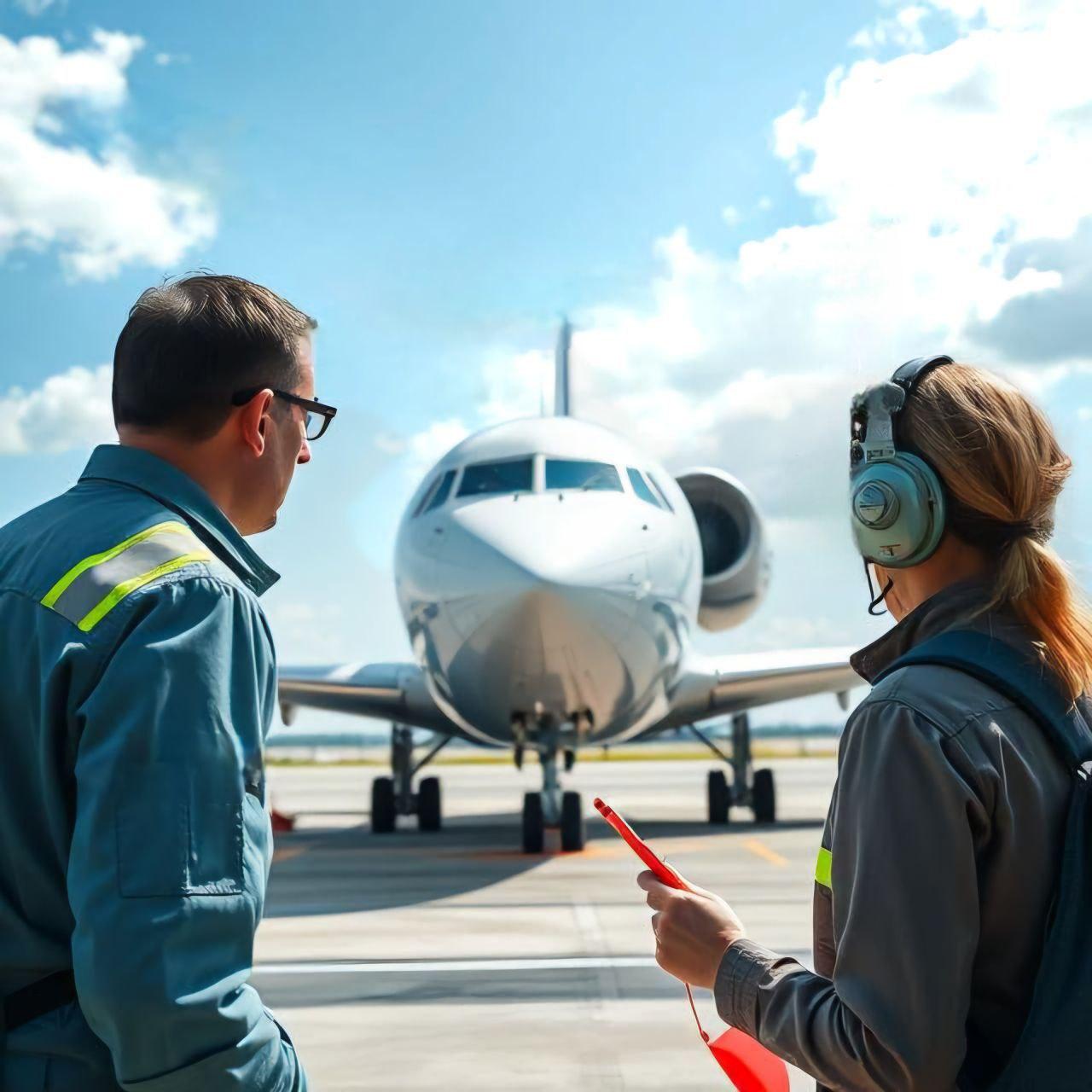
In aviation delays could lead to operational challenges and increased costs. An 'Aircraft on Ground' (AOG) situation refers to any condition where an aircraft is unable to fly due to technical malfunctions, maintenance needs or unavailability of necessary spare parts. During such events, the aircraft is considered out of service, resulting in potential delays, missed schedules, and dissatisfied customers.
Efficiently handling AOG events is essential for minimizing disruptions and ensuring fleet readiness. Despite rigorous maintenance schedules and proactive safety checks, unexpected issues can still arise, halting operations and demanding immediate intervention.

This image was created with Gemini 2.0 Flash support.
Several factors may contribute to an aircraft being designated as AOG. These causes range from mechanical failures to external environmental factors, each requiring distinct response protocols:
In the aviation industry, AOG events are an inevitable reality. Although strict maintenance programs and technological advancements have significantly reduced malfunctions, AOG incidents cannot be entirely eliminated.
Industry data suggests that major airlines experience approximately 1 to 2 AOG incidents per 1,000 flights. This rate can vary depending on the operational scale and the effectiveness of maintenance practices. Fleets with high aircraft utilization and long-haul operations tend to have a higher risk of AOG events.
Many operators plan for approximately 0.5% to 1% of their fleet to be in AOG status at any given time to ensure operational flexibility. Additionally, external factors such as severe weather or supply chain disruptions can temporarily increase these rates.
From a broader perspective, reports from organizations like the International Air Transport Association (IATA) indicate that AOG-related disruptions account for approximately 10–15% of total flight delays and cancellations. This highlights why efficient AOG management is critical not only for technical teams but also for overall airline operations.

This graphic was created with Gemini 2.0 Flash support.
Beyond operational inconvenience, AOG situations can lead to various costs, including storage fees, emergency part shipments, maintenance labor and passenger compensation. These costs, along with lost revenue from grounded flights, contribute to the overall financial impact. A 2010 study by the Federal Aviation Administration (FAA) and NEXTOR estimated that airline delays in 2007 cost the U.S. airline industry approximately $31 billion, a portion of which was directly related to AOG-related disruptions.
Aircraft represent a significant investment, and when grounded, they generate no revenue. The longer an aircraft remains grounded, the higher the operational losses. In response, some operators/airlines have begun utilizing specialized insurance to mitigate the financial risks associated with AOG incidents.
Moreover, the ripple effects extend far beyond the operators/airlines themselves. Air cargo services, postal systems, and global logistics chains rely on the punctuality of flights. A delayed aircraft can cause late deliveries, upset consumers, and affect business reputations—impacting even those who rarely fly.

This image was created with Gemini 2.0 Flash support.
Operators/Airlines adopt a multi-step strategy to respond rapidly and effectively to AOG situations:
Handling AOG scenarios successfully depends on the efficiency of maintenance teams, the resilience of supply chains, and the overall coordination between departments. Operators/Airlines continuously refine these systems to reduce downtime and maintain customer satisfaction.

This image was created with Gemini 2.0 Flash support.
"Aircraft on Ground" (AOG) is a critical operational status in aviation, indicating that an aircraft is temporarily out of service. Whether due to mechanical faults, environmental conditions, or logistical delays, AOG events present both financial and operational challenges. Operators/Airlines must act swiftly and strategically to resolve such incidents, employing methods such as rapid diagnostics, spare parts management, and OEM collaboration. By minimizing the impact of AOG, operators/airlines protect their revenue streams, maintain flight schedules, and uphold trust with both passengers and commercial partners.
Aviation Hub. “Aircraft on Ground.” Aviation Hub 11. Accessed April 19, 2025. https://aviationhub11.com/aircraft-on-ground/
Federal Aviation Administration (FAA) and NEXTOR. Total Delay Impact Study: A Comprehensive Assessment of the Costs and Impacts of Flight Delay in the United States. Washington, D.C.: Federal Aviation Administration, 2010.
Federal Aviation Administration, Aviation Maintenance Technician General Handbook-Human Factors Addendum. FAA-H-8083-30B (Washington, D.C. : Federal Aviation Administration, 2008) https://www.faa.gov/regulations_policies/handbooks_manuals/aviation/amtg_handbook.pdf.
International Air Transport Association (IATA). Annual Safety Report. Montreal: IATA, 2022.
Proponent. “The Causes and Costs Behind a Grounded Aircraft.” Proponent News. Accessed April 19, 2025. https://www.proponent.com/news/causes-costs-behind-grounded-aircraft/
Term Aviation. “What Is AOG in Aviation?” Term Aviation. Accessed April 19, 2025. https://termaviation.com/what-is-aog-in-aviation/

Henüz Tartışma Girilmemiştir
"Aircraft on Ground (AOG)" maddesi için tartışma başlatın
Causes of Aircraft on Ground (AOG) Status
Frequency and Rate of AOG Events Across the Aviation Industry
Financial Cost
Operational Strategies
Bu madde yapay zeka desteği ile üretilmiştir.