


Bu içerik Türkçe olarak yazılmış olup yapay zeka ile otomatik olarak İngilizceye çevrilmiştir.
+1 Daha
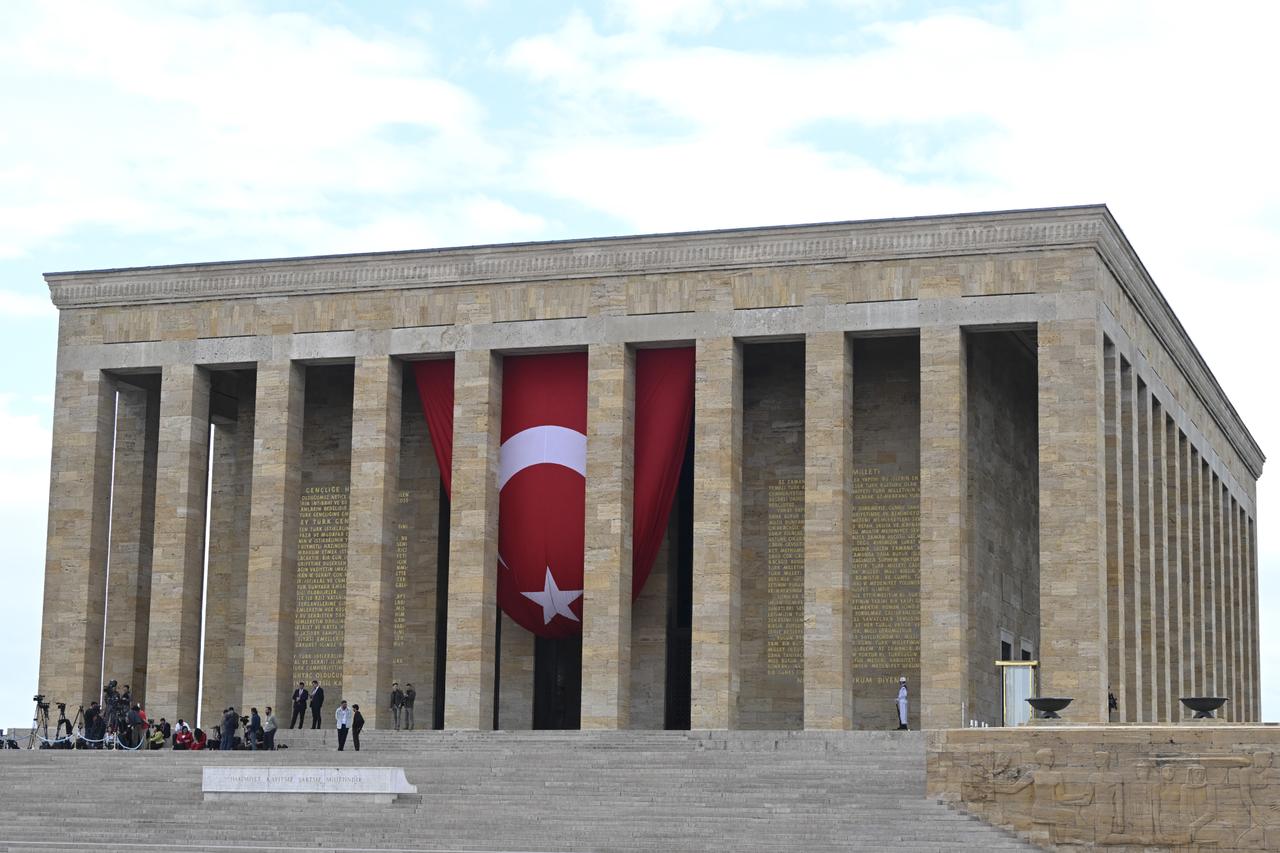
(Anadolu İmages)
Anıtkabir – The Eternal Resting Place of Atatürk
Location | Rasattepe (Anıttepe) Türkiye Ankara | ||||||||
|---|---|---|---|---|---|---|---|---|---|
Architect(s) | Doç. Orhan Arda Prof. Emin Onat | ||||||||
Opening Date | 1953-11-10 | ||||||||
Construction Process | Temporary Tomb: Ethnography Museum (1938–1953), Foundation: 9 October 1944, Opening and Transfer of Remains: 10 November 1953 | ||||||||
Architectural Style(s) | First National Architecture Movement modern-classical synthesis with simple lines monumental Symmetrical | ||||||||
Visit Information | Open throughout the year | ||||||||
Busy Visit Days | 10 November (Commemoration of Atatürk), 29 October (Republic Day), 23 April (National Sovereignty and Children's Day) | ||||||||
Anıtkabir is the monumental tomb of Mustafa Kemal Atatürk, the founder and first President of the Republic of Türkiye, constructed in the Rasattepe region of Ankara. This symbolic structure reflects the political, cultural, and ideological identity of the Republic of Türkiye and carries significant architectural and political weight. Anıtkabir is not merely a tomb; it is also regarded as a memorial, a ceremonial space, and an architectural representation of national memory.
Following the death of Mustafa Kemal Atatürk on 10 November 1938, the question of where his remains should be buried came to the forefront. The Ankara Etnography Museum was designated as the temporary resting place. In a decision dated 13 November 1938, the government resolved that his remains would remain there until a suitable monumental tomb could be constructed. The Etnography Museum served as the temporary tomb for 15 years.
Among the proposed sites for the tomb were Çankaya, Ankara Castle, and the Forest Farm like alternatives. The final decision, reached after the work of appointed commissions and a vote by the Republican People’s Party (CHP) parliamentary group, favored Rasattepe. At the time, Rasattepe was a distant, barren hill outside Ankara’s center. Through the construction of Anıtkabir, it was transformed into a central national landmark, with its surroundings developed through urbanization and afforestation.
An international architectural competition for the design of Anıtkabir was held in 1941. The winning proposal, submitted by architects Professor Emin Onat and Associate Professor Orhan Arda, was selected first. However, several modifications were made during the implementation phase. The foundation stone of Anıtkabir was laid on 9 September 1944, and construction continued under different administrations of the CHP and the Democrat Party (DP). Delays occurred due to ground-related challenges and difficulties in securing construction materials.
On 10 November 1953, Atatürk’s remains were transferred from the Etnography Museum to Anıtkabir in a solemn ceremony. The transfer reinforced the public and symbolic character of Anıtkabir. Since that date, Anıtkabir has become a place of pilgrimage for domestic and foreign visitors and has served as the focal point of national ceremonies.
Anıtkabir is a monumental structure characterized by its symmetrical layout and influences from the First National Architectural Movement. The main components of the complex include the Ceremonial Plaza, the Lions’ Way, the Şeref Hall, the Mausoleum, the Peace and Independence Towers, the Museum section, and the area housing the Anıtkabir Special Register. The 33-meter-high Mausoleum, with its simple and symmetrical façade, symbolizes Atatürk’s strong and unadorned leadership. Various parts of the structure feature reliefs, mosaics, and sculptures. The themes of the nation’s War of Independence, independence, and sovereignty are frequently depicted in these artworks. The granite column sent from the United States of America stands out as a symbol of international relations during that era.
One of the most symbolic elements of Anıtkabir’s entrance is the Lions’ Way, which is 262 meters long and leads visitors to the Ceremonial Plaza. On either side of the path, 24 seated lion statues are symmetrically arranged, symbolizing the strength, determination, and independence of the Turkish nation. The stones laid along the path are spaced at slight intervals to encourage visitors to walk slowly and respectfully, thereby slowing the pace of the procession and enhancing the sense of reverence. The Lions’ Way functions as a ceremonial passage laden with national symbols. The symmetrical arrangement of the statues, combined with the surrounding pine and cypress trees, creates a solemn atmosphere that imbues the journey with ritual significance.

Aslanlı Yol (Ankara Provincial and Culture Directorate)
The Şeref Hall is the most grandiose and central section of Anıtkabir, located within the Mausoleum. This space houses the 40-ton sarcophagus stone that marks Atatürk’s eternal resting place. The walls of the hall are clad in travertine stone, and the ceiling is adorned with gold mosaics.
The hall’s minimalist architecture symbolizes Atatürk’s leadership and the Turkish nation’s reverence for him. The silent and solemn atmosphere of the space instills a profound sense of respect in visitors.
The sarcophagus stone in the Mausoleum is positioned directly above the chamber where Atatürk’s actual remains lie. The sarcophagus is symbolic; the real tomb is located in a private room on the lower level of the Mausoleum. This chamber, accessible only by special permission, is simply furnished and surrounded by soil brought from all corners of Türkiye.
The Independence Tower, located at the entrance of the Lions’ Way, symbolizes the Turkish nation’s belief in independence. Its inner walls feature figures and inscriptions representing national sovereignty. Inside the tower, Atatürk’s address to the youth and the oath of Turkish youth are displayed. Opposite the Independence Tower stands the Peace Tower, which embodies Atatürk’s principle of “Peace at home, peace in the world.” Reliefs and texts referencing this principle are present within the tower.
The museum within the Anıtkabir complex displays personal belongings of Atatürk. This section features a chronological exhibition enriched with panoramic narratives of artifacts and works from the War of Independence and the early Republican period. The collection includes many personal items such as Atatürk’s clothing, pistols, gifts, writing sets, and other possessions, offering visitors a deeply personal journey. Digital panels, interactive maps, and reconstructions are also available.

The Anıtkabir Special Register is the official book in which state officials, official delegations, and important visitors record their signatures and thoughts upon visiting Anıtkabir. This notebook serves as a diplomatic and protocol-level expression of respect for Atatürk.
To date, messages from numerous presidents, prime ministers, foreign heads of state, and artists have been recorded in the register. The visitor texts constitute important documents reflecting the political climate of their time and the perception of Atatürk.
Anıtkabir, due to its historical and political significance, is also a major tourist and travel destination. Visitors from all over Türkiye and from countries around the world travel to Ankara to see this monumental structure. Open throughout the year, Anıtkabir experiences particularly high visitor traffic on national holidays such as 10 November, 29 October, and 23 April. School groups, official delegations, tourists, and the local public visit Anıtkabir to honor the memory of Atatürk on site.
Ankara İl Directorate of Culture and Tourism, "Anıtkabir," Ministry of Culture and Tourism of the Republic of Turkey, Accessed April 20, 2025. https://ankara.ktb.gov.tr/TR-152372/anitkabir.html
Ayvaz Gökdemir, "Mezar", Yeni Türk Ansiklopedisi, Volume 7, Ötüken Neşriyat, 1985.
Edhem Eldem, İstanbul’da Ölüm: Osmanlı-İslam Kültüründe Ölüm ve Ritüeller, Osmanlı Bankası Arşiv ve Araştırma Merkezi Yayınları, 2005
Ministry of Culture and Tourism. "Anıtkabir Atatürk and the War of Independence Museum." Türkiye Kültür Portalı, Accessed April 20, 2025. https://www.kulturportali.gov.tr/turkiye/ankara/gezilecekyer/anitkabr-ataturk-ve-kurtulus-savasi-muzes
Ministry of Culture and Tourism. "Anıtkabir." Accessed April 20, 2025. https://www.ktb.gov.tr/TR-96392/anitkabir.html
Tunç Boran, "Anıtkabir’in İnşa Edildiği Rasattepe’nin Tespit Edilme Süreci ve Morfolojik Değişimi", Malzeme Doku ve Renk, Issue 4, 2011, pp. 148–173
Tunç Boran, Mekân ve Siyaset İlişkisi Bağlamında Anıtkabir (1938–1973), Ankara Üniversitesi Türk İnkılâp Tarihi Enstitüsü, PhD thesis, 2011
Ulus, Cumhuriyet, Tan, Akşam newspapers (issues between 1938–1953)

(Anadolu İmages)
Anıtkabir – The Eternal Resting Place of Atatürk
Location | Rasattepe (Anıttepe) Türkiye Ankara | ||||||||
|---|---|---|---|---|---|---|---|---|---|
Architect(s) | Doç. Orhan Arda Prof. Emin Onat | ||||||||
Opening Date | 1953-11-10 | ||||||||
Construction Process | Temporary Tomb: Ethnography Museum (1938–1953), Foundation: 9 October 1944, Opening and Transfer of Remains: 10 November 1953 | ||||||||
Architectural Style(s) | First National Architecture Movement modern-classical synthesis with simple lines monumental Symmetrical | ||||||||
Visit Information | Open throughout the year | ||||||||
Busy Visit Days | 10 November (Commemoration of Atatürk), 29 October (Republic Day), 23 April (National Sovereignty and Children's Day) | ||||||||
Henüz Tartışma Girilmemiştir
"Anıtkabir" maddesi için tartışma başlatın
The Construction Process of Anıtkabir
Early Discussions and the Temporary Tomb
Site Selection: The Determination of Rasattepe
International Architectural Competition and Implementation
Transfer of the Remains and Inauguration
Architectural Features of Anıtkabir
Architectural Style and Design Elements
The Lions’ Way
The Şeref Hall
The Mausoleum
The Peace and Independence Towers
Anıtkabir Atatürk and the War of Independence Museum
Anıtkabir Special Register