


Bu içerik Türkçe olarak yazılmış olup yapay zeka ile otomatik olarak İngilizceye çevrilmiştir.
+1 Daha
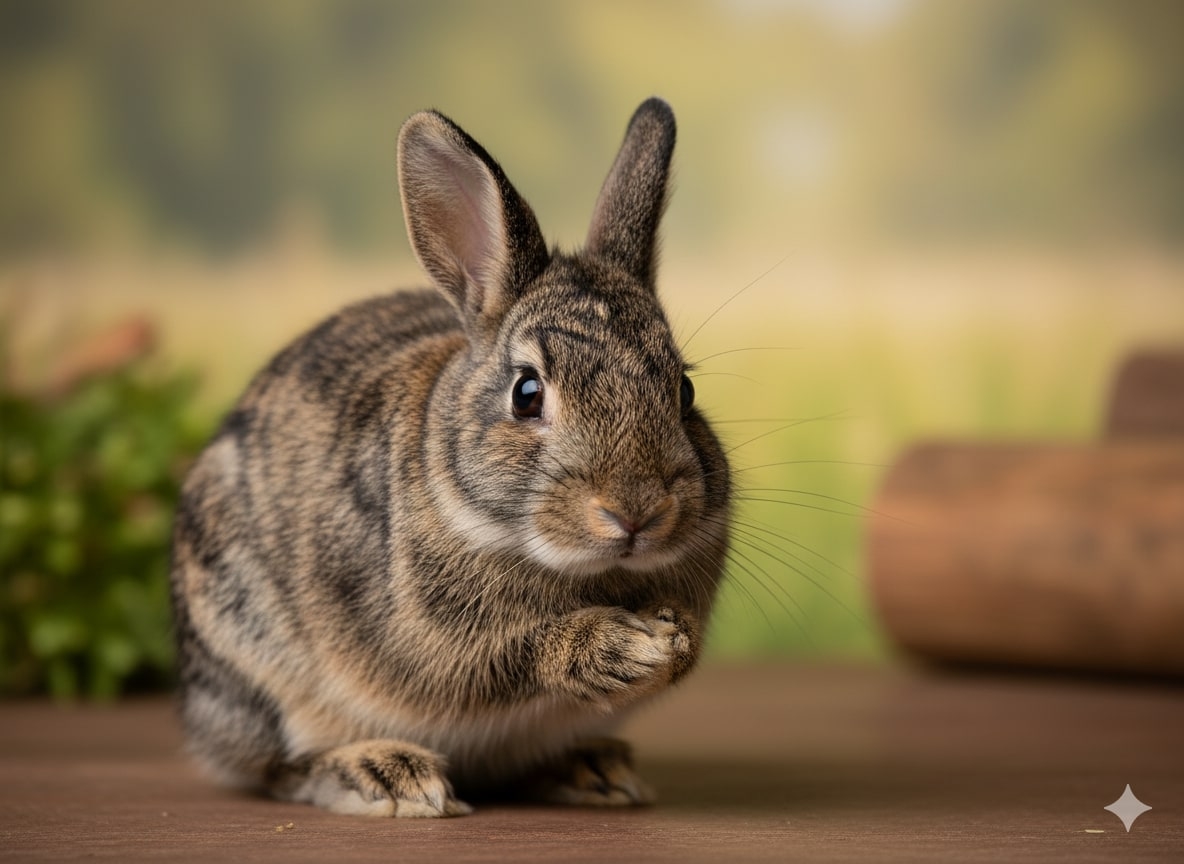
Annamite çizgili tavşanı (Nesolagus timminsi)
The Annamite striped rabbit (Nesolagus timminsi) is a mammal species belonging to the order Lagomorpha, family Leporidae, and genus Nesolagus.
The body fur of the Annamite striped rabbit is predominantly gray, with seven dark black or dark brown dorsal stripes extending from the head to the body. The tail region is reddish-brown. Compared to closely related rabbit species, members of the genus Nesolagus have relatively short ears, tails, and limbs. For example, ear length is approximately half that of species in the genus Lepus. The species also possesses a distinctive dental structure; it has a relatively primitive dental formula (I 2/1 P 3/2 M 3/3), and certain cranial features distinguish it from its sister species N. netscheri. For instance, the maximum skull length is about 12% larger than that of N. netscheri.
The known distribution of the species encompasses the northern and central Annamite Mountains along the border of Vietnam and the Lao People’s Democratic Republic. In Vietnam, it is believed to occur in six provinces from Nghe An to Quang Nam, and in Laos, in six provinces from Xiangkhouang (unconfirmed) to Xekong. Its habitat is restricted to moist evergreen forests. Most records come from elevations below 1,000 metres, but observations have been made from near sea level (50 metres) up to 1,300 metres. A large portion of its habitat lies in Vietnam, where intense trapping pressure persists.
Annamite Striped Rabbit (World Land Trust)
The Annamite striped rabbit is inherently nocturnal, spending its days resting in burrows dug by other animals. Due to its short limbs and weak claws, it has limited ability to dig its own burrows or run swiftly. Like all lagomorphs, it is herbivorous and re-ingests its soft feces (coprophagy) to extract all remaining nutrients from its food. Although its exact dietary habits are not fully known, it is observed that similar species feed on understory vegetation at night and avoid open areas while foraging. Very little is known about its reproductive cycle or lifespan; however, as a mammal, females nurse and protect their young until weaning.
Like all lagomorphs, the Annamite striped rabbit has a herbivorous diet. Its digestive system requires it to re-ingest its soft feces (coprophagy) to extract all usable nutrients from its food. The specific dietary preferences and plant species consumed by this species have not yet been fully determined. However, observations of its close relative, the Sumatran striped rabbit, indicate that it feeds on understory vegetation at night and avoids open areas while foraging.
There is very little scientific information available on the reproductive cycle and mating system of the Annamite striped rabbit. The primary reason is the extreme rarity of observations of this species in the wild. As a mammal, females give birth to live young (viviparous) and provide nourishment and protection until weaning.
The Annamite striped rabbit is listed as Endangered globally, primarily due to extremely high levels of illegal hunting within its habitat. Hunters commonly use wire snares targeting this rabbit and other similarly sized ground-dwelling fauna, and this practice has spread across nearly all of the Annamite forests, including protected areas. Intensive trapping has led to population declines. Because a large portion of suitable habitat in Vietnam is under heavy hunting pressure, it is assumed that population densities have decreased across much of its range.

Annamite çizgili tavşanı (Nesolagus timminsi)
Henüz Tartışma Girilmemiştir
"Annamite Striped Rabbit (Nesolagus timminsi)" maddesi için tartışma başlatın
Morphological Characteristics
Geographic Distribution and Habitat
Behavior and Ecology
Diet
Reproduction
Conservation Status