

+1 Daha

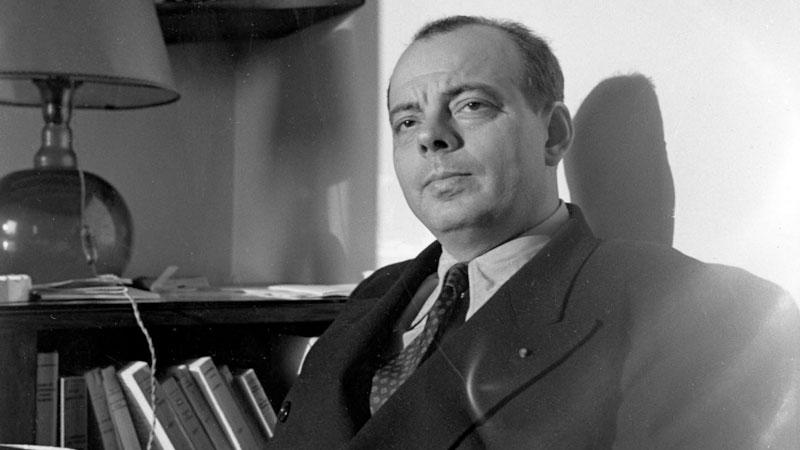
Antoine de Saint-Exupéry is known as one of the leading figures of 20th-century French literature. His full name is Antoine Jean-Baptiste Roger de Saint-Exupéry. He gained prominence both as a writer and as a pilot. He was born on 29 June 1900 in Lyon, France, and disappeared on 31 July 1944 during a reconnaissance flight over the Mediterranean Sea; his body was never recovered. Today, Saint-Exupéry is internationally renowned primarily for his work “The Little Prince,” and in his writings he frequently explored universal values such as humanity, loneliness, friendship, and the meaning of life, reflecting on the destruction and isolation created by the years of war.
Saint-Exupéry was born into an aristocratic family. He developed an interest in aviation during his early teens and, at the age of twelve, secretly entered an airfield where a pilot took him on his first flight. During his youth, he studied architecture but abandoned this education. In 1921 he joined the military and received pilot training. This training in Strasbourg shaped the course of his life. In 1923 he crashed his aircraft during takeoff due to a piloting error; this was his first aviation accident.

Antoine de Saint-Exupéry, Ministry of Arms
He began his career as a pilot in 1926, flying postal routes between Toulouse and Casablanca and Dakar. Two years later, his first short story and first book were published. In 1929 he traveled to Argentina, where he worked in air mail services; during this period he met Consuelo Suncín de Gómez Carrillo, whom he married in 1931. In 1934 he began working for Air France, writing articles for promotional films and aviation magazines.
It is well documented that Saint-Exupéry experienced numerous plane crashes throughout his flying career. In 1935, during an attempt to break the Paris-Saigon flight record, he crash-landed in the desert and spent three days waiting for rescue. He was saved just as he was on the verge of dying from dehydration. This experience provided the allegorical backdrop for several of his works, most notably “The Little Prince.”
In 1938 he suffered serious injuries in another crash in Guatemala and underwent long duration treatment. Despite all these accidents, he never gave up flying.

Antoine de Saint-Exupéry, Institut Français
During World War II, despite his deteriorating health, Saint-Exupéry insisted on participating in reconnaissance missions. After the German occupation of France, he went to USA, where he continued his literary work. In 1944 he resumed his duties as a reconnaissance pilot. On 31 July 1944, during his final flight, his aircraft disappeared over the Mediterranean Sea and his body was never found. However, in the early 2000s, the wreckage of his plane was discovered.
Saint-Exupéry’s first book, “The Aviator” (L’Aviateur), was published in 1926. It was followed by “Southern Mail” (Courrier Sud, 1929) and “Night Flight” (Vol de Nuit, 1931). “Wind, Sand and Stars” (Terre des Hommes), published in 1939, is one of his most significant works, demonstrating his literary power and sensitivity toward humanity. In 1942 he published “Flight to Arras” (Pilote de Guerre), and in 1943 his masterpiece, “The Little Prince” (Le Petit Prince), was released. This work was published simultaneously in French and English in the United States and was the last book to appear during his lifetime.
After his death, several works were compiled from his notes and letters, including “The Citadel” (Citadelle, 1948), “Letters of Youth” (Lettres de Jeunesse, 1953), “Wartime Writings” (Écrits de Guerre, 1982), and “Letters to an Unknown” (Lettres à l’Inconnue, 2008).

Representation of The Little Prince and the Pilot He Meets in the Sahara Desert (This image was generated by artificial intelligence)
Antoine de Saint-Exupéry’s most famous work, “The Little Prince,” is a narrative that speaks to both children and adults. He wrote the book in 1943 while living in the United States. The story unfolds through the dialogues between a pilot stranded in the Desert Desert and the Little Prince he encounters. As the Little Prince journeys from his own planet to Earth, his encounters with various characters serve as an allegorical critique of the adult world.
The universal themes of the book—love, responsibility, friendship, loneliness, and the essence of being human—also reflect Saint-Exupéry’s broader philosophical outlook. Critical analyses have shown that he idealized childhood and portrayed the adult world with a critical tone.

Representation of The Little Prince (This image was generated by artificial intelligence)
Antoine de Saint-Exupéry left behind not only the works of a literary figure but also universal questions about humanity, friendship, and the meaning of life. “The Little Prince” is now regarded as one of the most translated books in the world, available in 488 languages and dialects. Its simple language and profound content continue to be rediscovered by readers across different age groups.
Saint-Exupéry’s plain, sincere, and direct style forms the cornerstone of his literary legacy.

Henüz Tartışma Girilmemiştir
"Antoine de Saint-Exupéry" maddesi için tartışma başlatın
Youth and Education
Career and Achievements
Final Years and Death
Works
The Little Prince and Literary Identity
Legacy and Influence