

+2 Daha

Atatürk and Congress Museum
Location | Sivas Türkiye | ||||||||
|---|---|---|---|---|---|---|---|---|---|
Establishment Year (Museum) | 1990 (Initial Opening) 2018 (Current Configuration) | ||||||||
Original Use | Mülkî İdadî (1892) Vilayet-i Sultani (1911) | ||||||||
Usage Timeline | High School Noncommissioned Officer School Museum | ||||||||
Number of Floors | Basement + Ground Floor + 1st Floor (3 floors in total) | ||||||||
Plan Type | Interior courtyard Rectangular plan, nearly square | ||||||||
Architectural Style(s) | Baroque-Empire influences | ||||||||
Construction Materials | Ashlar stone Rubble stone Timber infill | ||||||||
Administrator | Sivas Museum Directorate | ||||||||
Affiliated Institution | Republic of Turkey Ministry of Culture and Tourism | ||||||||
Address | Örtülü Pınar Neighborhood İnönü Boulevard Sivas Türkiye | ||||||||
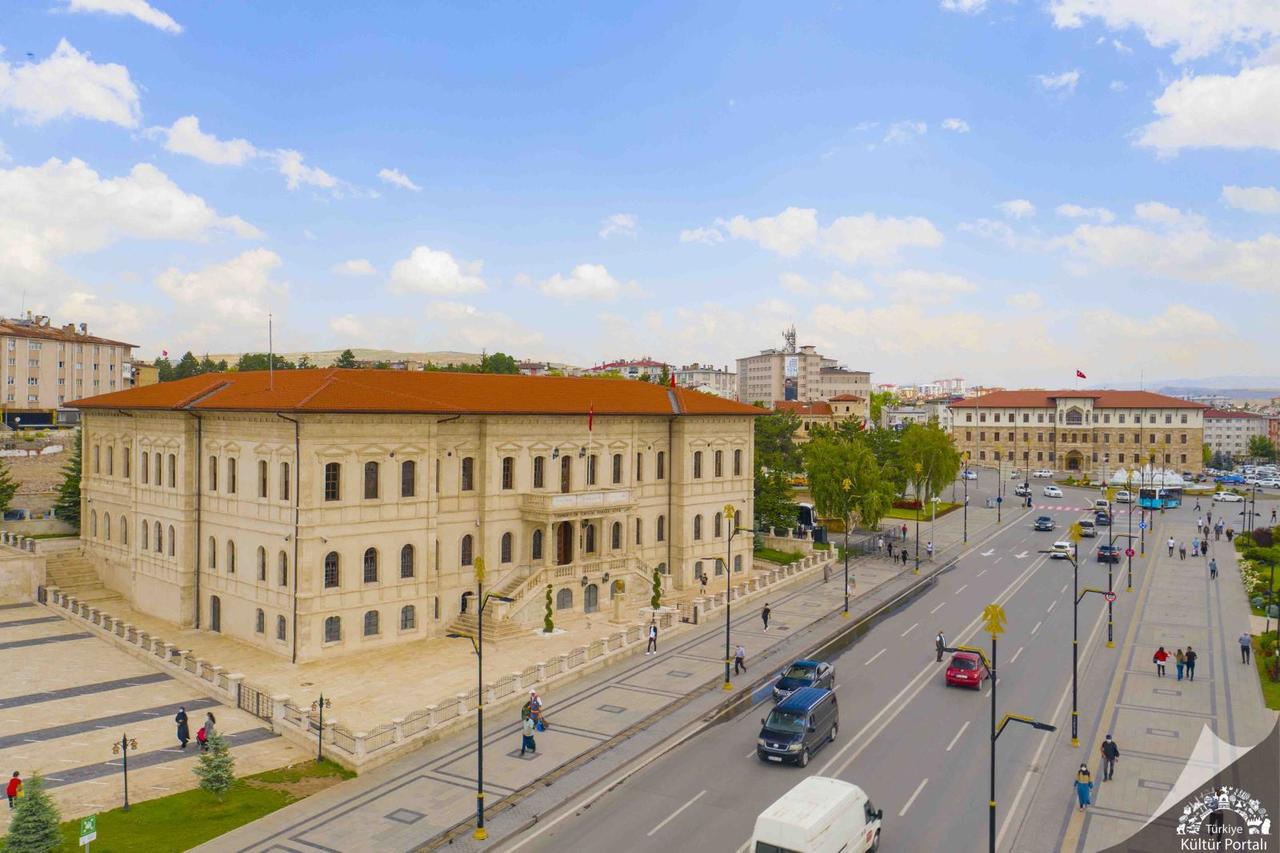
Located in the center of Sivas, the Atatürk and Congress Museum is a building of architectural and historical significance that witnessed the foundation process of the Republic of Turkey. The building hosted the Sivas Congress between September 4–11, 1919, and served as the headquarters of Mustafa Kemal Atatürk and the Representative Committee during the Turkish War of Independence.
The building was constructed on October 5, 1892, by the then-governor of Sivas, Mazlum Paşazade Mehmet Memduh Bey, to serve as a Mülki İdadî (a high school-level educational institution). It gained the status of a Vilayet-i Sultani (provincial high school) in 1911. While the building functioned as an educational institution in the late Ottoman period, it played a critical role during the post-World War I developments that led to the foundation of the Republic of Turkey.
Between September 4–11, 1919, the Sivas Congress was held in this building. From September 2 to December 18, 1919, it was used for 108 days as the "National Struggle Headquarters" by Mustafa Kemal Atatürk and the Representative Committee. Following the Congress, the building served as a Noncommissioned Officer School for a time. In 1924, it was turned into "Sivas High School," operating under this name until the 1970s and later as "Congress High School" until 1981.
The structure was transferred to the Ministry of Culture in 1983. After renovations, it was opened to the public as the “Atatürk Congress and Ethnography Museum” on December 19, 1990. In 2009, it was handed over to the Grand National Assembly of Turkey. In 2018, it was reallocated to the Ministry of Culture and Tourism and refunctioned as the “Atatürk and Congress Museum” under the Directorate of Sivas Museums.

Atatürk and Congress Museum (T.C. Kültür Ve Turizm Bakanlığı)
The building reflects the Baroque-Empire architectural style and consists of three floors, including a basement, built around an interior courtyard. The exterior façades are made of ashlar and rubble stone, while the inner sections use a wooden frame infilled with stones (dolmagöz wall technique). The main building plan is approximately 39.5 × 33.5 meters and is nearly square in shape.
There are four entrances to the building. The main entrance is on the northwest façade, facing Taşlı Street, and features a semi-circular arched, double-wing wooden door measuring 1.45 × 3 meters. The corners of the façade extend outward by 1.8 meters, and the window moldings reach the ground. Eight string courses surround the building, six of which continue around the entire structure, while two are limited to the entrance façade. Some string courses feature decorative blank cartouches and lozenge patterns.
The northeast and southwest façades are symmetrically designed. The southeastern rear façade has a balcony supported by four columns above the stairs leading to the ground floor. This arrangement was designed to open the building towards İstasyon Street after the introduction of railway service to Sivas in 1930.
At the center of the building is a rectangular courtyard measuring 7 × 14 meters, with 1-meter-thick walls, later enclosed by renovations. While the original roof was a terrace surrounded by railings, it now has a high hipped roof.

Atatürk and Congress Museum (T.C. Kültür Ve Turizm Bakanlığı)

Atatürk and Congress Museum (T.C. Kültür Ve Turizm Bakanlığı)
The ground and first floors serve as exhibition areas. The rooms on the ground floor include:
The exhibition rooms on the first floor are:
.jpg&w=1280&q=75)
Atatürk and Congress Museum (Kültür Portalı)
The museum houses 41 ethnographic artifacts related to Atatürk and the Sivas Congress. The desk used by Mustafa Kemal Atatürk and his rest room during the Congress are preserved in their original form. The exhibition halls also display:
Republic of Turkey Ministry of Culture and Tourism, General Directorate of Cultural Assets and Museums. “Sivas Atatürk and Congress Museum.” Müze.gov.tr. Accessed May 8, 2025. https://muze.gov.tr/muze-detay?SectionId=SAK01&DistId=MRK
Republic of Turkey Ministry of Culture and Tourism, General Directorate of Cultural Assets and Museums. “Sivas Atatürk and Congress Museum.” Turkish Museums. Accessed May 8, 2025. https://www.turkishmuseums.com/museum/detail/2236-sivas-ataturk-ve-kongre-muzesi/2236/1
Republic of Turkey Ministry of Culture and Tourism, General Directorate of Promotion. “Sivas Atatürk and Congress Museum.” Kültür Portalı. Accessed May 8, 2025. https://www.kulturportali.gov.tr/turkiye/sivas/gezilecekyer/sivas-ataturk-kongre-muzesi
Sivas Provincial Directorate of Culture and Tourism. “Atatürk and Congress Museum.” Official Website of the Sivas Directorate of Culture and Tourism. Accessed May 8, 2025. https://sivas.ktb.gov.tr/TR-278741/ataturk-ve-kongre-muzesi.html
Sivas Provincial Directorate of Culture and Tourism. “Photo Gallery.” Official Website of the Sivas Directorate of Culture and Tourism. Accessed May 8, 2025. https://sivas.ktb.gov.tr/TR-281094/fotograf-galerisi.html

Atatürk and Congress Museum
Location | Sivas Türkiye | ||||||||
|---|---|---|---|---|---|---|---|---|---|
Establishment Year (Museum) | 1990 (Initial Opening) 2018 (Current Configuration) | ||||||||
Original Use | Mülkî İdadî (1892) Vilayet-i Sultani (1911) | ||||||||
Usage Timeline | High School Noncommissioned Officer School Museum | ||||||||
Number of Floors | Basement + Ground Floor + 1st Floor (3 floors in total) | ||||||||
Plan Type | Interior courtyard Rectangular plan, nearly square | ||||||||
Architectural Style(s) | Baroque-Empire influences | ||||||||
Construction Materials | Ashlar stone Rubble stone Timber infill | ||||||||
Administrator | Sivas Museum Directorate | ||||||||
Affiliated Institution | Republic of Turkey Ministry of Culture and Tourism | ||||||||
Address | Örtülü Pınar Neighborhood İnönü Boulevard Sivas Türkiye | ||||||||
Henüz Tartışma Girilmemiştir
"Atatürk and Congress Museum" maddesi için tartışma başlatın
History
Architectural Features
Exhibition Layout
Ground Floor
First Floor
Artifacts and Documents
Bu madde yapay zeka desteği ile üretilmiştir.


