


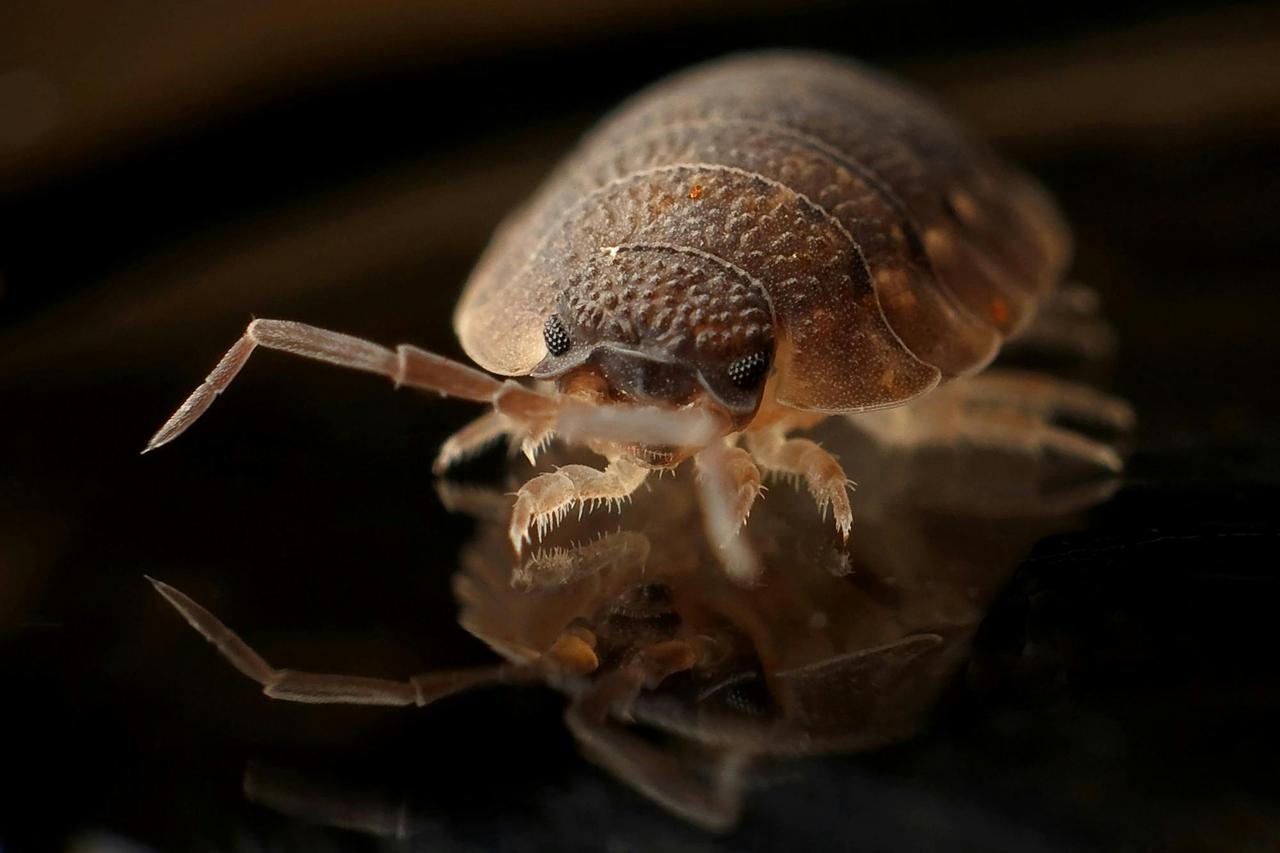
Bed Bug
Scientific Name(s) | Cimicidae | ||||||||
|---|---|---|---|---|---|---|---|---|---|
Family | 1802) Cimicidae (Latreille | ||||||||
Subkingdom | Eumetazoa | ||||||||
Subphylum | Hexapoda | ||||||||
Class | Insecta | ||||||||
Bed bugs are insects belonging to the Cimicidae family that feed by sucking blood from humans and other warm-blooded animals. Their importance to human health stems from the itching and dermatological reactions caused by their bites, as well as the psychological distress and economic losses they can inflict. The most common species affecting humans are Cimex lectularius (common bed bug), Cimex hemipterus (tropical bed bug), and Leptocimex boueti. Since the 1990s, there has been a significant resurgence in bed bug infestations worldwide.
Bed bugs belong to the order Hemiptera, infraorder Cimicomorpha. Within this infraorder, the main families of medical importance whose members are hematophagous (blood-feeding) at all stages are Cimicidae, Reduviidae (specifically the Triatominae subfamily), and Polyctenidae. The Cimicidae family comprises approximately six subfamilies, 24-25 genera, and over 100-110 species. Most of these species are associated with bats. The biogeographical distribution of the family includes genera endemic to the New World and the Old World, as well as some found in both regions.
The genus Cimex includes about 23 described species, often categorized into groups such as the C. lectularius group and the C. hemipterus group. Species that primarily feed on humans include C. lectularius, common in temperate regions, and C. hemipterus, found in tropical regions. In West Africa, Leptocimex boueti is another species that affects humans. Other Cimex species such as C. columbarius (pigeon bug), C. pipistrelli (bat bug), C. pilosellus, C. adjunctus, and C. dissimilismay also occasionally feed on humans. Additionally, there are "bird bugs" associated with birds (e.g., C. columbarius) and "bat bugs" associated with bats (e.g., the Pilosellus group and Pipistrelli group).
Cimex lectularius is a wingless insect with a dorsoventrally flattened body. Its average length is 4-5 mm, but it can reach up to 7 mm. Unfed individuals are pale yellow-brown, while those engorged with blood take on a reddish-brown or dark brown color. Their mouthparts are of the piercing-sucking type, forming a structure called a rostrum (proboscis). Their antennae are four-segmented. A distinguishing feature is the pronotum (anterior part of the thorax): C. lectularius has broad lateral lobes, whereas C. hemipterus has a narrower pronotum. Their wings are vestigial, existing as non-functional wing pads, and they cannot fly. They also possess scent glands that produce a characteristic odor.
Bed bugs undergo hemimetabolous (incomplete) metamorphosis. Their life cycle consists of an egg stage, five nymphal instars, and the adult stage. All stages, except the egg, must feed on blood. After a blood meal, females lay approximately 150-200 sticky eggs (in some cases up to 540) in secluded places. The hatching time of the eggs depends on temperature; for example, it takes 3-14 days at 23°C, while eggs do not hatch below 13°C or above 37°C. Eggs can remain viable for months at low temperatures.
Nymphs resemble adults and must take a blood meal to molt to the next stage. The development time from egg to adult is optimally 24 days at 30°C, but this period can extend to 128 days at 18°C. Bed bugs are generally active at night, feeding on their hosts. They feed on average every 3-7 days, and a blood meal takes 5-10 minutes to complete. They locate their hosts through body heat, carbon dioxide (CO2
), and host odors. Adults can survive for more than a year without a blood meal under favorable conditions, and nymphs can survive for 5-6 months without food at low temperatures. Traumatic insemination is a characteristic mode of reproduction for the Cimicidae family. Bed bugs form aggregations using pheromones.
The oldest fossil of the order Hemiptera dates back approximately 310 million years. The fossil of Quasicimex eilapinastes, considered an ancestor of the Cimicidae family, is about 100 million years old. It is thought that the Cimicidae family evolved before bats, initially living on an unknown host and later colonizing bats. The lineages of C. lectularius and C. hemipterus diverged approximately 47 million years ago. The oldest Cimex fossils associated with human environments were found in the Paisley Caves in the USA, dating back 5,100 to 11,000 years.
It is estimated that the switch of bed bugs from bats or birds to humans occurred when humans began to inhabit caves in the Middle East, Europe, or India. According to ancient records, bed bugs were known in Egypt about 3500 years ago, in Greece in 400 BC, in Italy in 77 AD, in China in 600 AD, in Germany in the 11th century, in France in the 13th century, and in England in 1583. They are thought to have reached the Americas with European colonists in the 1700s.
In the mid-20th century, the use of effective insecticides like DDT led to a significant reduction in bed bug populations. However, since the 1990s, they have re-emerged globally due to increased international travel, the development of insecticide resistance, and changes in pest control practices. In Türkiye, outbreaks caused by C. lectularius have been reported, especially in student housing and dormitories in some provinces like Konya.
C. lectularius is a cosmopolitan species, predominant in temperate regions, and found on all continents except Antarctica. C. hemipterus is more common in tropical and subtropical regions. During the day, bed bugs hide in cracks and crevices in walls, bed frames, furniture, and mattresses. They can be found in various environments, including homes, hotels, student dormitories, and public transportation.
Their spread is usually passive, through human belongings such as luggage, clothing, and furniture. Bed bug infestations are not directly linked to poor hygiene, although clutter can provide them with more hiding places.
Bed bug bites typically cause itchy, red welts (macules, papules), or sometimes blisters (bullae) on the skin; the severity of the reaction varies from person to person. These lesions can persist for about a week. Systemic allergic reactions are rare but can occur. Bed bug infestations can lead to psychological problems such as anxiety, insomnia, and stress. Economically, they cause control costs and losses in the tourism industry.
Over 40-50 pathogens, including Hepatitis B virus, HIV, bacteria like Borrelia recurrentis, Coxiella burnetii, Bartonella quintana, and parasites like Trypanosoma cruzi, have been isolated from bed bugs. It has been shown that T. cruzi can be transmitted experimentally by bed bugs. However, to date, there is no conclusive evidence that bed bugs effectively transmit any disease to humans under natural conditions.
Controlling bed bugs is challenging due to their hiding behavior, reproductive potential, and developed resistance to insecticides.
Akhoundi, M., D. Sereno, R. Durand, A. Mirzaei, C. Bruel, P. Delaunay, P. Marty, and A. Izri. "Bed Bugs (Hemiptera, Cimicidae): Overview of Classification, Evolution and Dispersion." International Journal of Environmental Research and Public Health 17, no. 12 (2020): 4576. https://doi.org/10.3390/ijerph17124576.
Center for Invasive Species Research (CISR). “Bed Bugs.” University of California, Riverside. Accessed May 21, 2025. https://cisr.ucr.edu/invasive-species/bed-bugs.
Dik, Bilal. “Tahtakuruları (Hemiptera: Cimicidae) İnsan Sağlığı Açısından Önemleri ve Mücadelesi.” Etlik Veterinary Microbiology Journal 35, no. 2 (2025): 193–202. https://doi.org/10.35864/evmd.1538905.
Pexels. “Brown 8-Legged Bug on Black Surface.” Pexels. Accessed May 21, 2025. https://www.pexels.com/tr-tr/fotograf/siyah-yuzeyde-kahverengi-8-bacakli-bocek-35804/
Kamelev, Egor. “Sitting, Grass, Lawn, Bug.” Pexels. Accessed May 21, 2025. https://www.pexels.com/tr-tr/fotograf/oturmak-cimen-cim-bocek-7899582/

Bed Bug
Scientific Name(s) | Cimicidae | ||||||||
|---|---|---|---|---|---|---|---|---|---|
Family | 1802) Cimicidae (Latreille | ||||||||
Subkingdom | Eumetazoa | ||||||||
Subphylum | Hexapoda | ||||||||
Class | Insecta | ||||||||
Henüz Tartışma Girilmemiştir
"Bed Bugs (Cimicidae)" maddesi için tartışma başlatın
Classification
Morphology
Life Cycle and Biology
Evolution, Dispersion, and History
Epidemiology and Current Distribution
Importance for Human Health and Pathogenesis
Control and Management
Prevention
Bu madde yapay zeka desteği ile üretilmiştir.