
+2 Daha

Location | Bilecik Türkiye | ||||||||
|---|---|---|---|---|---|---|---|---|---|
Established | 2007 (as a museum) | ||||||||
Building Date | 1794 | ||||||||
Historical Periods Represented | Paleolithic – Ottoman | ||||||||
Sections | Archaeology Ethnography | ||||||||
Number of Artifacts | 1,102 archaeological 731 coins 317 ethnographic | ||||||||
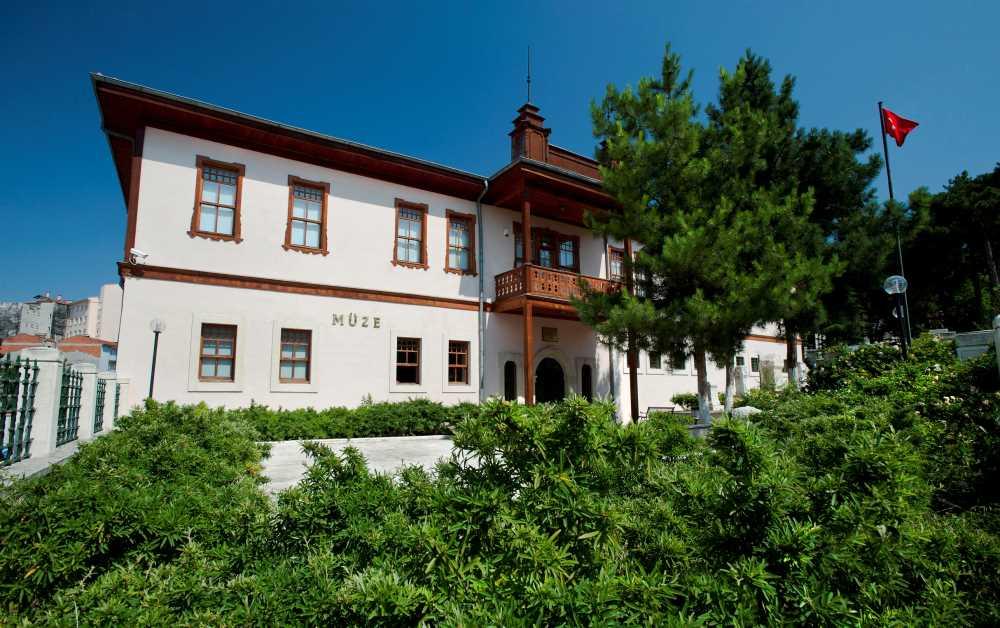
Bilecik Museum is an archaeology and ethnography museum located in the city center of Bilecik, Türkiye. Housed in a historical building, the museum has served various public functions in the past and now operates under the Ministry of Culture and Tourism. The structure is notable for its architectural history and functional transformation, and it hosts collections that reflect the cultural heritage of the region.
%2520kopya.jpg&w=1280&q=75)
Bilecik Museum (Türkiye Kültür Portalı)
The building that houses the museum was originally constructed in 1794 as a two-story gendarmerie station. Later, its ground floor was converted into a prison. During the Greek occupation between 1921 and 1922, the structure was destroyed by fire. After the Turkish War of Independence, it was rebuilt on its original foundations. Following reconstruction, the upper floor served as a courthouse while the lower floor continued to function as a prison. The building comprised six wards, four rooms, three workshops, three storage areas, three solitary cells, and a bathhouse, along with two separate courtyards—one designated for convicts and the other for detainees. The building remained in use as a prison until 1995. When the courthouse and prison were relocated, the structure was transferred to the Ministry of Culture and Tourism in 1996.
Restoration work began in 1997 and was completed by the end of 2006. On April 20, 2007, the building was opened to visitors as a branch of the Söğüt Museum Directorate under the name "Bilecik Museum." On April 7, 2010, it was established as an independent institution and began operating as the Bilecik Museum Directorate.
%2520kopya.jpg&w=1280&q=75)
Bilecik Museum (Türkiye Kültür Portalı)
Bilecik Museum employs a chronological exhibition approach and consists of three main display halls. The archaeology halls exhibit artifacts from the Paleolithic, Neolithic, Chalcolithic, Bronze, Hellenistic, Roman, and Byzantine (Eastern Roman) periods. The ethnography halls showcase depictions of the founding period of the Ottoman Empire, scenes from nomadic and domestic life, weaponry, everyday kitchen utensils made of ceramic and metal, traditional clothing, and decorative items. Additionally, panels in the museum’s corridors present examples of civil architecture found in Bilecik.

Bilecik Museum (Türkiye Kültür Portalı)
The garden and courtyard of Bilecik Museum serve as an extension of its main collection, offering visitors an open-air exhibition area. This space features stone artifacts from the Roman and Byzantine periods, including tomb stelae, column capitals, sarcophagi, and baptismal fonts. Within the museum building, the inventory includes a total of 1,102 archaeological artifacts, 731 coins, and 317 ethnographic items. These cultural assets, displayed both indoors and outdoors, document the region's historical continuity. The collection, which is open to the public free of charge, is presented with an integrated exhibition approach across both enclosed and open-air settings.
General Directorate of Cultural Heritage and Museums. “Bilecik Museum Directorate.” Republic of Turkey Ministry of Culture and Tourism. Accessed June 26, 2025. https://kvmgm.ktb.gov.tr/TR-281300/bilecik-muze-mudurlugu.html.
Republic of Turkey Bilecik Governorship. “Bilecik Museum.” Republic of Turkey Bilecik Governorship. Accessed June 26, 2025. http://www.bilecik.gov.tr/bilecik-muzesi-yeni.
Republic of Turkey Ministry of Culture and Tourism. “Bilecik Museum.” Muze.gov.tr. Accessed June 26, 2025. https://muze.gov.tr/muze-detay?SectionId=BLC01&DistId=MRK.
Turkey Culture Portal. “Bilecik Museum.” Republic of Turkey Ministry of Culture and Tourism. Accessed June 26, 2025. https://www.kulturportali.gov.tr/turkiye/bilecik/gezilecekyer/bleck-muzes.

Location | Bilecik Türkiye | ||||||||
|---|---|---|---|---|---|---|---|---|---|
Established | 2007 (as a museum) | ||||||||
Building Date | 1794 | ||||||||
Historical Periods Represented | Paleolithic – Ottoman | ||||||||
Sections | Archaeology Ethnography | ||||||||
Number of Artifacts | 1,102 archaeological 731 coins 317 ethnographic | ||||||||
Henüz Tartışma Girilmemiştir
"Bilecik Museum" maddesi için tartışma başlatın
History
Restoration and Conversion into a Museum
Exhibition and Collections
Open-Air Exhibition and Collection Inventory
Bu madde yapay zeka desteği ile üretilmiştir.