


Bu içerik Türkçe olarak yazılmış olup yapay zeka ile otomatik olarak İngilizceye çevrilmiştir.
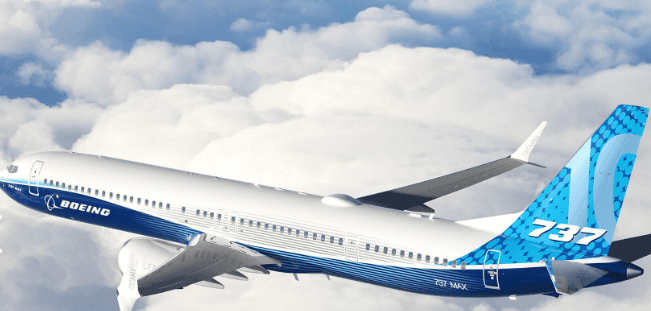
Boeing 737
Engine Models | LEAP-1B turbofan engines | ||||||||
|---|---|---|---|---|---|---|---|---|---|
Passenger Capacity (Classic) | Approximately 128–149 passengers. | ||||||||
NG Series Range | 5,500–6,295 kilometres. | ||||||||
Longest Range Models | 737 MAX 9 737 MAX 8 | ||||||||
Longest Range | 7130 km | ||||||||
Model with MCAS System | 737 MAX Series | ||||||||
Boeing 737, designed in the late 1960s for short and medium-range flights, has become one of the most preferred narrow-body jets in the aviation industry over time. This aircraft, which has evolved through various models, has drawn attention for both its technological innovations and the safety issues it has experienced.
The Boeing 737 is used for commercial air transport on domestic and international routes, as well as for VIP transport, cargo transport, and military purposes.

Boeing 737 (Source: pixabay)
The Boeing 737 family is divided into three technologically advanced generations: 737 Classic, 737 Next Generation (NG), and 737 MAX.
Narrow-body structure: The Boeing 737 is ideal for short and medium-range routes due to its single-aisle narrow fuselage. This design reduces turnaround times, providing airlines with operational advantages.
Low landing gear: The wings and low ground clearance, positioned close to the fuselage, facilitate ground service operations. This configuration creates advantages especially in regions with limited airport infrastructure.
Underwing engine placement: In the early generations of the 737, engines were mounted directly beneath the wings. However, as larger and more efficient engines were introduced, this design required the engines to be positioned slightly forward and upward—leading to the development of the MCAS system on the 737 MAX.

Close-up view of the Boeing 737 engine section (Source: pixabay)
The Boeing 737 NG series, introduced in 1997, replaced the 737 Classic series and attracted attention with its enhanced features. The NG series incorporates major improvements across all areas, from engine technology to cabin design. It is one of the most preferred and widely produced 737 models by airlines worldwide.
The 737 NG series held a significant share of the global narrow-body market and was the preferred model for low-cost carriers. However, the 737 MAX series advanced this role further with its efficiency and environmentally friendly features. The Boeing 737 MAX continues to serve as a cornerstone of modern civil aviation, building on the strong foundation provided by the NG series.
(Generated by artificial intelligence.)
Due to its larger engines compared to previous generations, the 737 MAX was equipped with the MCAS (Maneuvering Characteristics Augmentation System) to prevent excessive nose-up pitching during takeoff. Incorrect sensor data triggering the MCAS system automatically led to loss of pilot control, resulting in serious accidents.
Boeing. "737 MAX Airport Compatibility and Technical Summary." Last updated 2024. Accessed April 15, 2025. https://www.boeing.com/content/dam/boeing/boeingdotcom/commercial/airports/acaps/737MAX_RevD.pdf.
Boeing. "Boeing 737 MAX Ailesi Hakkında." Accessed April 16, 2025. https://www.boeing.com/commercial/737max#overview.
Boeing. "Boeing Next-Generation 737." Accessed April 16, 2025. https://www.boeing.com/commercial/737ng#Overview.
Dorneich, Michael L., and Jeremy D. Johnson. "Human Factors and Automation in the Boeing 737." Journal of Aircraft Systems Engineering 28, no. 2 (2023): 55–68.
Larcker, David F. “Boeing 737 Max.” Stanford Üniversitesi, May 2024. Accessed April 15, 2025. https://www.gsb.stanford.edu/faculty-research/publications/boeing-737-max.
National Library of Medicine. "The Boeing 737 MAX: Lessons for Engineering Ethics." PMC, 2020. https://pmc.ncbi.nlm.nih.gov/articles/PMC7351545/.
Tayan, Brian. “Boeing 737 Max.” Stanford Üniversitesi, May 2024. Accessed April 15, 2025. https://www.gsb.stanford.edu/faculty-research/publications/boeing-737-max.
U.S. Air Force. “C-40 Clipper Fact Sheet.” Updated 2022. Accessed April 15, 2025. https://www.af.mil/About-Us/Fact-Sheets/Display/Article/104560/c-40-clipper/.

Boeing 737
Engine Models | LEAP-1B turbofan engines | ||||||||
|---|---|---|---|---|---|---|---|---|---|
Passenger Capacity (Classic) | Approximately 128–149 passengers. | ||||||||
NG Series Range | 5,500–6,295 kilometres. | ||||||||
Longest Range Models | 737 MAX 9 737 MAX 8 | ||||||||
Longest Range | 7130 km | ||||||||
Model with MCAS System | 737 MAX Series | ||||||||
Henüz Tartışma Girilmemiştir
"Boeing 737" maddesi için tartışma başlatın
Applications
Technical Specifications
Design Features
Boeing 737 NG Series (Next Generation)
737 NG Series Features
737 NG Series Models
737 NG vs. 737 MAX: Comparative Analysis
Boeing 737 NG and MAX: Global Impact
Model Evolution and the MCAS System