

Bu içerik Türkçe olarak yazılmış olup yapay zeka ile otomatik olarak İngilizceye çevrilmiştir.
+2 Daha
Architect(s) | Jacques Herzog & Pierre de Meuron | ||||||||
|---|---|---|---|---|---|---|---|---|---|
Location | Madrid / Spain | ||||||||
Original Architect | Jesús Carrasco-Muñoz Encina | ||||||||
Original Structure | Sociedad Eléctrica del Mediodía Power Plant (1899) | ||||||||
Construction / Transformation Date | Early 2000s – 2008 (opening) | ||||||||
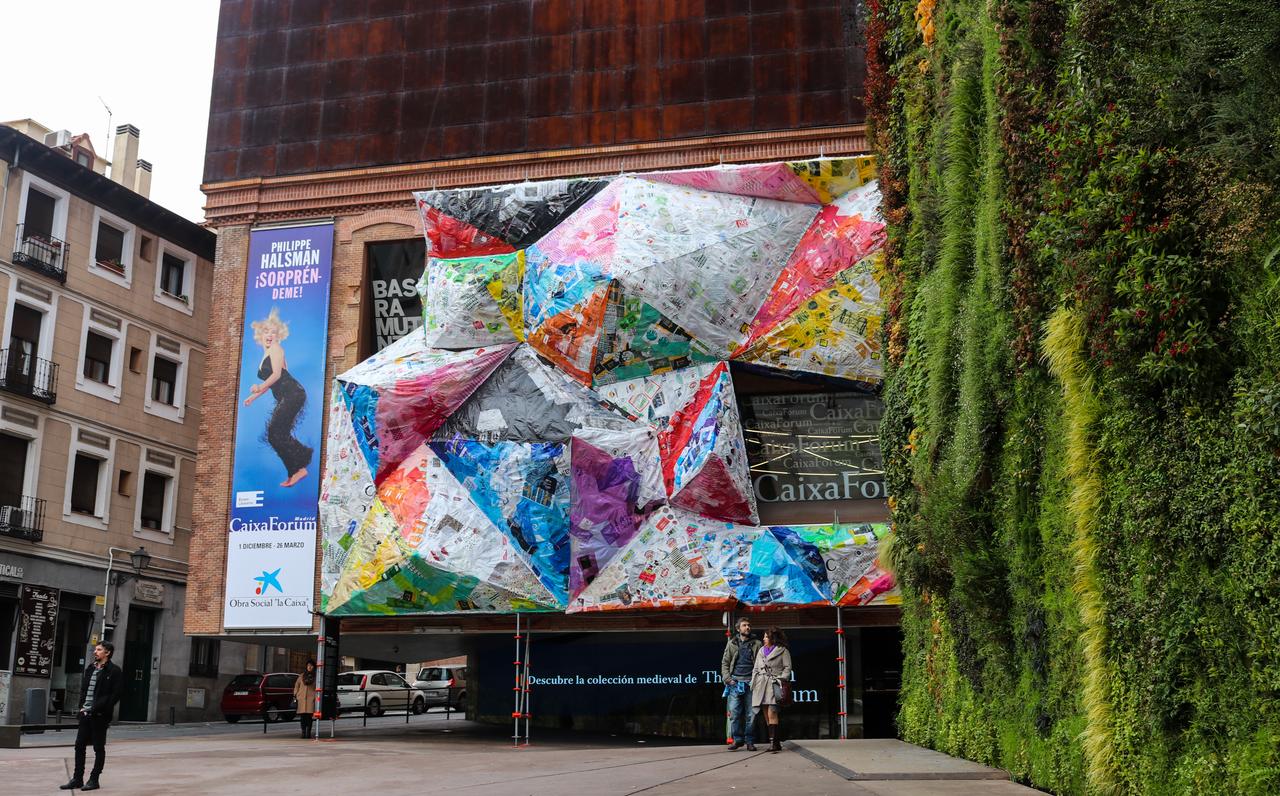
CaixaForum Madrid is a cultural center created through the adaptive reuse of the Mediodía Power Station, constructed in the early 20th century. Located along Madrid’s Paseo del Prado axis, the building emerged from the preservation of its industrial-era brick facades combined with contemporary architectural interventions. Initiated by Fundación La Caixa in 2001, the transformation process converted the structure into a multifunctional public space hosting exhibitions, events, and cultural activities.
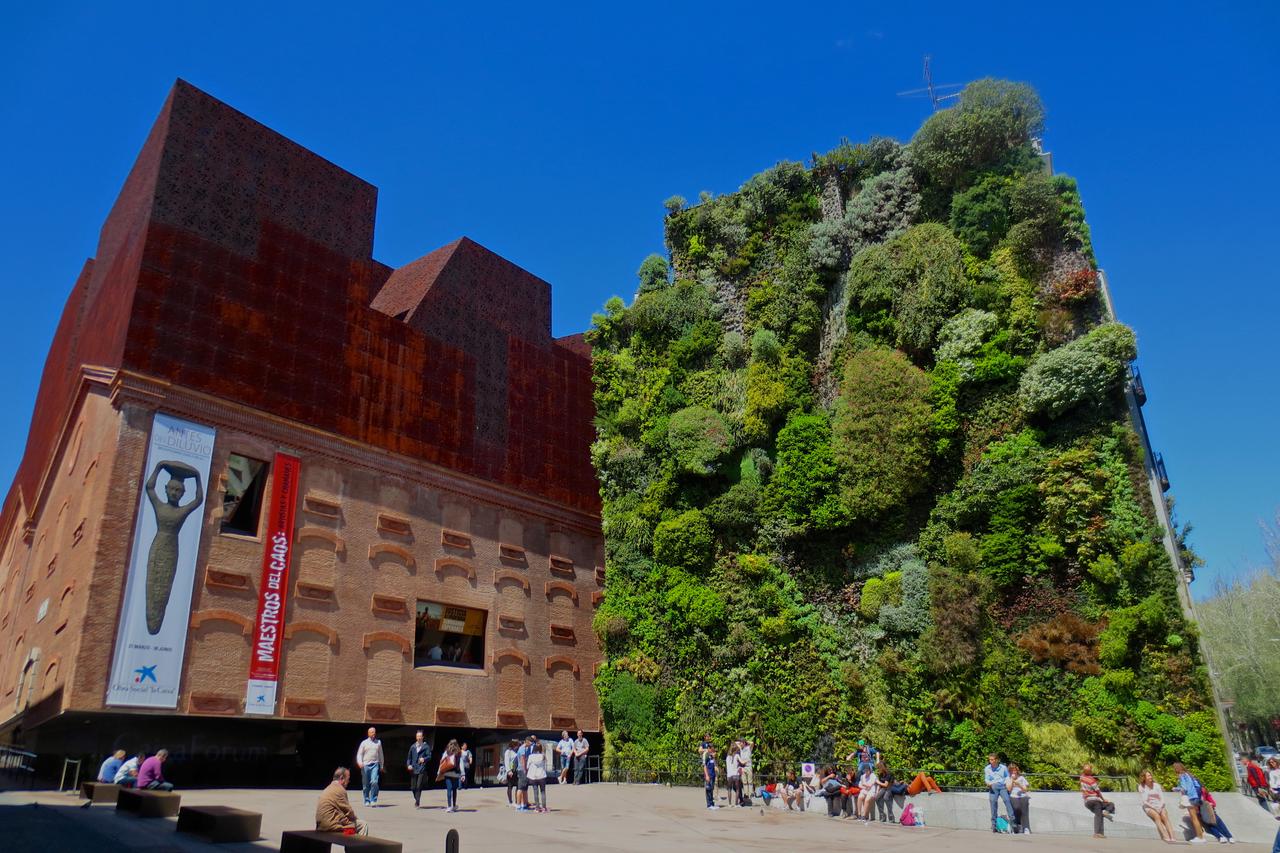
CaixaForum Madrid (flickr)
CaixaForum Madrid is based on an industrial facility constructed in the late 19th century as part of Madrid’s rapid electrification. Construction of the power station, owned by Sociedad Eléctrica del Mediodía, began in 1899 on a plot in the city’s southern center and was designed by the Madrid architect Jesús Carrasco-Muñoz Encina. The building was conceived as a typical industrial structure with two longitudinal naves, a sloping roof, and a metal truss support system; natural lighting was provided through skylights in the central section. The facade features brick masonry walls resting on a granite base, adorned with neo-Mudéjar decorative elements characteristic of Madrid at the time.
Functionally, the building operated as an electricity generation plant equipped with steam engines, boilers, and dynamo systems, and was quickly integrated into the Unión Eléctrica Madrileña network. However, due to technological advancements and urban transformation processes, it lost its original function, was replaced by more modern infrastructure, and its original equipment was gradually removed. Nevertheless, the structure remained standing throughout the 20th century, maintaining a strategic location alongside other key urban focal points such as the Paseo del Prado, Atocha Station, and major cultural institutions.
By the end of the century, although physically deteriorated and abandoned, the industrial building had not been demolished; instead, it endured as one of Madrid’s rare surviving industrial structures. In 1997, the Madrid General Urban Plan mandated the preservation of its facades, granting the building a formal level of urban protection.
In the early 2000s, Fundación La Caixa’s cultural initiative to establish a new cultural center in Madrid brought the abandoned power station back into consideration. Thus, the building became the starting point for a process of complete functional and spatial transformation, while retaining its industrial heritage.
The building is situated along the Paseo del Prado, one of Madrid’s central axes, within a district housing the city’s most important cultural institutions. Its inclusion within the “art triangle” formed by the Prado Museum, the Reina Sofía Museum, and the Thyssen-Bornemisza Museum was a decisive factor in its redevelopment. Additionally, its visual and spatial relationship with the adjacent botanical garden supported its redefinition as a cultural center.
In 2001, Fundación La Caixa acquired the building and decided, under its “Obra Social” program, to transform it into a multifunctional cultural center. This program views art and cultural activities as tools for social integration and aims to create culturally accessible public spaces. The building’s new function was defined as a center hosting exhibitions, music, theater, and literary events.
The project was designed by Pritzker Prize-winning architects Jacques Herzog and Pierre de Meuron. The firm’s previous industrial conversions served as key references for this project’s design approach. The design process aimed to integrate the preservation of the existing structure with contemporary interventions, adopting a hybrid architectural strategy.
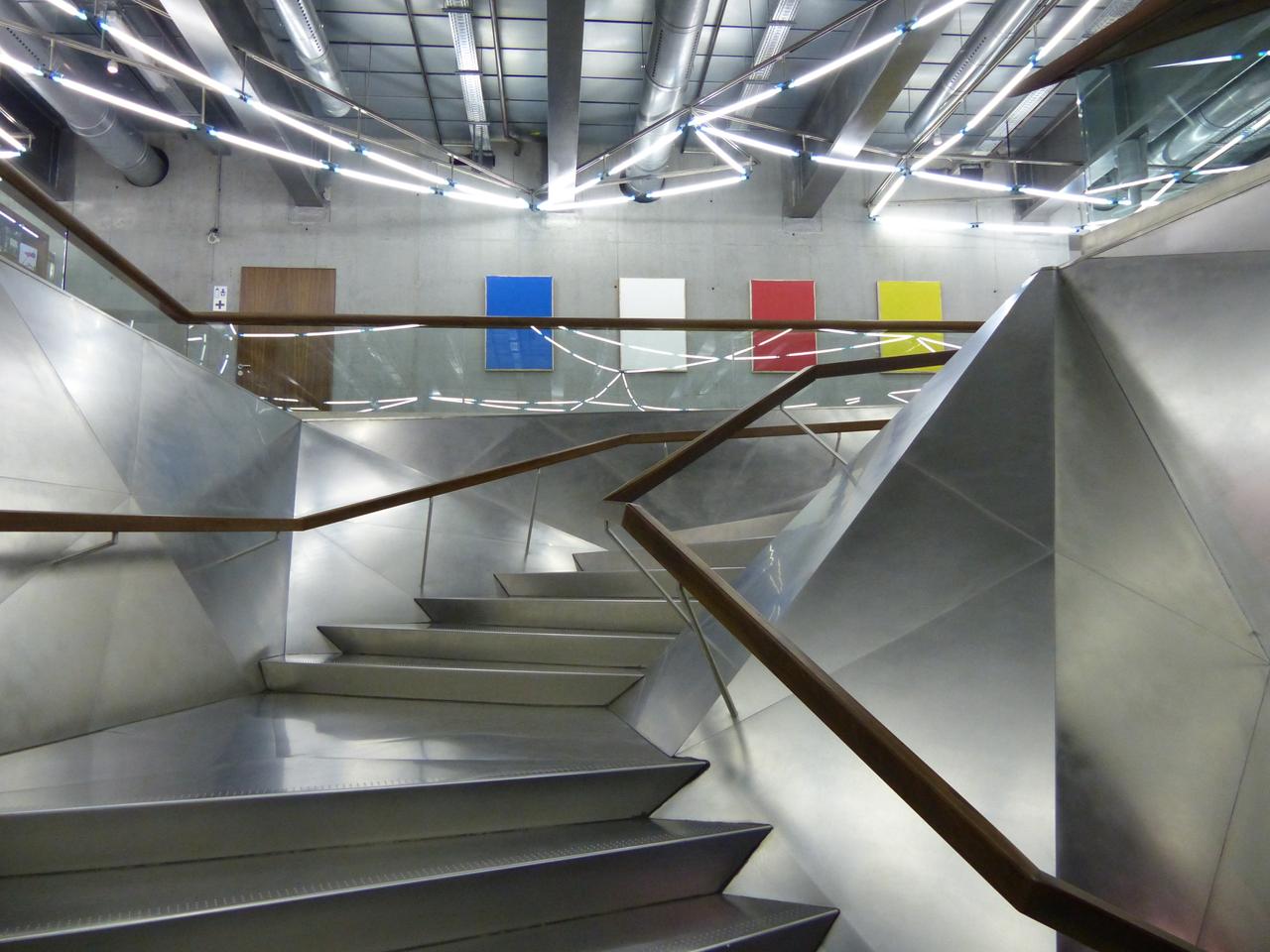
Interior (flickr)
In accordance with Madrid’s urban planning regulations, the preservation of the brick facades was mandatory. This requirement defined the fundamental boundaries of the architectural intervention and necessitated the integration of the existing building’s outer shell into the new design. Preserving the facades ensured the continuity of the building’s industrial heritage and enabled the new design to establish a meaningful relationship with this historical layer.
One of the most striking design decisions was to sever the building’s connection with the ground level and elevate its mass. This intervention detached the structure from the ground, creating a semi-open public space beneath it. This area functions both as an entrance and as a public gathering point, contributing to the building’s designation as an “urban magnet.”
The new structural system is organized around three main vertical cores, which serve as the primary load-bearing elements transferring all loads to the foundation. Additionally, post-tensioned concrete walls were added to reinforce the existing brick facades, creating an integrated structural system that unites the old and new components. This system enabled the clearance of the ground floor for use as a public space.
The building is organized into two main sections: underground and above ground. The underground levels house an auditorium, multipurpose halls, storage areas, and service spaces, while the upper levels contain exhibition areas, a library, offices, and social spaces. The seven-level structure employs vertical organization to consolidate diverse functions.
The existing brick facade was preserved, while a new volume composed of oxidized metal panels was added at the upper levels. These panels establish a visual and textural relationship with the original structure while expressing a contemporary architectural language. Thanks to micro-perforated surfaces, light is carefully filtered into the interior, generating varied lighting effects.
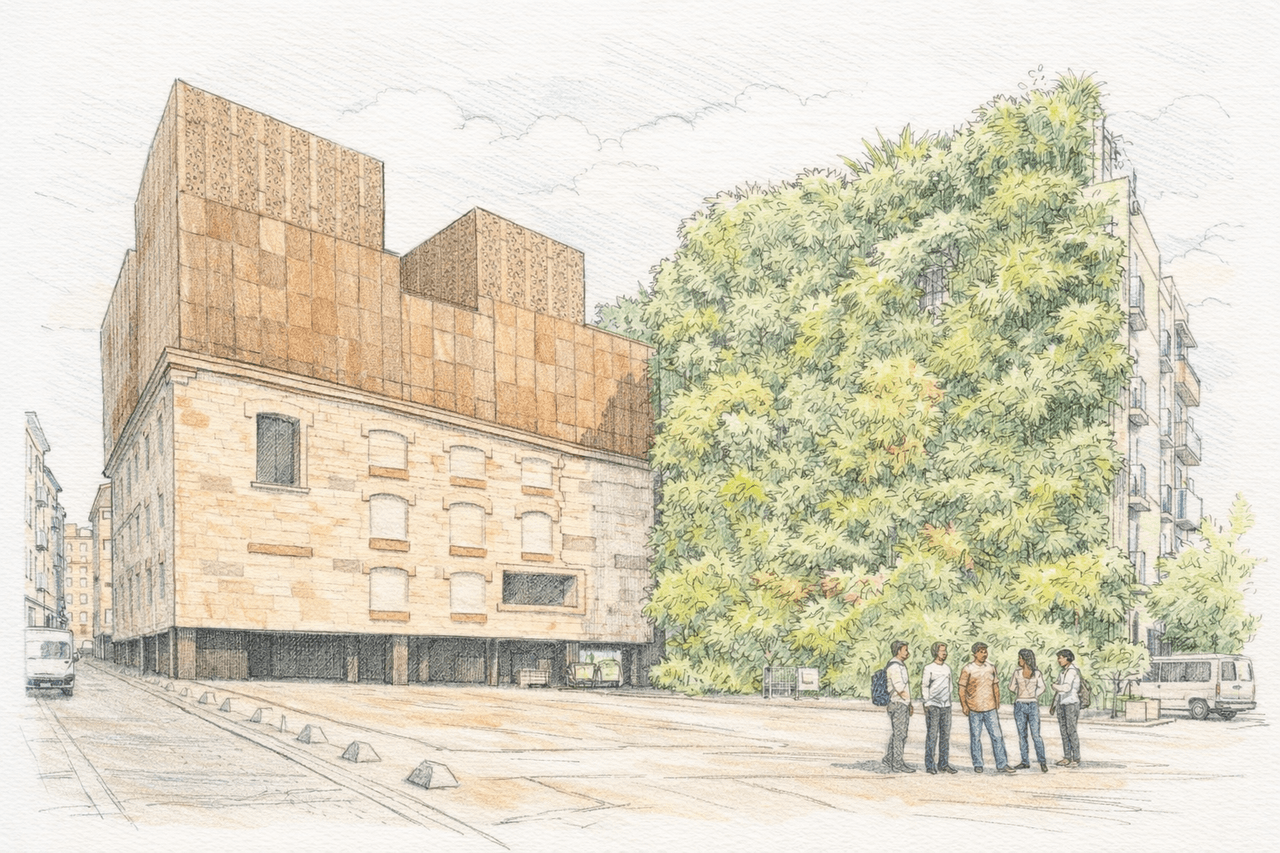
Landscape and Vertical Garden Implementation (Generated by Artificial Intelligence.)
The vertical garden adjacent to the building covers approximately 500 square meters and hosts more than 250 plant species. This feature establishes a visual connection with the nearby botanical garden and enhances the building’s environmental context by creating an urban green surface.
The interior spaces offer a varied experience through the use of different materials and lighting effects. Stainless steel surfaces and reflective elements support spatial continuity, while exhibition areas adopt a neutral and minimalist atmosphere. This approach reflects a design philosophy that diversifies the visitor experience and generates distinct spatial perceptions.
Belulaj. "Πανάχρηση στο έργο των Herzog & de Meuron [Herzog & de Meuron'un Eserlerinde Aşırı Kullanım / Yeniden İşlevlendirme]." Master's thesis, Εθνικό Μετσόβιο Πολυτεχνείο (National Technical University of Athens), 2014. Accessed April 16, 2026. https://dspace.lib.ntua.gr/xmlui/bitstream/handle/123456789/39007/Belulaj.pdf?sequence=1&
Gall, Edmund. "2013-04 Spain 155." Flickr. Accessed June 7, 2026. https://flic.kr/p/npiAJ7
Garea, Juan Orcajo. *Herzog & De Meuron y el reciclaje de edificios industriales: Tres edificios reciclados por Jacques Herzog & Pierre De Meuron*. Bachelor’s thesis, Escuela Técnica Superior de Arquitectura de Valladolid, 2023. Accessed April 16, 2026. https://uvadoc.uva.es/bitstream/handle/10324/61477/TFG-A-351.pdf?sequence=1&
Herzog & de Meuron. “CaixaForum Madrid.” H&dM. Accessed April 16, 2026. https://www.herzogdemeuron.com/projects/201-caixaforum-madrid/
Joan. "Madrid_0431." Flickr. Accessed June 7, 2026. https://flic.kr/p/V5W7zd
Pérez Lahuerta, Alejandro. *Estrategias de rehabilitación del Patrimonio Industrial: Caixa Fórum de Madrid, Medialab del Prado*. Bachelor's thesis, Universidad de Zaragoza, 2020. Accessed April 16, 2026. https://zaguan.unizar.es/record/96394/files/TAZ-TFG-2020-3924.pdf
Silverman, Steve. "Staircase at CaixaForum Madrid by Herzog & de Meuron." Flickr. Accessed June 7, 2026. https://flic.kr/p/dWStFv

Architect(s) | Jacques Herzog & Pierre de Meuron | ||||||||
|---|---|---|---|---|---|---|---|---|---|
Location | Madrid / Spain | ||||||||
Original Architect | Jesús Carrasco-Muñoz Encina | ||||||||
Original Structure | Sociedad Eléctrica del Mediodía Power Plant (1899) | ||||||||
Construction / Transformation Date | Early 2000s – 2008 (opening) | ||||||||
Henüz Tartışma Girilmemiştir
"CaixaForum Madrid" maddesi için tartışma başlatın
Historical Background and Industrial Origins
Urban Location and Cultural Context
Adaptive Reuse Process
Architectural Design
Preservation Decisions and Integration of the Existing Structure
Elevated Mass and Public Plaza
Structural System
Spatial Organization
Material Use and Facade Design
Landscape and Vertical Garden Implementation
Interior Design and Spatial Experience