


Bu içerik Türkçe olarak yazılmış olup yapay zeka ile otomatik olarak İngilizceye çevrilmiştir.
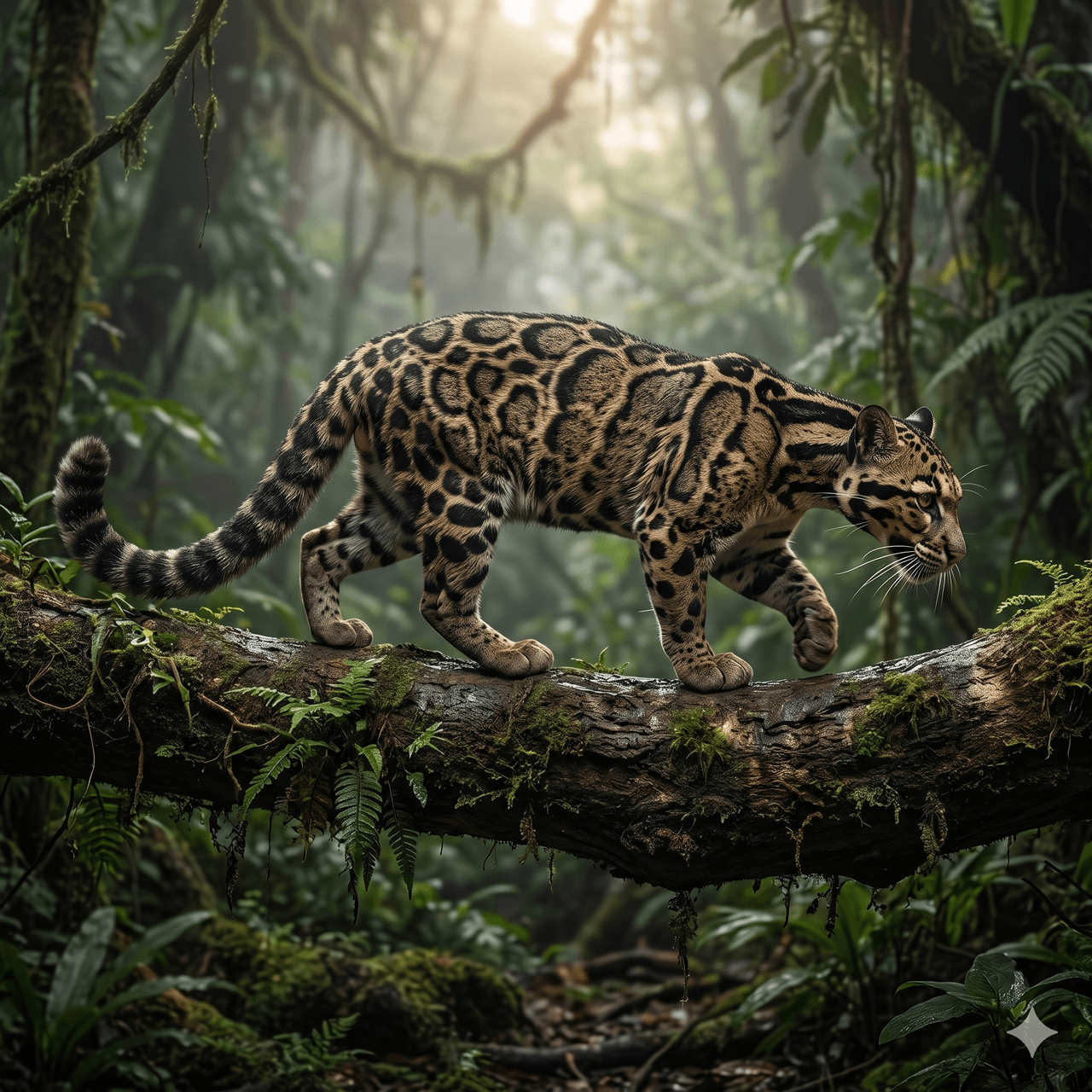
Görsel Yapay Zeka ile Oluşturulmuştur
Clouded leopard (Neofelis nebulosa) is a medium-sized carnivorous mammal species belonging to the subfamily Pantherinae of the Felidae family and the genus Neofelis, found across a geographic range extending from the Himalayas to Southeast Asia.
Recent genetic and morphological analyses have shown that clouded leopards consist of two distinct species rather than one. The species inhabiting the Asian mainland is classified as Neofelis nebulosa, while the isolated population on the islands of Borneo and Sumatra is classified as the Sunda clouded leopard (Neofelis diardi).
Although the Formosan subspecies (Neofelis nebulosa brachyura), endemic to Taiwan, is considered extinct, recent observation reports from the region continue to emerge. Current data suggest that the mainland population may be a monotypic species without any distinct subspecies.
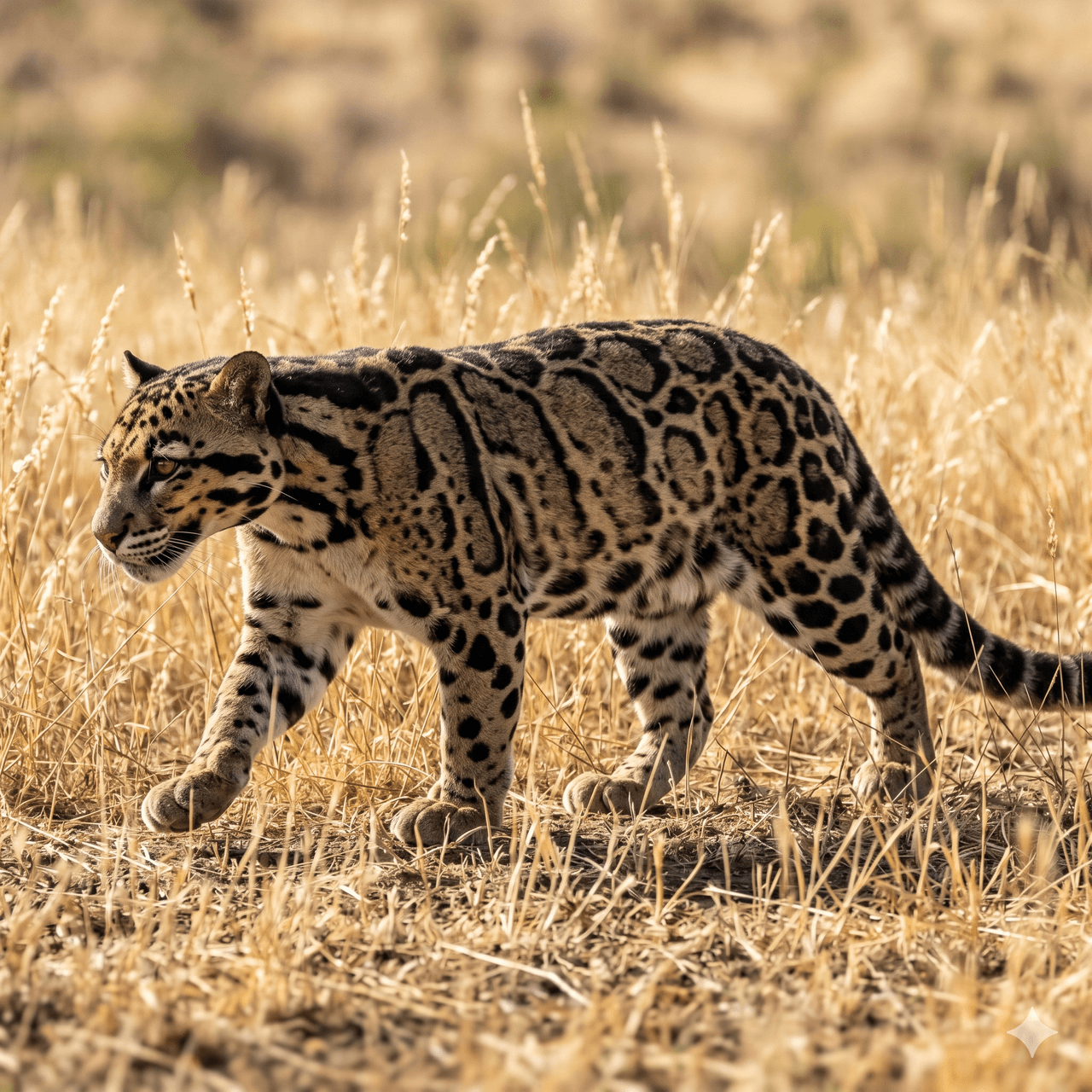
Clouded Leopard (Neofelis nebulosa) (Image Generated by Artificial Intelligence)
Adult individuals weigh between 11 and 23 kilograms, with head and body lengths ranging from 65 to 108 centimeters. This species exhibits the most pronounced sexual dimorphism in body size among all members of the cat family, with males typically twice the size of females. A distinctive anatomical feature of its skull is the possession of the longest canines relative to body size in the entire Felidae family. These teeth, which can reach up to five centimeters in length, are structurally similar to those of extinct saber-toothed cats and are the same size as those of a tiger ten times its body mass.
The pupils of this species do not become fully round or vertical slits; instead, they retain an oblong shape. Its thick tail, which reaches a length equal to its body, measuring between 61 and 91 centimeters, aids in balance while moving through trees.
Its fur consists of elliptical cloud-like markings with dark edges on a yellowish-brown or gray background. Two thick, prominent black stripes extend from the nape of the neck to the shoulder blades.
The clouded leopard’s range includes Nepal, Bhutan, India, Myanmar, southern China, and Southeast Asian countries. It primarily inhabits dense, shaded tropical rainforests.
In addition to these areas, it can also establish habitats in mangrove swamps, dry tropical forests, grasslands, and secondary forests. It has been documented at elevations ranging from sea level up to 3,000 to 4,500 meters in the Himalayas.
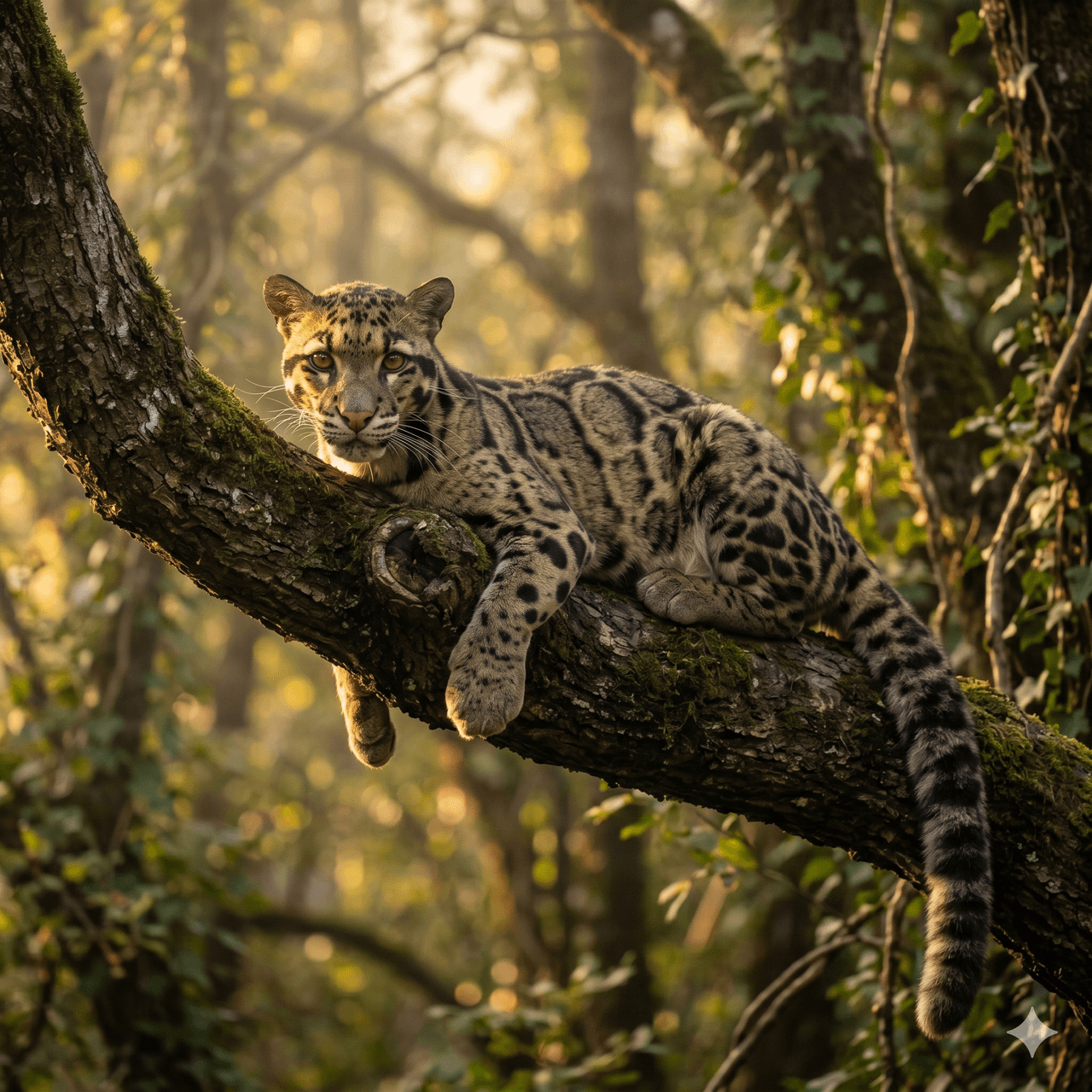
Clouded Leopard (Neofelis nebulosa) (Image Generated by Artificial Intelligence)
Clouded leopards are highly arboreal cats, exceptionally adapted to life in trees thanks to their highly flexible ankle joints that allow them to descend tree trunks completely headfirst. When needed, they can hang upside down from branches using only their hind legs while freeing their forepaws. They are solitary animals, and their activity patterns vary depending on the presence of other predators in the environment.
In areas where large predators such as the tiger and leopard coexist, clouded leopards predominantly exhibit nocturnal activity and rely more heavily on trees to avoid competition and predation. Anatomically, they lack the ability to roar. For communication, they produce mews, a unique vocalization called "prusten," and deep moans used to mark territory among conspecifics.
These entirely carnivorous cats hunt both in trees and on the forest floor. Their diet includes macaques, gibbons, muntjacs, wild boars, porcupines, and various bird species. Their primary hunting strategies involve pouncing on prey from above, often from the treetops, or approaching silently on the forest floor and launching a rapid ambush. They incapacitate their prey with a powerful bite to the neck that severs the spinal cord.
Gestation lasts between 85 and 109 days, typically ranging from 88 to 95 days. At birth, litters usually consist of two to three blind cubs. The spots on newborn cubs are initially entirely black and gradually develop into the characteristic adult coat pattern by the sixth month. Cubs are weaned between 10 and 14 weeks and remain under maternal care for approximately 10 months until they are capable of surviving independently.
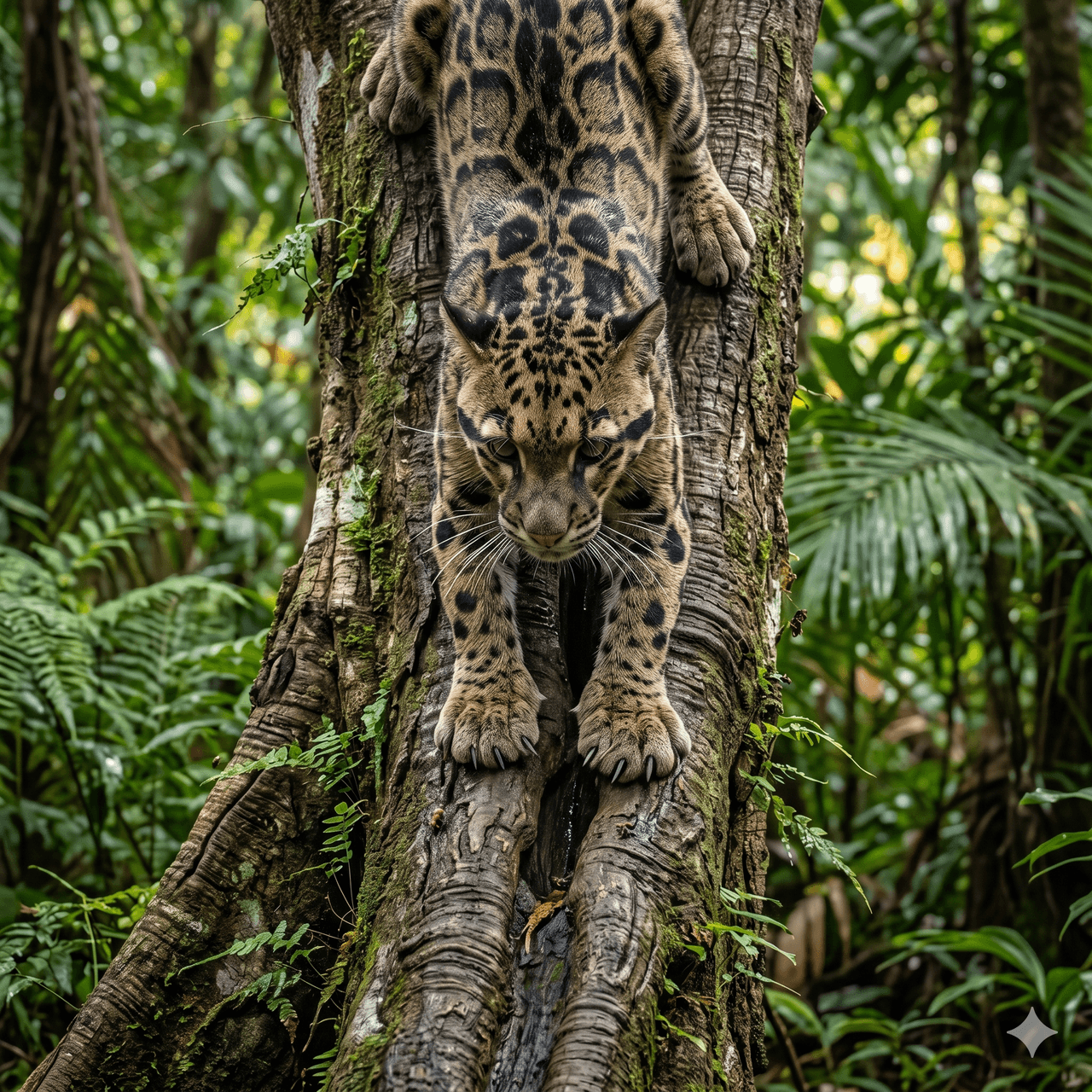
Clouded Leopard (Neofelis nebulosa) (Image Generated by Artificial Intelligence)
The clouded leopard is classified as Vulnerable on the International Union for Conservation of Nature (IUCN) Red List. The mature adult population in the wild is estimated at between 3,700 and 5,580 individuals. Deforestation, expansion of agricultural land, and habitat loss caused primarily by oil palm plantations in Southeast Asia constitute the main threats to the species. In addition, they face intense pressure from illegal poaching driven by the demand for their pelts, teeth, and bones, which are falsely believed to have medicinal value in traditional Asian medicine.
Animal Diversity Web. "Neofelis nebulosa (clouded leopard)." Accessed May 4, 2026.
Global Conservation. "Clouded Leopard." Accessed May 4, 2026. https://globalconservation.org/endangered-species/clouded-leopard
IUCN/SSC Cat Specialist Group. "Mainland Clouded Leopard." Accessed May 4, 2026. https://www.catsg.org/living-species-cloudedleopard
One Earth. "Once thought extinct, meet the fascinating, rare Formosan clouded leopard." Accessed May 4, 2026. https://www.oneearth.org/species-of-the-week-formosan-clouded-leopard/
San Diego Zoo Animals & Plants. "Clouded Leopard." Accessed May 4, 2026. https://animals.sandiegozoo.org/animals/clouded-leopard
https://animaldiversity.org/accounts/Neofelis_nebulosa/

Görsel Yapay Zeka ile Oluşturulmuştur
Henüz Tartışma Girilmemiştir
"Clouded Leopard (Neofelis nebulosa)" maddesi için tartışma başlatın
Taxonomy and Classification
Physical Characteristics
Habitat and Distribution
Behavior and Ecology
Diet and Hunting
Reproduction and Life Cycle
Conservation Status and Threats