

Bu içerik Türkçe olarak yazılmış olup yapay zeka ile otomatik olarak İngilizceye çevrilmiştir.
History | 8/9 February – 11 April 1920 | ||||||||
|---|---|---|---|---|---|---|---|---|---|
Place | Urfa (Şanlıurfa) | ||||||||
Type | Armed resistance and siege | ||||||||
Event | Armed resistance and siege | ||||||||
Parties | Kuva-yı Milliye Urfa Defense of Rights Society and surrounding tribes French occupation forces and Armenian volunteers | ||||||||
Commanders | National forces: Captain Ali Saip Bey (Ursavaş); French forces: Major Hauger, Colonel Normand French: Major Hauger (The Times: Goetz); Colonel Normand (reinforcement force) | ||||||||
Forces | National: between 600 and 3,000 (The Times: 8,000) Varies by source; National forces: 3,000 soldiers, volunteers and tribal members; French forces: 609 soldiers plus 500 to 1,200 armed Armenian and Syriac volunteers French: between 473 and 609, plus approximately 500 armed | ||||||||
Result | Armed evacuation of the French garrison from the city; clash in Şebeke | ||||||||
Casualties | 82 martyrs definitively identified in the 4 March offensive; French losses in Şebeke vary by source | ||||||||
Subsequent Developments | The title 'Şanlı' was granted to Urfa on 12 June 1984 | ||||||||
Defense of Urfa (Urfa Resistance), is the armed struggle carried out against the French garrison in Urfa, which was first occupied by British and then by French forces after the Armistice of Mudros.【1】 In this struggle, involving the Urfa Defense of Rights Society, Kuva-yı Milliye units under the command of Jandarma Captain Ali Saip Bey (Ursavaş), local tribes, and the city population, national forces entered the city on the night of February 8–9, 1920, and the first clashes occurred on February 9.【2】 During the approximately two-month siege, attacks were launched against French positions with the aim of cutting off their supply and communication lines.
As a result of the fierce resistance, the French garrison left Urfa with its weapons on April 11, 1920. French attempts to recapture Urfa and clashes in the surrounding areas continued through May and June 1920. By the end of June, the withdrawal of French forces west of the Euphrates ended the French occupation of the Urfa Sanjak. For its resistance during the National Struggle, Urfa was granted the honorific title “Şanlı” in 1984, and the province’s name was changed to Şanlıurfa. It was decided in 2016 that the city would be awarded the Independence Medal.
During the armistice period, Urfa was an independent mutasarrıflık comprising the center of Urfa, Birecik, Suruç, Harran, and Rakka, which today lies outside Turkey’s borders.【3】 The Armistice of Mudros, signed on October 30, 1918, was communicated to the mutasarrıflık on November 2. By November 1918, apart from a depleted gendarmerie battalion due to demobilizations and desertions, no military unit remained in the city.【4】
British forces entered Urfa on March 24, 1919 (some sources cite March 7).【5】 At noon, they entered the city with eight automobiles and accompanying Armenian soldiers; the commander of the 1st Cavalry Regiment stationed in Urfa, Major Hüseyin, protested the occupation via a letter stating that no grounds for occupation existed under the armistice terms.【6】 The date of the regiment’s arrival in Urfa is not recorded in sources; since it is stated that only a depleted gendarmerie battalion was present in November 1918, the regiment must have arrived after that date. Upon the British commander’s request, the regiment first moved to Karaköprü and then to Siverek on March 30, 1919.【7】 The local militia battalion responsible for security was also disbanded and its weapons collected.【8】
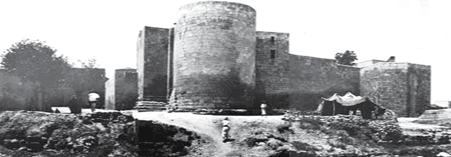
İngilizlerin İşgal Etmek İstedikleri Mahmutoğlu Kulesi (Milli Mücadele Albümü)
Mutasarrıf Nusret Bey was soon summoned to Istanbul under the pretext of his involvement in deportations; he was replaced by Mutasarrıf Ali Rıza Bey, who assumed the duties provisionally from Jandarma Commander Major Ali Rıza Bey.【9】 Nusret Bey’s trial before the Istanbul Divan-ı Harb-i Örfî was controversial and protracted: initially sentenced to 15 years of hard labor, the sentence was later changed to death, and carried out on August 5, 1920.【10】
It is known that the British attempted to win over tribes by propagating the idea of an independent Kurdistan in the region, and that Armenian volunteers who arrived with British forces provided weapons training to other Armenians in the city.【11】 No major clashes occurred between the British and the local population during the British occupation.【12】
Under the Syria Agreement signed on September 15, 1919, Britain ceded the regions of Antep, Adana, Urfa, Maraş, and İskenderun to France in exchange for Mosul.【13】 French forces entered Urfa on October 30, 1919. The contingent that entered the city consisted of 300 soldiers under the command of Captain Sajous, who also served as the French political commissioner.【14】 Sajous told local officials that the occupation was temporary and that French forces would withdraw after a peace agreement.【15】
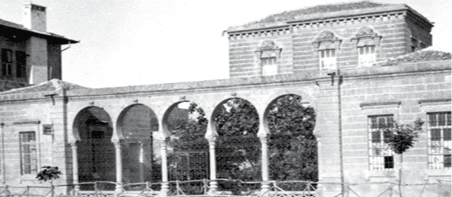
Fransızların İlk Karargâhlarından Kürkçüzade Ömer Edip Efendi’nin Evi (Milli Mücadele Albümü)
From the first days, the French interfered in local administration, requested personnel records, and released certain Armenians convicted of crimes and relatives of tribes loyal to them from prison.【16】 French flags were raised at every location where troops were stationed, and interference occurred in courts and financial affairs.【17】 The French garrison in the city was later expanded to 461 soldiers and 12 officers; the French took control of the city’s entrances and exits, the post office, and nearby railway stations, converted a hospital into a headquarters, and dug trenches around it.【18】
It is reported that the French relocated Armenian volunteers brought from various places into the Armenian quarter and prevented Turkish gendarmerie intervention in incidents instigated by them.【19】 It is also reported that the French attempted to win over local tribes, establishing contact with the Millî and Siyale tribes through the Syriac leader Abdülgani Ganime.【20】
The first organizational efforts in Urfa began immediately after the Armistice of Mudros. Following letters from 6th Army Commander Ali İhsan Paşa urging the establishment of Defense of Rights and militia organizations in mutasarrıflıks, Mutasarrıf Nusret Bey and Jandarma Commander Major Ali Rıza Bey convened with local notables; a central committee was formed in Nusret Bey’s office. The committee’s founding date is recorded in sources as either December 21, 1918, or January 10, 1919.【21】 The committee included figures such as Mayor Hacı Kâmilzade Hacı Mustafa and Mufti Hasan Açanal; it was anticipated that the organization’s arms needs would be met by 300 rifles from the Jandarma Directorate and 200 weapons from military depots.【22】
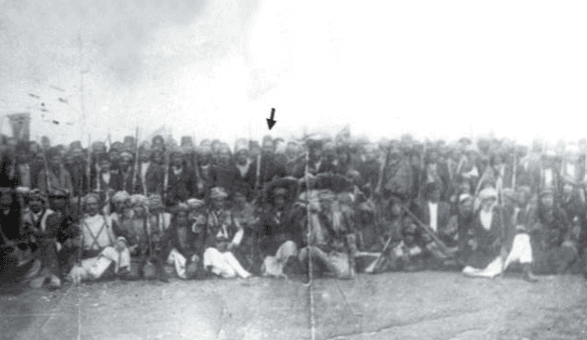
Hacı Kâmilzade Hacı Mustafa -Ok İle İşaretli (Milli Mücadele Albümü)
The organization’s activities were disrupted by the British occupation and Nusret Bey’s removal from office, but not entirely halted. On September 4–5, 1919, a secret society was formed with members swearing an oath on the Quran under the chairmanship of Jandarma Commander Ali Rıza Bey.【23】 This committee, known in Urfa as “the Twelve,” included Major Ali Rıza Bey, Mayor Hacı Mustafa Efendi, and gendarmerie officers; although the name implies twelve members, sources list thirteen names: Akalın lists twelve individuals after Chairman Ali Rıza Bey, while Can’s list includes thirteen names including the chairman.【24】 In accordance with the decisions of the Sivas Congress, on October 3, 1919, under the coordination of Mutasarrıf Ali Rıza Bey, the Urfa Defense of Rights Society acquired official status.【25】
Upon learning that the society’s leader was Jandarma Commander Ali Rıza Bey, the French dismissed him in November 1919; Ali Rıza Bey went to Siverek.【26】 When the French demanded the surrender of the “Twelve” individuals organizing resistance against them, the society members resolved to pursue armed resistance and decided to send a letter through the mutasarrıflık authorities informing the French that the number of “Twelve” was in fact much larger.【27】
Captain Ali Saip Bey (Ursavaş after the Surname Law), originally from Revandız, was transferred from the Kozan Jandarma Command under French pressure and appointed to the Urfa Jandarma Command, arriving in the city on December 29, 1919, to assume his duties.【28】 The appointment of a captain from the French-occupied zone to a major’s position was met with suspicion by the local population at first.【29】 Ali Saip Bey joined the society and was appointed its president.【30】
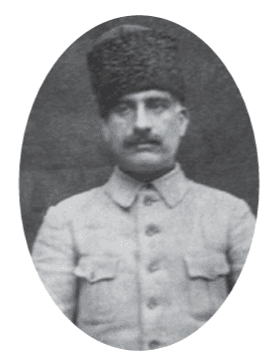
Ali Saip Ursavaş (Milli Mücadele Albümü)
Ali Saip Bey, finding the city’s 600-strong Kuva-yı Milliye forces insufficient, wrote letters to tribal chiefs calling for joint action against the French.【31】 In his secret instructions to the tribes, he specified that a 24-hour ultimatum would be issued to French command posts and outlined which tribe would operate in which region after the deadline expired.【32】 Suspicious of French intentions, Ali Saip Bey left Urfa on the night of January 14–15, 1920, went to the camp of Badıllı Tribe Chief Said Bey, and continued his activities under the pseudonym “Namık” as Kuva-yı Milliye Commander.【33】 These efforts are said to have expanded the organization’s strength to approximately 2,000 members drawn from the people of Urfa and the tribes.【34】
It is reported that on February 1, 1920, the French convened a meeting with tribal chiefs in Cerablus to propose attacks on Urfa; the proposal was rejected by everyone except the Ketkanlı Tribe Chief Basravi, while some elements of the Geysi and Siyale tribes later joined the French and attacked Turkish forces in the Suruç region.【35】 Can writes that the majority of tribes had switched to the Kuva-yı Milliye side by early February 1920, but does not enumerate them individually.【36】 The stance of the tribes was neither uniform nor static; chiefs and branches held different positions at different times and places. Indeed, according to Akalın, all branches of the Geysi tribe attended the oath-taking ceremony led by Jandarma Commander Ali Rıza Bey in November 1919, while Siyale Tribe Chief Salih el-Abdullah did not attend and reported the meeting to the French.
Mustafa Kemal Paşa, in a telegram to 13th Corps Commander Cevdet Bey, insisted that foreign forces must not be permitted to reoccupy Urfa and urged the rapid formation of national organizations to resist by force if necessary.【37】 On November 16, 1919, the Representative Committee resolved that the nation was free to defend its own rights.【38】 After a meeting in Sivas on December 8, 1919, with French High Commissioner for Syria Georges Picot, a telegram sent to the Urfa Mutasarrıflık stipulated that armed resistance should not be initiated unless there was French or Armenian provocation.【39】
When the French failed to honor their promises, the first phase of the planned campaign against them, as outlined in an instruction issued to all corps on January 25, 1920, was the Urfa resistance.【40】 Mustafa Kemal Paşa’s plan to retake Urfa involved organizing Kuva-yı Milliye supporters in the city to attack French forces, sever their communications, and force their surrender by cutting off their supplies.【41】
Sources provide varying figures for the strength of the national forces, depending on dates, regions, and unit types. Can states that after Ali Saip Bey assumed command, the Kuva-yı Milliye in Urfa numbered 600; after tribal mobilization efforts in January 1920, the combined organization of Urfa’s people and tribes reached approximately 2,000; and on February 9, 1920, Turkish forces composed of the Badıllı, Döğerli, Şeyhanlı, Baziki, İzdi, and Siverek tribes totaled 3,000.【42】 Demir writes that the number of tribal volunteers gathered in Karaköprü quickly reached 3,000, most of whom lacked military training; since it is unclear from sources whether this number refers to the same individuals as Can’s February 9 total, the two figures should not be added together as separate forces.【43】 It is reported that Hacim Bey, chief of the Aneze Tribe, later brought approximately 600 troops to the city; Hulki Saral and Tosun Saral give this number as 800.【44】
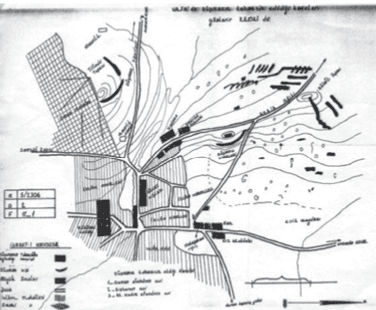
Map drawn by Yb. Akif Erdemgil, who arrived in Urfa from the 5th Division during the French Occupation (Milli Mücadele Albümü)
Figures regarding French forces also vary by date and scope. Can reports that the force entering Urfa on October 30, 1919, numbered 300 soldiers; later reinforcements brought the French presence in Urfa to 461 soldiers and 12 officers (without specifying a date). The same author describes the French force on February 9, 1920, as a reinforced battalion of 500 soldiers, 12 machine guns, and a cavalry detachment under a captain’s command, adding that approximately 500 armed Armenians joined them.【45】 Demir estimates the combined armed strength of French soldiers and Armenians at 1,000 and considers the French force superior in equipment but weak in manpower and logistics.【46】 The report from The Times on July 20, 1920, cited by Mutlu, states that Urfa was besieged by 8,000 Turks and that the garrison contained 609 soldiers; the report is based on survivors who reached Marseille and does not specify to which date the figure of 609 refers.【47】 Can also cites a document dated February 15, reporting that 1,200 Armenian and Syriac youths joined the French forces and were armed; since this number differs from the 500 Armenians mentioned earlier and refers to a different time and context, it cannot be regarded as corroborating the earlier figure.【48】
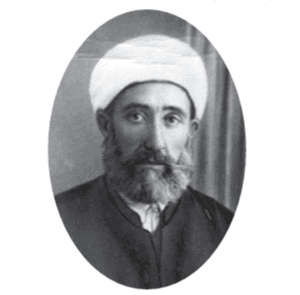
Müftü Hasan Efendi (Milli Mücadele Albümü)
Sources also disagree on the identity and commander of the French unit. Can identifies the unit in Urfa as the 1st Battalion of the 412th Regiment of the 156th French Division based in Adana, with Captain Hauger as commander; Captain Sajous served as political authority. The Times report cited by Mutlu, however, identifies the garrison as the 3rd Battalion of the 17th Senegal Regiment, commanded by Captain Goetz. Since sources do not confirm whether these two accounts refer to the same unit and time, Goetz cannot be equated with Hauger. Akalın’s account of an official French publication lists, alongside the 12 officers and 500 soldiers under Captain Hauger, additional elements such as a detachment of the 412th Regiment and a detachment of the 17th Senegal Regiment.【49】
Initially, the Kuva-yı Milliye had no artillery; on the night of February 11–12, a 70–80 round Shinaider mountain gun and a machine gun unit were brought from Siverek, followed later by a mountain artillery unit from Mardin, increasing the number of guns to two. To avoid revealing the involvement of regular army units, the guns were fired one at a time.【50】 Foreign institutions in the city were considered neutral zones. It is reported that during the course of the conflict, the American Orphanage and Dr. Fischer’s Swiss hospital were covertly involved on the French side.【51】
On February 6, 1920, tribal chiefs and forces gathered in the village of Badıllı near Urfa, where Ali Saip Bey assumed command and issued orders on February 7 to move toward Urfa. He sent a letter signed “Kuva-yı Milliye Commander Namık” demanding the French garrison evacuate the city within 24 hours.【52】 Sajous replied the same day, stating that evacuation of the territory required approval from General Gouraud.【53】
Sajous sent a delegation composed of Mutasarrıf Ali Rıza Bey, Mufti Hasan Efendi, Sheikh Müslüm Efendi, Hacı Mustafa, and other notables to Karaköprü to persuade the Kuva-yı Milliye commander to abandon his plan; however, since nearly all members of the delegation were affiliated with the Defense of Rights Society, the effort failed.【54】 Ali Saip Bey also informed Armenian leaders that the operation against the French would not threaten the lives or property of the Armenian population; the Armenian community conveyed its satisfaction with this assurance.【55】
On the night of February 8, 1920, at 23:00, Kuva-yı Milliye forces entered the city from two directions through the Harran and Bey gates. Soldiers were ordered not to use weapons unless the French fired first; since there was no resistance, the city was entered without incident and forces occupied hans, mosques, and large buildings.【56】 Weapons and ammunition from the Jandarma Directorate were distributed to tribal chiefs; on February 9, the Urfa Defense of Rights Society convened at the city hall and established a supply commission under the chairmanship of Hacı Mustafa.【57】
The clashes on February 9, 1920, began unexpectedly. While some prisoners in Urfa Prison were being armed and released to join the Kuva-yı Milliye, an unaware gendarmerie soldier fired into the air; the French interpreted this as an attack and responded with fire.【58】 According to the testimony of Mary Caroline Holmes, director of the American Orphanage, that morning gunshots were heard from the Great Mosque, its minarets, the citadel, and houses; it was noted that those rising up were not soldiers but civilians.【59】
On the night of February 9–10, Kuva-yı Milliye forces entered Sajous’s headquarters, lowered the French flag, and raised the Turkish flag in its place.【60】 Action was taken against a French force of 200 soldiers, armed by the French and operating alongside Armenians near the Armenian quarter.【61】 The French garrisons in Birecik and Suruç were also ordered to surrender, and clashes erupted in those regions as well.【62】 The French did not evacuate the city but instead occupied buildings near the hospital, orphanage, and Armenian quarter, establishing defensive positions; Kuva-yı Milliye attacks in open areas proved ineffective against French positions in populated neighborhoods.【63】
Ali Saip Bey again sent a letter to French commanders offering safe passage to any location they desired if they surrendered their weapons and ammunition; French commander Hauger rejected this proposal as well.【64】 Mutasarrıf Ali Rıza Bey also corresponded with Armenian community leaders and Holmes, urging them to convince the French to withdraw.【65】
On the morning of February 17, 1920, a Kuva-yı Milliye group of approximately 40 men under Reserve Officer Akif (Sözeri) launched a raid on the French outpost on Külaflı Hill, which dominated the city; the French abandoned the hill and withdrew.【66】 Accounts differ on who initiated the raid: Ali Saip Bey recounts it as his own initiative; Sözeri states that he seized the hill with 40 men during the time Ali Saip Bey was preparing a 600-man force, and Cevdet Emiroğlu corroborates this account. The number of weapons captured and prisoners taken also varies by source.【67】 On the night of February 20–21, tribal forces under Bozan Bey captured the Bediüzzaman Outpost between the Armenian quarter and French positions, cutting communication between the two sides.【68】 On February 26, the course of the stream passing near the French headquarters was altered to deprive the French of water; entry of food into the Armenian quarter was also prohibited.【69】 However, a water well revealed by Swiss Doctor Fischer enabled the French to hold out for a long time.【70】
On February 28, Kuva-yı Milliye forces attacked Karalök’s Bağı, located 200 meters from French positions. According to accounts, French soldiers were waving white flags and appeared ready to surrender when fire opened from the American Orphanage; Kuva-yı Milliye units dispersed, and three Kuva-yı Milliye members were killed in this attack.【71】 Ali Saip Bey informed Holmes and Doctor Fischer that this violated the rules of war; French commander Hauger wrote that placing troops in the orphanage was intended to protect Americans, while Doctor Fischer stated he would not evacuate his hospital.【72】 The orphanage side denied having opened fire.【73】
On March 2, 1920, news arrived that a French reinforcement force under Colonel Normand, equipped with artillery and machine guns, had reached Akçakoyunlu; the force’s strength was estimated at around 3,000.【74】 In response, part of the Kuva-yı Milliye was redeployed to the Suruç region.【75】 At a meeting on March 3, it was decided to launch one final attack before French reinforcements arrived; on March 4, the Kuva-yı Milliye launched its first major offensive against French positions with artillery support.【76】
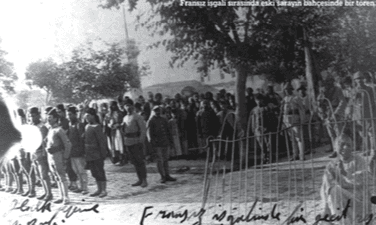
Fransız işgalinde Eski Saray avlusunda bir geçit resmi (Milli Mücadele Albümü)
The offensive failed. The militia nature of the forces, the absence of regular officers, the superiority of French firepower, and the visibility of Kuva-yı Milliye positions in open terrain led to heavy losses and a retreat.【77】 The number of dead identified only by close relatives is recorded as 82; bodies taken by villagers and relatives are not included in this figure; the exact number of wounded remains unknown.【78】 In a French officer’s diary cited by Ursavaş, a note states that morale had fallen sharply and that resistance could not have held out if the attack had continued the next day.【79】
While Colonel Normand’s force advanced toward Urfa via Birecik, it left some troops behind in Birecik; French forces encountering the Aneze tribe in Suruç withdrew and failed to reach Urfa.【80】 Ali Saip Bey proposed withdrawing Kuva-yı Milliye forces to Karaköprü upon hearing this news; the proposal faced opposition from Hacı Mustafa and the Siverek force commanders; Ali Saip Bey withdrew with a portion of the forces to Karaköprü and returned the next day when no enemy appeared.【81】 Upon realizing that the reinforcement force would not reach Urfa, Ali Saip Bey wrote to the French on March 17 informing them that expected reinforcements would not arrive; the French replied that they lacked authority to make decisions.【82】 On the same day, Mutasarrıf Ali Rıza Bey sent a telegram to Mustafa Kemal Paşa reporting that Urfa had been at war for 39 days.【83】
On the night of March 29–30, groups from the Badıllı Tribe launched raids on French forward outposts; the group, retreating under French machine gun fire, suffered seven dead and three wounded.【84】 On the night of April 1–2, the French attacked Turkish positions and were repelled; on April 3, the French were again offered terms of surrender, which they rejected.【85】 Due to shortages of food and water, the French had begun slaughtering their pack animals for food.【86】 By March 27, it was reported that food and ammunition shortages had begun to affect the French-occupied city of Urfa.【87】 On April 6, Ali Saip Bey was elected as Urfa’s deputy in elections held for the Grand National Assembly, scheduled to convene on April 23; he was replaced by Major Nuri, commander of the 24th Regiment, but Ali Saip Bey remained in command until the French withdrew.【88】
It is reported that on April 5, the French occupation command secretly informed Armenian community leaders through a French officer of its decision to evacuate the city.【89】 The Armenian delegation (Dr. Beşliyan and Armenian MP Mihran) met with the Turkish delegation; negotiations at the French headquarters on April 7 lasted two hours but yielded no decision.【90】 On April 8, the French delivered a letter signed by Swiss Doctor Fischer containing ten conditions to Mutasarrıf Ali Rıza Bey.【91】
The conditions included respect for the graves of French soldiers killed in Urfa, protection of Armenians, guaranteeing the safety of Americans’ lives and property, provision of 60 camels and 25 wagons to transport supplies to Cerablus, return of prisoners, protection of wounded French soldiers in Doctor Fischer’s hospital, and cessation of hostilities; additionally, the French demanded guaranteed security for their forces until they left the city and the escort of ten Urfa notables to Cerablus.__LINK_PLACEHOLDER_KURE
Akalın, Müslüm C. Urfa Kurtuluş Yazıları. Şanlıurfa: Şanlıurfa İli Kültür Eğitim Sanat ve Araştırma Vakfı, 2015.
Akalın, Müslüm C. Urfa Mutasarrıfı Şehit Nusret Bey’in Nemrut Mustafa Paşa Divan-ı Harbindeki Savunması. 3. baskı. Ankara: Türkiye Barolar Birliği Yayınları, 2019.
Akalın, Müslüm, and A. Cihat Kürkçüoğlu. *Urfa Millî Mücadele Albümü*. 3rd ed. Şanlıurfa: Şanlıurfa Büyükşehir Belediyesi Kültür ve Sosyal İşler Daire Başkanlığı, 2018.
Can, Mustafa. “Urfa’nın İşgali ve Kurtuluşu.” In *Millî Mücadele’nin Yerel Tarihi 1918–1923*, Volume 4, *Kahramanmaraş, Şanlıurfa, Kilis, Gaziantep, Hatay, Mersin, Osmaniye, Adana*, edited by Mustafa Göleç, Zeynep Kevser Şerefoğlu, and İlhami Danış, pp. 69–106. Ankara: Türkiye Bilimler Akademisi, 2024.https://doi.org/10.53478/TUBA.978-625-8352-66-5.ch03
Demir, Şerif. “Hatıralarla Milli Mücadele’de Urfa.” *Yüzüncü Yıl Üniversitesi Sosyal Bilimler Enstitüsü Dergisi*, no. 48 (2020): 253–70.https://dergipark.org.tr/tr/pub/yyusbed/article/761914.
Eser, Gülşah. "Milli Mücadele’de Kahramanlığın Adlandırılması: Urfa’dan Şanlıurfa’ya." In Gaziantep’in Kurtuluşu’nun 100. Yılında Mîsâk-ı Millî ve Güney Hattı, edited by Halil İbrahim Yakar, Ali Satan, Süleyman Hatipoğlu, and Selim Saygın, 1468-87. Gaziantep: Gazikültür Yayınları, 2022.
Mutlu, Cengiz. “Urfa’da Milli Mücadele.” *Türk Dünyası Araştırmaları* 121, no. 239 (2019): 405–18.https://dergipark.org.tr/tr/pub/tda/issue/58682/847515.
Şanlıurfa Valiliği. “Urfa’ya ‘Şanlı’ Unvanı Verilişinin 41’inci Yıl Dönümü.” June 23, 2025. Accessed September 29, 2026.https://www.sanliurfa.gov.tr/urfaya-sanli-unvani-verilisinin-41inci-yil-donumu
[1]
Mustafa Can, "Urfa'nın İşgali ve Kurtuluşu," *Millî Mücadele'nin Yerel Tarihi 1918–1923*, Volume 4, *Kahramanmaraş, Şanlıurfa, Kilis, Gaziantep, Hatay, Mersin, Osmaniye, Adana*, ed. Mustafa Göleç, Zeynep Kevser Şerefoğlu and İlhami Danış (Ankara: Türkiye Bilimler Akademisi, 2024), 69, 98.
[2]
Can, "Urfa'nın İşgali," pp. 83–90.
[3]
Can, "Urfa'nın İşgali," 71.
[4]
Can, "Urfa's Occupation," 71.
[5]
Can, "The Occupation of Urfa," 71–72; Demir, "National Struggle in Urfa Through Memoirs," 256; Cengiz Mutlu, "National Struggle in Urfa," *Türk Dünyası Araştırmaları* 121, no. 239 (2019): 407–8; Müslüm C. Akalın, *Kurtuluş Yazıları* (Şanlıurfa: Şanlıurfa İli Kültür Eğitim Sanat ve Araştırma Vakfı, 2015), 9; Gülşah Eser, "Naming Heroism in the National Struggle: From Urfa to Şanlıurfa," in *Mîsâk-ı Millî and the Southern Front on the 100th Anniversary of the Liberation of Gaziantep*, ed. Halil İbrahim Yakar et al. (Gaziantep: Gazikültür Yayınları, 2022), 1470. Mutlu gives the date of occupation as March 7, 1919, and also notes that a preliminary British force entered the city on February 5, 1919. Akalın gives March 24, noting that local sources indicate March 7 had passed. Eser records that the March 7 date appears in the memoirs of those present in Urfa at the time, but according to official documents, the date is March 24.
[6]
Can, "The Occupation of Urfa," 71–72. The date of the regiment’s arrival in Urfa is not specified in the sources used (Can, Demir, Mutlu, Akalın); Akalın writes that the regiment was in Urfa before the British occupation (35).
[7]
Can, "Urfa'nın İşgali," pp. 72–73.
[8]
Demir, "Hatıralarla Milli Mücadele'de Urfa," 256.
[9]
Can, "The Occupation of Urfa," 73, 81; Demir, "National Struggle in Urfa Through Memoirs," 258, n. 4; Akalın, "Liberation Writings," 80, 95. Can writes on p. 73 that "Ali Bey" was appointed in place of Nusret Bey; the full name and position, assumed provisionally by Gendarmerie Commander Ali Rıza Bey, is noted on p. 81. For Mutasarrıf Ali Rıza Bey (Kuruoğlu, 1870–1950) and Gendarmerie Commander Ali Rıza Bey (Türksoy, 1876–1948), see Demir, "National Struggle in Urfa Through Memoirs," 255, n. 2 and 258, n. 4; Akalın, "Liberation Writings," 80, 95.
[10]
Demir, "Hatıralarla Milli Mücadele'de Urfa," 257 and nn. 3 (Demir writes that Nusret Bey was tried, found guilty, and executed on August 5, 1920). For the stages of the trial, see Müslüm C. Akalın, "Nemrut Mustafa Paşa’s Defense of Martyred Nusret Bey Before the Divan-ı Harb," 3rd ed. (Ankara: Türkiye Barolar Birliği Yayınları, 2019), 25, 30–31: Initially, at the İstanbul No. 1 Divan-ı Harb-i Örfî under the presidency of Nemrut Mustafa Paşa, a sentence of 15 years of hard labor was signed on July 4, 1920; after a change in the panel, a death sentence was issued on July 20, 1920, and carried out on August 5, 1920, at Beyazıt Square. The nature of the trial remains contested; Akalın’s work adopts an approach that identifies with Nusret Bey’s defense.
[11]
Can, "Urfa's Occupation," 73.
[12]
Can, "Urfa's Occupation," 74.
[13]
Can, "Urfa's Occupation," 74.
[14]
Can, "The Occupation of Urfa," 74–75; Demir, "National Struggle in Urfa Through Memories," 257. Can also dates the beginning of the occupation to November 1, 1919, in a later section of the study (98).
[15]
Can, "Urfa's Occupation," 75.
[16]
Can, "Urfa'nın İşgali," pp. 75–76.
[17]
Mutlu, "Urfa'da Milli Mücadele," 411.
[18]
Can, "Urfa's Occupation," 76.
[19]
Can, "Urfa's Occupation," 76.
[20]
Can, "Urfa'nın İşgali," 77.
[21]
Can, "Urfa'nın İşgali," 80, dn. 57. He gives the founding date as December 21, 1918, by Açanal and January 10, 1919, by İsmail Özçelik.
[22]
Can, "Urfa's Occupation," 80.
[23]
Can, "Urfa's Occupation," 81.
[24]
Can, "The Occupation of Urfa," 81. Can, on page 81, states "with the participation of twelve individuals" and lists thirteen names; he enumerates the "twelve chiefs" convened under the presidency of Akalın’s president, Ali Rıza Bey (Akalın, "Kurtuluş Yazıları," 10–11). The count of "president and twelve members" is not explicitly documented in the sources; it has been inferred from a comparison of the two lists. Akalın notes that the name "Onikiler" was later given to the organization that became the Defense of Rights Society (107, n. 1).
[25]
Can, "The Occupation of Urfa," notes that October 3, 1919, is remembered not as the date of the establishment, but as the date when the establishment was reported to the Heyet-i Temsiliye by Mutasarrıf Ali Rıza Bey (Akalın, "Kurtuluş Yazıları", 33, 84).
[26]
Can, "Urfa'nın İşgali," pp. 78, 82.
[27]
Can, "The Occupation of Urfa," 82–83. Can notes that it was decided the article would be delivered to the French through the mutasarrıflık channel.
[28]
Can, "Urfa'nın İşgali," 83.
[29]
Demir, "Hatıralarla Milli Mücadele'de Urfa," 258.
[30]
Can, "Urfa'nın İşgali," 83.
[31]
Can, "Urfa'nın İşgali," pp. 83–84.
[32]
Can, "Urfa's Occupation," 84.
[33]
Can, "Urfa's Occupation," 85.
[34]
Can, "Urfa'nın İşgali," 85.
[35]
Can, "Urfa's Occupation," 86.
[36]
Can, "The Occupation of Urfa," for the distinct attitudes of the tribes, see Akalın, "Liberation Writings," 13 (November 1919, Geysi and Siyale), 43–47 (Berazi and Ketkanlı branches).
[37]
Can, "Urfa's Occupation," 74.
[38]
Can, "Urfa's Occupation," 79.
[39]
Can, "Urfa'nın İşgali," 85.
[40]
Can, "Urfa'nın İşgali," p. 85.
[41]
Mutlu, "Urfa'da Milli Mücadele," 414.
[42]
Can, "Urfa'nın İşgali," 83, 85, 88. The numbers refer to different locations and dates: 600 (83), approximately 2,000 (85; based on Açanal), and 3,000 for February 9, 1920 (88; based on Büyükoğlu).
[43]
Demir, "Hatıralarla Milli Mücadele'de Urfa," 260.
[44]
Can, "Urfa'nın İşgali," 90, p. 107.
[45]
Can, "Urfa's Occupation," 88.
[46]
Demir, "Hatıralarla Milli Mücadele'de Urfa," 262.
[47]
Mutlu, "Urfa'da Milli Mücadele," 416 (The Times, "Six Survivors Out of 600", July 20, 1920). The siege of 8,000 Turks, the siege between February 10 and March 4, and the 609 soldiers of the 3rd Battalion of the 17th Senegalese Regiment relate to this report; Mutlu does not specify which moment of the siege the number 609 refers to.
[48]
Can, "The Occupation of Urfa," 90; also mentions "around 1,000 Armenians" around February 7 (87).
[49]
Can, "The Occupation of Urfa," 75–76, 90, 93; Mutlu, "The National Struggle in Urfa," 416; Akalın, "Liberation Writings," 120–21 (transcribed from the French Ministry of Defense Historical Service table, "Les Armées Françaises au Levant"; the table’s date is illegible in OCR but appears to be late 1919). The name Goetz appears only in the Times report cited by Mutlu; Demir and Akalın do not mention Goetz, and Mutlu does not mention Hauger.
[50]
Can, "Urfa'nın İşgali," pp. 89–90.
[51]
Can, "Urfa'nın İşgali," 88, 92–93.
[52]
Can, "Urfa's Occupation," 86.
[53]
Can, "Urfa'nın İşgali," pp. 86–87.
[54]
Can, "Urfa's Occupation," 87.
[55]
Can, "Urfa'nın İşgali," p. 87.
[56]
Can, "Urfa's Occupation," 87.
[57]
Can, "Urfa's Occupation," 87.
[58]
Can, "The Occupation of Urfa," 88; Demir, "The National Struggle in Urfa Through Memories," 262. Can writes that the Kuva-yı Milliye entered the city on the night of February 8, 1920, and that the first gunfire began on February 9 (87–88); according to the report in The Times cited by Mutlu, the siege is mentioned as beginning on February 10 (416). Demir reports that Ali Saip Bey initially set the start date as January 15, then revised it to January 18 due to the lack of a common ground with the tribes (259–60).
[59]
Can, "Urfa's Occupation," 88, n. 93.
[60]
Can, "Urfa's Occupation," 89.
[61]
Can, "Urfa'nın İşgali," 89.
[62]
Can, "Urfa'nın İşgali," 89.
[63]
Can, "Urfa'nın İşgali," 89.
[64]
Can, "Urfa's Occupation," 90; Demir, "Urfa in the National Struggle through Memories," 263.
[65]
Can, "Urfa's Occupation," 90.
[66]
Can, "Urfa'nın İşgali," 91.
[67]
Demir, "Hatıralarla Milli Mücadele'de Urfa," 263–64. According to the account in Ali Saip Bey’s memoirs, as relayed by Akalın, the French left four dead, four wounded, and captured sixteen soldiers as prisoners, with one soldier killed and two wounded (27). In Ali Saip Bey’s letter recommending Sözeri for a medal, the raid is described as a bloodless nighttime attack by a detachment of 30–40 men, resulting in fifteen prisoners (28). Among the captured items, Can reports one automatic rifle, three infantry rifles, three hundred bombs, four crates of ammunition, and sixteen prisoners (91); Demir, relying on Emiroğlu, reports fourteen machine guns, ammunition, and nearly thirty prisoners (264).
[68]
Can writes that Urfa's occupation occurred on February 20 at the 91st Akalín barracks (18), while Eser was captured on February 21 (1471).
[69]
Can, "Urfa's Occupation," 92.
[70]
Can, "Urfa's Occupation," 92.
[71]
Can, "Urfa's Occupation," 92.
[72]
Can, "Urfa'nın İşgali," 93.
[73]
Akalın, Kurtuluş Yazıları, 18.
[74]
Can, "Urfa'nın İşgali," 93.
[75]
Can, "Urfa's Occupation," 93.
[76]
Can, "Urfa'nın İşgali," pp. 93–94.
[77]
Can, "Urfa's Occupation," 94.
[78]
Can writes that the victims taken from Urfa’s occupation were not included in the casualty count, and the exact number of wounded is unknown.
[79]
Can, "Urfa's Occupation," 94.
[80]
Can, "Urfa'nın İşgali," pp. 94–95.
[81]
Akalın, Kurtuluş Yazıları, 29.
[82]
Demir, "Hatıralarla Milli Mücadele'de Urfa," 265.
[83]
Mutlu, "Urfa'da Milli Mücadele," 415.
[84]
Mutlu, "Urfa'da Milli Mücadele," 415. The source of this sentence is not indicated by Mutlu; the date of March 27 does not appear in Can, Demir, and Akalın. Can writes that the French supplies were running out at the end of February–beginning of March (93).
[85]
Can, "The Occupation of Urfa," depicts the 95th Akalin raid on March 30 and identifies Murad’s son Hacı Osman at the head of the Badıllı forces (Akalın, "Kurtuluş Yazıları", 20).
[86]
Can, "Urfa's Occupation," 96.
[87]
Mutlu, "Urfa'da Milli Mücadele," 415.
[88]
Can, "The Occupation of Urfa," 96. Akalın, "Writings on the War of Independence," 94 (election held for the Assembly to convene on April 23; additional appointment of Major Nuri, n. 13). The date "April 6" appears only in Can; Akalın provides no date.
[89]
Can, "Urfa's Occupation," 96.
[90]
Can, "Urfa'nın İşgali," pp. 96–97.
[91]
Can, "Urfa's Occupation," 97.
History | 8/9 February – 11 April 1920 | ||||||||
|---|---|---|---|---|---|---|---|---|---|
Place | Urfa (Şanlıurfa) | ||||||||
Type | Armed resistance and siege | ||||||||
Event | Armed resistance and siege | ||||||||
Parties | Kuva-yı Milliye Urfa Defense of Rights Society and surrounding tribes French occupation forces and Armenian volunteers | ||||||||
Commanders | National forces: Captain Ali Saip Bey (Ursavaş); French forces: Major Hauger, Colonel Normand French: Major Hauger (The Times: Goetz); Colonel Normand (reinforcement force) | ||||||||
Forces | National: between 600 and 3,000 (The Times: 8,000) Varies by source; National forces: 3,000 soldiers, volunteers and tribal members; French forces: 609 soldiers plus 500 to 1,200 armed Armenian and Syriac volunteers French: between 473 and 609, plus approximately 500 armed | ||||||||
Result | Armed evacuation of the French garrison from the city; clash in Şebeke | ||||||||
Casualties | 82 martyrs definitively identified in the 4 March offensive; French losses in Şebeke vary by source | ||||||||
Subsequent Developments | The title 'Şanlı' was granted to Urfa on 12 June 1984 | ||||||||
Henüz Tartışma Girilmemiştir
"Defense of Urfa" maddesi için tartışma başlatın
Background
Armistice of Mudros and British Occupation
Syria Agreement and French Occupation
Organization of the Resistance
Initial Organization and the Twelve
Ali Saip Bey and Contact with Tribes
Attitude of the Representative Committee
Parties and Balance of Power
Course of the Defense
Ultimatum and Entry into the City
First Clashes
End of February
March
April
Withdrawal of French Forces
Armistice Negotiations