Bu içerik Türkçe olarak yazılmış olup yapay zeka ile otomatik olarak İngilizceye çevrilmiştir.
+2 Daha
The Dyatlov Pass incident is a tragic accident in which nine climbers, led by Igor Dyatlov, died under mysterious circumstances on 1–2 February 1959 in the Northern Ural Mountains. The tent being cut from the inside the footprints leading orderly outward and the varied causes of death have rendered the event an unsolved historical mystery to this day.
In January 1959 a group of nine climbers affiliated with the Ural Polytechnic Institute during the Soviet era set out on an extended winter trek. Their goal was to reach Mount Otorten in the northern Ural Mountains and complete one of the most challenging winter routes classified as “Category III.” The group was led by Igor Dyatlov an experienced student. The members had previously participated in similar expeditions and were known for their resilience and experience.
The journey began as planned. The group reached a designated point by train and truck then switched to sleds to continue northward along their route. Diaries from the early days show high morale smooth progress and camps being set up as intended.
On the night of 1 February the group established camp on the eastern slope of Kholat Syakhl. After this point extraordinary events occurred. The next day the camp was found abandoned with none of the climbers returning. The tent had been slit open from the inside. Inside the tent belongings food and shoes remained undisturbed yet the climbers were gone.
The footprints leading from the tent pointed toward the tree line. Some tracks indicated that individuals had exited barefoot or wearing only socks. This suggested that the group had fled the tent in haste without taking their clothing or equipment.
Search efforts eventually recovered the bodies at different locations. Two were found beneath a cedar tree near remnants of a fire three were located between the tent and the forest and four were discovered months later buried in a ravine. The first bodies showed severe signs of hypothermia while those in the ravine exhibited serious head and chest trauma. This indicated that the deaths had occurred due to different causes.
The official investigation found no evidence of criminal activity and closed the case citing an “unexplained compelling natural force.” This vague phrase sparked decades of debate and speculation.

One of the tents set up at the site (Dyatlov Pass)
The climbers’ deaths have been viewed not merely as a tragic accident but also as an inexplicable mystery by researchers and the public. One major point of contention is the choice of campsite. The tent was situated approximately 1.5 kilometers from the tree line on an exposed slope. Under normal conditions climbers would be expected to choose a more sheltered location. However entries in the diaries suggest the group struggled with navigation and were forced to select the slope due to time pressure.
Although the slope was relatively gentle the area had significant snow accumulation. Later scientific analyses have shown that wind-blown snow could have formed a snow slab at this location. The interior arrangement of the tent indicates the group had been preparing to spend the night. Meal preparations were incomplete and personal items were left in place. This suggests the climbers had established their usual camp routine and were continuing normal activities before an abrupt event occurred.
However the fact that the tent was slit open from the inside and abandoned in the middle of the night confirms that a sudden panic or emergency took place. The use of a knife to cut through the fabric rather than opening the entrance shows the exit was rushed. Why the climbers left without their boots or outer clothing remains unexplained.
The footprints leading away from the tent progressed in regular intervals toward the forest, indicating that the group had attempted to light a fire there. The regularity of the tracks suggests that the climbers moved in an organized manner without succumbing to panic. Nevertheless, the group failed to survive the harsh winter conditions and bodies were found at various locations.
These stages of the incident formed the foundation of the investigations and became among the most debated topics in subsequent hypotheses.

The final state of the tent after the events (Dyatlov Pass)
The diversity of findings made it impossible to explain the incident with a single scenario. The deaths of the first five individuals found were largely consistent with hypothermia. However, fractures of the ribcage and head trauma observed in later discoveries indicated exposure to high pressure or a powerful impact. The severity of these injuries exceeded what could be inflicted by human force, leading investigators to consider the possibility of a natural phenomenon causing such pressure. Additionally, the loss of soft tissues such as the tongue and eyes in some bodies was explained by natural postmortem processes; prolonged exposure to water and ice beneath the surface led to their decomposition. Consequently, possibilities of wild animal attacks or human intervention were regarded as secondary.
The distribution of clothing was also striking. Some climbers were found wearing garments belonging to others, suggesting that clothing had been shared in an effort to survive. For example, the fact that two individuals found near the fire were dressed lightly indicates that they may have been stripped of their clothing by later victims. These details reveal that the group attempted to assist one another before their deaths. The departure from the tent, the attempt to light a fire, efforts to return to the tent, and attempts to build shelter demonstrate that the incident unfolded as a gradual process. It became clear that group members reacted differently at each stage and lost their lives under changing conditions. This complexity further complicated efforts to solve the mystery.
The investigation was conducted by Soviet authorities, but its conclusions failed to satisfy public opinion. The official report cited the cause as an “unexplained compelling natural force.” While this phrase indicated the absence of criminal intent, it provided no definitive explanation. In the aftermath, media coverage during the Soviet era remained limited, and the case file was kept secret for many years.
Over time, the opening of archival documents enabled new investigations. Beginning in the 1990s, the incident gained attention in the international press and became the subject of various theories. These included avalanches, snow slab collapses, military tests, radioactive effects, and paranormal claims. However, official documents provided only limited clues, preventing any conclusive determination.
As a result, the Dyatlov Pass incident continues to be one of the most extensively debated mountain disasters in history.

Dubinina, Slobodin, Thibeaux-Brignolle and Kolmogorova (Dyatlov Pass)
Following the incident, the name of the mountain where the camp was located underwent a notable change. Among local populations, the name Kholat Syakhl, meaning “Mountain of the Dead,” was gradually replaced worldwide by “Dyatlov Pass.” This designation derives from the surname of the group’s leader, Igor Dyatlov, whose leadership became synonymous with the event itself.
The region has now become a symbolic space that commemorates the tragedy. Annual memorial ceremonies are held on anniversaries, and researchers continue to study the area. The incident has been examined in various documentaries filmed in different periods, published books, and cinematic productions, each highlighting different aspects.
Despite decades having passed, uncertainties and unanswered questions persist. For this reason, the Dyatlov Pass incident continues to be regarded not only as a pivotal event in Soviet mountaineering history but also as one of the foremost examples of mysterious tragedies worldwide.

Group at the pass. 1 February. Doroshenko, Thibeaux-Brignolle, Krivonischenko, Slobodin and Dyatlov (with tent) – Dyatlov Pass
The Dyatlov group’s expedition was based on a carefully planned route classified as “Category III” according to the Soviet Mountaineering Federation’s difficulty scale. The journey began in Vizhay, a remote northern village accessible by train and truck. From there, the group was transported by sled to a certain point before beginning their hike.
The route initially traversed forested areas, then ascended increasingly steep ridgelines. The “labaz” camp, used as an intermediate storage point, was a crucial component of the expedition. Excess food and equipment were left there to lighten the load, with plans to retrieve them on the return journey. This arrangement demonstrates the disciplined and organized structure of the hike.
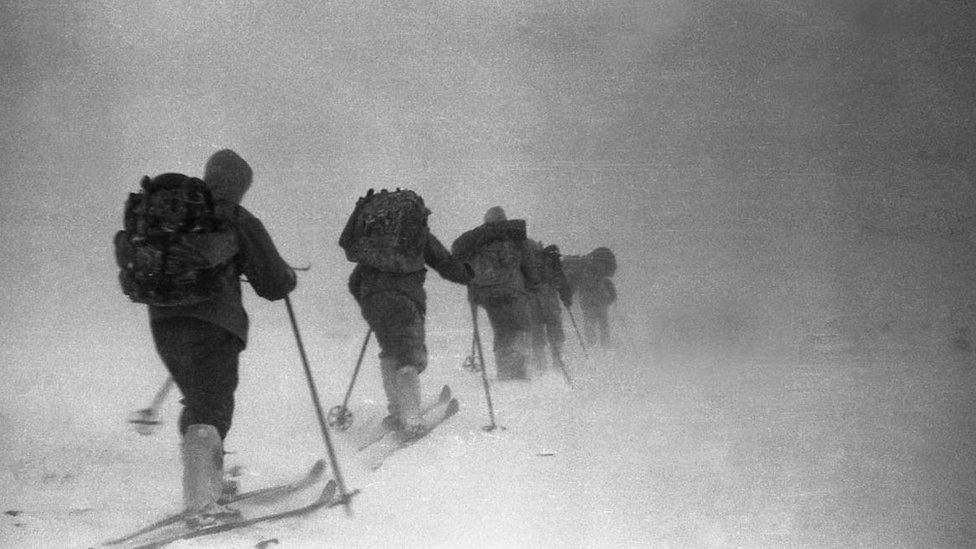
Maps detail the group’s path with precision, while diaries describe the specific locations reached each day and the conditions under which camps were established. Photographs also serve as vital visual evidence of the journey.
The originally planned route became more challenging as weather conditions deteriorated. Heavy snowfall and strong winds slowed the group’s progress, yet they maintained discipline in their movements and carefully selected camp sites. Maps clearly reflect this reduction in speed, indicating that the expedition continued as a routine process of hiking and camping until its final moments.

“Last frame”. 1 February. An octagonal object is visible in the center (Dyatlov Pass)
Records in the maps and diaries provide critical insights into why the group chose the slope of Kholat Syakhl for their final camp. This slope lies approximately 1.5 kilometers above the tree line and is exposed to the wind. Under normal conditions, particularly in winter, a more sheltered location would have been expected. However, the diaries reveal that due to heavy snowfall, the group lost their bearings and opted for the slope instead of returning to the tree line. This decision is also linked to the necessity of setting up camp before darkness fell.
Although the maps show that the campsite was on a relatively gentle slope, the area was vulnerable to snow drifts carried by the wind. Consequently, the tent’s location has become one of the focal points of subsequent scientific investigations. The tent was not pitched parallel to the slope but slightly diagonally, likely an attempt to balance against the wind direction. Brief notes in the diaries describe preparations at this site, while photographs capture the group’s final activities before the camp—faces smiling and meals being prepared. These images document that everything appeared normal immediately before the tragedy. Thus, the route has become not merely a geographical trace but a reflection of the group’s psychological state.
The photographs taken during the expedition played a fundamental role in documenting the route and camp locations. The images clearly show equipment arrangements, layered clothing, footprints in the snow, and camp preparations. The film rolls from the cameras were recovered during search operations and developed. The chronological sequence of the photographs has served as a vital source for determining the group’s whereabouts on each day.
When evaluated alongside the diaries, the photographs emerge as reliable records of the expedition. The expressions on the members’ faces indicate high morale prior to the incident, suggesting that the tragedy occurred suddenly and unexpectedly.
Photographs also provide clues about the weather conditions. The images clearly show the density of snow, the effects of wind, and visibility levels. These factors contributed significantly to understanding the environmental conditions during the night of the incident. Additionally, relationships within the group are reflected in the frames. Members seen joking together, preparing food, or setting up tents demonstrate a strong sense of team spirit and solidarity. This suggests that the sudden developments of that night were unexpected even for a disciplined and cohesive group.

Route of the hike (Dyatlov Pass)
The analysis of the route and maps also played a crucial role in the scientific modeling conducted after the incident. In particular, the avalanche and snow slab hypotheses were tested through calculations that considered the slope of the campsite and wind direction. Contour lines on the maps revealed the percentage gradients of the terrain, enabling simulations of snow accumulation. The micro-topography where the tent was pitched sparked debate between those who argued it was “not suitable for an avalanche” and those who claimed “a slab collapse was possible.”
The photographs reveal the hardening of the snow surface, areas where snow had been deposited by wind, and the camp’s position relative to these zones. Scientists used these visual clues to estimate snow density and refine their models accordingly. The maps also clearly established the distance between the tree line and the camp, a measurement used to interpret the direction of footprints and the group’s efforts to seek shelter.
The route, maps, and visual records have become central sources in the investigation of the Dyatlov Pass incident. The maps provided quantitative data on the campsite’s risk profile, while the photographs were regarded as vivid eyewitness accounts of the moments preceding the tragedy. Thus, these documents did not merely offer geographical information—they also became central to research aimed at understanding the dynamics of the event.

Locations where the bodies were found (Dyatlov Pass)
Igor Dyatlov, after whom the Dyatlov Pass incident is named, was the group’s leader and responsible for planning and executing the expedition. A student of radio engineering, Dyatlov was known for his technical skills, disciplined personality, and field experience. He had previously participated in challenging journeys and gained extensive winter camping experience. Before the trip, he organized all preparations, from equipment checks to leaving supplies at the Labaz camp. The setup of the tent and stove also fell directly under his responsibility. His friends described him as calm, rational, and composed even under extreme conditions. His leadership ensured the group’s disciplined progress throughout the journey.
On the night of the tragedy, it is understood that the leader, faced with extraordinary circumstances, cut open the tent to evacuate the group. Igor Dyatlov’s body was found between the tent and the tree line. He was wearing limited clothing, and his cause of death was reported as hypothermia. His location suggests he was attempting to return toward the camp. It appears he tried to save his team but was unsuccessful. For this reason, Dyatlov’s biography remains central to the incident, and the tragedy is named after him.

Group members. Yuri Yudin left the group due to illness (Dyatlov Pass)
Zinaida Kolmogorova, one of the two women in the group, included entries in her diary that reflected her high morale throughout the journey. Her physical endurance was also praised by other members. Zinaida’s body was found in the snow between the tent and the tree line. Her cause of death was recorded as hypothermia. She was wearing light clothing, indicating she had not had time to retrieve heavier garments during the sudden exit from the tent. Her diary provides a detailed record of the weather conditions during the final days of the expedition and serves as a valuable source for understanding the group’s psychological state before the tragedy. She wrote positively about her companions and emphasized the group’s solidarity. Her presence added a distinct dimension to the group’s social structure. As a female member, she adapted to the physical demands of the journey and actively participated in camp duties. Examination of her body revealed that her death resulted from freezing, not from sudden trauma. This finding provides critical evidence supporting the claim that some members died solely from hypothermia. Zinaida Kolmogorova has become one of the symbols of the tragedy.
Yuri Doroshenko and Yuri Krivonischenko were the two hikers found near a fire at the tree line. Doroshenko was known for his physical strength and resilience. Krivonischenko contributed to the group’s morale through his cheerful personality and his habit of playing music around camp. The bodies of both men were found beneath a fir tree, barefoot or wearing only socks. Remnants of a fire were found beside them, indicating they had attempted to warm themselves. However, the fire burned only briefly, and they likely died quickly from the cold. Doroshenko’s hands showed burn marks, suggesting he had tried to maintain the fire. Similar signs of cold exposure and fire damage were observed on Krivonischenko’s body. They were the first victims found farthest from the tent. Some of their clothing was later taken by other group members, indicating that survivors exchanged garments to combat the cold. The deaths of Doroshenko and Krivonischenko suggest they occurred during the earliest phase of the incident. Their presence near the fire represents the most tangible evidence of the group’s desperate efforts to survive the cold. Their profiles—marked by resilience and cheerfulness—played an important role within the group. Yet their status as the first victims intensified the dramatic nature of the tragedy.
Lyudmila Dubinina was one of the youngest women in the group. In photographs taken during the expedition, she stood out for her active, cheerful, and diligent nature. She recorded the hardships they encountered in her diary but tried to maintain her morale. Her body was found alongside four others in the streambed. This group exhibited severe traumatic injuries. Dubinina had fractures in her ribcage and her tongue was missing. This condition sparked speculation for years. However, investigations revealed that the loss of her tongue could be explained by natural postmortem processes or the aquatic environment. Clothing belonging to other group members was found on her body, confirming the practice of clothing sharing. Her death was too complex to be attributed solely to hypothermia. Dubinina’s biography shows she held an important place in the group due to her energy and resourcefulness. At the same time, the findings on her body became one of the most debated pieces of evidence in unraveling the incident. Her death became a central element in reinforcing the “mysterious” nature of the Dyatlov Pass event.
The circumstances of Rustem Slobodin, Nikolay Thibeaux-Brignolle, Aleksander Kolevatov, and Semyon Zolotaryov are also crucial to understanding the incident. Slobodin’s body was found between the tent and the forest, with a skull fracture that could be explained by a fall or impact. Thibeaux-Brignolle was discovered in the streambed with severe head trauma. Kolevatov, known for his disciplined nature, was also found in the streambed. Zolotaryov, the oldest member of the group and a veteran, had ribcage fractures indicating exposure to high pressure. The profiles of these four members reveal the group’s diversity. Differences in age, experience, and profession demonstrate that the group encompassed a broad spectrum. Yet despite all these differences, they all shared the same tragedy. The findings on each of their bodies added to the complexity of the incident. Some, like Slobodin and Kolmogorova, died of hypothermia, while others, such as Dubinina and Zolotaryov, suffered severe trauma. This variation is one of the reasons the event cannot be explained by a single theory. The individual profiles of the group members reveal the human dimension of the tragedy. The Dyatlov Pass incident has gained depth through these personal stories.
The Dyatlov group’s tent has been one of the most debated elements in the investigation of the incident. The tent was pitched on a steep slope and surrounded by snow. It was designed to accommodate the entire group in terms of width and length. However, on the night of the incident, the tent’s entrances were not used; instead, an exit was made by cutting through the fabric from inside. These cuts suggest the group faced an emergency situation within the tent. Examination of the tent’s interior revealed that meal preparations had been abandoned mid-process and personal belongings were in their proper places. Boots, thick clothing, and some personal items were left inside the tent. This indicates that the departure was sudden and panicked. The area where the tent was located was exposed to wind, leading to speculation that sudden weather changes may have triggered the event. The fact that the tent was cut from the inside suggests the group consciously chose to exit that way. If the tent had been buried by an avalanche, these cuts would be a comprehensible escape route. However, the tent was only partially covered by snow and not fully buried. This has fueled debate around the avalanche hypothesis. Investigations around the tent revealed regular footprints in the snow. These tracks suggest the group did not scatter in panic but exited in an orderly manner. Yet why they exited through the cuts rather than the entrances remains one of the unanswered questions today.
The stove inside the tent is another critical element in understanding the incident. A portable stove was designed for the expedition and intended to be set up inside the tent. The stove was essential for maintaining warmth during the night and drying clothing. However, whether the stove was assembled and operational on the night of the incident remains disputed. Some testimonies claim the stove was mounted inside the tent and even burning. Other accounts state that only parts of the stove were found and that it had not been ignited. Whether firewood or fuel was present inside the tent is also debated. Some search team members mentioned logs prepared for the stove, while others insisted the fragments found were actually protective rings of the stove. These conflicting statements have complicated efforts to explain the incident. If the stove had been burning and produced smoke inside the tent, it could explain the panicked evacuation. Yet there is no definitive evidence that the stove was active. No traces of smoke or burn marks were found inside the tent. Thus, the stove and firewood debate remains central to interpretations of the event.
The tent’s interior arrangement has also been examined. The sleeping layout, the placement of belongings, and the organization of food indicate the group had prepared to spend the night normally. Food remnants, incomplete meal preparations, and neatly arranged items were found inside. These findings suggest the group was following a routine camp procedure. Therefore, the panicked abandonment of the tent becomes even more striking. No signs of struggle, conflict, or sudden disruption were found inside. This suggests the panic may have been triggered by an external factor. If the stove was not assembled, it may have caused the interior to remain cold, making the air inside unbearable. However, the ventilation systems inside the tent appeared normal. The orderly interior suggests the group believed the camp was safe. These conflicting elements have given rise to various hypotheses regarding the incident.
The location of the tent is also a focal point of debate. The tent was pitched on a sloping terrain in an area exposed to wind. This setting could have facilitated the formation of a snow slab. If a snow slab had slid at the tent’s location, the tent might have been partially buried, potentially explaining the interior cuts made for escape. However, since the tent was not fully buried, this hypothesis has been questioned. Maps of the area show the slope was relatively gentle. Nevertheless, snow carried by the wind could have accumulated there. The tent’s orientation, placed diagonally to the slope, may have been chosen with wind direction in mind. Yet this setup could have increased the danger of a potential snowslide. The location was selected because the group had lost their bearings and were under time pressure. Choosing the slope instead of returning to the forest line was a decision made to avoid being caught in darkness. This choice may have directly contributed to the tragic outcome.
In conclusion, the tent, stove, and firewood debate are among the key elements of the Dyatlov Pass incident. The tent being cut from the inside indicates the group encountered an extraordinary situation. The stove not being assembled suggests no heat was generated inside, making the cold even more unbearable. Conflicting statements regarding firewood and fuel have complicated efforts to explain the event. The tent’s arrangement shows the group believed everything was normal, yet they abandoned it suddenly due to an emerging threat. The tent’s location, slope, and wind direction have become the most frequently evaluated factors in subsequent hypotheses. These elements have strengthened the avalanche or snow slab theories. However, the fact that the tent was only partially buried weakens these hypotheses. The fact that the tent was evacuated in an organized manner rather than in panic is also striking. The footprints indicate a deliberate exit. All these factors are among the primary reasons the Dyatlov Pass incident remains mysterious.

A fire scar beneath an old cedar tree, with branches broken up to five meters high, has led investigators to believe the hikers climbed the tree to observe their surroundings or to gather firewood. (Dyatlov Pass)
One of the most critical aspects of the Dyatlov Pass incident is the manner in which the tent was abandoned and the tracks left behind. The tent was evacuated not through its normal entrances but through cuts made from the inside with a knife. This detail indicates the group encountered an extraordinary situation within the tent. The condition of belongings inside the tent reveals the departure was hasty. Boots, thick clothing, and most personal items were left behind, proving the group exited into the cold unprepared. Footprints, clearly identified during investigations around the tent, were reported to be orderly and parallel. There were no scattered tracks indicating running in panic. This suggests the group exited in an organized manner rather than in panic. Some footprints were barefoot, others were socked, and some were booted. This variety indicates that not everyone was equally prepared when leaving the tent. The tracks headed toward the forest line approximately 1.5 kilometers away, suggesting the group was seeking shelter and protection. These tracks were followed as far as a fire pit beneath an old cedar tree in the forest.

On 27 February 1959, the first bodies were found near a fire pit beneath an old cedar tree. (Dyatlov Pass)
The tracks leading toward the forest line indicate the group moved with purpose. The footprints were made with discipline and followed a specific route. This suggests the group maintained leadership even during the crisis. Had the group scattered in panic, the tracks would have been irregular and dispersed in multiple directions. Instead, the tracks moved uniformly in one direction, indicating a collective decision was made. The tracks ended at a point where a large cedar tree stood. At this location, remnants of a fire were found. Two hikers’ bodies were discovered near the fire, wearing only light clothing. This finding confirms the group attempted to warm themselves with fire. However, it became clear the fire did not burn for long, suggesting the group could not find sufficient fuel or succumbed to hypothermia too quickly. Signs of climbing were found on the cedar tree’s branches. These marks indicate the group climbed the tree to survey the surroundings or to break off branches for firewood. Yet this effort was insufficient to save their lives.
Some of the tracks leading from the tent are linked to the bodies of three hikers found between the tent and the forest line. The bodies of these three individuals were found along a path suggesting they tried to return to the tent. This implies they abandoned their attempt to build a fire in the forest and attempted to return to the tent. However, they died of hypothermia midway. Examination of these three bodies revealed they lacked thick clothing. Most had exited wearing only undergarments or thin layers. This confirms they also left the tent in haste. The positioning of these three bodies reveals the sequence of events: first, abandonment of the tent; then, an attempt to build a fire in the forest; finally, an effort to return to the tent. This chain illustrates the group’s struggle for survival. Their failure to return to the tent shows how impossible it became to navigate in the cold and darkness. Furthermore, the rapid onset of hypothermia led to swift death.

After the snow was cleared, the bodies of Doroshenko and Krivonischenko were found lying face down. (Dyatlov Pass)
Months later, the bodies of four more climbers were found in the ravine alongside melting snow. This group had sought a more sheltered refuge after attempting to build a fire in the forest. Snow pits were dug, and an attempt was made to construct a temporary shelter. However, this shelter may have collapsed or failed to provide adequate protection. The bodies of these four individuals showed severe trauma, including rib fractures and head injuries, indicating exposure to high pressure. There are differing opinions regarding the source of these injuries. Some believe a snowslide or snowpack collapse caused them, while others suggest falls or impacts from rock fragments. Yet the exact cause has never been determined. Clothing belonging to others was found on these four individuals, indicating that they had taken garments from their deceased companions in an effort to protect themselves from the cold. This sharing of clothing is a strong testament to the group’s struggle for survival. Nevertheless, the extreme cold and trauma ultimately claimed their lives.
The traces from the night of the incident and the locations of the bodies constitute the most complex elements of the Dyatlov Pass incident. The tent being cut open from the inside, the orderly footprints, the remnants of a fire along the tree line, the positions of the three individuals who attempted to return to the tent, and the condition of the four bodies found in the ravine reveal the sequence of events. These stages show that the group first abandoned the tent, then tried to seek warmth by building a fire, subsequently attempted to return to the tent, and finally tried to establish a shelter. Each stage ended in failure. Hypothermia, inadequate clothing, and severe trauma led to deaths occurring under different circumstances. The tracks indicate that the incident unfolded in an organized manner rather than in panic, suggesting that the group maintained leadership and discipline until the very end. However, the scale of the danger they faced overwhelmed even this discipline. Thus, one of the most striking aspects of the Dyatlov Pass incident is that the tragedy can be reconstructed through the physical evidence left behind.
The Dyatlov group’s expedition ended tragically on 1 February 1959, but their disappearance was not immediately noticed. According to their plan, the group was expected to return by mid-February, and delays were considered normal by friends and family. In the Soviet Union, such expeditions often experienced delays of several days, so initial concern was minimal. However, as time passed, anxiety grew, and search and rescue operations were launched on 20 February. Initially, friends and volunteer students participated in the search. Later, a large team comprising military units, police, and local residents joined the effort. Weather conditions in the Ural region were extremely harsh: heavy snowfall, low temperatures, and strong winds made the search difficult. Additionally, the area was geographically remote, with roads closed and limited access. Despite these challenges, the search was conducted systematically. In the first phase, the group’s planned route was followed, and potential camp sites were examined. Yet no trace of the group was found over several days, strengthening the possibility that something extraordinary had happened to the nine missing climbers.
During the search, the group’s abandoned “labaz” camp was first reached. Here, excess supplies and equipment were found neatly stored, indicating that the group had followed its planned route and only went missing during the final stage. The orderliness of the labaz camp reflected the group’s discipline: tents were properly pitched, and provisions were preserved under the snow. Search teams concluded that the group had continued beyond this point and began following their trail. On 26 February, a tent was found on the slope of Kholat Syakhl. The tent was partially buried under snow but not completely covered. Its condition immediately drew attention: the fabric had been cut from the inside, and belongings inside were scattered. This discovery suggested that the incident was not an ordinary accident. Footprints were found beside the tent, leading toward the tree line. From this point, the search was expanded.
About 1.5 kilometers from the tent, along the tree line, two bodies were found: those of Yuri Doroshenko and Yuri Krivonischenko. The bodies were located beneath a cedar tree, near the remains of a fire. They were wearing only underwear and light clothing, indicating they were unprepared for the cold. Burns were also found on their hands, suggesting they had tried to maintain the fire. Search teams later discovered three more bodies along the path between the tent and the tree line: Igor Dyatlov, Zinaida Kolmogorova, and Rustem Slobodin. These three had frozen to death while attempting to return to the tent. Slobodin had a skull fracture, which may have contributed to his death. However, overall, the deaths were attributed to hypothermia. The discovery of these five bodies provided the first concrete evidence of the group’s fate.
The remaining four bodies took months to locate. The depth of the snow had concealed them. In May, as the snow melted, four more bodies were found in the ravine: Lyudmila Dubinina, Semyon Zolotaryov, Aleksander Kolevatov, and Nikolay Thibeaux-Brignolle. These individuals showed severe trauma: rib fractures, head injuries, and loss of soft tissue indicated that their deaths could not be explained by freezing alone. Dubinina’s tongue was missing, a detail that sparked years of speculation. However, forensic examinations suggested this may have been the result of postmortem processes. The distribution of clothing was also striking: clothing belonging to others was found on these four individuals, revealing that the group had shared garments in their struggle for survival. These findings indicated that the incident was more complex than initially assumed.
The search and rescue operation attracted widespread attention in the Soviet Union. Official reports described the cause of the incident as “an unknown compelling natural force.” However, the evidence uncovered during the search gave rise to numerous theories. The tent being cut from the inside, the bodies found in disparate locations, the severe trauma, and the inadequate clothing complicated efforts to explain the event. The search teams’ reports formed the foundation for all subsequent investigations. The prolonged duration of the search, due to weather conditions and geographic challenges, was understandable, but the fact that the bodies were found under differing conditions revealed the complex nature of the tragedy. Thus, the 1959 search and rescue operation not only located the lost climbers but also deepened the mystery surrounding the incident.

Igor Dyatlov was found on the same day (27 February 1959), face down, 300 meters from the cedar tree, his head oriented toward the tent (Dyatlov Pass)
After the bodies of the Dyatlov group were recovered, autopsies were conducted by forensic experts in the Sverdlovsk region. The autopsy reports of the first five bodies found indicated that their deaths were largely due to hypothermia. These included Igor Dyatlov, Zinaida Kolmogorova, and Rustem Slobodin. Prominent signs of freezing were observed on the bodies: discoloration of the skin, cold burns on the face and extremities, and internal organ changes consistent with freezing. Slobodin had a skull fracture, but it was assessed as non-fatal and likely contributing to death only in combination with hypothermia. No traumatic injuries were found on the other two bodies; only signs of freezing were recorded. These results indicate that those who left the tent first succumbed rapidly to the cold. As the freezing process progressed, the bodies were preserved by the snow environment and remained intact despite being discovered months later. These findings demonstrate that the initial phase of the tragedy involved natural causes of death.

The bodies of Kolevatov and Zolotaryov (Dyatlov Pass)
The autopsies of Yuri Doroshenko and Yuri Krivonischenko, found along the tree line, also pointed to hypothermia as the primary cause of death. Both bodies showed burn marks, indicating attempts to maintain a fire. The burns on their hands suggest direct contact with wood or branches to sustain the flames. Additionally, blisters and freezing-related changes were noted on their skin. Doroshenko’s body exhibited swelling in soft tissues, a typical consequence of prolonged exposure to cold. Krivonischenko’s body also showed clear signs of hypothermia. The fact that both men had either bare feet or only socks on when they reached the tree line accelerated the onset of freezing. Their light clothing shortened their survival time. The fire’s rapid extinction eliminated any chance of survival. The autopsies revealed that these two men had fought to survive against the cold but ultimately failed. These findings expose the tragic fate of the group’s most vulnerable members.
The autopsies of the four bodies found in the ravine revealed the most controversial aspects of the incident. Lyudmila Dubinina had multiple rib fractures, consistent with exposure to high pressure or severe blunt force. Additionally, her tongue and some soft tissues were missing—a finding that generated years of speculation. However, forensic experts suggested this may have resulted from postmortem processes. Semyon Zolotaryov also had numerous rib fractures, the pressure from which likely caused damage to his heart and lungs. Nikolay Thibeaux-Brignolle had a large skull fracture. Aleksander Kolevatov showed fewer traumatic injuries, but his death was still attributed to hypothermia. Clothing belonging to others was found on these four individuals, indicating that garment sharing occurred before death. However, the source of the severe trauma could not be definitively determined. As a result, these findings further deepened the mystery of the incident.
In autopsy reports, radiation measurements were also conducted. Elevated radiation levels were detected on some clothing items. This finding has raised the possibility of military testing or exposure to radioactive materials. However, the radiation levels were not fatal. Experts have suggested that the radiation on the clothing may be linked to prior studies or mining activities. Despite this finding, it was determined that radiation did not play a direct role in the deaths. Nevertheless, this detail in the reports sparked public debate for decades. Additionally, orange discolorations on the skin of some corpses and unusual appearances of their hair were recorded during autopsies. These observations fueled theories involving radioactive substances. However, forensic experts noted that these findings could be explained by freezing and natural postmortem processes. Thus, the radiation component remained unconfirmed but generated considerable speculation.
In conclusion, the autopsy findings revealed that the deaths in the Dyatlov Pass incident could not be attributed to a single cause. The first five bodies discovered died largely from hypothermia. However, the last four bodies showed severe trauma. It remains uncertain whether these traumas resulted from natural events or another factor. Radiation findings also failed to provide a clear explanation. Therefore, the autopsy reports deepened rather than resolved the mystery of the incident. Different causes of death indicate that the group perished under varying conditions. These findings removed the Dyatlov Pass incident from the category of an ordinary mountain accident and laid the foundation for decades of debate. Thus, forensic reports have played a central role both in scientific investigation and public interest.
Although the Dyatlov Pass incident was officially concluded with an investigation in 1959, the case was never closed; instead, it was archived with the temporary designation “unexplained compelling natural force.” This phrasing indicated the state’s reluctance to assume responsibility while simultaneously proving the incident had not been fully clarified. From the 1960s onward, the file remained sealed in archives and inaccessible to the public. However, with the dissolution of the Soviet Union in the 1990s, partial opening of the archives enabled renewed investigations. Researchers examined autopsy reports, photographs, and map records, offering new interpretations. Theories proposed during this period included avalanches, snow slab collapse, military testing, clashes with local populations, and exposure to radioactive materials. Authorities long resisted reopening the case. Yet public pressure, particularly from the families of the missing climbers, compelled new inquiries. Consequently, the incident reemerged on the agenda in the post-Soviet era, and official reinvestigations were launched.
In 2019, the Office of the Prosecutor General of the Russian Federation reopened the Dyatlov Pass case. This review attracted attention as the most comprehensive official assessment conducted in decades. Authorities examined existing documents and the conditions at the site. Avalanche and snow slab theories were brought to the forefront. In particular, the “snow slab collapse” model was used to explain both the cutting of the tent from the inside and the chest and skull traumas suffered by four individuals. According to this model, a snow slab slid onto the tent, increasing internal pressure and forcing the group to flee rapidly. Additionally, sudden changes in weather conditions were considered capable of causing wind-driven snow accumulation. The 2019 report emphasized that the deaths could be explained by an avalanche or slab collapse followed by hypothermia. This report provided an official explanation to the public but did not end all debate. Elements not addressed in the report—particularly the radiation findings and soft tissue losses—continued to raise unanswered questions.
The incident’s reflection in popular culture is also extensive. Dyatlov Pass has been the subject of novels, films, documentaries, and television series. In various fictional works, the event has been linked to supernatural forces, secret military experiments, or paranormal phenomena. However, these portrayals rely more on dramatic fiction than scientific facts. Nevertheless, the continuous reproduction of the incident in popular culture has sustained public interest. Countless discussions have taken place on internet forums and social media, with numerous hypotheses proposed. In this sense, the Dyatlov Pass incident has become not merely a mountaineering tragedy but one of the most famous mysteries of the modern era. The contribution of the press and popular culture has ensured the incident remains unforgettable. Thus, the tragedy has remained continuously relevant in both academic and societal contexts.
A documentary on the events (National Geographic UK)
Official reinvestigations and media coverage have elevated the Dyatlov Pass incident far beyond a routine accident file. The 1959 tragedy has been reinterpreted numerous times over the years, explained through various theories, and debated in the public sphere. While official reports emphasized avalanche and snow slab hypotheses, the press and public focused on alternative explanations. This dynamic has reinforced rather than resolved the mystery of the incident. Today, Dyatlov Pass is recognized as one of the most researched and debated events in mountaineering history. Although reinvestigations have sought to provide scientific explanations, many questions remain unanswered in the public mind. Therefore, the Dyatlov Pass incident has become not merely a subject of research but a symbol of modern historical mysteries.
Archive GDH Digital. "Dyatlov Geçidi Vakası." Accessed September 28, 2025. https://archive.gdh.digital/dyatlov-gecidi-vakasi-35167
BBC Türkçe. “Dyatlov Geçidi’nde Ne Oldu?” Accessed September 28, 2025. https://www.bbc.com/turkce/haberler-dunya-51267593
Dyatlovpass.com. "1959 Search." Accessed September 28, 2025. https://dyatlovpass.com/1959-search
Dyatlovpass.com. "Aleksander Kolevatov." Accessed September 28, 2025. https://dyatlovpass.com/aleksander-kolevatov
Dyatlovpass.com. "Death." Accessed September 28, 2025. https://dyatlovpass.com/death
Dyatlovpass.com. "Firewood in the Tent." Accessed September 28, 2025. https://dyatlovpass.com/firewood-in-the-tent?rbid=18461
Dyatlovpass.com. "Hikers." Accessed September 28, 2025. https://dyatlovpass.com/hikers
Dyatlovpass.com. "Homepage." Accessed September 28, 2025. https://dyatlovpass.com/
Dyatlovpass.com. "Igor Dyatlov." Accessed September 28, 2025. https://dyatlovpass.com/igor-dyatlov
Dyatlovpass.com. "Lyudmila Dubinina." Accessed September 28, 2025. https://dyatlovpass.com/lyudmila-dubinina
Dyatlovpass.com. "Maps." Accessed September 28, 2025. https://dyatlovpass.com/maps
Dyatlovpass.com. "Nikolay Thibeaux-Brignolle." Accessed September 28, 2025. https://dyatlovpass.com/nikolay-thibeaux-brignolle
Dyatlovpass.com. "Rustem Slobodin." Accessed September 28, 2025. https://dyatlovpass.com/rustem-slobodin
Dyatlovpass.com. "Semyon Zolotaryov." Accessed September 28, 2025. https://dyatlovpass.com/semyon-zolotaryov
Dyatlovpass.com. "Trek Photos." Accessed September 28, 2025. https://dyatlovpass.com/trek-photos
Dyatlovpass.com. "Yuri Doroshenko." Accessed September 28, 2025. https://dyatlovpass.com/yuri-doroshenko
Dyatlovpass.com. "Yuri Krivonischenko." Accessed September 28, 2025. https://dyatlovpass.com/yuri-krivonischenko
Dyatlovpass.com. "Zinaida Kolmogorova." Accessed September 28, 2025. https://dyatlovpass.com/zinaida-kolmogorova
Gaume, Johan, and Alexander M. Puzrin. “Mechanisms of Slab Avalanche Release and Impact in the Dyatlov Pass Incident in 1959.” Nature. Accessed September 28, 2025. https://www.nature.com/articles/s43247-020-00081-8
Independent Türkçe. “Dyatlov Geçidi Vakası: 60 Yıl Önce 9 Kişinin Öldüğü Gizemli Olay Açıklığa Kavuştu.” Accessed September 28, 2025. https://www.indyturk.com/node/308951/bi%CC%87li%CC%87m/dyatlov-ge%C3%A7idi-vakas%C4%B1-60-y%C4%B1l-%C3%B6nce-9-ki%C5%9Finin-%C3%B6ld%C3%BC%C4%9F%C3%BC-gizemli-olay-a%C3%A7%C4%B1kl%C4%B1%C4%9Fa-kavu%C5%9Ftu
Kıyak, Güneç. “Dyatlov Geçidi’nde Ne Oldu?” T24. Accessed September 28, 2025. https://t24.com.tr/yazarlar/gunec-kiyak/dyatlov-gecidi-nde-ne-oldu,35576
National Geographic UK. Russia’s Mystery Files | National Geographic UK [Video]. YouTube. Accessed September 28, 2025. https://www.youtube.com/watch?v=ZH3Yk3K7Fts
New York Times. “Dyatlov Pass Avalanche, Russia.” April 1, 2022. Accessed September 28, 2025. https://www.nytimes.com/2022/04/01/world/europe/dyatlov-pass-avalanche-russia.html
New York Times. “Russia Dyatlov Pass Avalanche.” February 25, 2021. Accessed September 28, 2025. https://www.nytimes.com/2021/02/25/world/europe/russia-dyatlov-pass-avalanche.html
The Moscow Times. “What Happened on Dyatlov Pass? ‘Dead Mountain’ Reveals All.” September 2, 2021. Accessed September 28, 2025. https://www.themoscowtimes.com/2021/09/02/what-happened-on-dyatlov-pass-dead-mountain-hreveals-all-a74959


Henüz Tartışma Girilmemiştir
"Dyatlov Pass Incident (1959)" maddesi için tartışma başlatın
The Incident
Route, Maps, and Visual Records
Group and Individual Profiles
Camp, Tent, and Firewood Debate
Night of the Incident, Tracks, and Departure from the Tent
The 1959 Search and Rescue Operation
Autopsy Findings and Causes of Death
Official Reinvestigations and Media Coverage