

badge icon

Bu içerik Türkçe olarak yazılmış olup yapay zeka ile otomatik olarak İngilizceye çevrilmiştir.

Madde
Alıntıla

An emergency escape ramp is a road safety structure designed to safely stop heavy vehicles that have lost brake function or control, particularly on long and steep road sections. These ramps enable drivers to respond quickly and controllably in emergency situations such as brake failure, helping to prevent potentially catastrophic accidents.


Escape Ramp Accidents (Engineering and Architecture)

Structural Features

Emergency escape ramps are generally constructed in three main types:


  • Gravity-Assisted Ramp: The ramp is designed with an upward incline. The force of gravity acts against the vehicle’s current speed, slowing it down. These ramps are used in hilly terrain where sufficient elevation difference is available.
  • Gravel Bed Ramp: Constructed horizontally and covered with loose materials to increase friction. The vehicle loses speed and comes to a stop as it moves over these materials. This type requires a longer distance.
  • Mechanical Arrestor Systems: The vehicle is physically stopped using nets, cables, or specialized mechanical barriers. These are typically preferred when space is limited.


Types of Emergency Escape Ramps (5th Regional Directorate of Highways)
Traffic Signs

It is crucial that drivers are adequately informed in advance of approaching emergency escape ramps to ensure their safe and timely use. For this purpose, warning and directional signs are placed at specific intervals along the roadway. Signs related to escape ramps are installed in accordance with standards set by the General Directorate of Highways.

Warning Signs and Placement Sequence

Before an emergency escape ramp, the following signage sequence is typically applied:


  1. Preliminary Warning Sign (500 meters before): The first informational sign, displaying “Escape Ramp” in text or symbols, is placed 500 meters before the ramp. This sign alerts drivers for the first time that an escape ramp is approaching and helps drivers with brake failure to focus their attention.
  2. Intermediate Warning Sign (300 meters before): A second warning sign is placed 300 meters before the ramp. This sign assists drivers in preparing for an emergency maneuver and informs them of the remaining distance to the ramp entrance.
  3. Final Warning Sign (At Ramp Entrance): At the ramp entrance, a highly visible sign with “Escape Ramp” in a yellow or red frame is installed. This sign ensures drivers use the ramp at the correct location and marks the final point where an emergency maneuver must be executed.
  4. Directional and Arrow Signs: Additional arrow-shaped signs may be placed at the ramp entrance to guide drivers. These are especially preferred on steep and curved roads with limited visibility.


Examples of Emergency Escape Ramps (5th Regional Directorate of Highways)

Usage Guidelines

What to Do

  • When brake failure or difficulty stopping is experienced, the emergency escape ramp must be used immediately without delay.
  • The vehicle should enter the ramp centered and directed toward the gravel bed.
  • After the vehicle has stopped, the driver and passengers must immediately move to a safe distance.
  • The emergency services number 112 and the Highway Authority number 159 must be called to notify authorities.
  • The vehicle must be removed from the ramp exclusively using a tow truck.

What Not to Do

  • Do not avoid entering the ramp due to fear of vehicle damage. Not using the ramp can lead to far greater dangers.
  • Never park at the entrance of the ramp. Doing so blocks access during emergencies.
  • Escape ramps must not be used for personal driving experience or recreational purposes.


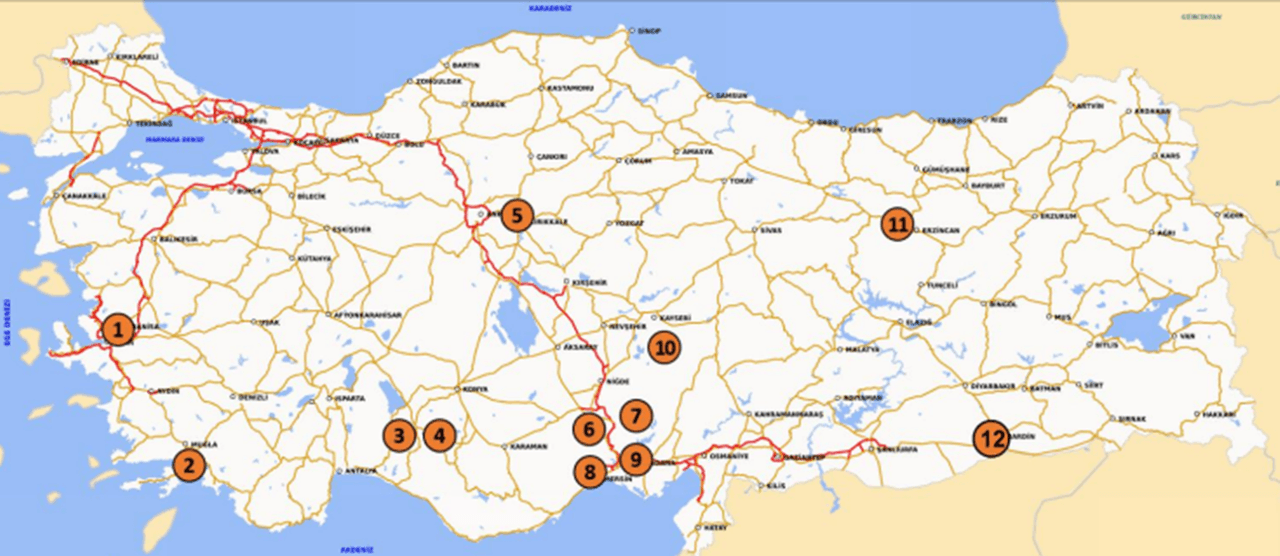
Emergency Escape Ramps in Türkiye (5th Regional Directorate of Highways)

Yazar Bilgileri

Avatar
YazarElyesa Köseoğlu3 Aralık 2025 13:07

Etiketler

Tartışmalar

Henüz Tartışma Girilmemiştir

"Emergency Escape Ramp" maddesi için tartışma başlatın

Tartışmaları Görüntüle

İçindekiler

  • Structural Features

  • Traffic Signs

    • Warning Signs and Placement Sequence

  • Usage Guidelines

    • What to Do

    • What Not to Do

KÜRE'ye Sor