+2 Daha

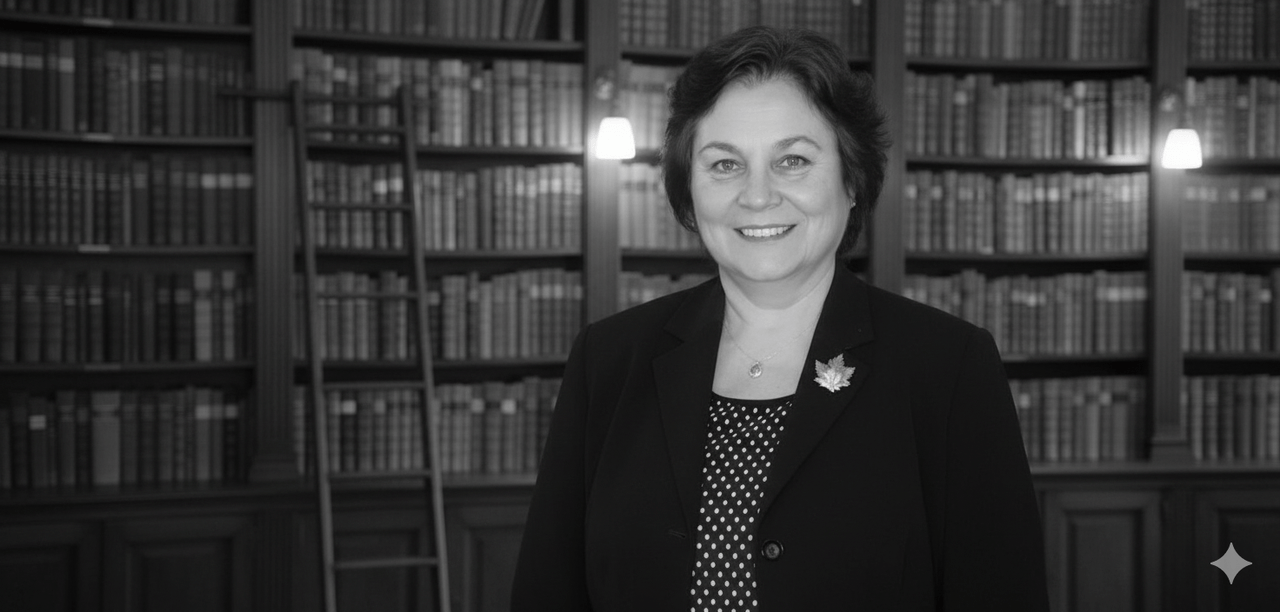
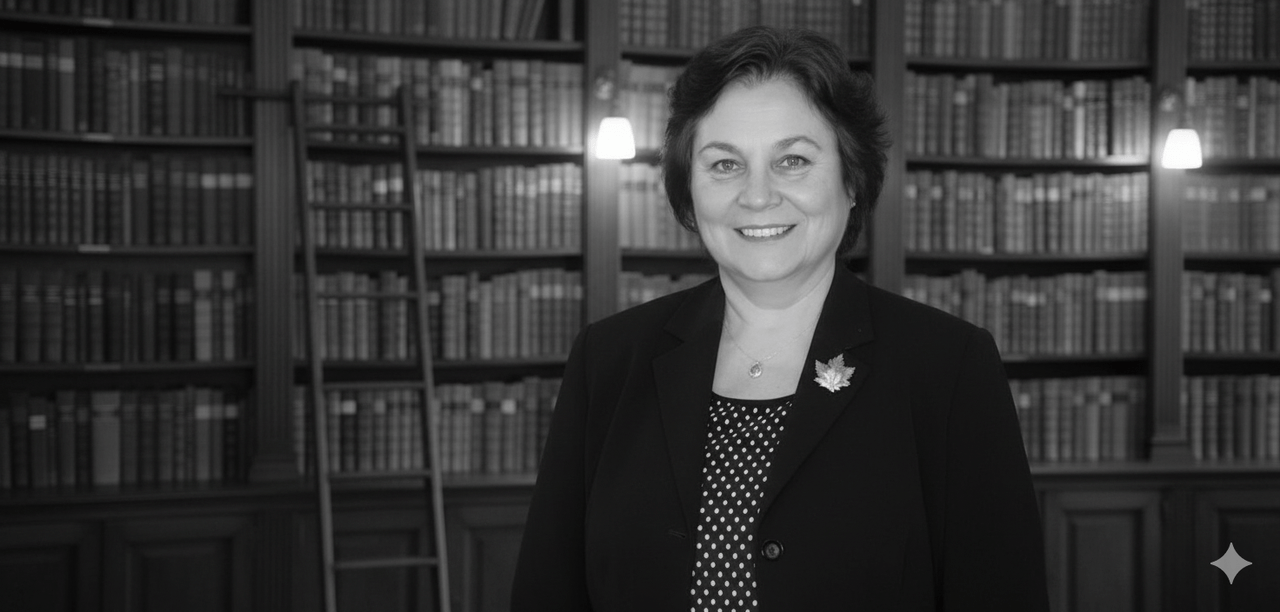
Engin Arık (Yapay Zeka ile Oluşturulmuştur.)
Prof. Dr. Engin Arık was born on 14 October 1948 in Istanbul. His father, Hâdi Atagür, was from the Istanbul elite, and his mother, Güzide Atagür, was of Crimean origin. His family had lived for many years between the Balkans and Istanbul; it is known that his grandfather served as a military doctor in Albania and Shkodër. Engin Arık graduated first in his class from Atatürk Girls’ High School in 1965. In the same year, he was admitted to the TÜBİTAK summer program for young scientists, and after completing the training, he began his undergraduate studies in the Department of Physics and Mathematics at Istanbul University. After graduating in 1969, he served as a student assistant in the Theoretical Physics Chair at the same university. Shortly thereafter, he married theoretical physicist Metin Arık and continued his academic work in the United States. He earned his master’s degree in 1971 for his work in experimental high-energy physics at the University of Pittsburgh, and his doctorate in 1976 with a thesis on Y resonances observed in hyperon beams. During his doctoral studies, he conducted research at Brookhaven National Laboratory.【1】

Prof. Dr. Engin Arık (Generated by Artificial Intelligence.)
After completing his doctorate, Engin Arık worked as a researcher at the University of London and the Rutherford Laboratory from 1976 to 1979, participating in experiments that studied exotic delta production using pion beams directed at hydrogen targets. In 1979, he returned to Türkiye and began his academic career at Boğaziçi University’s Department of Physics. In 1981, he earned the title of associate professor with his study titled “Interactions of Positive Pions with Momenta of 1.27–2.50 GeV/c with Protons.” In 1983, he left the university to work in the private sector for two years, returning to Boğaziçi University in 1985 and being promoted to full professor in 1988. Between 1997 and 2000, he served as a “radio-nuclide” expert at the Comprehensive Test Ban Treaty Organization under the United Nations. Throughout his research career, he focused on experimental high-energy physics and accelerator technologies, representing Türkiye in international experiments at CERN including ATLAS, CAST, CHORUS, and CMS. Engin Arık published hundreds of scientific papers, received thousands of citations, and significantly contributed to the academic development of many young scientists in this field in Türkiye. He was also one of the pioneers of the Turkish Accelerator Center (TAC) project and worked to institutionalize theoretical and experimental high-energy physics in Türkiye.【2】
Engin Arık actively participated in CERN activities from the 1990s onward and advocated for Türkiye’s institutional participation in experimental high-energy physics. He argued that CERN was not merely a scientific center but an international platform enabling nations to become active participants in knowledge production. He emphasized that full membership in CERN was essential for Türkiye’s scientific credibility and technology transfer, and he informed public institutions and initiated efforts accordingly. According to Arık, full membership could propel Türkiye’s science policy forward and position the country as a leader in science within fifteen years. However, Türkiye withdrew its full membership application in 2009 and instead applied for associate membership in 2012. In May 2015, Türkiye officially attained the status of “associate member” of CERN.【3】
Engin Arık made significant efforts to advance experimental research on the fundamental particles of the universe in Türkiye. As one of the original fifty founders of the ATLAS experiment, he played an active role in its international scope and encouraged participation from various Turkish universities. ATLAS is a detector in which protons collide forty million times per second and played a pivotal role in the discovery of the Higgs boson. Arık led the infrastructure and coordination efforts necessary for Turkish groups to join this experiment and also participated in numerous other experiments at CERN, including CHARM-II, SMC, CHORUS, CAST, and CMS.【4】 His research on new particle families, neutrino oscillations, hyperon and baryon resonances has been published in international literature.
One of the key issues Engin Arık emphasized was the utilization of Türkiye’s abundant thorium reserves for energy production. He argued that thorium-based reactors powered by modern accelerator technologies would constitute a safe energy system for the future, noting that thorium is environmentally safer, produces less radioactive waste, and carries no risk of explosion. Highlighting that a large portion of the world’s thorium reserves are located in Türkiye, he stated that developing accelerator technologies could reduce Türkiye’s energy dependence and enable it to become a global actor in energy.【5】
A Speech by Prof. Dr. Engin Arık on Türkiye’s Thorium Deposits (Turkish Physical Society TV)
One of Arık’s scientific goals was for Türkiye to have its own accelerator center. Beginning in the 1990s, he collaborated with Prof. Saleh Sultansoy and other scientists to develop the intellectual and technical infrastructure of the TAC project. In the 2000s, with support from the State Planning Organization, he ensured the project’s formal adoption.【6】 TAC is designed as a center providing research infrastructure ranging from high-energy physics to medical applications and from materials science to defense technologies. Engin Arık aimed for TAC to serve not only Türkiye but also the broader Turkic world, placing great importance on fostering collaborative research with Turkic Republics.
Arık supported the enhancement of scientific capacity not only in Türkiye but also in Turkic Republics, leading efforts to enable scientists from Azerbaijan, Kazakhstan, and Uzbekistan to participate in CERN projects. He contributed to the establishment of high-energy physics laboratories in these countries and provided material support at various times to prevent the disruption of scientific projects. He met with British physicist Peter Higgs to secure support for Turkic participation in CERN initiatives and promoted the creation of joint scientific platforms.【7】
Engin Arık was known for his dedication to scientific work and his disciplined academic approach toward students. He provided both scientific and material support to enable his students to participate in international projects, particularly encouraging young researchers to pursue experimental high-energy physics. Engin Arık combined patriotism with the ideal of scientific independence, viewing science as the fundamental source of true national sovereignty and emphasizing that accelerator technologies were essential for Türkiye to compete globally in science.
Prof. Dr. Engin Arık died in an airplane crash near Isparta on 30 November 2007. Of the 57 people on board, six were scientists. Among those who perished alongside Arık were Prof. Dr. Fatma Şenel Boydağ, Assoc. Prof. Dr. İskender Hikmet, research assistants Mustafa Fidan and Özgen Berkol Doğan, and master’s student Engin Abat.【8】 The scientific team was traveling to attend a meeting in Eğirdir, Isparta, regarding the technical design of the planned Turkish Accelerator Center. Technical investigations revealed that the aircraft’s Enhanced Ground Proximity Warning System was malfunctioning. Prof. Arık was buried at Edirnekapı Martyrs’ Cemetery.【9】

An Image from the Air Crash near Isparta on 30 November 2007, Which Claimed the Life of Engin Arık and Others (Anadolu Agency)
Engin Arık is recognized as one of the founding figures of experimental high-energy physics in Türkiye. His efforts to support young scientists enabled many of his students to establish themselves in international scientific communities. Since his death, this scientific legacy has been preserved and celebrated through various events and commemorative programs.
[1]
Karataş, Esra Müjgan, "Engin Arık – Bilim İnsanı, Fizikçi.” Türk Dünyası Ansiklopedisi, erişim 16 Kasım 2025, https://turkdunyasiansiklopedisi.gov.tr/detay/31/Engin-Ar%C4%B1k
[2]
Karataş, Esra Müjgan, "Engin Arık – Bilim İnsanı, Fizikçi.” Türk Dünyası Ansiklopedisi, erişim 16 Kasım 2025, https://turkdunyasiansiklopedisi.gov.tr/detay/31/Engin-Ar%C4%B1k
[3]
Karataş, Esra Müjgan, "Engin Arık – Bilim İnsanı, Fizikçi.” Türk Dünyası Ansiklopedisi, erişim 16 Kasım 2025, https://turkdunyasiansiklopedisi.gov.tr/detay/31/Engin-Ar%C4%B1k
[4]
Topdemir, Hüseyin Gazi, “Engin Arık’ın Parçacık Fiziği ve Toryum Çalışmaları,” Bilim ve Teknik, cilt 44, sayı 728, sayfa 84, erişim 16 Kasım 2025. https://services.tubitak.gov.tr/edergi/yazi.pdf;jsessionid=EUFCIPb+gA3+kRFG6Wfy37Nk?dergiKodu=4&cilt=44&sayi=728&sayfa=82&yaziid=31457
[5]
Topdemir, Hüseyin Gazi, “Engin Arık’ın Parçacık Fiziği ve Toryum Çalışmaları,” Bilim ve Teknik, cilt 44, sayı 728, sayfa 84, erişim 16 Kasım 2025. https://services.tubitak.gov.tr/edergi/yazi.pdf;jsessionid=EUFCIPb+gA3+kRFG6Wfy37Nk?dergiKodu=4&cilt=44&sayi=728&sayfa=82&yaziid=31457
[6]
Karataş, Esra Müjgan, "Engin Arık – Bilim İnsanı, Fizikçi.” Türk Dünyası Ansiklopedisi, erişim 16 Kasım 2025, https://turkdunyasiansiklopedisi.gov.tr/detay/31/Engin-Ar%C4%B1k
[7]
Karataş, Esra Müjgan, "Engin Arık – Bilim İnsanı, Fizikçi.” Türk Dünyası Ansiklopedisi, erişim 16 Kasım 2025, https://turkdunyasiansiklopedisi.gov.tr/detay/31/Engin-Ar%C4%B1k
[8]
Anadolu Ajansı, “Isparta uçak kazası dosyası 17 yıl sonra kapandı.” Anadolu Ajansı, erişim 16 Kasım 2025, https://www.aa.com.tr/tr/gundem/isparta-ucak-kazasi-dosyasi-17-yil-sonra-kapandi/3161262
[9]
Karataş, Esra Müjgan, "Engin Arık – Bilim İnsanı, Fizikçi.” Türk Dünyası Ansiklopedisi, erişim 16 Kasım 2025, https://turkdunyasiansiklopedisi.gov.tr/detay/31/Engin-Ar%C4%B1k
Engin Arık (Yapay Zeka ile Oluşturulmuştur.)
Henüz Tartışma Girilmemiştir
"Engin Arık" maddesi için tartışma başlatın
Academic Career and Scientific Contributions
CERN Research and Efforts for Türkiye’s Membership
Contributions to Experimental High-Energy Physics
Thorium Research and Contributions to Energy Policy
Turkish Accelerator Center (TAC) Project
International Collaborations and Contributions to the Turkic World
Personality and Philosophy of Science
Death and Air Crash
Legacy and Impact