+2 Daha

Genre | Dystopia Science Fiction Anime | ||||||||
|---|---|---|---|---|---|---|---|---|---|
Creator | Shūkō Murase | ||||||||
Director(s) | Shūkō Murase (with some episodes directed by others) | ||||||||
Production Companies | WOWOW Geneon Entertainment Manglobe | ||||||||
Number of Episodes | 23 | ||||||||
Running Time | Approximately 23–25 minutes per episode | ||||||||
Original Run | February 25 2006 – August 12 2006 | ||||||||
Music(s) | Yoshihiro Ike | ||||||||
Main Characters | Raul Creed Daedalus Yumeno Pino Re-l Mayer Vincent Law / Ergo Proxy | ||||||||
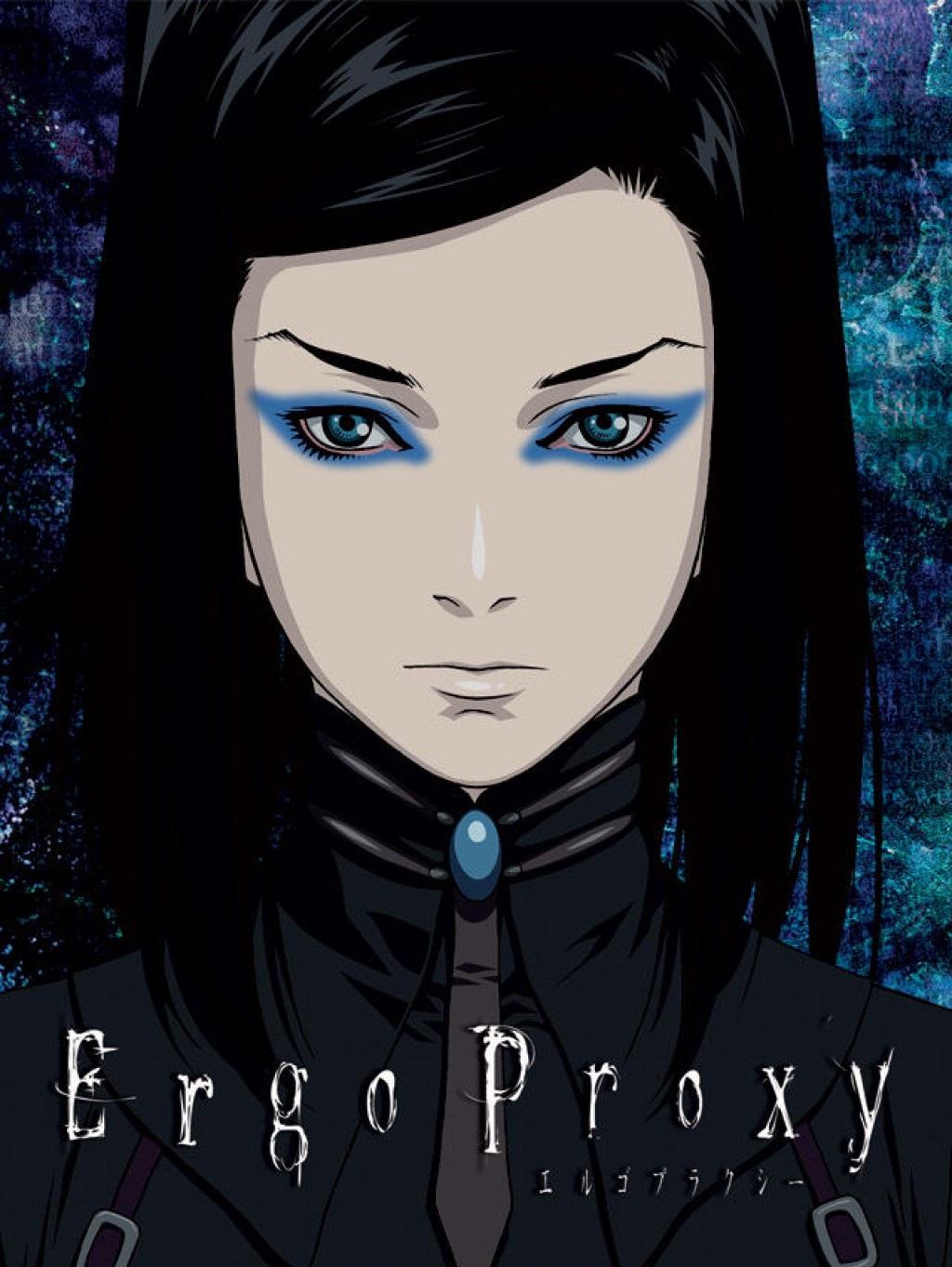
Ergo Proxy (2006) is a 23-episode Japanese television series produced by the studio Manglobe, with Shûkô Murase as part of the creative team. Set in a post-apocalyptic future, the story begins in Romdo, a domed city where humans live alongside androids. It follows a series of mysterious murders and the philosophical inquiries that unfold around these events.
Ergo Proxy Official Trailer (Japdesene)
Ergo Proxy depicts a post-apocalyptic future in which humanity struggles to survive through artificial means. In Romdo, a domed city where humans coexist with androids, order and stability are maintained by an authoritarian regime. This closed system is disrupted through the conflicts surrounding Vincent Law, a migrant of uncertain origins; Re-l Mayer, an inspector in the Security Bureau; and Pino, a child android who gains consciousness through the “Cogito Virus.” As the journey expands beyond the city, the characters encounter different communities, ruined domes, and alien creatures, while the role of the superhuman beings known as “Proxies” in the survival of human civilization is brought into question.
Ergo Proxy enriches its science fiction narrative with philosophical and mythological references, creating a multilayered field of thought. The central themes of the series include:
Proxies and Divinity: Created to ensure humanity’s survival, the Proxies symbolize the fragile relationship between creator and creation. By founding cities and communities, they assume roles both as protectors and as destructive forces.
Human and Android Relations: The androids known as AutoReivs (or Autolaves) represent both humanity’s technological dependence and its confrontation with its own identity. Through the Cogito Virus, which grants consciousness to androids, the question of raison d’être (reason for existence) emerges in the duality between human and machine.
Closed Society and the Individual: The domed structure of Romdo is portrayed as a space where security and confinement coexist. Citizenship, discipline, and a life under constant surveillance stand in opposition to the quest for freedom.
Sophia and the Search for Unity: The principle of “what has been divided must be made whole again” functions as a fundamental law governing the physical universe, the spiritual world, and the narrative’s very structure.
Apocalyptic Imagery and Rapture: The missile named “Rapture,” embodying Raoul Creed’s rebellion, reflects the apocalyptic fears of the nuclear age. At the same time, it alludes to the concept of the “rapture” in Christian eschatology, exposing the tension between destruction and salvation.
Philosophical Allusions: Nietzsche’s notion of the death of God, Camus’ concept of absurdism, Descartes’ subject-centered philosophy, and Berkeley’s immaterialist metaphysics are woven into the series through symbolic imagery or direct reference.
Ergo Proxy consists of a total of 23 episodes. The series premiered in Japan on the WOWOW channel on February 25, 2006, and concluded on August 12, 2006. Each episode runs for approximately 23–25 minutes. The episodes were released with both their original Japanese titles and their English counterparts. The opening theme is “Kiri” by Monoral, while the ending theme features Radiohead’s “Paranoid Android.”
IMDb. “Episode list”. IMDb. Accessed September 29, 2025. https://www.imdb.com/title/tt0791205/episodes/?ref_=tt_eps
IMDb. “Ergo Proxy”. IMDb. Accessed September 29, 2025. https://www.imdb.com/title/tt0791205/?ref_=fn_all_ttl_1
IMDb. “Ergo Proxy (2006) Photos”. IMDb. Accessed September 29, 2025.https://www.imdb.com/title/tt0791205/mediaviewer/rm897924608/?ref_=tt_ov_i
IMDb. “Full cast & crew”. IMDb. Accessed September 29, 2025. https://www.imdb.com/title/tt0791205/fullcredits/?ref_=tt_cst_sm
IMDb. “Plot”. IMDb. Accessed September 29, 2025. https://www.imdb.com/title/tt0791205/plotsummary/?ref_=tt_stry_pl
Kuroda, Makoto. “4 Science, Science Fiction and Cogitation: God, Man and "Self" in Ergo Proxy”. ResearchGate, (2023): 1–45. Accessed September 29, 2025. Accessed


Genre | Dystopia Science Fiction Anime | ||||||||
|---|---|---|---|---|---|---|---|---|---|
Creator | Shūkō Murase | ||||||||
Director(s) | Shūkō Murase (with some episodes directed by others) | ||||||||
Production Companies | WOWOW Geneon Entertainment Manglobe | ||||||||
Number of Episodes | 23 | ||||||||
Running Time | Approximately 23–25 minutes per episode | ||||||||
Original Run | February 25 2006 – August 12 2006 | ||||||||
Music(s) | Yoshihiro Ike | ||||||||
Main Characters | Raul Creed Daedalus Yumeno Pino Re-l Mayer Vincent Law / Ergo Proxy | ||||||||
Henüz Tartışma Girilmemiştir
"Ergo Proxy (TV Series)" maddesi için tartışma başlatın
Plot
Themes and Concepts
Episodes
Characters and Voice Actors
Bu madde yapay zeka desteği ile üretilmiştir.