

Doğum tarihi | 1899-07-21 | ||||||||
|---|---|---|---|---|---|---|---|---|---|
Eş | Hadley Richardson (m. 1921–1927) Pauline Pfeiffer (m. 1927–1940) Martha Gellhorn (m. 1940–1945) Mary Welsh Hemingway (m. 1946–1961) | ||||||||
Ölüm tarihi | 1961-07-02 | ||||||||
Influenced People | William Faulkner, Mark Twain, Gertrude Stein, Lev Tolstoy, Fyodor Dostoyevski, Ezra Pound, Joseph Conrad, Anton Çehov, Henry David Thoreau | ||||||||
Place of Birth | USA - Oak Park, Illinois | ||||||||
Place of Death | USA - Ketchum, Idaho | ||||||||
Books | The Old Man and the Sea (1952), For Whom the Bell Tolls (1940), The Sun Also Rises (1926), A Farewell to Arms (1929), A Moveable Feast (1964), Hills Like White Elephants (1927), The Snows of Kilimanjaro (1936), The Garden of Eden (1986), Men Without Women (1927), Islands in the Stream (1970), The Killers (1927), To Have and Have Not (1937), Cat in the Rain (1925), A Clean, Well-Lighted Place | ||||||||
Important Awards | Nobel Prize in Literature (1954), Pulitzer Prize (1953) | ||||||||
Ernest Miller Hemingway (21 July 1899 – 2 July 1961) is one of the most significant writers of 20th century American literature. His journalistic style of spare, direct prose emphasized personal observations on war and nature alongside psychological character studies and is regarded as a hallmark of modernist fiction. In his works Hemingway commonly explored themes such as individual struggle heroism alienation and the conflict between human and nature. His minimalist style and the "iceberg theory" profoundly influenced both his contemporaries and subsequent generations. The author who received both the Nobel and Pulitzer Prizes also became a cultural figure through his lifestyle political engagements and worldview.
Ernest Hemingway was born in Oak Park a conservative suburb west of Chicago in the state of Illinois. His father Clarence Edmonds Hemingway was a physician with a passion for nature and hunting. His mother Grace Hall Hemingway was interested in music and the performing arts. Growing up in this environment steeped in culture and nature Hemingway developed a disciplined and observant personality. His interest in literature became evident during his years at Oak Park and River Forest High School. The articles he wrote for the school newspaper and literary annual are considered his first steps into a writing career.
After graduating from high school he bypassed university and immediately entered professional life. He began working as a reporter for the Kansas City Star. The journalistic principles he acquired there—short clear and direct prose—later formed the distinctive style of his fictional works.
Toward the end of World War I in 1918 Hemingway went to Italy on behalf of the American Red Cross and served as an ambulance driver on the front. He was seriously wounded during the war. This experience deepened his awareness of the futility of war and laid the foundation for novels such as A Farewell to Arms.
In the early 1920s Hemingway moved to Paris to pursue journalism. There he met prominent intellectuals of the era including Gertrude Stein F Scott Fitzgerald and Ezra Pound. This group became known as the "Lost Generation" defined by the disillusionment following World War I. During his years in Paris Hemingway made significant advances in literary form and content. His first books Three Stories and Ten Poems (1923) and In Our Time (1925) drew attention for demonstrating his mastery of the short story. The 1926 publication of The Sun Also Rises propelled him to international fame. The novel portrays the spiritual disintegration of Americans living in exile in postwar Europe.
In the 1930s Hemingway lived in both Europe and America. Hunting and nature expeditions particularly his safari trips in Africa reinforced the theme of human struggle against nature. Works published during this period such as A Farewell to Arms (1929) and Green Hills of Africa (1935) reflected his personal impressions of war and nature in fictional form.
During the Spanish Civil War Hemingway served as a journalist on the Republican side. He incorporated this experience into his novel For Whom the Bell Tolls (1940). The novel attracted considerable critical and popular attention for its focus on the human dimension of war and its central engagement with political and ethical questions.
One of Hemingway’s most renowned works The Old Man and the Sea (1952) centers on the struggle of a fisherman off the coast of Cuba against the ocean. The work won the Pulitzer Prize in 1953 and brought Hemingway the Nobel Prize in Literature in 1954. The Nobel committee specifically highlighted the author’s "powerful impact on contemporary narrative art."
Other collections of short stories such as Men Without Women (1927) Winner Take Nothing (1933) and The Fifth Column and the First Forty-Nine Stories (1938) document Hemingway’s achievements in the short story form.
Hemingway’s narrative approach known as the "iceberg theory" enabled his texts to appear superficially simple while constructing a symbolic structure beneath the surface. This technique allows emotional intensity to be conveyed not directly but through implication.
Hemingway married four times. He met his first wife Hadley Richardson during his years in Paris. He later married journalist Pauline Pfeiffer war correspondent Martha Gellhorn and finally writer Mary Welsh. These relationships at times influenced his writing career resulting in periods of creative productivity as well as episodes of psychological distress.
Hunting fishing bullfighting and travel were indispensable elements of both Hemingway’s lifestyle and his literary universe. He spent many years at Finca Vigía his home in Cuba where he immersed himself in nature to concentrate on his writing.
Hemingway’s final years were marked by health problems and psychological decline. Accidents from plane crashes and injuries he sustained weakened his physical condition. He also began suffering from psychiatric disorders including depression and paranoia which ran in his family. He underwent electroconvulsive therapy. On 2 July 1961 he ended his life by his own hand at his home in Ketchum Idaho.
Published posthumously A Moveable Feast (1964) recounts his observations creative development and the literary atmosphere of his Paris years. This work is regarded as Hemingway’s literary autobiography.
Hemingway is recognized as a leading representative of realism and narrative economy in 20th century literature. His concise clear and emotionally detached prose left a lasting mark on American literature. His literary style influenced numerous contemporary writers notably Raymond Carver.
His reinterpretation of the individual’s search for meaning the human will in the face of war’s absurdity the struggle with nature and the myth of heroism has made him an exemplary writer for his era and beyond. By forging an almost seamless connection between his writing and his life Hemingway shaped both the literary and cultural landscape of modern literature.
Gündüz, Nazlı. “Ernest Hemingway’ın The Sun Also Rises (Güneş de Doğar) Eserinin Türkçeye Çevirilerinde Çevirmen Kararları.” Eğitim ve Toplum Dergisi 9, no. 26 (2020): 431–451. Accessed July 13, 2025. https://dergipark.org.tr/tr/pub/egitimvetoplum/issue/60280/878284
Harmancı, Hasan. “Ernest Hemingway’in ‘Yaşlı Adam ve Deniz’i ile Muzaffer Sultan'ın ‘fi’l-Kûhı’l-Muteheddem ‘Ale’ş-Şâti’l-Be‘îd’ Adlı Hikâyesinin Karşılaştırmalı İncelemesi.” Anemon Journal of Culture and Civilization 9, no. 6 (2021): 1555–1570. Accessed July 13, 2025. https://doi.org/10.18506/anemon.819215
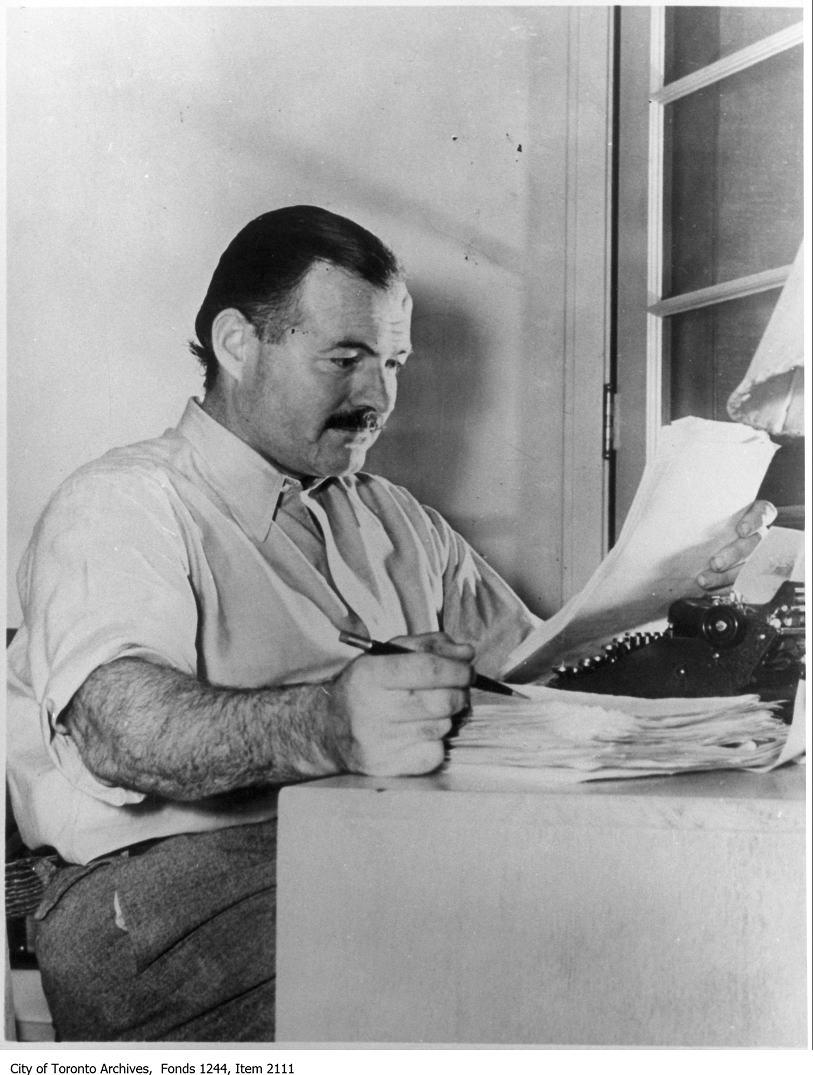
James, William. "Ernest Hemingway." Flickr. Accessed July 16, 2025. https://www.flickr.com/photos/torontohistory/9623687088
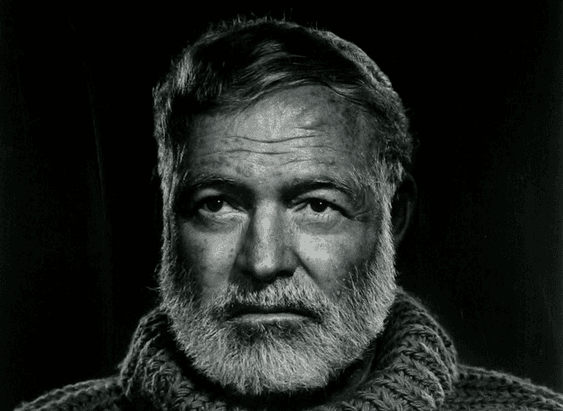
Karsh, Yousuf. "Hemingway portrait." Flickr. Accessed July 16, 2025. https://www.flickr.com/photos/130233892@N08/16973954350
Köseman, Zennure. “Ernest Hemingway’in ‘Satılık Bebek Patikleri: Hiç Giyilmemiş’ adlı Kısa Öyküsünde Çok Anlamlılık.” *Atatürk Üniversitesi Sosyal Bilimler Enstitüsü Dergisi* 17, no. 3 (2013): 1–10. Accessed July 13, 2025. https://www.academia.edu/104610701/Ernest_Hemingway_in_Sat%C4%B1l%C4%B1k_Bebek_Patikleri_Hi%C3%A7_Giyilmemi%C5%9F_Adl%C4%B1_K%C4%B1sa_K%C4%B1sa_%C3%96yk%C3%BCs%C3%BCnde_%C3%87ok_Anlaml%C4%B1l%C4%B1k


Doğum tarihi | 1899-07-21 | ||||||||
|---|---|---|---|---|---|---|---|---|---|
Eş | Hadley Richardson (m. 1921–1927) Pauline Pfeiffer (m. 1927–1940) Martha Gellhorn (m. 1940–1945) Mary Welsh Hemingway (m. 1946–1961) | ||||||||
Ölüm tarihi | 1961-07-02 | ||||||||
Influenced People | William Faulkner, Mark Twain, Gertrude Stein, Lev Tolstoy, Fyodor Dostoyevski, Ezra Pound, Joseph Conrad, Anton Çehov, Henry David Thoreau | ||||||||
Place of Birth | USA - Oak Park, Illinois | ||||||||
Place of Death | USA - Ketchum, Idaho | ||||||||
Books | The Old Man and the Sea (1952), For Whom the Bell Tolls (1940), The Sun Also Rises (1926), A Farewell to Arms (1929), A Moveable Feast (1964), Hills Like White Elephants (1927), The Snows of Kilimanjaro (1936), The Garden of Eden (1986), Men Without Women (1927), Islands in the Stream (1970), The Killers (1927), To Have and Have Not (1937), Cat in the Rain (1925), A Clean, Well-Lighted Place | ||||||||
Important Awards | Nobel Prize in Literature (1954), Pulitzer Prize (1953) | ||||||||
Henüz Tartışma Girilmemiştir
"Ernest Miller Hemingway" maddesi için tartışma başlatın
Early Life and Education
Career and Achievements
Major Works and Contributions
Personal Life
Final Years and Death
Legacy and Influence