

Bu içerik Türkçe olarak yazılmış olup yapay zeka ile otomatik olarak İngilizceye çevrilmiştir.
+2 Daha
Period | Ottoman State | ||||||||
|---|---|---|---|---|---|---|---|---|---|
Main Function | Cash aid Gift Letter transportation | ||||||||
Transportation Route | Surre Alayı | ||||||||
Place of Use | Mecca Medina | ||||||||
Material | Calf skin and meşin | ||||||||
Colors | Bordeaux Yellow | ||||||||
Form | Square or rectangular; in some examples, a bell-shaped lower section | ||||||||
Closing System | Meşin kaytan, sırma kordon or buckled strap | ||||||||
Sent Items | Money Quran Prayer mat Prayer beads Essence etc. | ||||||||
Items Brought Back | Zamzam Date Henna Miswak Od tree | ||||||||
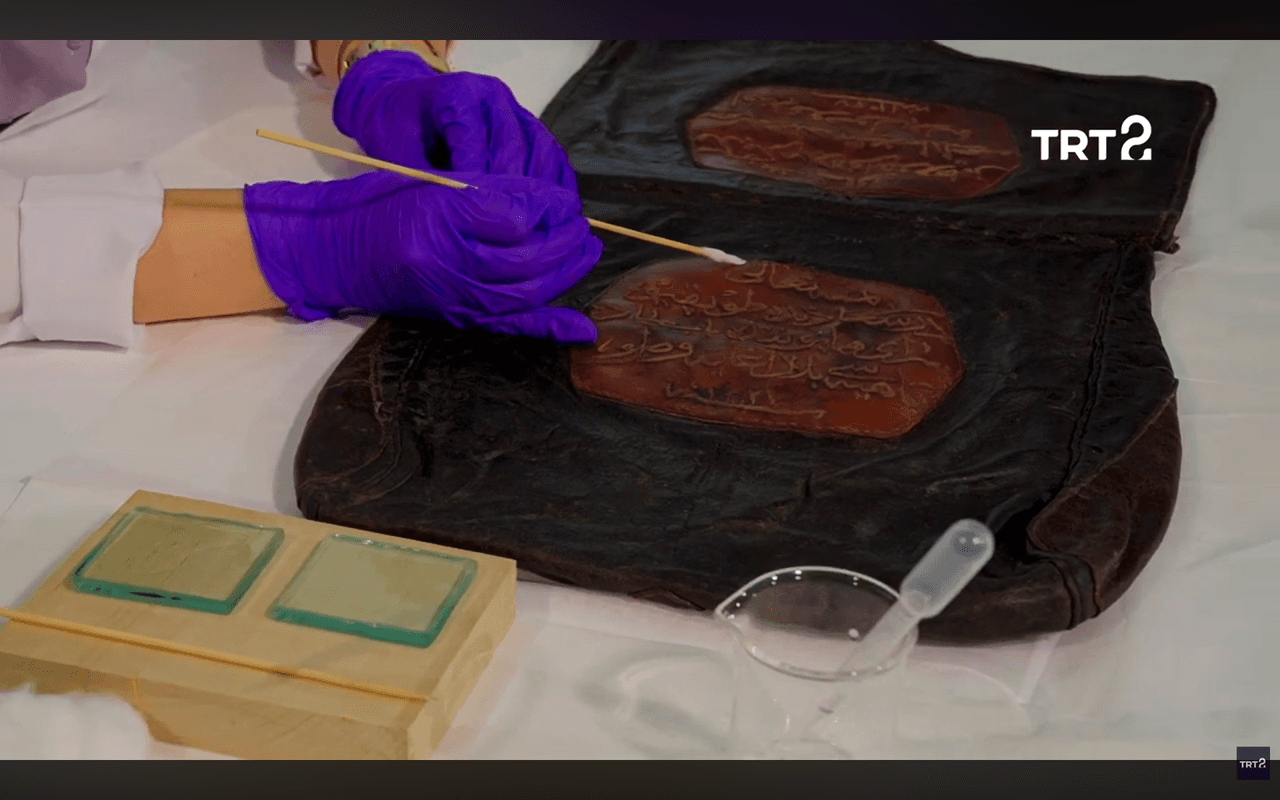
Feraşet çantası are leather containers used during the Ottoman State period to deliver cash assistance, gifts, and letters to the ferraşs and zevraks in Mecca and Medina, as well as to service personnel and those in need. The term "ferraş," literally meaning "distributor, spreader, sweeper, and servant," refers specifically to officials responsible for the cleaning, maintenance, and sweeping of the Kaaba al-Muazzama and the Prophet’s tomb (Ravza-i Mutahhara).【1】 The Ottoman sultans granted the title "Ferâşet-i Şerife Beratı" to individuals performing these sacred cleaning duties, while the term "zevrak" denotes the sack bearers in Mecca who distributed Zamzam water to pilgrims using earthenware vessels. The feraşet çantası was thus a specialized instrument devised to safeguard the cash and gifts delivered to these officials.
Conceptually, the feraşet çantası served as a channel through which both the Ottoman imperial administration and the general public could send assistance and correspondence to personnel and local communities in the Haremeyn region. Carriers prepared for the zevraks who distributed Zamzam water—sometimes also called "zevrak çantası"—were generally classified within the same functional category as feraşet çantası. These containers were made of leather or felt and bore the identities and addresses of both sender and recipient. They were registered under the Evkaf Nezareti and transported to their destinations via the Surre Alayı caravans.
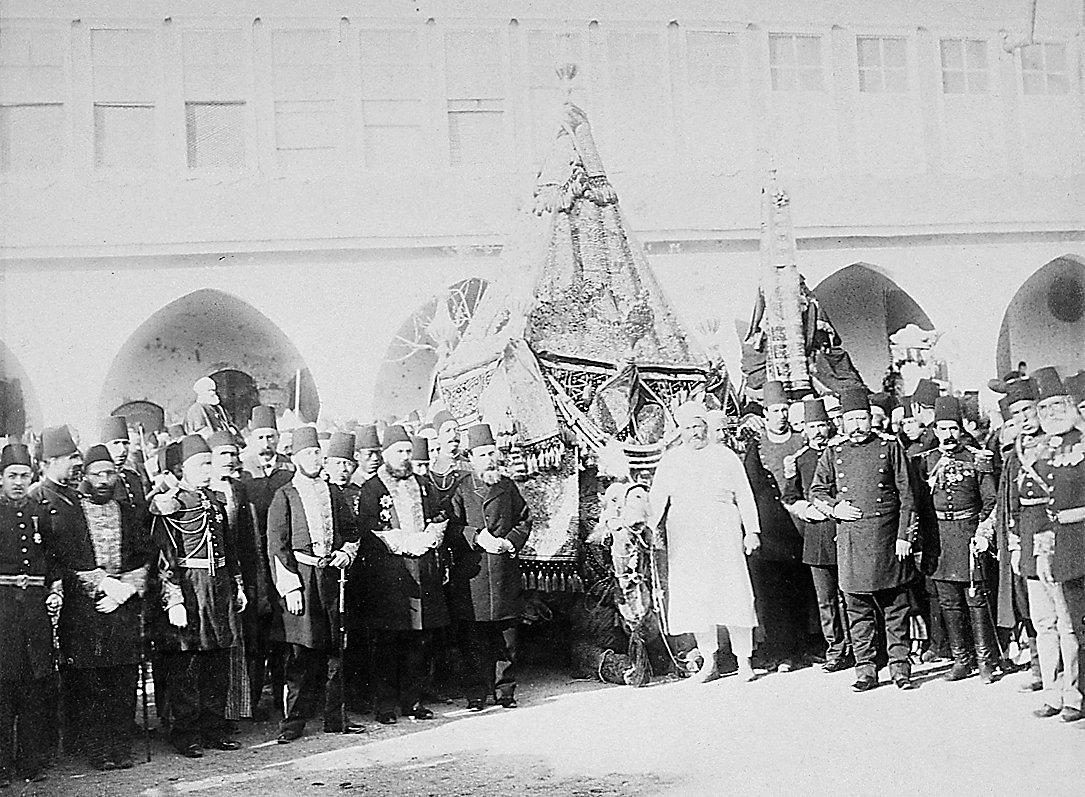
Surre Alayı (TDV İslam Ansiklopedisi)
The practice of annually delivering cash assistance and gifts to the Haremeyn region was institutionalized during the Abbasid Caliphate under Al-Muktedir Billah in 311 AH (923–924 CE) and later continued by the Fatimids and Mamluks. The first Ottoman surre was dispatched during the reign of Çelebi Sultan Mehmed and remained an ongoing practice under Murad II and Bayezid II. After Sultan Selim I’s 1517 campaign in Egypt and the subsequent pledge of allegiance by the Sharif of Mecca, the Ottoman ruler assumed the title "Hâdimü'l-Harameyni'ş-Şerifeyn," transforming the dispatch of surre and gifts into an official state duty with political significance.【2】
Within the Ottoman administrative and religious hierarchy, the feraşet çantası system operated alongside the Surre Alayı and formed an integral component of state protocol and waqf administration. Initially managed by the Dârüssaade Ağalığı and the Haremeyn Treasury, from the 19th century onward it came under the jurisdiction of the Kuyûd-ı Vakfiyye Kalemi within the Evkaf-ı Hümâyûn Nezâreti. Funds allocated from the sultan’s private treasury, as well as gifts prepared by private individuals, were sealed, recorded, and transported to Hejaz via the Surre Emini and designated officials.【3】
This administrative and religious tradition, sustained for approximately four centuries, came to an end during the First World War (1915–1918), when military developments along the Damascus and Hejaz railway lines and the resulting political fragmentation prevented the Surre Alayı caravans from reaching Hejaz.【4】
The primary purpose of the feraşet çantası was to securely deliver cash assistance and special gifts to the officials serving the Kaaba and Ravza-i Mutahhara, religious scholars, learned individuals, and needy locals in Mecca and Medina. Ottoman subjects and palace members who could not travel personally to the Haremeyn appointed ferraşs or zevraks as their representatives and contributed materially to their cleaning, maintenance, and water-distribution services. Envelopes containing money were inscribed with the recipient’s address alongside religious invocations, thereby fostering social solidarity and establishing a spiritual bond between sender and recipient.【5】
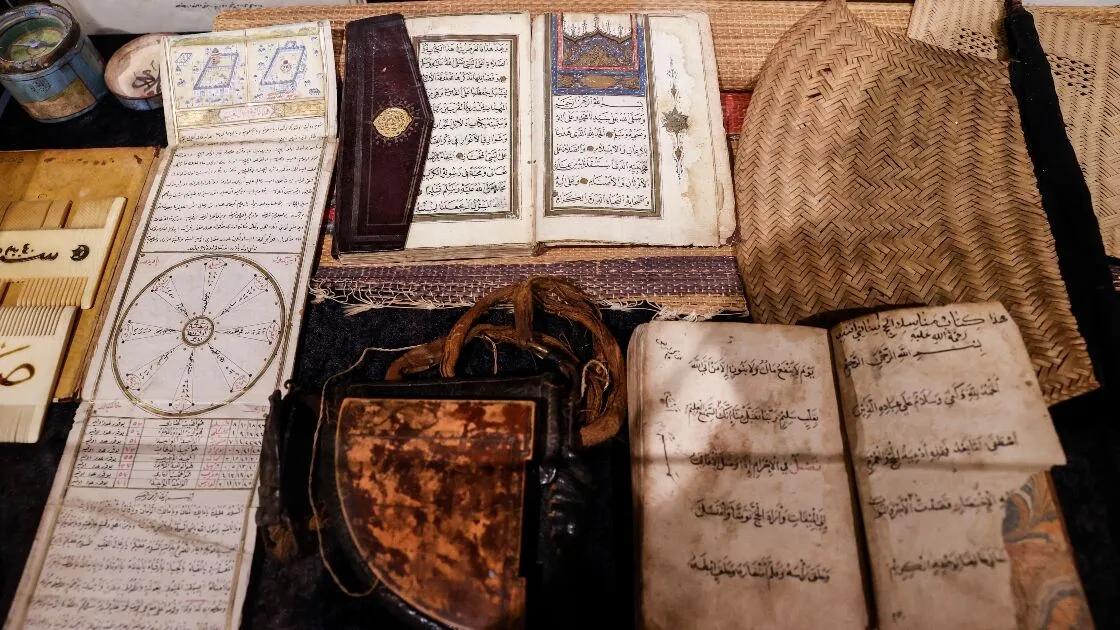
Feraşet Çantası ve Kutsal Eserler (Anadolu Ajansı)
Beyond serving as a one-way conduit for aid, the feraşet çantası functioned as a reciprocal medium of communication and gift exchange between Istanbul and Hejaz. Alongside cash, the containers carried handwritten copies of the Qur’an, precious coverings, perfumes, and other valued items. Upon delivery, the containers were not returned empty; instead, they were filled with gifts from the Haremeyn officials and local communities for the original senders.【6】
On their return journey, the feraşet çantası carried items of blessing (teberrük) intended for the sender, including Zamzam water, dates, henna, oud wood, miswak, agate rings, and fragrances. Additionally, dust and fragments of brooms collected during the cleaning of the Kaaba and Ravza-i Mutahhara were placed inside these containers and transported back to Istanbul. In this way, the feraşet çantası fulfilled not only the function of securing annual stipends for the sacred site personnel but also acted as a tangible instrument sustaining social and religious ties between Hejaz and the imperial center.【7】
Feraşet çantası were generally made of calf leather and felt. Historical examples preserved in the General Directorate of Waqfs Archives show a preference for burgundy and yellow felt. The dimensions and geometric forms of the containers varied according to their intended use and the volume of contents; archival records document models measuring 29.5 cm in width and 46 cm in height, as well as square and rectangular variants sized 41x50 cm, 32x32 cm, and 38x38 cm. The lower portions of the bags were designed with bellows-like structures, their edges decorated with intricate embroidery, and metallic components gilded with gold leaf.【8】
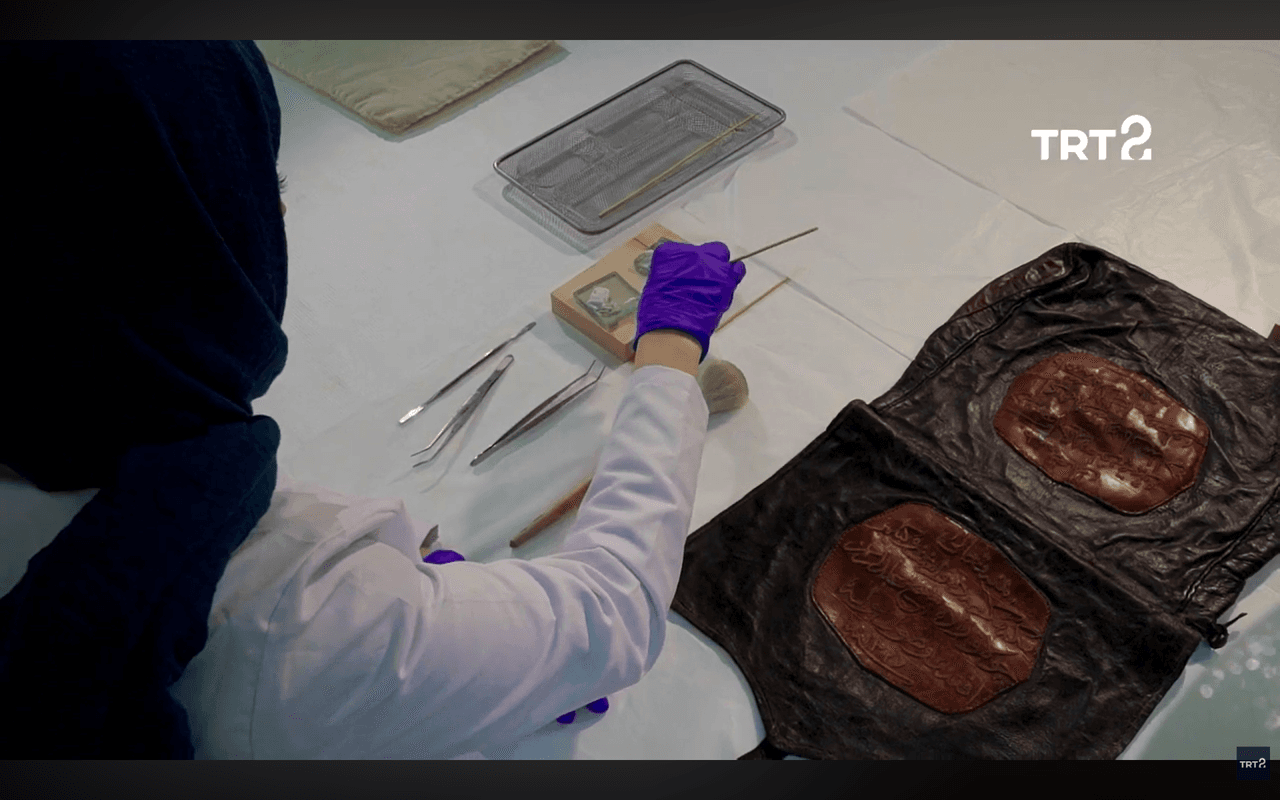
Feraşet Çantası (TRT2)
The opening and closure mechanisms of the bags were engineered to ensure the security of their contents. The openings were either drawn shut with felt cords or special braided tassels, or secured with buckled straps. In examples made of burgundy felt, six perforations were placed along the top edge, with cords measuring 180 cm in length terminating in 10 cm-long braided tassels.【9】 Once filled and delivered by the relevant parties, the bags were sealed with lead seals to prevent unauthorized opening and then handed over to designated officials.
Another distinctive physical feature of the feraşet çantası is the inscriptions identifying the sender and recipient. On one side of the bag, the sender’s name, title, and place of residence were recorded; on the opposite side, the recipient’s name, position, and city were noted. These details could be transferred via a separate plaque affixed to the lid, but more commonly they were written in black ink or gold embroidery on red felt patches and appliquéd onto the body of the bag.【10】
The primary contents transported from Istanbul to the Haremeyn via feraşet çantası consisted of cash donations and valuable objects. Depending on the donor’s means, gold and silver coins were placed in specially prepared envelopes within the bags. Alongside cash, the containers carried handwritten Qur’ans, Qur’an cases, sanduqa puşides, Kaaba coverings, prayer rugs, saddlebags, silver locks, carpets, and gold and silver candelabras. Additionally, prayer beads adorned with pearls, diamonds, amber, and rubies, as well as jewelry, rose oils, perfumes, Kaaba-cover scents, and various garments were dispatched.【11】
After delivery to recipients in Hejaz, the feraşet çantası were not returned empty but were refilled with reciprocal gifts. Among the principal items placed inside the returning bags were Zamzam water, dates, henna, miswak, and kürdan. In addition, agate rings, silver and brass bracelets, oud wood, incense materials, and fragrance essences constituted the gifts sent back to the original donors.【12】
Another group of items preserved in the return containers consisted of blessed relics from the sacred sites. During the cleaning of the Kaaba al-Muazzama and Ravza-i Mutahhara, dust collected from these sites was carefully gathered and placed inside the feraşet çantası. Similarly, the brooms used in the cleaning process and fragments of the periodically replaced Kaaba coverings were also transported back to Istanbul via these containers.【13】
The administrative and legal procedures governing the feraşet çantası system were managed centrally by the Evkaf-ı Hümâyûn Nezâreti (specifically the Kuyûd-ı Vakfiyye Kalemi and Kuyûd-ı Kadîme Müdüriyeti), the Dârüssaade Ağalığı, and the Bâb-ı Âli; in Hejaz, they were supervised by the Harem-i Şerif Hazreti Nebevî Müdüriyeti. To solicit donations and cash gifts from the public for the Haremeyn, official announcements were issued through neighborhood imams, the Istanbul Kadı, and the zabtiye administration in Istanbul, Üsküdar, Galata, and Havass-ı Refia districts up until mid-Shaban. Bags and their contents brought by agents were received by officials of the Evkaf Nezareti’s Kuyûd-ı Vakfiyye Kalemi, documented with receipts, and recorded in ledgers and registers.【14】
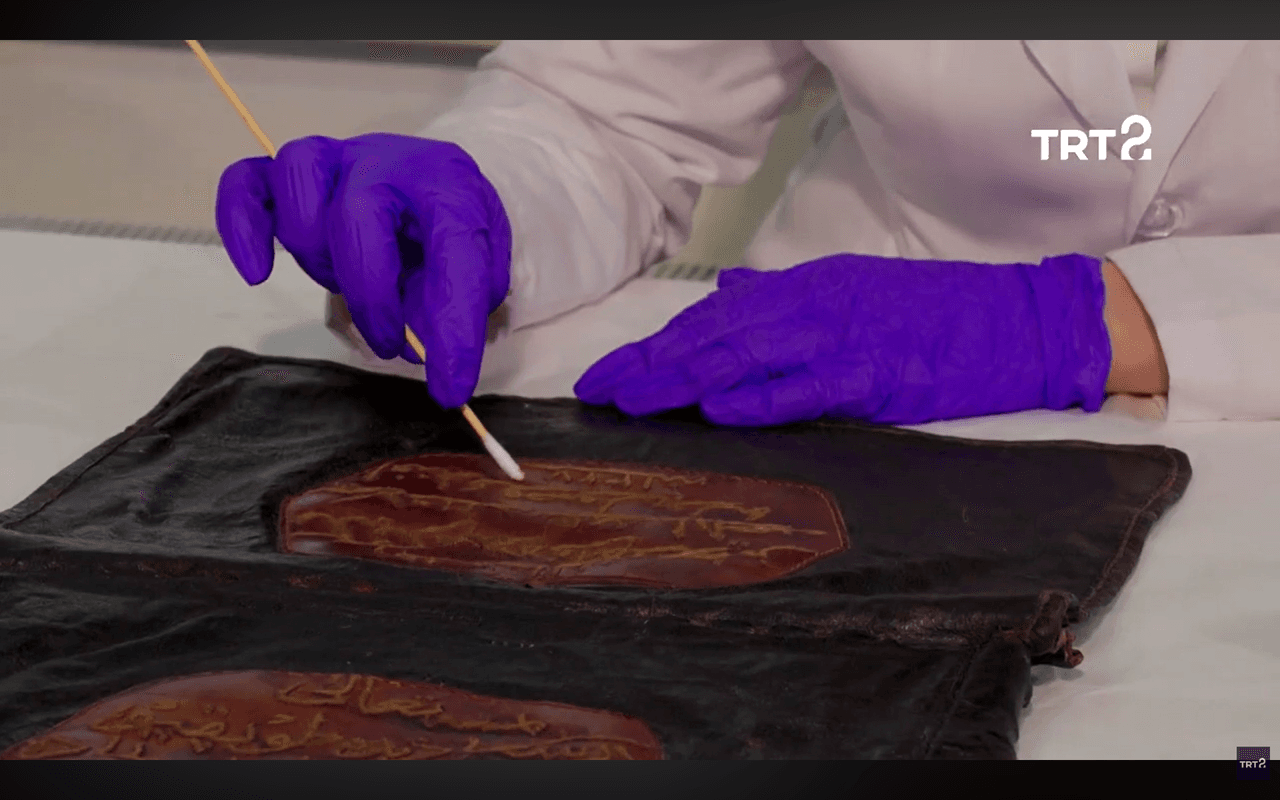
Feraşet Çantası (TRT2)
Upon receipt, the bags were individually counted (bit-ta'dat) and sealed with internal and external lead seals (temhir) to ensure security. Within this administrative process, the Kuyûd-ı Vakfiyye Kalemi clerks of Feraşet-i Şerife and Zevrak, along with the tesellüm and tevzi officials, were held responsible, and two copies of the accompanying registers were submitted to the Muhasebat Müdüriyet-i Umumiyesi. Prepared bags were loaded onto caravans under the supervision of isale officials, the Surre Kethüdası, and the Akkam Başı, housed in sealed containers and sacks. Additionally, müjdecibaşı officers from the Peykân-ı Hassa Ocağı were assigned duties related to communication and transport.【15】
Upon arrival in the sacred lands, the feraşet çantası were received and inspected by officials of the Harem-i Şerif Hazreti Nebevî Müdüriyeti and local kadis, who verified the integrity of the seals. The bags were then distributed to their recipients against receipt and signature, in accordance with ledger records. Certified and annotated reports, along with sealed documents, were compiled into registers and returned to Dersaadet. Thus, both the oversight of treasury and waqf records was ensured and the return containers carrying reciprocal gifts were safely transported back to the center.
Anadolu Ajansı. “Mukaddes yolculuğun hatıraları ve Kabe örtüleri Esenler'de sergileniyor.” Accessed September 19, 2026.https://www.aa.com.tr/tr/kultur-sanat/mukaddes-yolculugun-hatiralari-ve-kabe-ortuleri-esenlerde-sergileniyor/2561001
Ateş, İbrahim. “Osmanlılar Zamanında Mekke ve Medine’ye Gönderilen Para ve Hediyeler.” *Vakıflar Dergisi*, 1981: 113–170. Accessed September 19, 2026.https://isamveri.org/pdfdrg/D00143/1981_13/1981_13_ATESI.pdf
Ayaz, Betül. “Hilafet ve Siyaset: Osmanlı Devleti’nin Hac Hizmetleri (1798–1876).” PhD thesis, Marmara Üniversitesi Türkiyat Araştırmaları Enstitüsü, Türk Tarihi Anabilim Dalı, Yakınçağ Tarihi Bilim Dalı, 2014. Accessed September 19, 2026.https://katalog.marmara.edu.tr/veriler/yordambt/cokluortam/9F/eTez024458.pdf
Buzpınar, Ş. Tufan. “Surre.” *TDV İslâm Ansiklopedisi*. Accessed September 19, 2026.https://islamansiklopedisi.org.tr/surre
Gaziantep Olgunlaşma Enstitüsü. *Surre Alayı Kataloğu*. Olgunlaşma Enstitüleri, October 2024. Accessed September 19, 2026.https://antepolgunlasma.meb.k12.tr/meb_iys_dosyalar/27/08/763501/dosyalar/2025_02/21093327_surrealayikatalogusikistirilmis.pdf
Kültür İstanbul. "Haremeyn – Kutsal Yolculuk Sergisi 27 Mart’ta Panorama 1453 Tarih Müzesi’nde açılacak." Accessed September 19, 2026.https://kultur.istanbul/haremeyn-kutsal-yolculuk-sergisi-27-martta-panorama-1453-muzesinde-acilacak/
Okay, Yeliz. "İstanbul’un Eğlenceleri ve Sosyal Tarihine Maziden Bir Katkı: ‘Dünden Hatıralar’." Sosyologca 2, no. 4 (July–December 2012): 61–77. Accessed September 19, 2026.
TRT 2. “Seyr-i Mukaddes” | Topkapı Sarayı’nda Muhafaza Edilen Kutsal Emanetler @trt2. YouTube. Accessed September 19, 2026.
Özlü, Zeynel. 2013. “Osmanlılarda Haberleşme ve Tören Ocağı: Peykân-I Hassa”. Türk Kültürü ve Hacı Bektaş Veli Araştırma Dergisi, no. 65: 135-168. Accessed September 19, 2026.
“Ferraş” Kubbealtı Lugatı. Accessed September 19, 2026.https://lugatim.com/s/FERRA%C5%9E
“Ferâşet” Kubbealtı Lugatı. Accessed September 19, 2026.https://lugatim.com/s/FER%C3%82%C5%9EET
[1]
“Ferraş” Kubbealtı Lugatı, son erişim: 19 Eylül 2026. https://lugatim.com/s/FERRA%C5%9E
[2]
Ş. Tufan Buzpınar, “Surre,” TDV İslâm Ansiklopedisi, son erişim: 19 Eylül 2026,https://islamansiklopedisi.org.tr/surre
[3]
Ş. Tufan Buzpınar, “Surre,” TDV İslâm Ansiklopedisi, son erişim: 19 Eylül 2026, https://islamansiklopedisi.org.tr/surre
[4]
Ş. Tufan Buzpınar, “Surre.”
[5]
İbrahim Ateş, “Osmanlılar Zamanında Mekke ve Medine’ye Gönderilen Para ve Hediyeler,” Vakıflar Dergisi (1981): 113, son erişim: 19 Eylül 2026. https://isamveri.org/pdfdrg/D00143/1981_13/1981_13_ATESI.pdf
[6]
Gaziantep Olgunlaşma Enstitüsü, Surre Alayı Kataloğu (Olgunlaşma Enstitüleri, Ekim 2024), s.17. https://antepolgunlasma.meb.k12.tr/meb_iys_dosyalar/27/08/763501/dosyalar/2025_02/21093327_surrealayikatalogusikistirilmis.pdf
[7]
İbrahim Ateş, “Osmanlılar Zamanında Mekke ve Medine’ye Gönderilen Para ve Hediyeler,” s.113,
[8]
İbrahim Ateş, “Osmanlılar Zamanında Mekke ve Medine’ye Gönderilen Para ve Hediyeler,” s.124.
[9]
İbrahim Ateş, “Osmanlılar Zamanında Mekke ve Medine’ye Gönderilen Para ve Hediyeler,” s.124.
[10]
Gaziantep Olgunlaşma Enstitüsü, Surre Alayı Kataloğu (Olgunlaşma Enstitüleri, Ekim 2024), s.8.
[11]
Gaziantep Olgunlaşma Enstitüsü, Surre Alayı Kataloğu (Olgunlaşma Enstitüleri, Ekim 2024), s.8.
[12]
İbrahim Ateş, “Osmanlılar Zamanında Mekke ve Medine’ye Gönderilen Para ve Hediyeler,” s.113.
[13]
Gaziantep Olgunlaşma Enstitüsü, Surre Alayı Kataloğu (Olgunlaşma Enstitüleri, Ekim 2024), s.17.
[14]
İbrahim Ateş, “Osmanlılar Zamanında Mekke ve Medine’ye Gönderilen Para ve Hediyeler,” s.124.
[15]
İbrahim Ateş, “Osmanlılar Zamanında Mekke ve Medine’ye Gönderilen Para ve Hediyeler,” s.134.

Period | Ottoman State | ||||||||
|---|---|---|---|---|---|---|---|---|---|
Main Function | Cash aid Gift Letter transportation | ||||||||
Transportation Route | Surre Alayı | ||||||||
Place of Use | Mecca Medina | ||||||||
Material | Calf skin and meşin | ||||||||
Colors | Bordeaux Yellow | ||||||||
Form | Square or rectangular; in some examples, a bell-shaped lower section | ||||||||
Closing System | Meşin kaytan, sırma kordon or buckled strap | ||||||||
Sent Items | Money Quran Prayer mat Prayer beads Essence etc. | ||||||||
Items Brought Back | Zamzam Date Henna Miswak Od tree | ||||||||
Henüz Tartışma Girilmemiştir
"Feraşet Bag" maddesi için tartışma başlatın
Historical Context and Place within the Ottoman Administrative and Religious Structure
Purpose and Function
Physical, Technical, and Production Characteristics
Contents, Preserved Items, and Reciprocal Gifts
Personnel, Institutions, and Administrative Procedures