


Bu içerik Türkçe olarak yazılmış olup yapay zeka ile otomatik olarak İngilizceye çevrilmiştir.
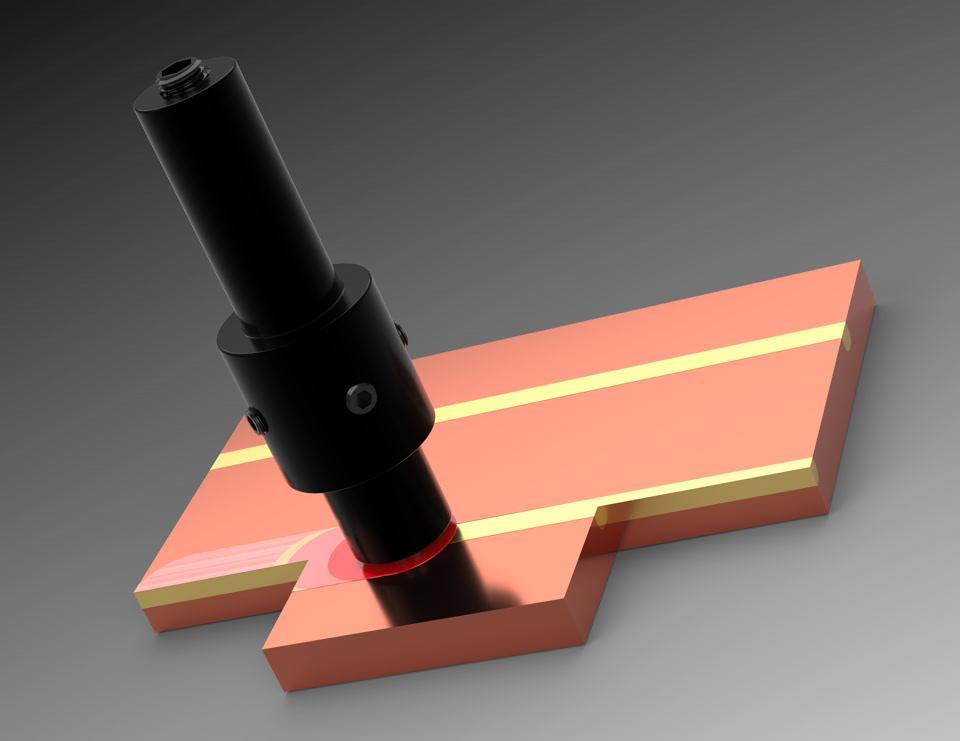
Friction Stir Welding Source
Description | Friction Stir Welding is a solid-state welding method used to join metal and plastic materials. Developed for the first time in 1991 this method joins materials without melting them enhancing mechanical strength and offering environmentally friendly characteristics. FSW provides particular advantages for materials with low melting points and is widely used in many industries such as automotive aerospace and space. | ||||||||
|---|---|---|---|---|---|---|---|---|---|
Application Area(s) | Aerospace and Space: NASA uses it in the production of space shuttle fuel tanks. Automotive: It is preferred for the safe and durable joining of aluminum alloys. Shipbuilding: It is applied to create lightweight and strong joints. | ||||||||
Friction Stir Welding (FSW) is a solid-state joining method used for joining metals and plastic materials. Developed for the first time in 1991, this method technique joins materials without melting them, enhancing mechanical strength in the weld zone and offering environment friendly characteristics. FSW provides significant advantages especially for materials with low melting points and is widely used in many industries including automotive, aerospace, and space like common.
Friction Stir Welding has a broad range of applications in various industries such as aerospace, automotive, space, and shipbuilding. NASA has employed friction stir welding in the production of space shuttle fuel tanks, leveraging the advantages this method offers for joining lightweight alloys. In the automotive industry, FSW is preferred for the safe and durable joining of aluminum alloys. Additionally, this method contributes to environmentally friendly production processes by improving energy efficiency.
The advantages of Friction Stir Welding include joining materials without melting, eliminating the need for filler material or shielding gas, producing a fine-grained building structure in the weld zone, and being an environmentally benign process place. However, some disadvantages also exist; particularly, applying FSW to hard materials or those operating at high temperatures can be challenging. Moreover, the tools and equipment used during the welding process can be costly.
Success in FSW depends on the proper adjustment of welding parameters. Parameters such as welding speed, tool rotational speed, and vertical force directly influence the mechanical properties of the weld zone. Research has shown that an FSW process conducted with appropriate parameters produces a weld zone with high tensile strength and a fine-grained microstructure. In particular, studies on the FSW joining of pure copper have observed that intensive mixing improves weld quality on.
Friction Stir Welding can contribute further to industry by expanding its applicability to a broader range of materials in the future. Research on composite materials and advanced technology alloys has the potential to extend the application areas of FSW. Furthermore, integration with welding robots and automated systems can enable easier adaptation of FSW into production lines.
Al-Shammari, Mohsin Abdullah, and Worood H. Ibrahim. "Effect of Friction Stir Welding and Friction Stir Processing Parameters on The Efficiency of Joints." مجلة النهرين للعلوم الهندسية, 2018. https://doi.org/10.29194/NJES21020230.
Eker, İlker. "Değişik Kimyasal Kompozisyondaki Alüminyum Alaşımının Sürtünme Karıştırma Kaynak (Friction Stir Welding) Yöntemiyle Kaynak Edilebilirliğinin İncelenmesi." 2008. Accessed February 11, 2025. https://tez.yok.gov.tr/UlusalTezMerkezi/tezDetay.jsp?id=n5QiM03Uyew3Y70XohKR8Q&no=KWTmiSbUfG5XGcJUCPNkSA.
Esme, Uğur, Mustafa Kemal Kulekci, Onur Er, and Cem Boğa. "Multi Response Optimization of Friction Stir Spot Welding Process." *Çukurova Üniversitesi Mühendislik Fakültesi Dergisi*, 2021. Accessed February 11, 2025. https://search.trdizin.gov.tr/tr/yayin/detay/456553/multi-response-optimization-of-friction-stir-spot-welding-process.
Horton, K. Renee. "Friction Stir Welding and NASA." 00000, 2016. Accessed February 11, 2025. https://ntrs.nasa.gov/citations/20160003169.
Miličić, M., P. Gladović, R. Bojanić, T. Savković, and N. Stojić. "Friction Stir Welding (FSW) Process of Copper Alloys." *Metalurgija*, 2016. Accessed February 11, 2025. http://hrcak.srce.hr/file/209305.

Friction Stir Welding Source
Description | Friction Stir Welding is a solid-state welding method used to join metal and plastic materials. Developed for the first time in 1991 this method joins materials without melting them enhancing mechanical strength and offering environmentally friendly characteristics. FSW provides particular advantages for materials with low melting points and is widely used in many industries such as automotive aerospace and space. | ||||||||
|---|---|---|---|---|---|---|---|---|---|
Application Area(s) | Aerospace and Space: NASA uses it in the production of space shuttle fuel tanks. Automotive: It is preferred for the safe and durable joining of aluminum alloys. Shipbuilding: It is applied to create lightweight and strong joints. | ||||||||
Henüz Tartışma Girilmemiştir
"Friction Stir Welding (FSW)" maddesi için tartışma başlatın
Application Areas
Advantages and Disadvantages
Welding Parameters
Future Potential