

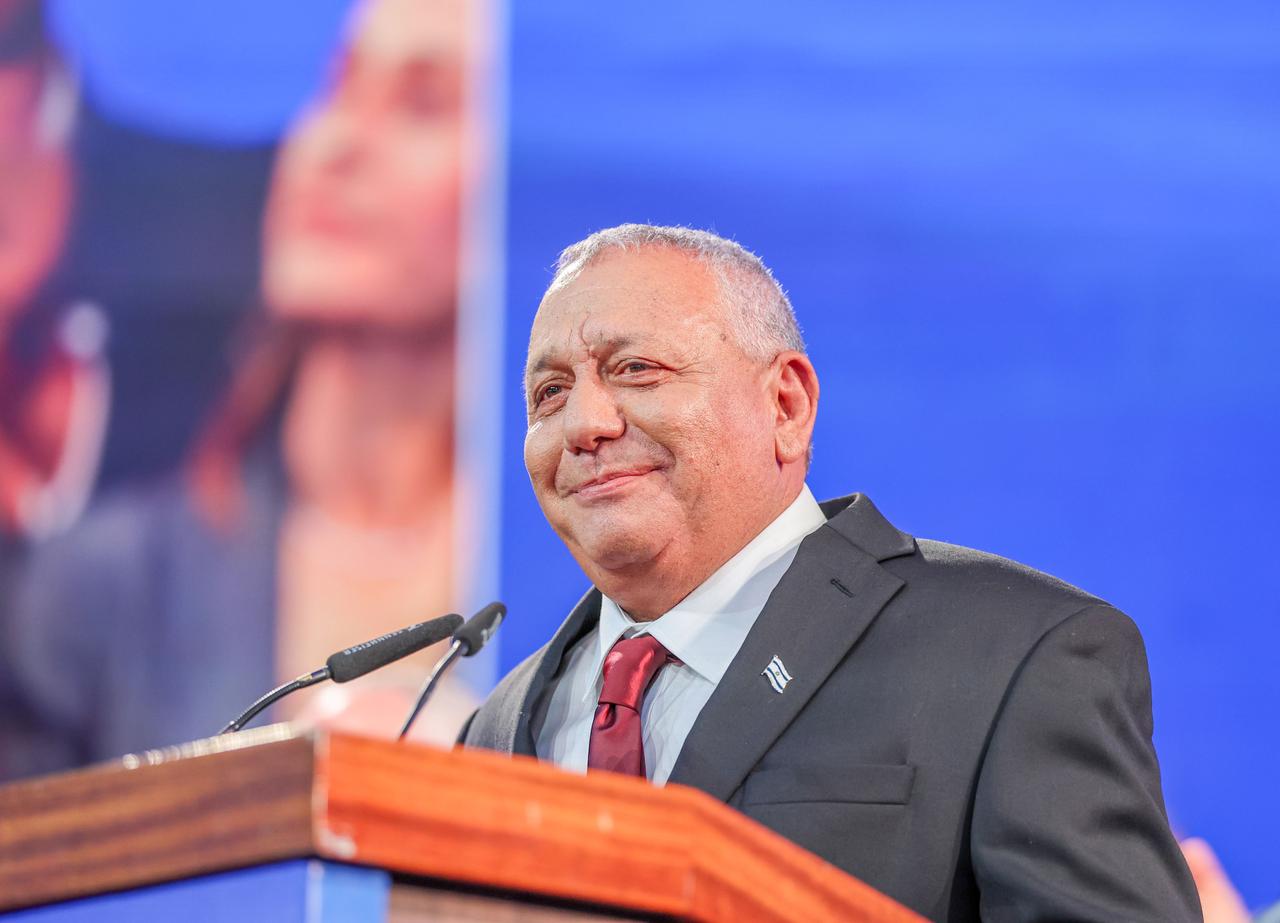

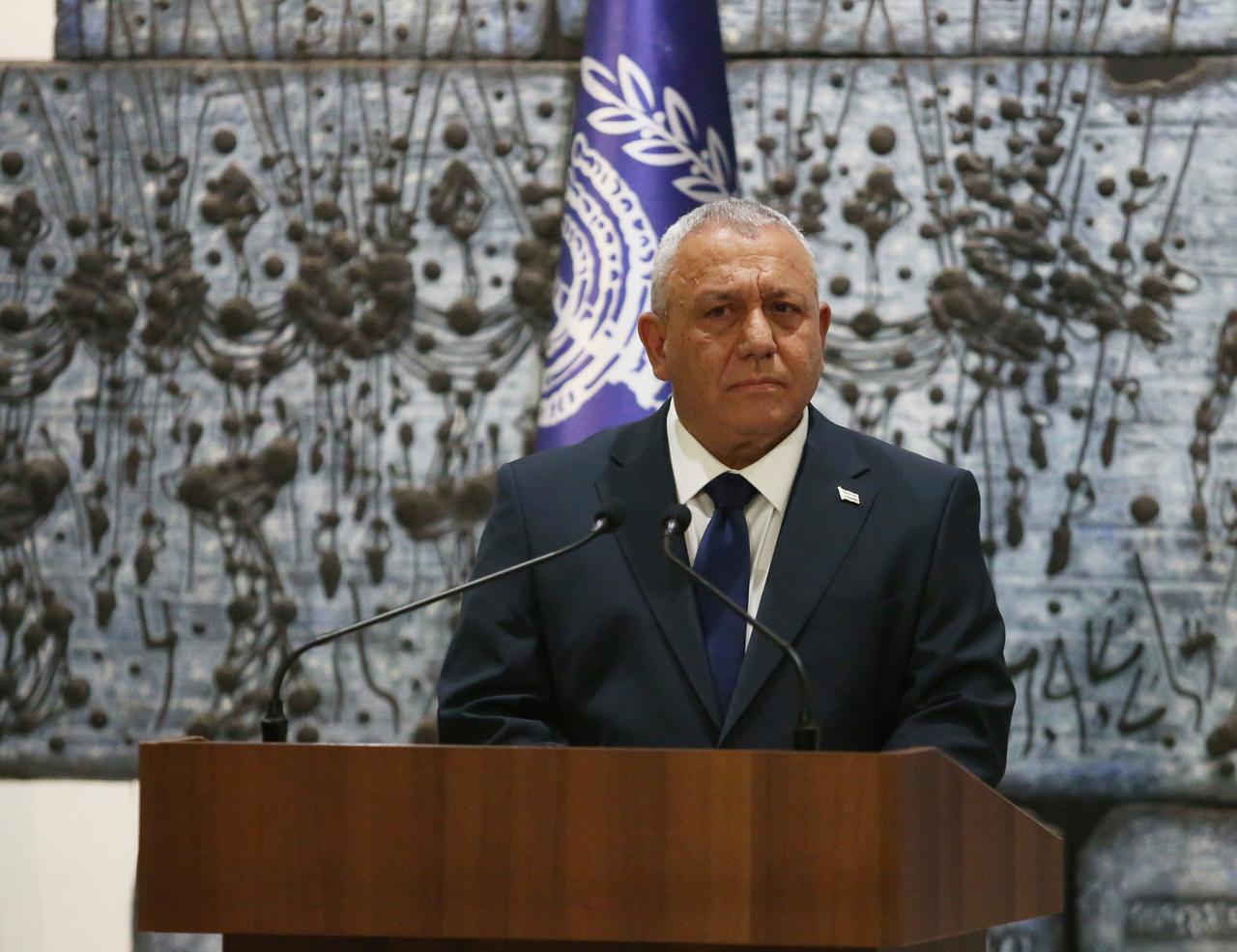
Gadi Eisenkot (Anadolu Ajansı)
Date of Birth | 19 May 1960 | ||||||||
|---|---|---|---|---|---|---|---|---|---|
Place of Birth | Tiberias, Israel | ||||||||
Nationality | Israel | ||||||||
Family Origin | Jewish of Moroccan origin (Mizrahi) | ||||||||
Education | Military education at Tel Aviv University, Haifa University and in the United States | ||||||||
Profession | Soldier, politician | ||||||||
Military Service Years | 1978–2019 | ||||||||
Rank | Lieutenant General | ||||||||
General Staff Presidency | 16 February 2015–15 January 2019 | ||||||||
Political Parties | National Unity Party, Yesh Atid Party | ||||||||
Year of Entry into Politics | 2022 | ||||||||
Membership in Parliament | 25th Knesset, 2022 | ||||||||
Membership in War Cabinet | October 2023–June 2024 | ||||||||
2026 General Elections | Yesh Atid Party, 21 seats in the Knesset | ||||||||
Task of Forming Government | 7 November 2026 | ||||||||
Civil Status | Married, father of five children | ||||||||
Place of Residence | Herzliya, Israel | ||||||||
Gadi Eisenkot (born 19 May 1960 in Tiberias) is an Israeli soldier and politician of Moroccan origin. He began his military career in the Israel Defense Forces in 1978 and held various command positions. He served as the 21st Chief of the General Staff of Israel from 16 February 2015 to 15 January 2019. He is associated with the development of the Dahiya Doctrine, formulated by Israel after the 2006 Lebanon War, which envisaged targeting civilian infrastructure and employing disproportionate military force. In 2022 he entered politics and was elected to the Knesset. He served in the emergency government and war cabinet led by Benjamin Netanyahu from October 2023 to June 2024. In 2025 he founded the Yashar Party and contested the general elections on 27 October 2026, leading the opposition bloc against Netanyahu. On 7 November 2026 he was tasked by Israeli President Isaac Herzog with forming a government.【1】
Gadi Eisenkot was born on 19 May 1960 in Tiberias, in northern Israel, to a Jewish family that had immigrated from Morocco.【2】 His father, Meir Eisenkot, emigrated from Marrakesh in Morocco, and his mother, Ester Eisenkot, from Casablanca.【3】 The second of four children, Eisenkot spent his childhood and youth in Eilat, in southern Israel.【4】 His family belonged to the Mizrahi community, a term used to describe Jews whose origins lie in the Middle East and North Africa.【5】
After completing his secondary education at Goldwater High School in Eilat, he graduated from Tel Aviv University with a degree in history. During his military career, he pursued graduate studies at U.S. military institutions. In his 1997 work titled Israel’s Security in the 21st Century: Risks and Opportunities, he analyzed Israel’s security strategy, military threats, and potential policy responses. He noted that the foundational principles of Israel’s security doctrine had never been formally published in a detailed document. He advocated for enhancing intelligence capabilities, maintaining military deterrence, and preserving peace agreements with Arab countries. In 2011 he earned a master’s degree in political science from the University of Haifa.【6】
In 1978 at the age of 18, Eisenkot joined the Israel Defense Forces’ Golani Brigade. He began his service in the 13th Infantry Battalion. In the early 1980s he participated in Israel’s military operations in Lebanon. From 1986 to 1987 he served as an operations officer and was subsequently assigned to the Northern Command.
He was promoted to the rank of colonel in 1992. In 1994 he was appointed commander of the Efraim Brigade. From 1997 to 1998 he commanded the Golani Brigade. In 1999 he was promoted to brigadier general and appointed military secretary to Prime Minister and Defense Minister Ehud Barak. During this posting he participated in negotiations between Israel and Syria.【7】
During the Second Intifada, Eisenkot assumed command of Israeli military forces in the West Bank. In 2003 he was appointed commander of the West Bank Division. In June 2005 he was named head of the General Staff Operations Directorate and promoted to major general.【8】
During the 2006 Lebanon War between Israel and Hezbollah, Eisenkot served in the General Staff Operations Directorate. After the war he was appointed commander of Israel’s Northern Command, a position he held until July 2011.
While serving as Northern Command commander, Eisenkot made statements regarding Israel’s military approach toward Lebanon. He noted that Hezbollah’s rocket capabilities had expanded and that a future conflict could require the use of greater military force against Israel. He defended Israel’s reconnaissance flights over Lebanese airspace as necessary for monitoring Hezbollah’s military activities.【9】
The Dahiye Doctrine is a military approach named after the Dahiya neighborhood in southern Beirut, Lebanon, where Hezbollah operates. The doctrine gained prominence following Israel’s intense aerial bombardments of this area during the 2006 Lebanon War. It is based on the principle of subjecting not only military targets but also infrastructure within populated areas where armed groups operate to widespread attacks.
In a statement reported by Reuters on 3 October 2008, Eisenkot said that if rockets were launched from Lebanon into Israel, the destruction witnessed in Dahiya in 2006 would be replicated in other populated areas. He stated that disproportionate force would be applied to villages that attacked Israel, treating these settlements not as civilian areas but as military bases. He emphasized that this approach was not a proposal but an approved plan.【10】
The United Nations Fact-Finding Mission on the Gaza Conflict report, submitted to the United Nations Human Rights Council on 25 September 2009, treated the Dahiye Doctrine as an emerging approach within Israeli military thinking. Paragraphs 1194 to 1199 of the report referenced Eisenkot’s 2008 statements. The report noted that the doctrine entailed the use of disproportionate force resulting in extensive destruction of civilian property and infrastructure. The UN mission concluded that certain military practices observed during Israel’s Operation Cast Lead in Gaza between 27 December 2008 and 18 January 2009 aligned with this approach.【11】
The entry on the Israeli military’s understanding of military ethics in the Interactive Encyclopedia of the Palestinian Question also examined Eisenkot’s statements regarding the Dahiye Doctrine. It noted that while there had been no official public declaration by the Israeli military adopting this approach as formal military policy, Eisenkot had explicitly stated that the plan had been approved.【12】
Human Rights Watch, in its report titled I Lost Everything: Israel's Unlawful Destruction of Property During Operation Cast Lead, published on 13 May 2010, examined the destruction of civilian property during the 2008–2009 military operation in Gaza. The organization reported that in the 12 incidents it investigated, 189 buildings were completely destroyed, including 170 residential homes, resulting in at least 971 people becoming homeless. The report also cited Eisenkot’s 2008 statements, emphasizing that the destruction of civilian property beyond military necessity violated international humanitarian law.【13】
After leaving his post as Commander of the Northern Command, Eisenkot was appointed Deputy Chief of the General Staff. On 16 February 2015, he became the 21st Chief of the General Staff of the Israeli military, becoming the first Chief of Staff of Israeli descent from a family of Moroccan Jewish origin.
During his tenure, he focused on restructuring the military command system, enhancing military preparedness, expanding intelligence operations, and improving coordination among ground, air, naval, and cyber forces.
During Eisenkot’s tenure as Chief of Staff, the document IDF Strategy was published in August 2015. The document outlined the Israeli military’s strategic objectives, threat assessments, principles of force employment, and command structure. Its English translation, accompanied by an introduction by Ahmad Samih Khalidi, was published in the Journal of Palestine Studies in 2016.
The strategy document defined Israel’s military security doctrine in terms of deterrence, early warning, defense, and achieving military outcomes. In addition to threats from regular state armies, it listed non-state armed organizations such as Hamas and Hezbollah, Iran’s regional activities, and cyberattacks as key security threats.
The document addressed military operations within three distinct frameworks: routine periods, exceptional circumstances, and wartime conditions. It anticipated that political leadership would set operational objectives, command and control mechanisms would be refined, intelligence capacity would be enhanced, and the effectiveness of ground operations would be improved.【14】
The multi-year military transformation program implemented during Eisenkot’s tenure as Chief of the General Staff was named the Gideon Plan. The foundations of the plan were laid in 2015 and its implementation began in 2016.
The program aimed to restructure the relationship between regular military units and reserve forces, enhance training and readiness levels, develop technological capabilities, and strengthen operational capacity. It also sought to redirect military resources toward priority areas and reduce the size of the force structure while increasing its effectiveness.
During this period, Eisenkot argued that the military needed to maintain an institutional structure independent of religious and political divisions. In 2016, he changed the institutional position of the unit responsible for religious awareness activities within the military. This reorganization, which sparked debate between religious and secular segments, was linked to his view that military institutions must operate within a unified command and values framework.
In the same year, he was awarded the Legion of Merit by the Chairman of the U.S. Joint Chiefs of Staff, Joseph Dunford.【15】
During Eisenkot’s tenure as Chief of the General Staff, protests began in the Gaza Strip on 30 March 2018 under the name the Great March of Return. The demonstrations, organized by Palestinians, demanded an end to the blockade of Gaza and recognition of the right of Palestinian refugees to return to their homes.
In a statement prior to the start of the protests, Eisenkot announced that over 100 snipers had been deployed along the Gaza border. He stated that Israeli soldiers had been ordered to use overwhelming force to prevent mass crossings of the border or the destruction of border barriers.
Human Rights Watch, in a statement dated 3 April 2018, criticized the rules of engagement regarding the use of lethal force during the protests. The organization classified the killing of 14 Palestinian demonstrators on 30 March as unlawful, noting that there was no evidence these individuals posed an imminent threat to life.【16】
The Palestinian human rights organization Al-Haq, in its report titled Planning to Kill: Israel's Public and Stated Plans to Commit War Crimes, examined Eisenkot’s pre-protest statements and the Israeli military’s rules of engagement. The report noted that Eisenkot had confirmed the deployment of snipers and publicly endorsed the use of overwhelming force on 28 March 2018. Al-Haq also included Eisenkot’s statements following the initial protests that supported the military’s intervention.【17】
The United Nations Human Rights Council’s independent international commission of inquiry, in its report dated 25 February 2019, reviewed the protests from 30 March to 31 December 2018. The commission reported that 189 Palestinians were killed in the protest areas, 183 of whom were killed by Israeli security forces using live ammunition. Among those killed by live ammunition were 35 children, three medical personnel, and two journalists. More than 6,000 people were injured by live ammunition during the same period.【18】
The commission found reasonable grounds to believe that Israeli security forces targeted some demonstrators who did not pose an imminent and serious threat to life. It concluded that some of the violations examined may constitute war crimes or crimes against humanity.【19】
An information note on Eisenkot published by the Institute for Middle East Understanding on 27 July 2026 also addressed the 2018 Gaza protests and Eisenkot’s role as Chief of the General Staff during that period. The organization included the military response to the protests among the events that occurred under Eisenkot’s command.【20】
Eisenkot completed his approximately 40-year military career on 15 January 2019 when he stepped down from the position of Chief of the General Staff. After retirement, he held various positions in research institutions, civil organizations, and the private sector. He served as president of the David Ben-Gurion Heritage Institute, which is dedicated to preserving the legacy of Israel’s first Prime Minister David Ben-Gurion and developing the Negev region.【21】
On 14 August 2022, he announced his joining of a political alliance formed by then-Defense Minister Benny Gantz and former Justice Minister Gideon Saar. He became a member of the center-right coalition composed of Gantz’s Blue and White Party and Saar’s New Hope Party. When announcing his entry into politics, Eisenkot noted that the legally mandated waiting period following his military service had been completed.【22】
In the general elections held on 1 November 2022, he was elected as a member of the 25th Knesset from the National Unity Party’s list. The party won 12 seats in the election. Eisenkot served on the Knesset’s Foreign Affairs and Security Committee. In addition, he participated in legislative work concerning the powers of the police force and parliamentary activities related to military reserve personnel.
In 2023, he opposed legislative changes that paved the way for the reestablishment of four Israeli settlements in northern West Bank, which had been evacuated in 2005. During the same period, he criticized the policies of the Netanyahu government, arguing that political and social divisions within the country were undermining Israel’s security capabilities.【23】
Following the outbreak of hostilities between Hamas and Israel on 7 October 2023, an emergency government was formed under the leadership of Benjamin Netanyahu. Eisenkot joined the government in October 2023 as a minister without portfolio and served on the War Cabinet.
Eisenkot’s activities within the War Cabinet focused on the return of Israeli hostages, the dismantling of Hamas’s military capabilities, security policies targeting Hezbollah, and the objectives of the military operation in Gaza. He operated in close coordination with Benny Gantz within the cabinet.
As the war in Gaza continued, Eisenkot criticized Netanyahu’s military and political decisions. He argued that the priority must be the return of Israeli hostages, supported the continuation of ceasefire and hostage exchange negotiations, and asserted that the Netanyahu government had failed to achieve the stated objectives of the war.【24】
Eisenkot’s son, Gal Meir Eisenkot, was killed on 7 December 2023 during clashes in the Jabaliya area of northern Gaza Strip while serving in the Israel Defense Forces. It was reported that Gal Eisenkot died as a result of an explosion in a military tunnel.
Eisenkot’s nephews, Maor Cohen-Eisenkot and Yogev Bazi, were also killed in clashes in the Gaza Strip.【25】
Disagreements between Eisenkot and Netanyahu persisted over the management of the military operation in Gaza and the return of hostages. Following Benny Gantz’s announcement on 9 June 2024 that he was leaving the emergency government, Eisenkot also resigned from the government.
In his letter of resignation to Netanyahu, Eisenkot stated that the government had failed to make the decisions necessary to achieve the war’s objectives. He argued that this failure was damaging Israel’s strategic position and national security.
Gantz and Eisenkot called for early elections, asserting that Netanyahu was acting on political grounds rather than national interest. Eisenkot’s resignation marked the end of his tenure in the War Cabinet, which had been established in October 2023.【26】
Eisenkot founded a new political party named Yashar in 2025. He announced that with the party’s establishment he aimed to provide an alternative to the Netanyahu government and to run for the position of prime minister.
The Yashar Party listed as its core objectives the preservation of Israel as a Jewish and democratic state, the strengthening of national security, and the reorganization of state institutions. Eisenkot argued for reducing internal political divisions, increasing public trust in state institutions, and reassessing military security policies.
The party decided to participate in the 2026 general elections under Eisenkot’s leadership.【27】
In his statements on the Palestinian issue, Eisenkot emphasized Israeli security and advocated for the continuation of military control over Palestinian territories.
A political profile published on Al Jazeera on 18 July 2024 reported that Eisenkot had previously expressed sympathy for the two-state solution but underscored the strategic importance to Israel of the Jordan Valley and the settlement blocs in the West Bank. The same report noted that he did not seek the elimination of the Palestinian Authority and supported Palestinians managing their own daily affairs.【28】
In contrast, in statements made in 2026 Eisenkot explicitly opposed the two-state solution. In June 2026 he stated that he did not support the idea of two states for two peoples. A July 27 2026 information note from IMEU highlighted Eisenkot’s rejection of the establishment of an independent Palestinian state.【29】
During a podcast appearance on 11 October, Eisenkot declared that the principle of two states for two peoples was wrong. In the same statement he opposed the incorporation of millions of Palestinians into the Israeli state and defended the preservation of the Jewish majority in Israel.【30】
Eisenkot made statements supporting the continuation and expansion of Israeli settlements in the West Bank. In June 2026 he affirmed his belief in settlement activity in the West Bank. His visit in April 2026 to certain Israeli settlements in the northern region brought his stance on settlement policy in Palestinian territories into public focus.
At the same time he criticized violent actions by settler groups against Palestinians. He opposed the policies of Itamar Ben-Gvir and Bezalel Smotrich, who held office in the Netanyahu government. He argued that settlement activities must be conducted within the framework of Israel’s national interests and its own legal system.【31】
Eisenkot advocated for the dismantling of Hamas’s military and political leadership in Gaza. During his 2026 election campaign he declared that if elected prime minister he would aim to end Hamas’s governance in Gaza within 18 months. He stated this goal could be achieved through diplomatic initiatives or the use of military force.
On Lebanon he continued to support the Dahiye Doctrine. In a statement made in March 2026 he argued for the doctrine’s renewed implementation. He identified preventing Iran from acquiring nuclear weapons capability as a key Israeli security objective and mentioned both military options and diplomatic arrangements supported by the United States as means to achieve this.【32】
In the Israeli parliamentary elections held on 27 October 2026, Eisenkot’s Yashar Party competed against Netanyahu’s Likud Party. Some opinion polls published before the elections showed Yashar leading Likud, but the final results placed Likud first and Yashar second.
On 4 November 2026 the Israeli Central Elections Committee certified the official results. According to these, Likud won 27 seats and Yashar won 21 seats in the 120-member Knesset. The governing bloc led by Netanyahu reached a total of 53 seats while the opposition bloc led by Eisenkot secured 48 seats. The Joint List and Raam parties, representing Israeli Arab citizens, won a combined total of 19 seats.
No political bloc achieved the 61-seat majority required to form a government independently.【33】
Following the elections, Israeli President Isaac Herzog appointed Eisenkot on 7 November 2026 with the mandate to form a government. After the appointment Eisenkot announced that a national emergency government was necessary.
Eisenkot was given 28 days to form a government with the possibility of a 14-day extension. Potential coalition options included forming a minority government with external support from Arab parties, reaching an agreement with ultra-Orthodox parties, or building a broad coalition with Netanyahu. However, Eisenkot had previously stated during the election process that he opposed forming a government with Arab parties and did not wish to serve in the same government as Netanyahu.
As of 7 November 2026 it remained uncertain whether Eisenkot would succeed in forming a government.【34】
Eisenkot is married and the father of five children. He lives with his family in Herzliya, Israel. After serving in the Israeli military throughout his career, Eisenkot began engaging in civil institutions and politics following his retirement in 2019.【35】
Agence France-Presse. “Israeli Ex-Army Chief Joins New Party to Contest November Poll.” Al-Monitor, August 14, 2022. Accessed November 10, 2026.https://www.al-monitor.com/originals/2022/08/israeli-ex-army-chief-joins-new-party-contest-november-poll
Al Jazeera. “غادي آيزنكوت.. عرّاف ‘عقيدة الضاحية’ المرشّح لرئاسة الحكومة الإسرائيلية.” Updated October 26, 2026. Accessed November 10, 2026.https://www.aljazeera.net/encyclopedia/2015/3/1/غادي-إيزنكوت
Al-Haq. “Planning to Kill: Israel’s Public and Stated Plans to Commit War Crimes.” June 11, 2018. Accessed November 10, 2026.https://www.alhaq.org/advocacy/6188.html
Arnaout, Abdel Ra’ouf D. A. R. “Netanyahu’nun ‘Savaş Kabinesinde’ yer alan Eisenkot, seçimlerdeki en dişli rakibi oldu.” Anadolu Ajansı, October 27, 2026. Accessed November 10, 2026.https://www.aa.com.tr/tr/dunya/netanyahunun-savas-kabinesinde-yer-alan-eisenkot-secimlerdeki-en-disli-rakibi-oldu/4102081
Fırat, Esat. “İsrail Savaş Kabinesi üyesi Gantz, kabineden istifa ettiğini duyurdu.” Anadolu Ajansı, June 9, 2024. Last updated June 10, 2024. Accessed November 10, 2026.https://www.aa.com.tr/tr/dunya/israil-savas-kabinesi-uyesi-gantz-kabineden-istifa-ettigini-duyurdu/3245065
Hamit, Dilara. “EXPLAINER – Israel Elections: What Do Main Parties Say about Palestinians?” Anadolu Ajansı, October 16, 2026. Accessed November 10, 2026.https://www.aa.com.tr/en/middle-east/explainer-israel-elections-what-do-main-parties-say-about-palestinians/4091030
Hanedar, Faruk. “İsrail Merkez Seçim Komitesi, 27 Ekim seçimlerinin sonuçlarını onayladı.” Anadolu Ajansı, November 4, 2026. Accessed November 10, 2026.https://m.aa.com.tr/tr/dunya/israil-merkez-secim-komitesi-27-ekim-secimlerinin-sonuclarini-onayladi/4111387
Human Rights Watch. “I Lost Everything”: Israel’s Unlawful Destruction of Property during Operation Cast Lead. May 13, 2010. Accessed November 10, 2026.https://www.hrw.org/report/2010/05/13/i-lost-everything/israels-unlawful-destruction-property-during-operation-cast-lead
Human Rights Watch. “Israel: Gaza Killings Unlawful, Calculated.” April 3, 2018. Accessed November 10, 2026.https://www.hrw.org/news/2018/04/03/israel-gaza-killings-unlawful-calculated
Ibrahim, Şadi. “غادي آيزنكوت.. مهندس عقيدة التدمير والعقاب الجماعي في جيش الاحتلال.” Al Jazeera, July 18, 2024. Accessed November 10, 2026.https://www.aljazeera.net/politics/2024/7/18/غادي-آيزنكوت-مهندس-عقيدة-التدمير
Institute for Middle East Understanding. “6 Things to Know about Yashar Party Leader Gadi Eisenkot.” Accessed November 10, 2026.https://imeu.org/resources/resources/6-things-to-know-about-yashar-party-leader-gadi-eisenkot/497
Khalidi, Ahmad Samih. “Introduction: On the Limitations of Military Doctrine.” Journal of Palestine Studies 45, no. 2 (Winter 2016): 127–146. Accessed November 10, 2026.https://doi.org/10.1525/jps.2016.45.2.127.Full text:https://www.palestine-studies.org/sites/default/files/attachments/jps-articles/JPS178_07__Khalidi.pdf
Khalidi, Muhammad Ali. “The Israeli Military: The Myth of ‘the Most Moral Army in the World.’” PalQuest: Interactive Encyclopedia of the Palestine Question. Accessed November 10, 2026.https://www.palquest.org/en/highlight/25341/israeli-military
Reuters. “Israel Warns Hezbollah War Would Invite Destruction.” October 3, 2008. Accessed November 10, 2026.https://www.reuters.com/article/economy/israel-warns-hezbollah-war-would-invite-destruction-idUSL3251393/
Reuters. “Israeli President Picks Gadi Eisenkot, Netanyahu Rival, to Try to Form Government.” November 7, 2026. Last updated November 8, 2026. Accessed November 10, 2026.https://www.reuters.com/world/middle-east/israeli-president-picks-gadi-eisenkot-netanyahu-rival-form-government-2026-11-07/
United Nations Human Rights Council. Report of the Independent International Commission of Inquiry on the Protests in the Occupied Palestinian Territory. A/HRC/40/74. February 25, 2019. Accessed November 10, 2026.https://www.ohchr.org/sites/default/files/Documents/HRBodies/HRCouncil/CoIOPT/A_HRC_40_74.pdf
United Nations Human Rights Council. Report of the United Nations Fact-Finding Mission on the Gaza Conflict. A/HRC/12/48. September 25, 2009. Accessed November 10, 2026.https://www.un.org/unispal/wp-content/uploads/2009/09/A.HRC_.12.48_250909.pdf
[1]
Abdel Ra’ouf D. A. R. Arnaout, “Netanyahu'nun ‘Savaş Kabinesinde’ Yer Alan Eisenkot, Seçimlerdeki En Dişli Rakibi Oldu,” Anadolu Ajansı, October 27, 2026.https://www.aa.com.tr/tr/dunya/netanyahunun-savas-kabinesinde-yer-alan-eisenkot-secimlerdeki-en-disli-rakibi-oldu/4102081
[2]
Al Jazeera, "غادي آيزنكوت.. عرّاب ‘عقيدة الضاحية’ المرشّح لرئاسة الحكومة الإسرائيلية," Al Jazeera Ansiklopedi, last updated October 26, 2026, Accessed November 10, 2026,https://www.aljazeera.net/encyclopedia/2015/3/1/غادي-إيزنكوت
[3]
Abdel Ra’ouf D. A. R. Arnaout, “Netanyahu’nun ‘Savaş Kabinesinde’ yer alan Eisenkot, seçimlerdeki en dişli rakibi oldu”; Şadi İbrahim, “غادي آيزنكوت.. مهندس عقيدة التدمير والعقاب الجماعي في جيش الاحتلال,” Al Jazeera, July 18, 2024, Accessed November 10, 2026,https://www.aljazeera.net/politics/2024/7/18/غادي-آيزنكوت-مهندس-عقيدة-التدمير
[4]
Ibrahim, “Gadi Eizenkot.. Engineer of the Doctrine of Destruction and Collective Punishment”; Al Jazeera, “Gadi Eizenkot.. Architect of the ‘Suburb Doctrine’.”
[5]
Al Jazeera, “Gadi Eizenkot.. Architect of the ‘Suburb Doctrine’.”
[6]
Şadi İbrahim, “غادي آيزنكوت.. مهندس عقيدة التدمير والعقاب الجماعي في جيش الاحتلال,” Al Jazeera, July 18, 2024, Accessed November 10, 2026,https://www.aljazeera.net/politics/2024/7/18/غادي-آيزنكوت-مهندس-عقيدة-التدمير
[7]
Al Jazeera, “Gadi Eizenkot.. Architect of the ‘Suburb Doctrine’.”
[8]
Al Jazeera, "Gadi Eisenkot.. Architect of the 'Suburb Doctrine'"; İbrahim, "Gadi Eisenkot.. Engineer of the Doctrine of Destruction and Collective Punishment."
[9]
Reuters, “Israel Warns Hezbollah War Would Invite Destruction,” October 3, 2008, Accessed November 10, 2026,https://www.reuters.com/article/economy/israel-warns-hezbollah-war-would-invite-destruction-idUSL3251393/
[10]
United Nations Human Rights Council, Report of the United Nations Fact-Finding Mission on the Gaza Conflict, A/HRC/12/48, September 25, 2009, par. 1194–1199, Accessed November 10, 2026,https://www.un.org/unispal/wp-content/uploads/2009/09/A.HRC_.12.48_250909.pdf
[11]
United Nations Human Rights Council, Report of the United Nations Fact-Finding Mission on the Gaza Conflict, paras. 1194–1199.
[12]
Muhammad Ali Khalidi, “The Israeli Military: The Myth of ‘the Most Moral Army in the World,’” PalQuest: Interactive Encyclopedia of the Palestine Question, Accessed November 10, 2026,https://www.palquest.org/en/highlight/25341/israeli-military
[13]
Human Rights Watch, “I Lost Everything”: Israel’s Unlawful Destruction of Property during Operation Cast Lead, May 13, 2010, Accessed November 10, 2026,https://www.hrw.org/report/2010/05/13/i-lost-everything/israels-unlawful-destruction-property-during-operation-cast-lead
[14]
Ahmad Samih Khalidi, “Introduction: On the Limitations of Military Doctrine,” Journal of Palestine Studies 45, no. 2 (Winter 2016): 127–146, Accessed November 10, 2026,https://doi.org/10.1525/jps.2016.45.2.127. Full text:https://www.palestine-studies.org/sites/default/files/attachments/jps-articles/JPS178_07__Khalidi.pdf
[15]
Ibrahim, “Ghadi Aiznokut.. Engineer of the Doctrine of Destruction and Collective Punishment.”
[16]
Human Rights Watch, “Israel: Gaza Killings Unlawful, Calculated,” April 3, 2018, Accessed November 10, 2026,https://www.hrw.org/news/2018/04/03/israel-gaza-killings-unlawful-calculated
[17]
Al-Haq, “Planning to Kill: Israel’s Public and Stated Plans to Commit War Crimes,” June 11, 2018, Accessed November 10, 2026,https://www.alhaq.org/advocacy/6188.html
[18]
United Nations Human Rights Council, Report of the Independent International Commission of Inquiry on the Protests in the Occupied Palestinian Territory, A/HRC/40/74, February 25, 2019, par. 37, 94–99, 113–117, Accessed November 10, 2026,https://www.ohchr.org/sites/default/files/Documents/HRBodies/HRCouncil/CoIOPT/A_HRC_40_74.pdf
[19]
United Nations Human Rights Council, Report of the Independent International Commission of Inquiry, par. 37, 94–99, 113–117.
[20]
Institute for Middle East Understanding, “6 Things to Know about Yashar Party Leader Gadi Eisenkot,” Accessed November 10, 2026,https://imeu.org/resources/resources/6-things-to-know-about-yashar-party-leader-gadi-eisenkot/497
[21]
Arnaout, “Eisenkot in Netanyahu’s ‘War Cabinet.’”
[22]
Agence France-Presse, “Israeli Ex-Army Chief Joins New Party to Contest November Poll,” Al-Monitor, August 14, 2022, Accessed November 10, 2026,https://www.al-monitor.com/originals/2022/08/israeli-ex-army-chief-joins-new-party-contest-november-poll
[23]
Al Jazeera, "Gadi Eizenkot... Architect of the 'Suburb Doctrine'."
[24]
Institute for Middle East Understanding, “6 Things to Know about Yashar Party Leader Gadi Eisenkot.”
[25]
Arnaout, “Eisenkot in Netanyahu’s ‘War Cabinet’.”
[26]
Esat Fırat, “İsrail Savaş Kabinesi üyesi Gantz, kabineden istifa ettiğini duyurdu,” Anadolu Ajansı, June 9, 2024, last update June 10, 2024, Accessed November 10, 2026,https://www.aa.com.tr/tr/dunya/israil-savas-kabinesi-uyesi-gantz-kabineden-istifa-ettigini-duyurdu/3245065
[27]
Arnaout, “Eisenkot in Netanyahu’s ‘War Cabinet.’”
[28]
Ibrahim, "Gadi Eizenkot... Engineer of the Doctrine of Destruction and Collective Punishment in the Occupying Army."
[29]
Ibrahim, “غادي آيزنكوت.. مهندس عقيدة التدمير والعقاب الجماعي”; Institute for Middle East Understanding, “6 Things to Know about Yashar Party Leader Gadi Eisenkot.”
[30]
Dilara Hamit, “EXPLAINER – Israel Elections: What Do Main Parties Say about Palestinians?,” Anadolu Ajansı, October 16, 2026, Accessed November 10, 2026,https://www.aa.com.tr/en/middle-east/explainer-israel-elections-what-do-main-parties-say-about-palestinians/4091030
[31]
Al Jazeera, "Gadi Eizenkot.. Architect of the 'Suburb Doctrine'."
[32]
Institute for Middle East Understanding, “6 Things to Know about Yashar Party Leader Gadi Eisenkot”; Hamit, “EXPLAINER – Israel Elections.”
[33]
Faruk Hanedar, “İsrail Merkez Seçim Komitesi, 27 Ekim seçimlerinin sonuçlarını onayladı,” Anadolu Ajansı, November 4, 2026, Accessed November 10, 2026,https://m.aa.com.tr/tr/dunya/israil-merkez-secim-komitesi-27-ekim-secimlerinin-sonuclarini-onayladi/4111387
[34]
Reuters, “Israeli President Picks Gadi Eisenkot, Netanyahu Rival, to Try to Form Government,” November 7, 2026, updated November 8, 2026, Accessed November 10, 2026,https://www.reuters.com/world/middle-east/israeli-president-picks-gadi-eisenkot-netanyahu-rival-form-government-2026-11-07/
[35]
Al Jazeera, "Gadi Eizenkot... Architect of the 'Suburb Doctrine'."

Gadi Eisenkot (Anadolu Ajansı)
Date of Birth | 19 May 1960 | ||||||||
|---|---|---|---|---|---|---|---|---|---|
Place of Birth | Tiberias, Israel | ||||||||
Nationality | Israel | ||||||||
Family Origin | Jewish of Moroccan origin (Mizrahi) | ||||||||
Education | Military education at Tel Aviv University, Haifa University and in the United States | ||||||||
Profession | Soldier, politician | ||||||||
Military Service Years | 1978–2019 | ||||||||
Rank | Lieutenant General | ||||||||
General Staff Presidency | 16 February 2015–15 January 2019 | ||||||||
Political Parties | National Unity Party, Yesh Atid Party | ||||||||
Year of Entry into Politics | 2022 | ||||||||
Membership in Parliament | 25th Knesset, 2022 | ||||||||
Membership in War Cabinet | October 2023–June 2024 | ||||||||
2026 General Elections | Yesh Atid Party, 21 seats in the Knesset | ||||||||
Task of Forming Government | 7 November 2026 | ||||||||
Civil Status | Married, father of five children | ||||||||
Place of Residence | Herzliya, Israel | ||||||||
Henüz Tartışma Girilmemiştir
"Gadi Eisenkot" maddesi için tartışma başlatın
Early Life and Education
Military Career
Golani Brigade and Early Command Roles
Northern Command and the 2006 Lebanon War
Dahiye Doctrine
General Staff and Military Strategy
2015 Military Strategy Document
Gideon Plan
2018 Gaza Protests and the Israeli Military’s Response
Departure from Military Service and Entry into Politics
The 2023 Gaza War and Membership in the War Cabinet
Losses in the Family
Resignation from the War Cabinet
Founding of the Yashar Party
Political Views
The Palestinian Issue and the Two-State Solution
West Bank and Settlement Policy
Gaza, Lebanon and Iran Policy
2026 General Elections and the Mandate to Form a Government
Personal Life