
Bu içerik Türkçe olarak yazılmış olup yapay zeka ile otomatik olarak İngilizceye çevrilmiştir.
GIMP Toolkit (GTK), a cross-platform, free and open-source toolset developed for creating graphical user interfaces. Originally written to meet the needs of the GIMP image editor, GTK has since become one of the most fundamental components of the GNU/Linux desktop ecosystem. Written in the C programming language, GTK provides binding support for multiple languages including Python, Rust, JavaScript and C++, and serves as the official toolset for the GNOME desktop environment.
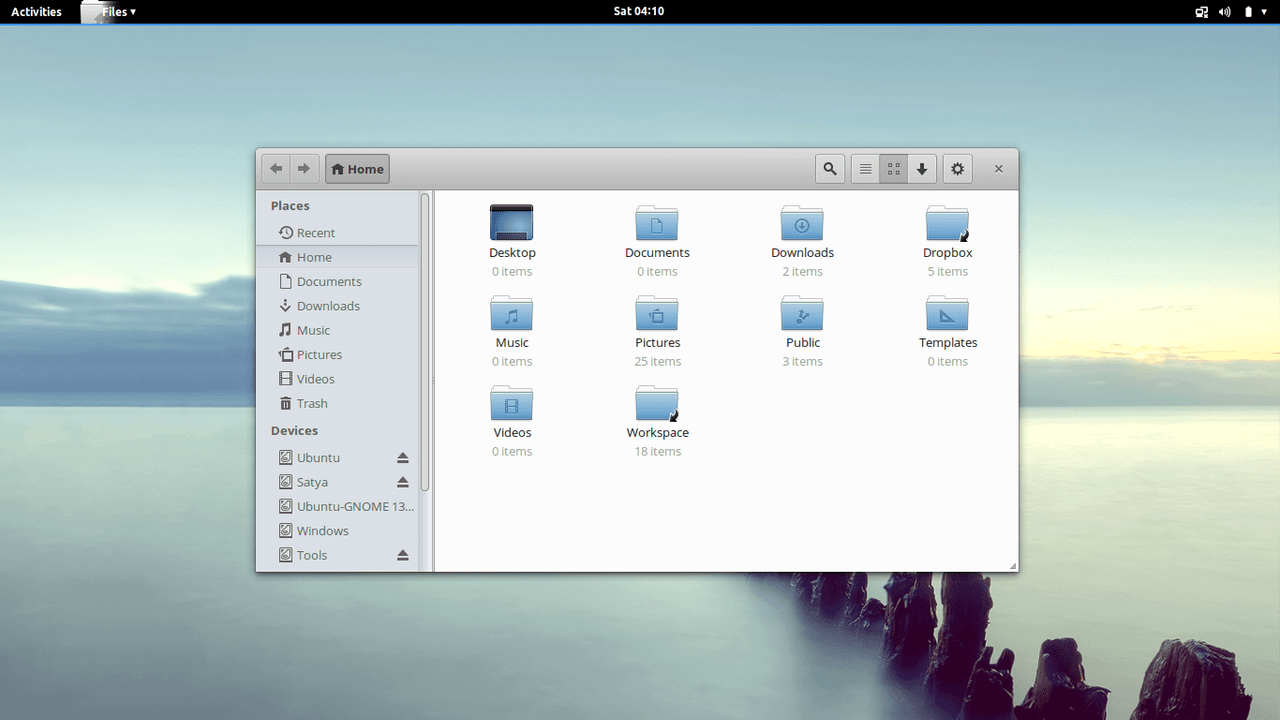
Application Built with GTK (Deviant Art, Created by User Satya-164)
The origins of GTK stem from the mid-1990s work of Peter Mattis and Spencer Kimball on the GNU Image Manipulation Program (GIMP). At the time, the widely used Motif toolset was distributed under a proprietary license and failed to provide the flexibility required by GIMP developers. As a result, Mattis and Kimball decided to write their own toolset from scratch, and GTK’s initial form emerged directly as a subcomponent of GIMP.
Early versions positioned GTK as a low-level wrapper around the X Window System (X11). This layer, known as GDK (GIMP Drawing Kit), provided abstraction between GTK and the underlying windowing system. This architectural approach laid the groundwork for GTK’s later support of diverse display backends including Wayland.【1】
In the late 1990s, competition and licensing debates emerged in the Unix/Linux desktop world. KDE (K Desktop Environment) initially relied on the Qt toolset, but Qt was distributed under a proprietary license at the time. Within the free software community, figures such as Richard Stallman argued that KDE’s dependence on a proprietary component was incompatible with the goal of a truly free desktop environment.
In this context, the GNOME (GNU Network Object Model Environment) project was launched in 1997 under the leadership of Miguel de Icaza and Federico Mena Quintero. GNOME was built entirely on GTK, which was already available under a free license. This choice transformed GTK from merely a GIMP component into a comprehensive desktop software infrastructure.【2】
GTK’s distribution under the GNU Lesser General Public License (LGPL) was also a decisive factor. The LGPL allowed the library to be used in both commercial and proprietary applications, facilitating its widespread adoption.【3】
The historical evolution of GTK can be divided into four major release periods, each representing significant technical transformations.
GTK 1.x: Released in 1998 as the first official version, GTK 1.0 introduced the core widget set and the GDK layer. During this period, GTK remained heavily dependent on the X Window System and had limited internationalization (i18n) support.【4】
GTK 2.x: Released in 2002, GTK 2 is regarded as a turning point in the toolset’s history. This version standardized support for Unicode and UTF-8, and integrated the Pango text rendering library, significantly improving support for international languages and fonts. GTK 2 also introduced the ATK interface for accessibility.【5】
GTK 3.x: Released in 2011, GTK 3 introduced a new drawing architecture. Instead of widgets performing their own rendering, a model based on the Cairo vector graphics library was adopted. This change greatly improved GTK’s compatibility with HiDPI screens and modern graphics infrastructure. Additionally, GTK 3 introduced a CSS-based theming system, enabling visual customization through a syntax similar to web technologies; GNOME’s libadwaita library was built upon this CSS infrastructure. GTK 3 also added support for the Wayland protocol.【6】
GTK 4.x: Released in 2020, GTK 4 is the result of a transition to a GPU-based rendering architecture. The new GTK Scene Kit (GSK) layer introduced the concept of render nodes, enabling hardware-accelerated drawing on the GPU via OpenGL and Vulkan.【7】 During this period, Wayland became the primary display protocol while X11 compatibility was maintained. With GTK 4, GNOME elevated the libadwaita library as the standard for visual and behavioral consistency.
GTK is built on a layered architecture composed of several closely related libraries.【8】 This layered approach enables clear separation of responsibilities.
GLib and GObject: The entire GTK infrastructure is built on the GLib core library. GLib provides fundamental C infrastructure such as data structures, portable wrappers, an event loop, and thread support. GObject is a type system that implements object-oriented features such as inheritance, polymorphism, and reference counting in C. GObject serves as the foundational object model used throughout GTK and GNOME libraries.
Signal/Callback Mechanism: GTK manages user interactions and application events through GObject’s signal system. Unlike standard UNIX signals, this mechanism is designed to route events occurring on specific objects—for example, a button click—to corresponding callback functions.【9】 This event-driven structure forms the core architectural framework of GTK applications.
Widget System: All GUI components in GTK are represented as objects called widgets. Each component—such as a button, text box, window, or scrollbar—is a distinct class derived from the GObject hierarchy. In GTK 4, widgets work alongside layout managers that define their visual arrangement.
Theming System: The CSS-based theming engine introduced in GTK 3 is maintained in GTK 4. Developers and distributors can customize the visual properties of widgets using CSS syntax. This system enables GTK to adopt different visual identities across desktop environments and distributions.
Rendering Architecture: GTK 4 uses the GSK (GTK Scene Kit) layer to render widgets on screen. GSK transmits drawing commands to GPU backends such as OpenGL or Vulkan through render trees. This architecture enables smoother animations and more efficient rendering by leveraging modern hardware graphics capabilities.【10】
Although GTK is written in the C programming language, it is not limited to C. Designed to facilitate language bindings through GObject and enabled by the GObject Introspection mechanism, GTK can be used with multiple programming languages.
GObject Introspection exports GTK’s API in machine-readable XML and binary formats. This allows language bindings to access GTK functions without requiring manual glue code.
Officially supported and maintained language bindings include: C (primary language), C++ (gtkmm), Python (PyGObject), Rust (gtk-rs), JavaScript (GJS), and Vala. Additionally, community-maintained bindings exist for Go, D, Java, Perl, and Guile (GNU Scheme).
One of GTK’s most common use cases is in applications for the GNOME desktop environment. As the official toolset of the GNOME project, most GNOME applications—including Nautilus (file manager), Evince (document viewer), GNOME Builder (development environment), Web/Epiphany (web browser), Calendar, and Maps—are developed using GTK.
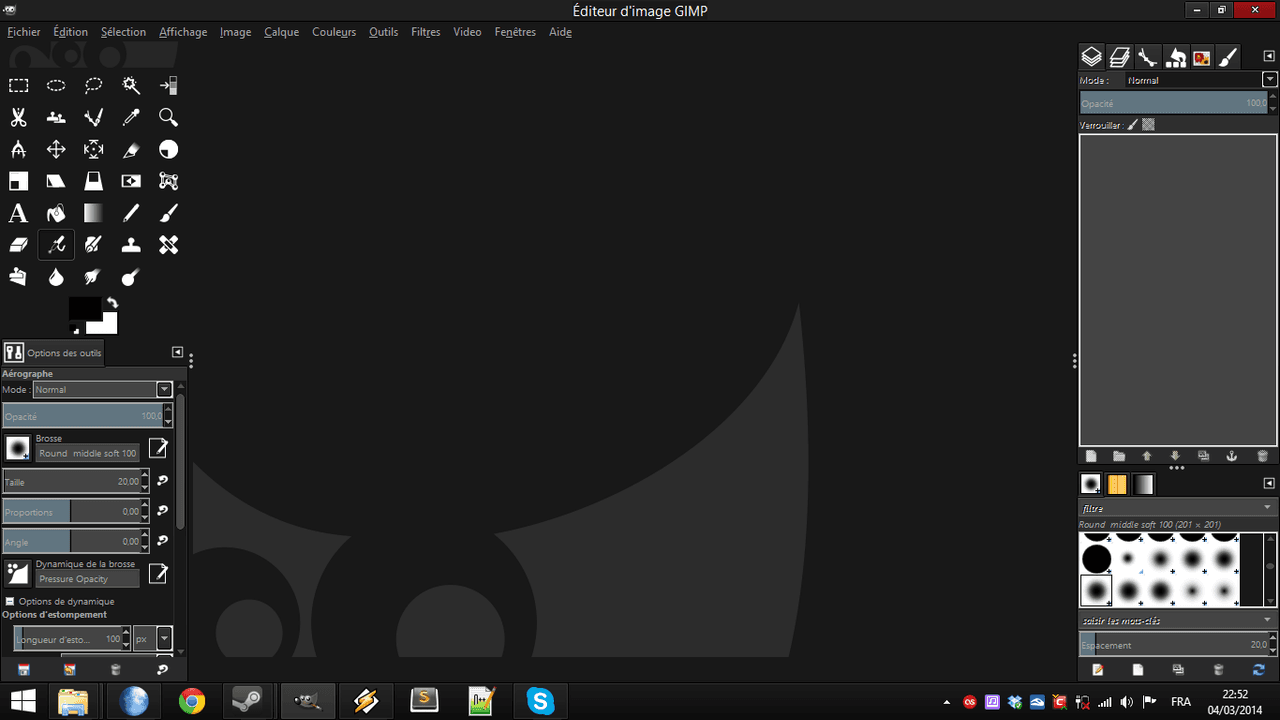
Screenshot from GIMP (Deviant Art, Created by User Tarkan-t29)
GTK is also used in independent desktop applications. The GIMP image editor continues to be the original application for which GTK was developed. In addition, various open-source applications such as Inkscape (vector graphics editor), Evolution (email client), Transmission (torrent client), and HandBrake (video transcoder) are also based on GTK.
As it provides standard GUI components such as buttons, windows, menus, tabs, lists, and text fields, GTK serves as a general-purpose GUI infrastructure in desktop software development. GTK’s theming support, internationalization features, accessibility infrastructure, and compatibility with multiple programming languages make it a preferred choice across diverse application types.
GTK is not limited to end-user applications; it is also used in application development tools and some embedded system interfaces. Particularly in Linux-based systems with lightweight or customizable graphical interface requirements, GTK-based solutions are commonly preferred. In this context, GTK is recognized as one of the most widely used GUI development technologies in the GNU/Linux desktop software ecosystem.
GTK is one of the most widely used graphical user interface toolsets in the GNU/Linux desktop software ecosystem. Due to its role as the foundational component of the GNOME desktop environment, it has played a significant part in the evolution of Linux desktop technologies.
In the late 1990s, there was notable competition among different GUI toolsets in the Unix/Linux desktop environment. While Motif was widely used in commercial Unix systems, the KDE project relied on the Qt toolset. Qt’s licensing model at the time sparked controversy within the free software community, leading to the creation of the GNOME project on top of GTK.【11】 Thus, GTK evolved from a toolset developed solely for GIMP into an independent desktop application infrastructure.【12】
GTK’s distribution under the GNU Lesser General Public License (LGPL) enabled its use in both free software projects and proprietary applications. This licensing model facilitated adoption by diverse developer communities and software companies.
Technically, GTK has evolved to adapt to transformations within the Linux desktop infrastructure. During the transition from the X Window System to the Wayland display protocol, GTK was among the first toolsets to adopt Wayland support. Wayland support, introduced in GTK 3, was significantly expanded in GTK 4.
In the GTK 4 era, the libadwaita library developed within the GNOME ecosystem aims to create a more consistent user interface across GTK-based applications. This library provides ready-made components and design rules aligned with the GNOME Human Interface Guidelines.
Today, GTK continues to be used in GNOME applications as well as in various free software projects such as GIMP, Inkscape, Transmission, and Evolution. Moreover, GTK’s compatibility with programming languages such as Python, Rust, JavaScript, and C++ ensures its preference among a broad developer base.
In these respects, GTK is regarded as one of the primary graphical interface technologies used in the development of modern free software desktop applications.
Clasen, Matthias. "Current GTK+ Development." Red Hat / Usenix 2004 Conference Notes. Accessed May 13, 2026. https://people.redhat.com/mclasen/Usenix04/notes/t1.html
Clasen, Matthias. "GTK+ History." Red Hat / Usenix 2004 Conference Notes. Accessed May 13, 2026. https://people.redhat.com/mclasen/Usenix04/notes/x29.html
GObject Development Team. "GObject: Type System Concepts." GNOME Developer Documentation. Accessed May 13, 2026. https://docs.gtk.org/gobject/concepts.html
GTK Development Team. "Gtk – 4.0 API Reference." GTK Documentation. Accessed May 13, 2026. https://docs.gtk.org/gtk4
The GTK Team. "Language Bindings." GTK Documentation. Accessed May 13, 2026. https://www.gtk.org/docs/language-bindings
The GTK Team. "The GTK Project – A Free and Open-Source Cross-Platform Widget Toolkit." The GTK Project. Accessed May 13, 2026. https://www.gtk.org
The Qt Company. "Qt Open Source Licensing – FAQ." Qt.io. Accessed May 13, 2026. https://www.qt.io/faq/qt-open-source-licensing
[1]
Clasen, Matthias. “Current GTK+ Development.” Red Hat / Usenix 2004 Conference Notes. Accessed: 13 May 2026. https://people.redhat.com/mclasen/Usenix04/notes/t1.html
[2]
Clasen, Matthias. “GTK+ History.” Red Hat / Usenix 2004 Conference Notes. Accessed: 13 May 2026. https://people.redhat.com/mclasen/Usenix04/notes/x29.html
[3]
The Qt Company. “Qt Open Source Licensing – FAQ.” Qt.io. Accessed: 13 May 2026. https://www.qt.io/faq/qt-open-source-licensing
[4]
Clasen, Matthias. “Current GTK+ Development.” Red Hat / Usenix 2004 Conference Notes. Accessed: 13 May 2026. https://people.redhat.com/mclasen/Usenix04/notes/t1.html
[5]
Clasen, Matthias. “Current GTK+ development.” Red Hat / Usenix 2004 Conference Notes. Accessed: 13 May 2026. https://people.redhat.com/mclasen/Usenix04/notes/t1.html
[6]
Clasen, Matthias. “Current GTK+ development.” Red Hat / Usenix 2004 Conference Notes. Accessed: 13 May 2026. https://people.redhat.com/mclasen/Usenix04/notes/t1.html
[7]
GTK Development Team. “Gtk – 4.0 API Reference.” GTK Documentation. Accessed: 13 May 2026. https://docs.gtk.org/gtk4
[8]
Clasen, Matthias. “Current GTK+ development.” Red Hat / Usenix 2004 Conference Notes. Accessed: 13 May 2026. https://people.redhat.com/mclasen/Usenix04/notes/t1.html
[9]
GObject Development Team. “GObject: Type System Concepts.” GNOME Developer Documentation. Accessed: 13 May 2026. https://docs.gtk.org/gobject/concepts.html
[10]
GTK Development Team. “Gtk – 4.0 API Reference.” GTK Documentation. Accessed: 13 May 2026. https://docs.gtk.org/gtk4
[11]
The Qt Company. “Qt Open Source Licensing – FAQ.” Qt.io. Accessed: 13 May 2026. https://www.qt.io/faq/qt-open-source-licensing
[12]
Clasen, Matthias. “GTK+ History.” Red Hat / Usenix 2004 Conference Notes. Accessed: 13 May 2026. https://people.redhat.com/mclasen/Usenix04/notes/x29.html


Henüz Tartışma Girilmemiştir
"GIMP Toolkit" maddesi için tartışma başlatın
History
Development for GIMP
GNOME’s Adoption of GTK
GTK 2, 3, and 4 Eras
Technical Architecture
Programming Language Support
Use Cases
Role in the Free Software Ecosystem