


Bu içerik Türkçe olarak yazılmış olup yapay zeka ile otomatik olarak İngilizceye çevrilmiştir.
+1 Daha
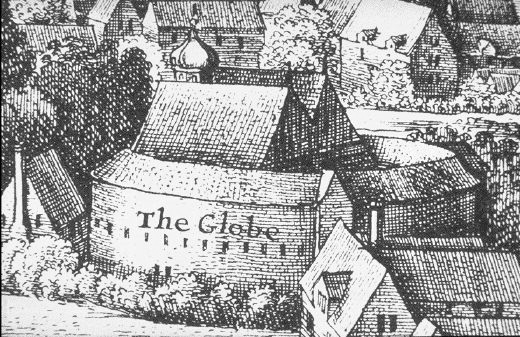
Globe Theatre is one of the most iconic structures in English theater history, established in 1599 on the south bank of the River Thames in London. This building represents a pivotal moment in the stage arts of the English Renaissance and is particularly associated with the works of William Shakespeare. Built by the theatre company known as "Lord Chamberlain’s Men", of which Shakespeare was both playwright and shareholder, the Globe was a comprehensive embodiment of the era’s audience culture, architectural understanding, and staging practices.

Location of the Globe Theatre (OpenStreetMap)
The theatre’s construction was made possible by the reuse of materials from a previous structure called "The Theatre". Built by James Burbage, The Theatre was demolished in 1598 due to a lease dispute. Burbage’s sons, Cuthbert and Richard, along with William Shakespeare and other members of the acting company, used these materials to build a new theatre in Southwark, naming it the "Globe". Among the shareholders were not only Shakespeare but also actors John Heminges, Augustine Phillips and Thomas Pope like.
The Globe Theatre had a polygonal plan with approximately twenty sides, giving it the appearance of a circle from a distance. It could accommodate around 3,000 spectators. The structure consisted of an open-air courtyard and three tiers of covered galleries surrounding it. Audience members standing in the yard, known as groundlings, watched the performance from below, while those in the upper galleries paid higher prices for seated viewing. This spatial arrangement clearly reflected the social stratification of the time.
The stage was a rectangular platform projecting into the yard and partially covered by a roof. Behind the stage lay the "tiring house", where actors changed costumes and made entrances and exits, and above it, the "heavens", a space used for divine interventions. Special effects were achieved using trapdoors in the stage floor or overhead winch systems. Since lighting relied entirely on natural day light, performances were typically held in the afternoon.

The Globe held a central place in William Shakespeare’s theatrical career. Many of his major works, including "Hamlet", "Othello", "Macbeth", "King Lear", and "Storm", premiered here. The physical structure of the Globe directly influenced the staging of Shakespeare’s texts. For instance, the multi-level stage enabled the rapid scene changes, hidden entrances and divine interventions common in his plays. The intimate proximity of actors to the audience mirrored the direct address and soliloquies characteristic of Shakespeare’s writing.
Shakespeare was also economically invested in the theatre; as a shareholder, he ensured his plays were regularly performed and financially sustained. In this context, the Globe was not merely a stage but an environment that enabled Shakespeare to sustain his career as a playwright.
On 29 June 1613, during a performance of "Henry VIII", a cannon effect ignited the thatched roof, causing the entire theatre to burn down. There were no fatalities, but the building was completely destroyed. The theatre was rebuilt within a year and reopened in 1614. However, in 1642, when the Puritans took control of the government, all theatres were closed. The Globe was demolished in 1644, as part of the era’s anti-theatrical policies.
In the second half of the 20th century, American actor and director Sam Wanamaker spearheaded the effort to reconstruct the Globe. Drawing on archaeological findings, historical records and contemporary building techniques, a reconstruction faithful to the original was completed and opened in 1997 as "Shakespeare’s Globe". Located immediately beside the River Thames, this new structure closely resembles the original Globe in its use of timber, open courtyard layout and stage design.
Today’s Globe Theatre functions not only as a performance venue but also as a multifunctional center dedicated to theatre education, academic research and exhibitions on Shakespeare’s life and era. It also supports experimental projects that combine contemporary theatrical approaches with early modern staging practices. The Globe Theatre continues to exist not merely as a building but as a living symbol representing Shakespeare’s legacy and the evolution of English theatre.


Henüz Tartışma Girilmemiştir
"Globe Theatre" maddesi için tartışma başlatın
Founding and Early Years
Architectural Design and Staging Layout
Relationship with Shakespeare
Fire, Reconstruction and Closure
Shakespeare’s Modern Globe Theatre