Bu içerik Türkçe olarak yazılmış olup yapay zeka ile otomatik olarak İngilizceye çevrilmiştir.
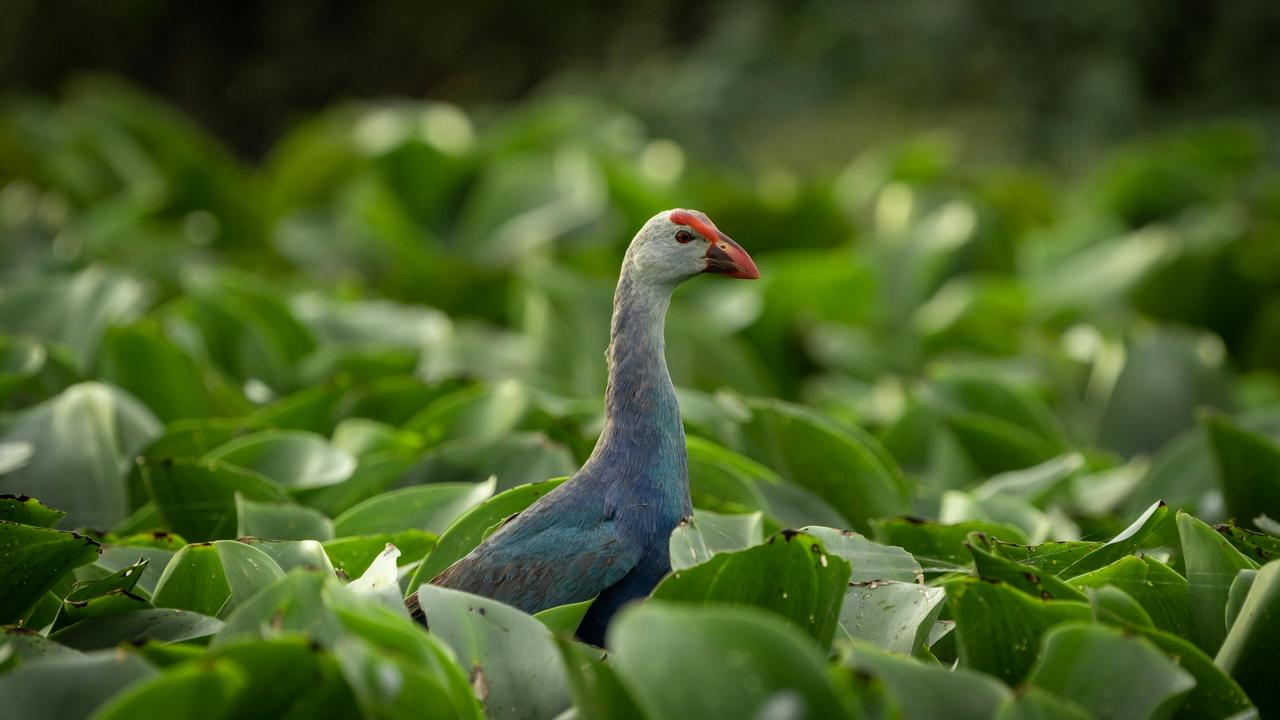
Purple Swamphen (pexels)
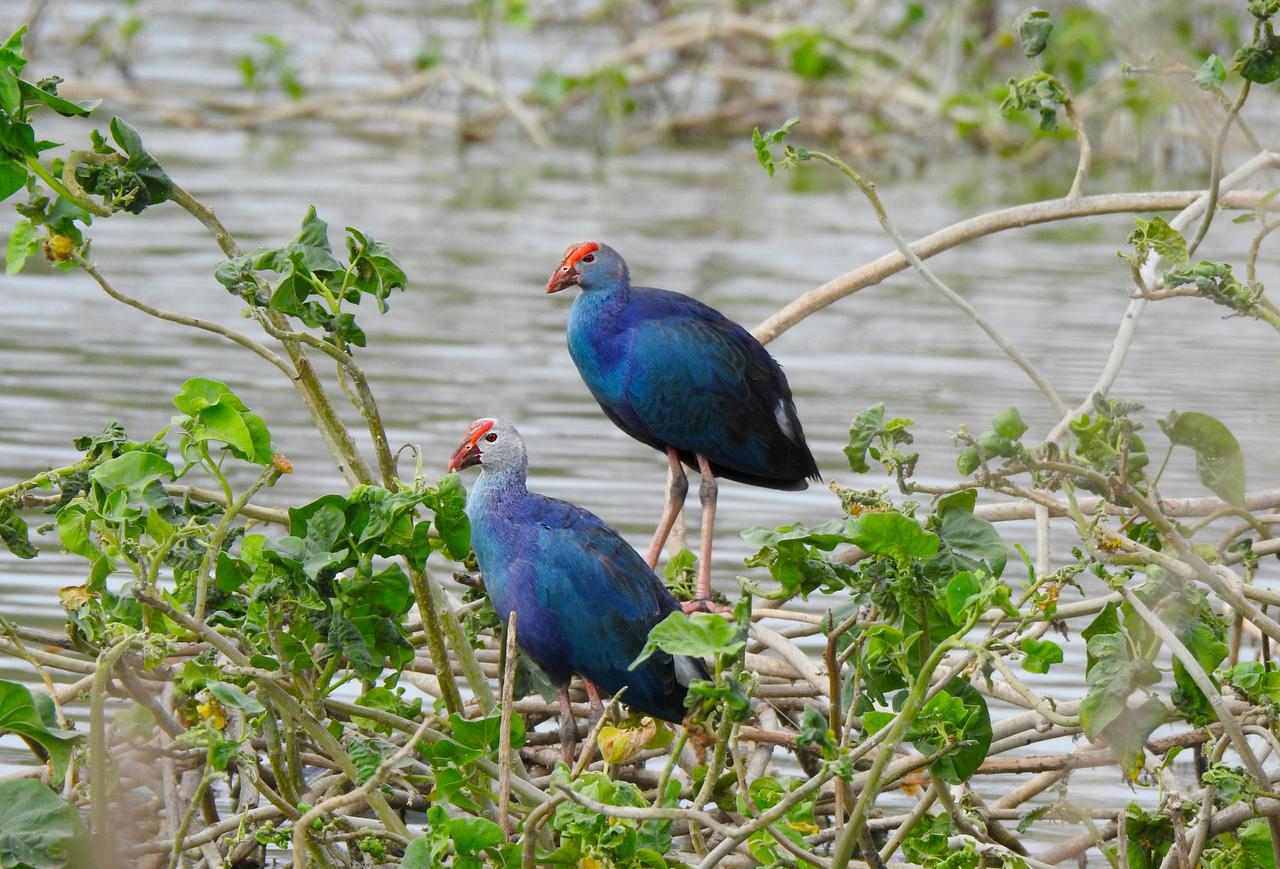
The bill is large, triangular, thick, and curved, with a red frontal plate extending to the top of the head. The eyes are red. The legs are red and feature long, slender toes, with the hind toe being particularly prominent.
The sexes are similar in appearance. While the general purple-blue coloration is consistent across all subspecies, the intensity of color and the tone of the upper parts (purple-blue, bronze-green, dark brown, or chestnut) may vary. Juveniles have duller plumage, with paler heads and chests.
It prefers freshwater or brackish wetlands characterized by low-lying, narrow, or enclosed waters such as lagoons, with dense vegetation including Typha, Phragmites, Scirpus, and Carex growing in or near the water. It also inhabits reed swamps, coastal lagoons, rivers, and wetlands with fluctuating water levels.
The species lives in areas with dense vegetation along water edges and favors zones where plants extend into or grow submerged in water.
In threatening situations, it displays various defensive behaviors. It may raise its tail, arch its neck to appear hunched, and perform bill-clapping toward rivals. During territorial defense, it stands upright to display its white undertail coverts and emits loud, harsh calls. If necessary, it may attack with bill strikes and kicking with its feet.
Communication between individuals occurs through vocalizations and visual displays. Behaviors such as wing-raising, neck-bending, and feather preening are especially observed between mates. Approaching the nest, mutual feeding, and ritualized behaviors are observed during the pre-breeding and chick-rearing periods.
During locomotion, the bird lifts its feet and keeps its toes splayed as it moves among aquatic vegetation.
It typically forages while standing. It grazes on short vegetation and uses its bill to pull down and its feet to uproot taller plants. Large food items are carried to the bill using its feet and then broken apart with its strong bill.
It has been frequently observed feeding in rice fields, moving along the ground or water edges to collect plant material and actively using its feet in food acquisition.
The nest is a large structure, often with one or two access ramps. The breeding season occurs between April and May. The eggs are large and glossy, with a mottled purplish-brown coloration. Incubation lasts approximately 25 days. Chicks leave the nest four to five days after hatching and are fed by both parents.
However, other Porphyrio species face conservation concerns in certain regions. In Portugal, the population of the Western Swamphen (Porphyrio porphyrio) has experienced a severe decline due to habitat loss, degradation, and overhunting.
For the Australian Swamphen subspecies found in Palau (P. melanotus pelewensis), an Endangered status has been proposed.
Callaghan, C. T., Bill Pranty, Peter Pyle, and Michael A. Patten. “Gray-headed Swamphen (Porphyrio poliocephalus).” Birds of the World. Cornell Lab of Ornithology. Accessed April 2026. https://birdsoftheworld.org/bow/species/purswa3/cur/conservation
Mathiew, Vijay. “Shallow Focus of Grey-Headed Swamphen.” Pexels. Accessed April 2026. https://www.pexels.com/photo/shallow-focus-of-grey-headed-swamphen-12975085/
Ornito. “Sazhorozu (Porphyrio porphyrio).” *ornito.org.* Accessed April 2026. https://ornito.org/Bird/Detail/416
Sharath G. “Close-Up Shot of Blue Birds Perched on Branches.” Pexels. Accessed April 2026. https://www.pexels.com/photo/close-up-shot-of-blue-birds-perched-on-branches-12411554/
Trakuş. "Sazhorozu (Porphyrio porphyrio)." *trakus.org*. Accessed April 2026. https://www.trakus.org/kods_bird/uye/?fsx=2fsdl17@d&tur=Sazhorozu
eBird. "Sazhorozu (Porphyrio porphyrio)." Cornell Lab of Ornithology. Accessed April 2026. https://ebird.org/species/purswa3?siteLanguage=tr
Henüz Tartışma Girilmemiştir
"Grey-headed Swamphen (Porphyrio poliocephalus)" maddesi için tartışma başlatın
Taxonomy
Morphological Characteristics
Distribution and Habitat
Behavior and Ecology
Diet
Breeding
Conservation Status