

+1 Daha


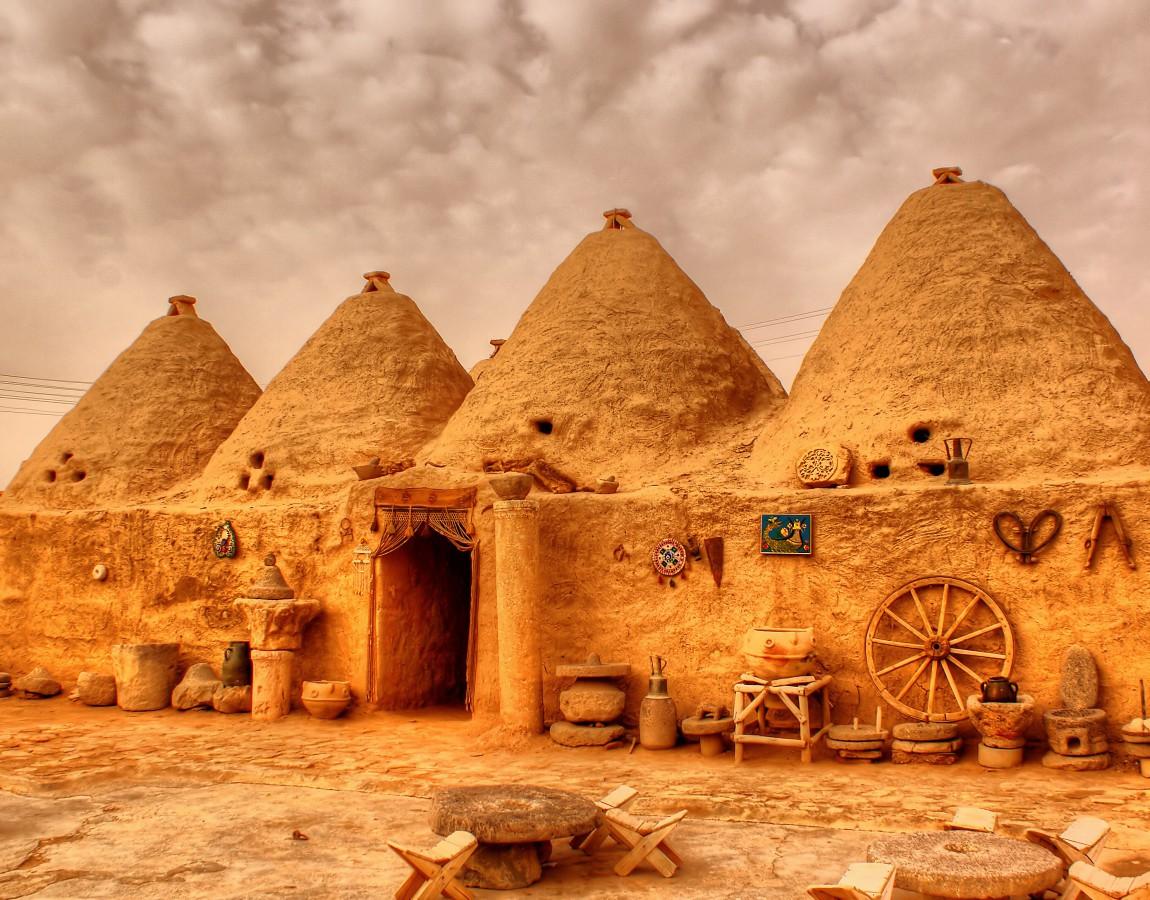
Harran Beehive Houses are structures located in the district of Harran, within the province of Şanlıurfa. Built using local materials and traditional techniques, these buildings are known for their distinctive architectural features. Often referred to as “conical domed houses,” they are designed to accommodate the geographical and climatic conditions of Harran. Many of these beehive houses are still standing today and are recognized as important elements of both historical and architectural heritage. The structures were registered as part of an archaeological and urban conservation site in 1979.
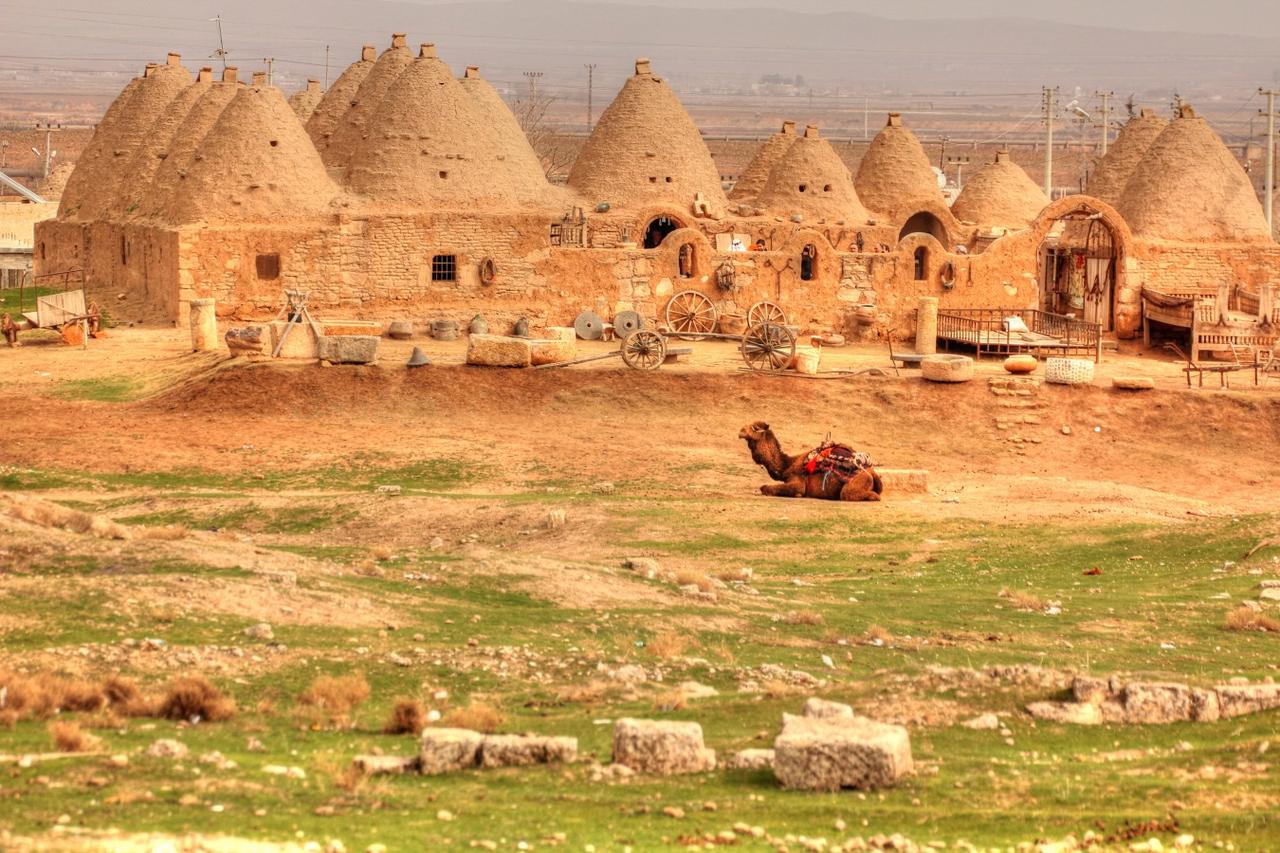
Harran Beehive Houses (Şanlıurfa Metropolitan Municipality)
Architecturally, the Harran Beehive Houses are constructed on a square or near-square prismatic base. Bricks collected from ancient ruins were used as the primary building material, stacked using a corbelling technique to form conical domes. Each dome consists of approximately 30–40 layers of brick, reaching interior heights of up to 5 meters.
Mud plaster was employed as a binding material on both the domes and walls, also serving as the finishing layer for interior and exterior surfaces. Some sources note that the mortar mix may include additives such as rose oil, straw, terracotta, and egg white. Domes are connected via arches to create wider interior spaces. The structures taper upward, which enhances their structural integrity and thermal performance.
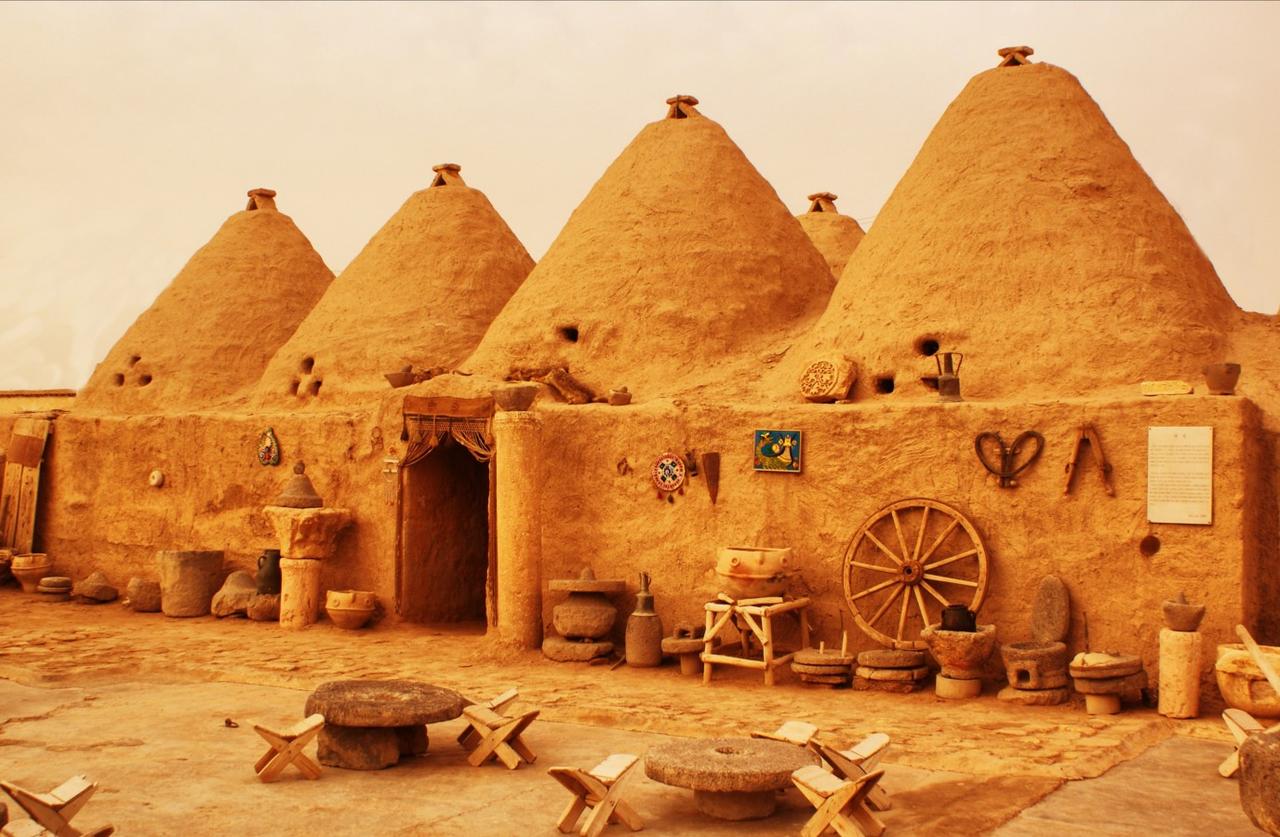
The conical-domed Beehive Houses, an example of traditional architecture in Harran (Şanlıurfa Metropolitan Municipality)
The Harran Beehive Houses are designed to adapt to the region’s hot and arid climate. Their architectural form provides a cool environment in summer and warmth during the winter months. Functioning as natural ventilation and insulation systems, these buildings offer effective protection against external weather conditions.
The scarcity of timber in Harran necessitated the use of brick for dome construction. The abundant availability of raw materials for brick in the region was a key factor in shaping this architectural tradition.
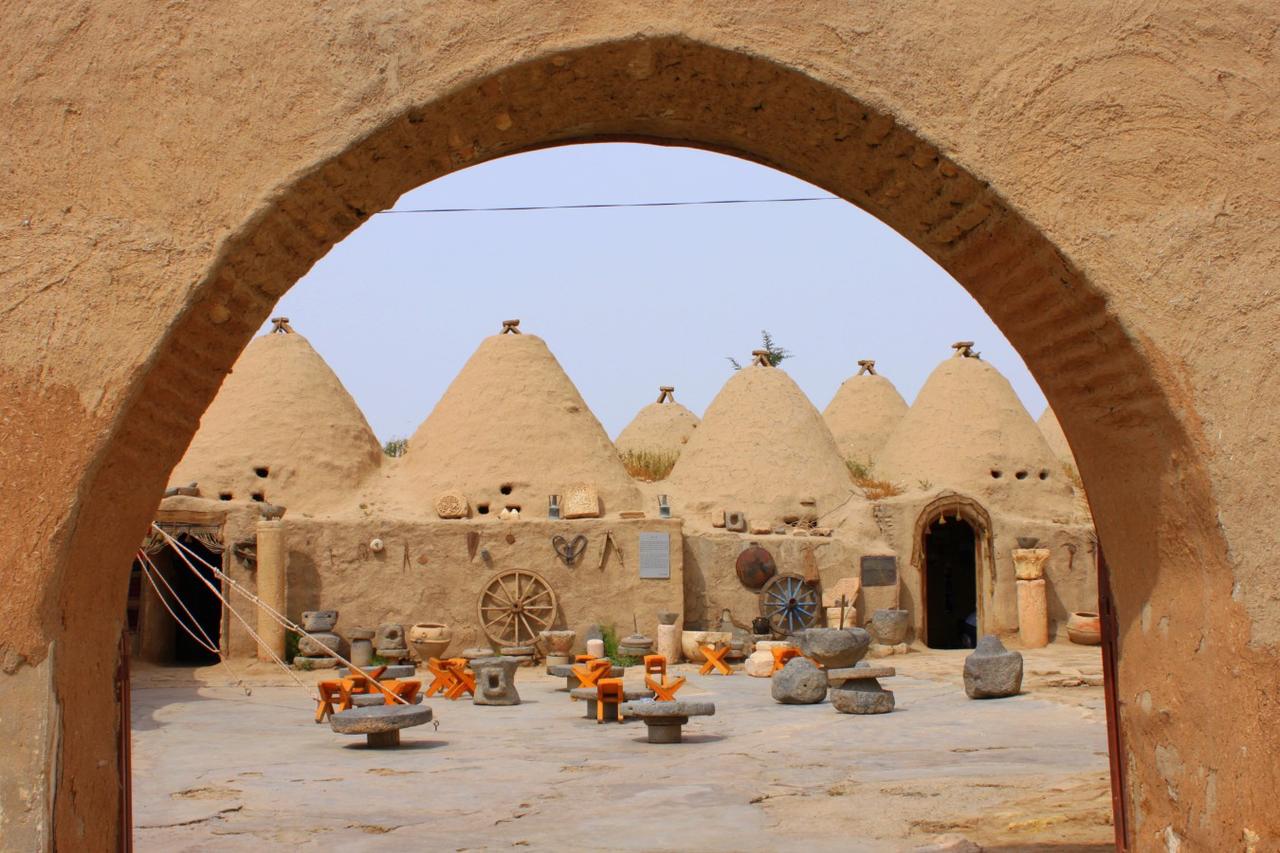
Harran Beehive Houses (Şanlıurfa Metropolitan Municipality)
The beehive houses were declared an archaeological and urban conservation site in 1979. Under this status, new constructions are prohibited, and existing structures are placed under protection. One of these houses has been converted into a public exhibit for educational and promotional purposes.
T.C. Harran Kaymakamlığı. “Harran Kümbet Evleri.” Harran Kaymakamlığı. Erişim 22 Mayıs 2025. http://www.harran.gov.tr/harran-kumbet-evleri.
T.C. Kültür ve Turizm Bakanlığı. “Harran Kümbet Evleri.” Kültür Portalı. Erişim 22 Mayıs 2025. https://www.kulturportali.gov.tr/turkiye/sanliurfa/gezilecekyer/harran-kumbet-evleri.
Şanlıurfa Büyükşehir Belediyesi. “Kümbet Evler.” Şanlıurfa Büyükşehir Belediyesi. Erişim 22 Mayıs 2025. https://www.sanliurfa.bel.tr/icerik/231/71/kumbet-evler.
Henüz Tartışma Girilmemiştir
"Harran Beehive Houses" maddesi için tartışma başlatın
Architectural Characteristics
Climatic Adaptation and Use
Conservation Status
Bu madde yapay zeka desteği ile üretilmiştir.