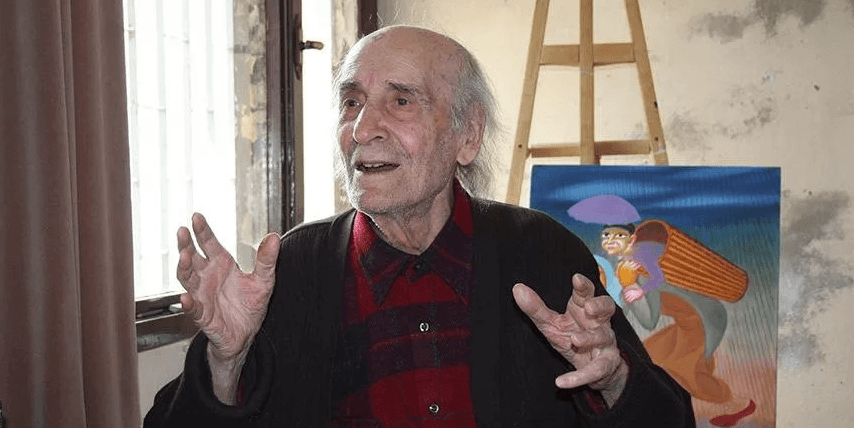

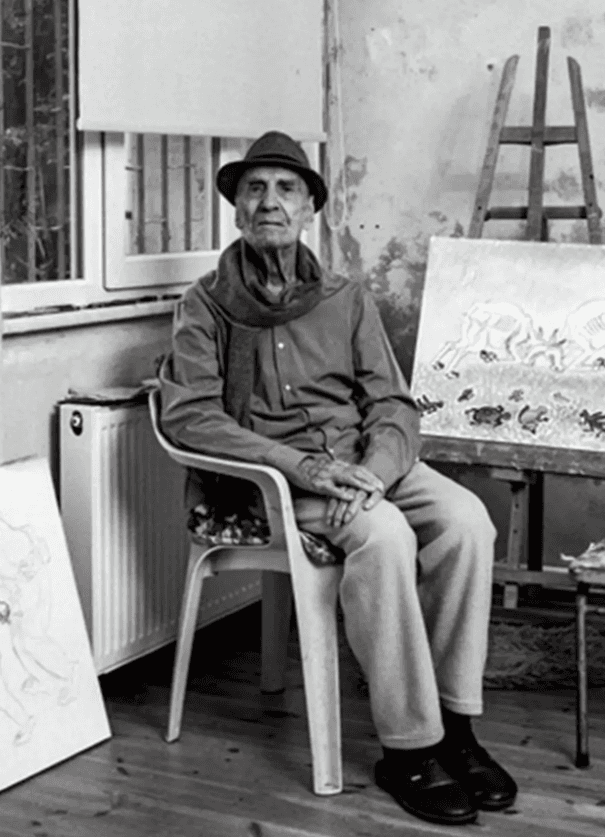
Ibrahim Balaban (1921, Bursa – 9 June 2019, Istanbul) is a painter and writer. One of the leading representatives of the rural realism movement, Balaban embraced a socially realistic artistic approach by depicting the traditional rural culture and life of Anatolia in his paintings. At the same time, as a naive painter, he used his art to narrate folk legends, epics, and the lives of the people of Anatolia.
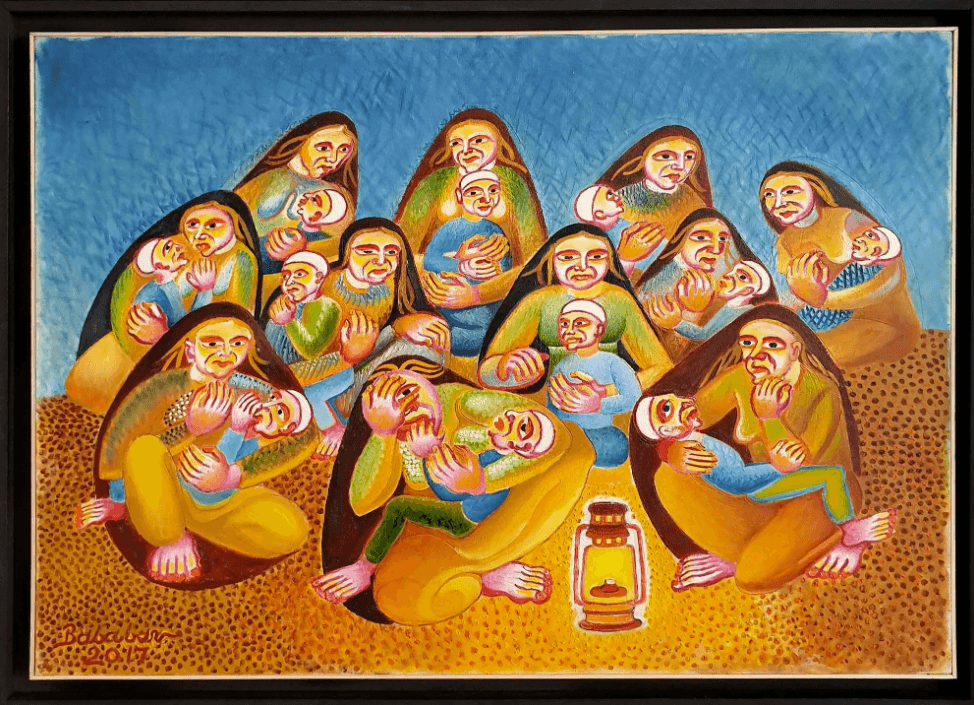
The Waiting Mothers / Oil on Canvas (Source: Gallery Abstract)
Ibrahim Balaban was born in Seçköy, a village in the Osmangazi district of Bursa. After completing a three-grade elementary school, he began confronting the hardships of rural life. During his youth, while working as a shepherd and agricultural laborer, he was imprisoned in 1937 at the age of 16 on charges of cultivating hemp. It was in prison that Balaban first encountered painting. There he met the poet Nazım Hikmet, under whose guidance he developed his artistic sensibility. With Hikmet’s support, Balaban embraced art as a way of life and took significant steps toward becoming a major artist.
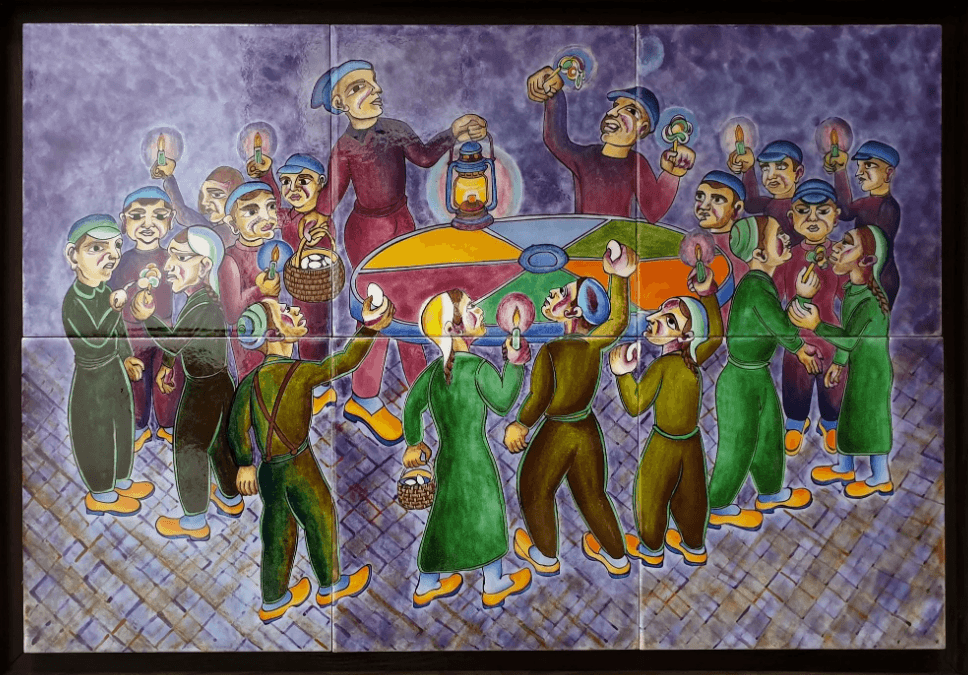
Macuncu / Iznik Blue Ceramic Tile (2007) (Source: Galeri Soyut)
In 1953, Ibrahim Balaban held his first solo exhibition at the French Cultural Center in Istanbul and subsequently participated in numerous important exhibitions. Beginning his work with a socially realistic perspective, he developed a distinctive pictorial language rooted in traditional Anatolian figures while portraying rural life, folk legends, and epics. In 1959 he joined the Yeni Dal Group, but was later prosecuted following an exhibition, and subsequently acquitted. Similarly, in 1968, a painting published in Gazi Magazine led to another prosecution, from which he was again acquitted. Balaban also addressed the transition from village to city life and the social struggles of urban existence in his paintings.
Balaban’s art adopted a figurative approach that reflected social and cultural events. Beyond his techniques and color choices, his works revealed profound insight into social issues. The artist was awarded prestigious honors including the 1990 Human Rights Prize, the 1998 Truva Art Prize, and the 1999 GESAM Prize.
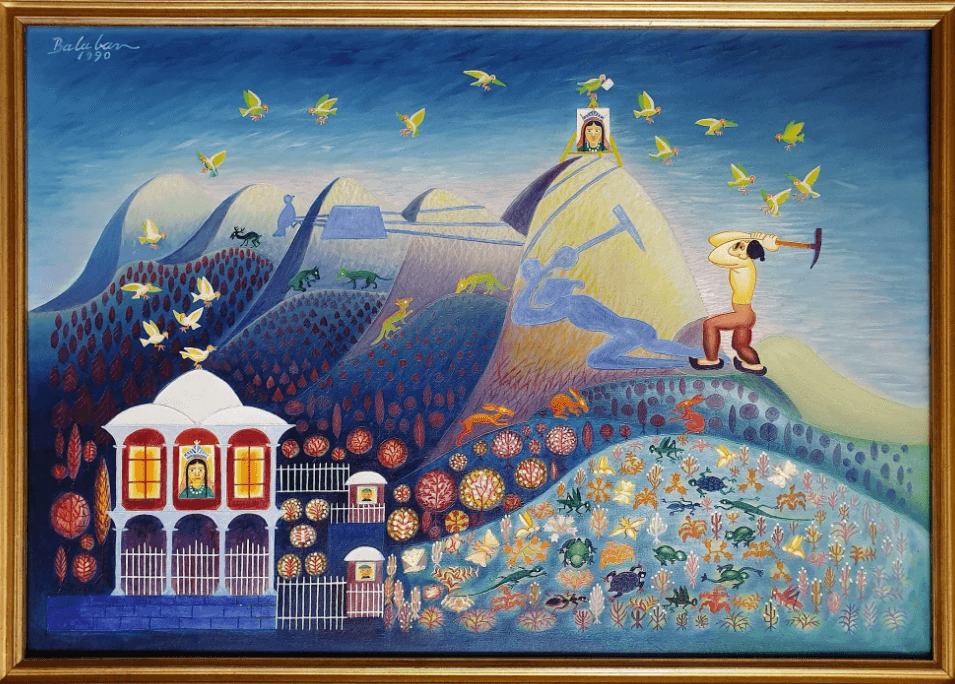
Ferhat and Shirin / Oil on Canvas (1990) (Source: Gallery Abstract)
Ibrahim Balaban produced over 2000 paintings and numerous design studies. While his works reflected the life and culture of the Anatolian people, he continued to address societal problems. In pieces such as “Our Women and the Carts Under the Moon” and “Migration,” he powerfully conveyed the hardships and struggles of the people. Moreover, Balaban’s artworks developed an illustrative language infused with social messages, inspired by the poetry of Nazım Hikmet.
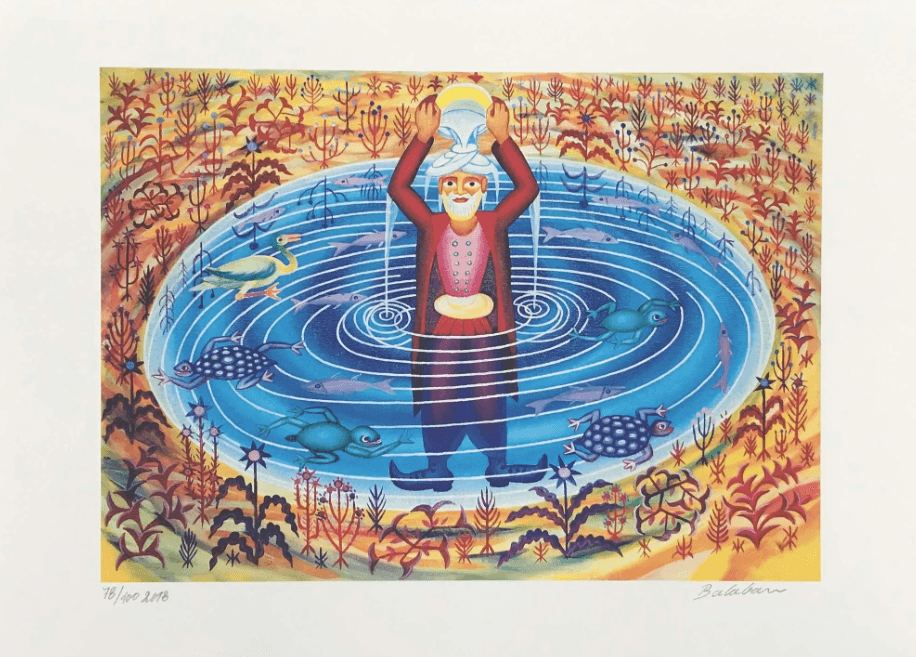
Nasrettin Hoca (Source: Galeri Soyut)
Balaban spent much of his life in his village and consistently emphasized his devotion to his family. His son, Nazım Balaban, born in 1955, is also a painter like his father. Balaban wrote about his years with Nazım Hikmet in two books titled “Seven Years with Nazım Hikmet” and “Nazım Hikmet and We.” His paintings and writings exhibit a sincere and unique authenticity in portraying the realities of life and the people.
In his final years, Balaban painted Anatolian sages and mothers. He passed away on 9 June 2019 in Istanbul. His funeral prayer was held at Şişli Camii, after which his body was taken to his hometown of Seçköy in the Osmangazi district of Bursa for burial.
Ibrahim Balaban’s artistic legacy is not only preserved through his paintings but also through the books he authored, which carry forward a socially realistic tradition. His works remain a vital part of Turkish painting and continue to inspire contemporary artists. Through his art, Balaban not only conveyed the lives, emotions, and social struggles of the people but also deeply explored and expressed his own artistic vision and philosophy.
Anadolu Ajansı. “Nazım Hikmet’in Köylü Ressamı: İbrahim Balaban.” Anadolu Ajansı, 2019. Accessed March 13, 2025. https://www.aa.com.tr/tr/kultur-sanat/nazim-hikmetin-koylu-ressami-ibrahim-balaban/1500327.
Anadolu Ajansı. “Ressam İbrahim Balaban Son Yolculuğuna Uğurlandı.” Anadolu Ajansı, 2019. Accessed March 13, 2025. https://www.aa.com.tr/tr/turkiye/ressam-ibrahim-balaban-son-yolculuguna-ugurlandi-/1501385.
Galeri Soyut. "İbrahim Balaban." Galeri Soyut. Accessed March 13, 2025. https://www.galerisoyut.com.tr/sergi/ibrahim-balaban.
Onur, Ömer Oytun, and İbrahim Çoban. “Çağdaş Türk Resminde İllüstratif Etkiler: İbrahim Balaban Örneği.” *Ulakbilge Akademik Sanat Araştırmaları Dergisi*, 2022. Accessed March 13, 2025. https://www.ulakbilge.com/makale/pdf/1663153726.pdf.
T.C. Ministry of Culture and Tourism. "İbrahim Balaban." Kültür Portalı. Accessed March 13, 2025. https://www.kulturportali.gov.tr/portal/ibrahim-balaban.
Türkiye Edebiyatçılar ve Kültür Adamları Ansiklopedisi. "İbrahim Balaban." TEİS - Türkiye Edebiyatçılar İsimler Sözlüğü. Accessed March 13, 2025. https://teis.yesevi.edu.tr/madde-detay/ibrahim-balaban.
İstanbul Sanat Evi. "İbrahim Balaban Hayatı ve Eserleri (1921)." İstanbul Sanat Evi. Accessed March 13, 2025. https://www.istanbulsanatevi.com/unlu-sanatcilarin-hayati/soyadi-b-unlu-sanatcilarin-hayati/ibrahim-balaban-hayati-ve-eserleri-1921/.
“Ibrahim Balaban’ın Resim ve Kitaplarında Toplumsallık Algısı.” Academia.edu. Accessed March 13, 2025. https://www.academia.edu/33396066/.

Henüz Tartışma Girilmemiştir
"Ibrahim Balaban" maddesi için tartışma başlatın
Early Life and Education
Career and Achievements
Works and Contributions
Personal Life
Later Years and Death
Legacy and Influence