

Bu içerik Türkçe olarak yazılmış olup yapay zeka ile otomatik olarak İngilizceye çevrilmiştir.
I want to begin with that familiar feeling I experience late at night, staring at a terminal window illuminated only by the glow of a screen in a dark room. The code flowing across the display, complex algorithms waiting to be solved, the sweet tension of a CTF (Capture the Flag) challenge... To most people, this scene appears as nothing more than an entertaining digital puzzle, but in reality, it is the very essence of the 21st century’s most critical defense line: the Digital Homeland.
When we hear the term National Technology Initiative, we rightly think of our unmanned aerial vehicles tearing through the skies or our indigenous systems gliding across our seas. Yet behind this tangible power lies an invisible but equally vital digital twin—the intelligence and lifeblood that animates those steel systems. Today, entrusting the security of critical infrastructure, such as an energy plant or our health data, to proprietary foreign software is no different from handing the keys to our home to someone we have never met.
I believe that true technological independence lies in the keys of the keyboard and in the lines of code we write ourselves. Securing our server architectures with the speed of Go, building critical systems that communicate at the lowest hardware level using the uncompromising structure of C and C++ as conceived by our own minds, processing massive datasets with the flexibility of Python... Digital independence means writing the very core of the system with our own engineering vision, rather than living in fear of backdoors in imported systems.
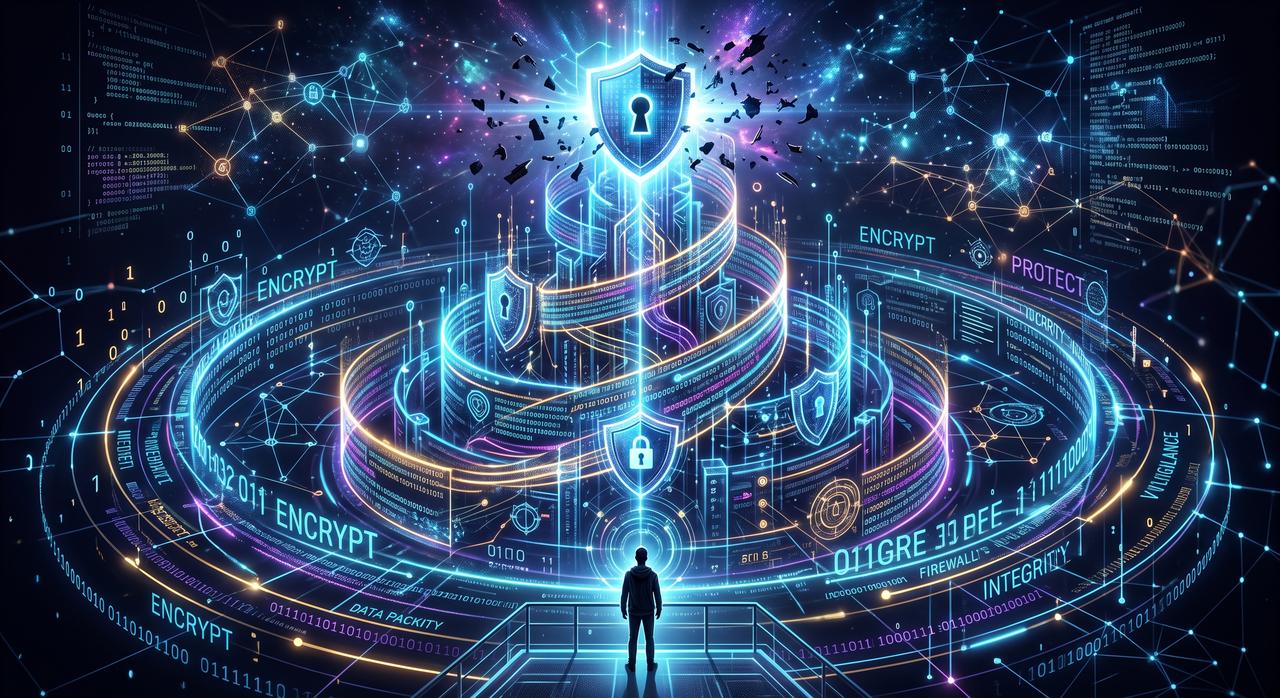
Siber Vatan ve Dijital Güvenlik Temsili (Yapay Zeka ile Oluşturulmuştur.)
Defending the Digital Homeland is not a task that can be accomplished merely by reading theoretical textbooks in school classrooms. The intense focus you feel while decoding data encrypted in Base64 during a hours-long competition, probing the depths of a network through WHOIS queries, or uncovering a malicious message hidden via steganography—that state of concentration is in fact a genuine national defense practice. Young minds searching for system vulnerabilities on Kali Linux virtual machines, thinking like cyber attackers to develop indigenous defense strategies, are this nation’s greatest digital shields.
Every young person who grows up on visionary platforms like the T3 Foundation, works side by side in technology teams, and is unafraid to step into the heart of the craft, is a piece of this larger picture. A new generation is emerging—not merely consuming knowledge, but producing it and guiding the minds around them.
In the world of the future, borders will not be drawn on maps but within the labyrinths of algorithms and the depths of data centers. The National Technology Initiative teaches us not only how to use technology, but how to set its rules within our own local ecosystem. I believe that what will illuminate our country in the dark waters of cyberspace is the determination of young people who store their own data on their own servers, weave their own native software architecture stitch by stitch, and take the first steps to become the invisible guardians of the Digital Homeland.
Guardians of Invisible Borders
A Digital Chessboard: The CTF Culture
Independence Rising Through Code