

Bu içerik Türkçe olarak yazılmış olup yapay zeka ile otomatik olarak İngilizceye çevrilmiştir.
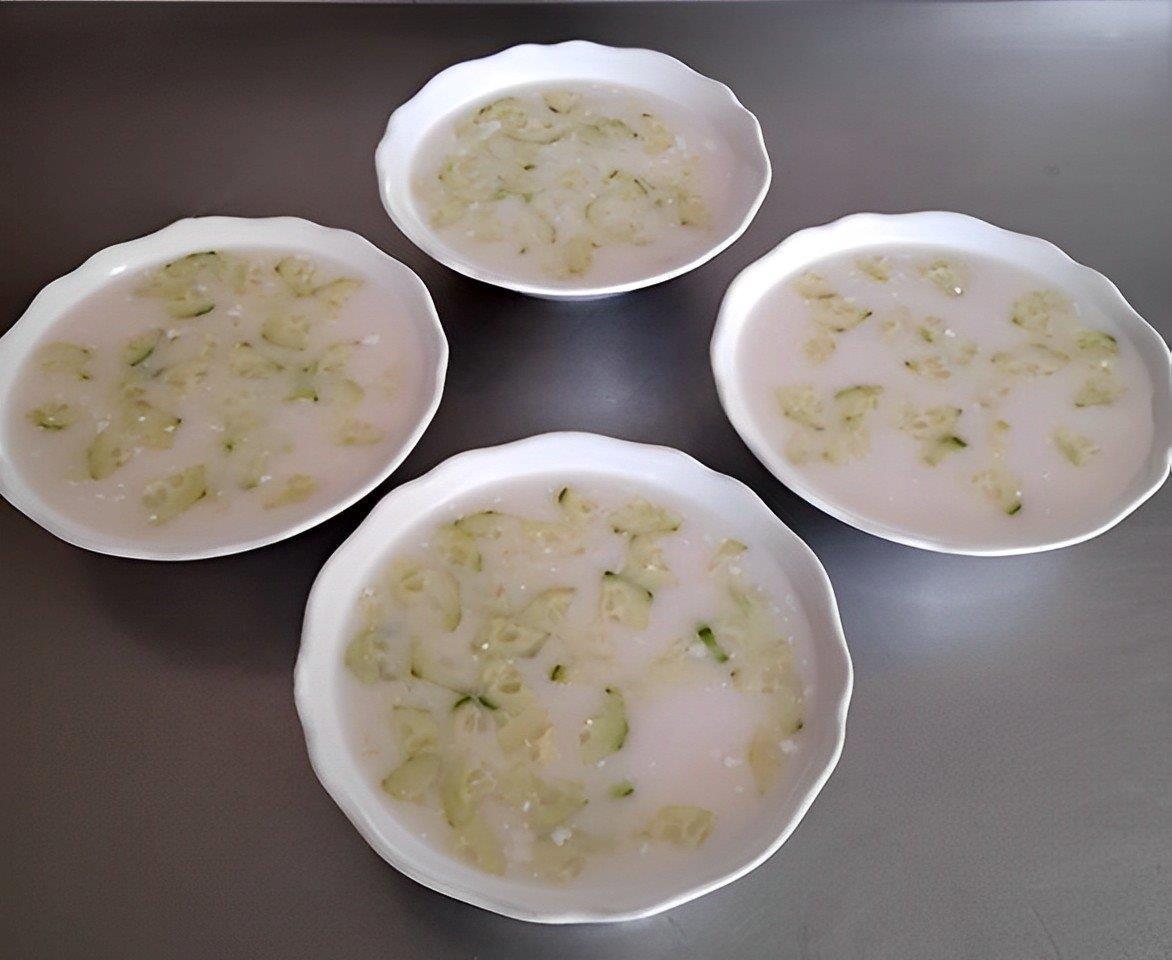
İskilip sirke salatası is a watery type of cacık native to the İskilip district of Çorum, Turkey. It is prepared with yogurt, grape vinegar, water, seedless cucumber, crushed garlic, sugar, and salt. The garlic is not added directly to the mixture but is placed in a cheesecloth and left to infuse, thereby enriching the flavor profile without leaving any garlic pieces in the salad. The cucumbers are softened by soaking in water before use, and the final mixture is served in bowls.
İskilip sirke salatası is a traditional watery cacık produced and consumed in the İskilip district of Çorum province, Türkiye. The product is made from basic ingredients including yogurt, grape vinegar, water, cucumber, garlic, white sugar, and salt. Its distinctive flavor arises from the combination of vinegar-based ayran and garlic aroma. This product, registered with a geographical indication mark, is a traditional side dish with deep historical roots, traditionally served on special occasions in İskilip culinary culture.
İskilip sirke salatası stands out for its watery texture and refreshing quality. The garlic used in the product is not added directly to the mixture; instead, it is crushed and placed in a cheesecloth to release its aroma into the liquid, ensuring no solid garlic pieces remain in the salad. The cucumbers are softened by soaking in water before use. These distinctive production techniques contribute significantly to both the flavor profile and the traditional character of the dish.
İskilip Sirke Salatası is a food item with historical continuity in İskilip cuisine. It has become customary to serve it alongside İskilip Dolması, another product registered with a geographical indication, during special occasions in the district. This pairing demonstrates that İskilip sirke salatası is not only a nutritional element but also a cultural symbol. The geographical indication registration of İskilip sirke salatası represents a step toward preserving this cultural connection and local production knowledge.
The ingredients and quantities required for a four-serving preparation of İskilip sirke salatası are as follows:
The preparation begins by mixing yogurt and water to form ayran. Grape vinegar is then added to the mixture. Crushed garlic is placed in a cheesecloth and immersed in the mixture to allow its flavor to infuse, ensuring the garlic itself does not remain in the final product. Salt and sugar are added next. In the final stage, cucumbers cut into cubes and softened by soaking in water for approximately 4 to 6 minutes are incorporated to complete the mixture. The product is served in bowls.
All production processes for İskilip sirke salatası must be carried out within the boundaries of the İskilip district. This requirement aims to preserve the product’s reputation and its connection to traditional production methods. The geographical dependency of production is explicitly defined in the registration document to ensure the continuity of the product’s historical and cultural integrity.
The production processes of İskilip sirke salatası are monitored under the registered geographical indication mark by the Turkish Patent and Trademark Office. The monitoring mechanism is coordinated by the İskilip Municipality and conducted by a three-member committee composed of representatives from the İskilip Municipality, the İskilip District Directorate of Agriculture and Forestry, and the İskilip Chamber of Tradesmen and Craftsmen. These inspections are carried out at least once annually and may also be conducted upon request or complaint.
The criteria considered during inspections include:
Reports prepared following inspections are submitted annually to the Turkish Patent and Trademark Office. Producers are informed of any non-compliance identified, and support may be sought from public institutions or specialized experts when necessary.

Henüz Tartışma Girilmemiştir
"İskilip Sirke Salatası" maddesi için tartışma başlatın
General Characteristics
Historical and Cultural Context
Ingredients and Production Method
Geographical Boundaries and Production Conditions
Monitoring and Protection Processes