
badge icon

Bu içerik Türkçe olarak yazılmış olup yapay zeka ile otomatik olarak İngilizceye çevrilmiştir.

Madde

Junkers Ju 87 Stuka

Alıntıla
Name
Junkers Ju 87 Stuka
Category
Dive Bomber
Origin
Germany (Junkers)
Engine
1 x Junkers Jumo 211D/V-12 piston engine
First Flight
17 September 1935
Crew
2 (Pilot and Gunner)
Length
11 m
Wingspan
13.8 m
Maximum Speed
410 km/h
Maximum Takeoff Weight
5400 kg

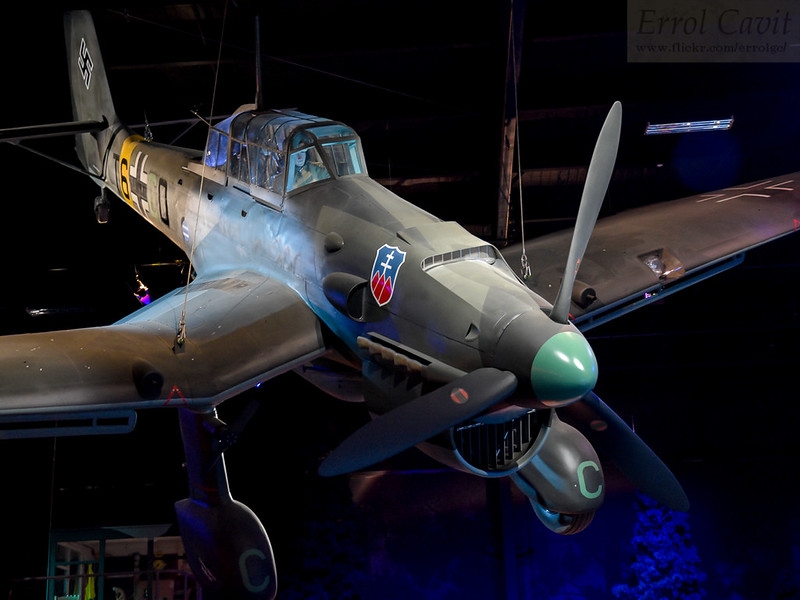
Junkers Ju 87 is a dive bomber aircraft designed by the Junkers company under the leadership of Hermann Pohlmann for Nazi Germany and served as the main light bombing and ground attack platform for the German Air Force (Luftwaffe) at the beginning of World War II. Commonly known as the Stuka (an abbreviation of the German Sturzkampfflugzeug, meaning dive bomber), this aircraft became an icon due to its critical role in providing close air support to armored units during the Blitzkrieg tactic.


Junkers Ju 87 Stuka (Kelly Michals)

Design and Development Process

The development of the Ju 87 began in 1935, with the design supported by the personal interest of Luftwaffe leaders such as Ernst Udet in the concept of dive bombing. The aircraft’s design philosophy centered on combining a simplified structure with exceptional bombing accuracy.


  • Initial Prototypes (V1–V4): The first prototype, Ju 87 V1, made its maiden flight in 1935 but featured a twin vertical tail and was powered by the British Rolls-Royce Kestrel engine. This prototype crashed during dive tests due to structural failure of the tail surfaces. The accident exposed design weaknesses and forced engineers to adopt a single vertical tail configuration. The Ju 87 V4 prototype was the first version close to production and was equipped with the Jumo 210 engine.
  • Aerodynamic Design: The Ju 87 featured a distinctive inverted gull wing design and fixed landing gear, which increased aerodynamic drag but improved maintenance access and low-speed maneuverability. These landing gear units are characterized by large “pants” fairings.
  • Dive Bombing Mechanism: The aircraft’s most important technical feature was its ability to dive at nearly vertical angles. To minimize the risk of pilot blackout from high G-forces and ensure safe recovery from dives, Ju 87s were equipped with dive brakes (hinged flaps under the wings) that activated automatically during dives and automatic dive recovery systems. The main bomb was swung forward and downward by a cradle before release to prevent it from striking the propeller.


Junkers Ju 87 Stuka (thewaryears1939)

Ju 87 A Series (First Production Variant)

The A series was the first production variant of the Ju 87 and saw use in early wartime operations despite being rapidly replaced by the B series.

  • Engine: The Ju 87 A-1 was powered by the Junkers Jumo 210 Da, a liquid-cooled inverted V12 engine. This engine was less powerful than those used in the B series, producing approximately 635 to 680 hp (470–500 kW).
  • Production: Pre-production Ju 87 A-0 aircraft were manufactured in late 1936, followed by the first series production model, the Ju 87 A-1, which entered service in spring 1937.
  • Armament: The armament of the A series was more limited compared to later variants.
    • Attack: Two 7.92 mm MG 17 machine guns mounted in the wings.
    • Defense: One 7.92 mm MG 15 machine gun operated by the radio operator in the rear cockpit.
    • Bomb Load: One 250 kg bomb under the fuselage and four 50 kg bombs under the wings.
  • Operational Performance: The A series had a maximum speed of around 320 km/h (199 mph at 12,000 ft). This speed rendered it slow and vulnerable against contemporary fighter aircraft.


Junkers Ju 87 Stuka (Clemens Vasters)

First Combat Experience and Role

Before entering Luftwaffe service, the Ju 87 was tested in combat conditions during the Spanish Civil War (1936–1939) as part of the Condor Legion.

  • Spanish Civil War: The Stukas successfully completed their evaluation by demonstrating exceptional precision bombing in Spain, reinforcing the German High Command’s confidence in the dive bombing concept.
  • Blitzkrieg: At the outset of World War II, the Ju 87 assumed the role of a “flying artillery” unit, providing close air support to ground forces during the invasions of Poland and France. During dives, the aircraft emitted a piercing wail from a siren mounted on the landing gear, known as the Jericho Trompete, which served as a psychological weapon against enemy troops on the front lines.

Emergence of Vulnerabilities and Evolution

The Ju 87’s vulnerabilities became apparent when facing well-organized and heavily armed enemy air forces.

  • Battle of Britain: During the early stages of the Battle of Britain in 1940, its slow speed—one of the slowest operational aircraft of its time—and inadequate defensive armament left it defenseless against RAF Spitfires and Hurricanes. Rising losses led to the rapid withdrawal of Ju 87 units from the Western Front and their redeployment to the Mediterranean and Eastern Fronts.
  • Variant Development: The Ju 87’s shortcomings spurred the development of the B series, featuring a more powerful Jumo 211 engine, a streamlined fuselage, and enhanced armament, followed later by the G series, which was adapted for anti-tank roles and armed with a 37 mm cannon.

Yazar Bilgileri

Avatar
YazarArif Zahid Yüksel1 Aralık 2025 03:48

Etiketler

Tartışmalar

Henüz Tartışma Girilmemiştir

"Junkers Ju 87 Stuka" maddesi için tartışma başlatın

Tartışmaları Görüntüle

İçindekiler

  • Design and Development Process

  • Ju 87 A Series (First Production Variant)

  • First Combat Experience and Role

  • Emergence of Vulnerabilities and Evolution
KÜRE'ye Sor