

+2 Daha


Kaman Kalehöyük Archaeology Museum
Location | Kaman Kırşehir | ||||||||
|---|---|---|---|---|---|---|---|---|---|
Opening Date(s) | 2010 July 11 | ||||||||
Surface Area | Total 1,500 m² (470 m² indoor830 m² outdoor) | ||||||||
Collection | Approximately 5,000 works | ||||||||
Chronology | Chalcolithic Age - Ottoman Period | ||||||||
Excavation Sites | Kalehöyük,Yassıhöyük,Büklükale | ||||||||
Governance | Republic of Turkey Ministry of Culture and Tourism,Japan Middle East | ||||||||
Education Programs | Archaeo-School hands-on art and history lessons | ||||||||
Award(s) | 2011 Green Good Design (USA) | ||||||||
Garden | Mikasanomiya Memorial Garden (Japanese Garden) | ||||||||
Visiting Hour(s) | Every day of the week 08.00-17.00 (Summer: 08.00-19.00) | ||||||||
The Kaman Kalehöyük Archaeological Museum, located in the Kaman district of Kırşehir province, was built within the framework of the cultural and economic cooperation of the Turkish and Japanese governments and opened to visitors in 2010. The museum forms a whole with the adjacent Japanese Garden (Mikasanomiya Memorial Garden), the Japanese-Anatolian Archaeological Institute, and the Kalehöyük Excavation Site 2 km away. Architecturally built in the form of a mound and harmony with the environment, the museum stands out with its natural grass covering. It was awarded the US-based Green Good Design Award in 2011 and nominated for the European Museum of the Year award in 2012.

Kaman Kalehöyük Archeology Museum (Turkey Culture Portal)
The museum was realized as a result of the cultural cooperation between the Ministry of Culture and Tourism of the Republic of Türkiye and the Government of Japan in order to preserve and exhibit the artifacts obtained from the Kalehöyük excavations carried out by the Japan Middle East Cultural Center since 1986. Started in 2008, construction was completed in 2010, and the museum was inaugurated on July 11, 2010, with the participation of HRH Prince Tomohito Mikasa, HRH Princess Akiko, and the Turkish Minister of Culture and Tourism, Ertuğrul Günay.

Exhibited Works (MüzekartOfficialWebsite)
The museum mainly features artifacts from the Chalcolithic Age to the Ottoman Period, mainly from the excavations at Kalehöyük, Yassıhöyük, and Büklükale. The collection consists of approximately 5000 artifacts. In addition to these, artifacts acquired through donations and purchases are also on display. The museum is designed in reverse chronological order, from the most recent to the oldest, offering visitors a different perspective on historical processes.

Excavation Methods Exhibition (Turkey Culture Portal)

Exhibited Works (Kaman Municipality)
Spread over a total area of 1500 square meters, the museum has 470 square meters of indoor space and 830 square meters of outdoor space. In addition to the exhibition halls, there are also a cinevision corner, a laboratory, a library, a photography studio, a café and technical departments. Thanks to its mound-shaped structure, both museology and archaeological excavation methodology are presented to visitors together.
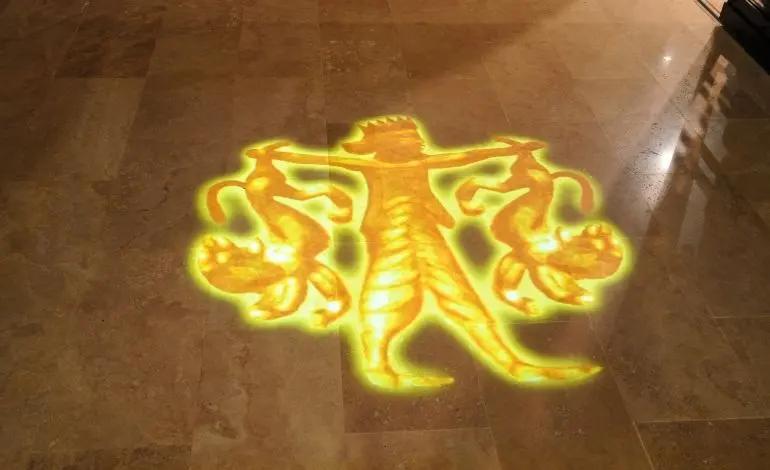
Technological exhibition methods such as 3D artifact presentation screens, interactive television, and holographic animation systems are used in the museum. Within the scope of educational activities, especially for primary and secondary school children, "Arkeo-School Summer School" is implemented and applied courses such as pottery making, cuneiform writing, mosaics, figurines, jewelry design, and marbling are given. These activities aim to raise historical awareness.
The Mikasanomiya Memorial Garden, located next to the museum, is the largest Japanese Garden outside Japan. The garden features plants and fish brought from Japan, Japanese temple architecture, and ponds. In addition, the Japan-Anatolia Archaeology Institute conducts excavations and publishes scientific publications.

Mikasanomiya Memorial Garden (Embassy of Japan)
The museum is open all days of the week and can be visited between 08.00-19.00 from April to October and 08.00-17.00 in other periods.
Embassy of the Republic of Turkey in Tokyo. "Kaman Kalehöyük Archaeology Museum." Embassy of the Republic of Turkey in Tokyo Official Website. Accessed May 15, 2025. https://www.tr.emb-japan.go.jp/itpr_tr/00_000058.html.
Republic of Turkey Ministry of Culture and Tourism. "Kaman Kalehöyük Archaeology Museum." Culture Portal. Accessed May 15, 2025.
Republic of Turkey Ministry of Culture and Tourism. "Kaman Kalehöyük Archaeology Museum." Museum.gov.tr. Accessed May 15, 2025. https://muze.gov.tr/muze-detay?DistId=MRK&SectionId=KKK01.
Republic of Turkey Ministry of Culture and Tourism. "Kırşehir Kaman Kalehöyük Archaeology Museum." Turkish Museums. Accessed May 15, 2025. https://turkishmuseums.kprod.kultur.gov.tr/museum/detail/2118-kirsehir-kaman-kalehoyuk-arkeoloji-muzesi/2118/1.
Republic of Turkey Ministry of Culture and Tourism. "Kırşehir Kaman Kalehöyük Museum Directorate." General Directorate of Cultural Assets and Museums. Accessed May 15, 2025. https://kvmgm.ktb.gov.tr/TR-281419/kirsehir-kaman-kalehoyuk-muze-mudurlugu.html.
Republic of Turkey, Kaman Municipality. "Kalehöyük Archaeology Museum." Kaman Municipality Official Website. Accessed May 15, 2025.

Kaman Kalehöyük Archaeology Museum
Location | Kaman Kırşehir | ||||||||
|---|---|---|---|---|---|---|---|---|---|
Opening Date(s) | 2010 July 11 | ||||||||
Surface Area | Total 1,500 m² (470 m² indoor830 m² outdoor) | ||||||||
Collection | Approximately 5,000 works | ||||||||
Chronology | Chalcolithic Age - Ottoman Period | ||||||||
Excavation Sites | Kalehöyük,Yassıhöyük,Büklükale | ||||||||
Governance | Republic of Turkey Ministry of Culture and Tourism,Japan Middle East | ||||||||
Education Programs | Archaeo-School hands-on art and history lessons | ||||||||
Award(s) | 2011 Green Good Design (USA) | ||||||||
Garden | Mikasanomiya Memorial Garden (Japanese Garden) | ||||||||
Visiting Hour(s) | Every day of the week 08.00-17.00 (Summer: 08.00-19.00) | ||||||||
Henüz Tartışma Girilmemiştir
"Kaman Kalehöyük Archaeology Museum" maddesi için tartışma başlatın
History and Foundation
Collection and Exhibition
Architecture and Space Utilization
Technology and Education
Japanese Garden and Institute
Visit Information
Bu madde yapay zeka desteği ile üretilmiştir.