

Bu içerik Türkçe olarak yazılmış olup yapay zeka ile otomatik olarak İngilizceye çevrilmiştir.
+1 Daha
Elevation(s) | 300 - 350 metres | ||||||||
|---|---|---|---|---|---|---|---|---|---|
Building Type | Defensive and garrison castle | ||||||||
Construction Period | 13th century, (Byzantine Empire / Laskarid period) | ||||||||
Transportation(s) | No vehicle road exists accessible only by a challenging hiking trail (on foot) | ||||||||
Location | Selçuk / İzmir Alaman / Galesion Mountain) (within the boundaries of Belevi village | ||||||||
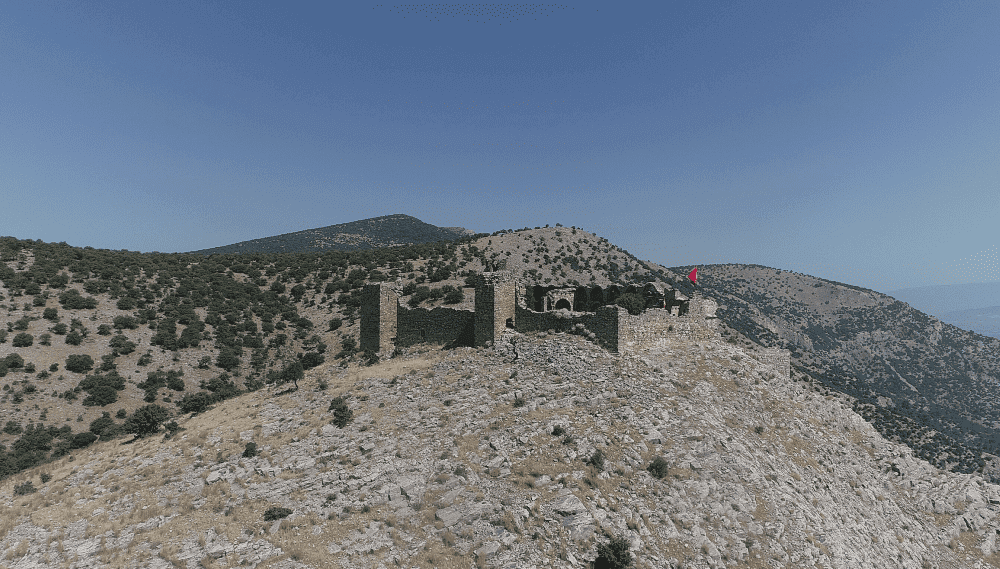
Keçi Kalesi is a historical defensive and garrison castle located at the summit of Alaman Dağı within the boundaries of the Selçuk district of İzmir Province, reflecting architectural features of the Byzantine Empire (Laskaris period).
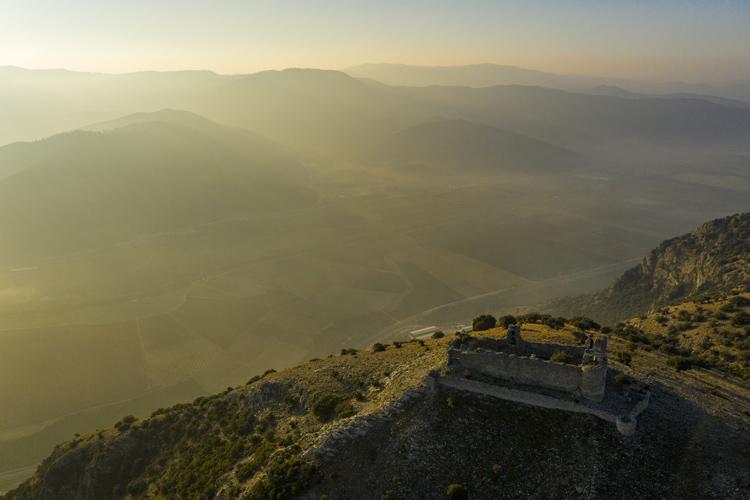
Keçi Kalesi (Anadolu Ajansı)
Keçi Kalesi is situated 9 kilometers from the center of Selçuk district in İzmir, within the boundaries of the Belevi village. The castle is located at an elevation of 300–350 meters on the peak of Alaman Dağı, known in antiquity as Galesion and situated along a major highway.
The structure is strategically positioned to dominate the routes leading northward to Smyrna (İzmir) and Sardis, and southward to Ayasuluk. Control over the mountainous terrain on both sides of the Küçük Menderes River is maintained from this fortress.
Vehicle access to the hill on which the castle stands is impossible. The structure can only be reached via a challenging hiking trail. Today, the castle is visited by hikers, local and foreign tourists, and photography enthusiasts, particularly in the early morning hours when it is enveloped in mist and offers striking panoramic views.
Following the division of the Roman Empire in 395 CE, İzmir and its surroundings came under Byzantine rule. The region suffered attacks and destruction during the 7th and 8th centuries from Umayyad Arab forces. After the Battle of Manzikert in 1071, the Seljuk Turks reached the Aegean coast, and Çaka Bey established the first Turkish beylik in the region.
However, in 1097 during the First Crusade, the Byzantine army recaptured the area. After the Fourth Crusade's capture of Constantinople in 1204, the Empire of Nicaea, centered in Nicaea (İznik) and ruled by the Laskarids, gained control over all of Western Anatolia, including İzmir and its surroundings, beginning in 1212. The region experienced significant economic and architectural development, particularly during the reign of Emperor John III Vatatzes (1222–1254).
Alaman (Galesion) Mountain held religious significance during the Byzantine period due to the presence of Saint Lazarus, who lived there and founded monasteries dedicated to Christ, the Virgin Mary, and the Holy Resurrection. It is known that the region came under the control of the Empire of Nicaea under Theodore Laskaris in the early 13th century. Keçi Kalesi is generally believed to have been constructed during the Laskaris period (13th century) to provide early warning of potential attacks on Ayasuluk Castle and to safeguard vital trade routes.【1】
Keçi Kalesi has an irregular rectangular plan. This stepped elevation, adapted to the sloping topography of the terrain, resembles Roman castrum designs and shares similarities with the contemporary Metropolis Castle.
The structure primarily consists of an inner keep. The southern and eastern sides face steep valley ridges, making attacks from these directions unlikely; therefore, single-tiered walls were constructed here. In contrast, the northern and western sides, vulnerable to potential assaults, are reinforced with outer walls connected to the inner keep, forming a double-tiered wall system.
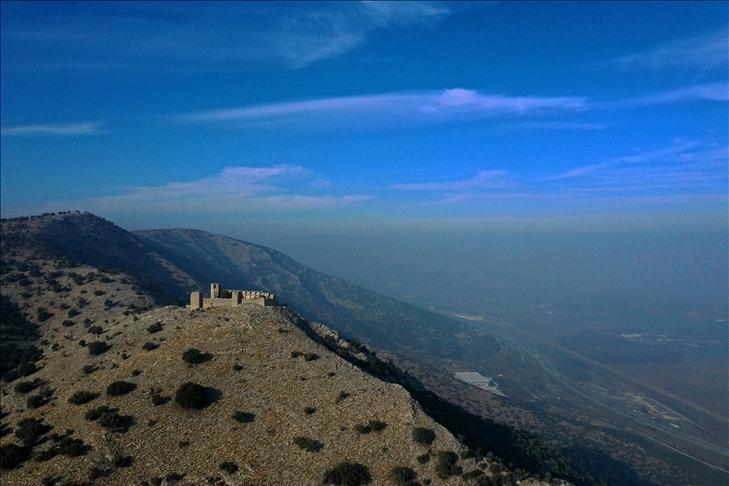
Keçi Kalesi (Anadolu Ajansı)
The western wall of the inner keep is supported by a circular tower to the north and a nearly square-plan tower to the south. The northern circular tower has three stories. Its interior space is also circular, with round-arched, rectangular-shaped mazgal windows on the interior face. The southern square tower has a circular niche entrance at ground level.
Within the castle’s interior, adjacent to the eastern section of the southern wall, is a cistern with a barrel-vaulted roof.
The primary construction material used throughout Keçi Kalesi is rubble stone and broken stone. Brick usage is highly limited. Brick was employed only in the arches of the mazgal windows inside the northern circular tower and as filler and binding material in the relieving arch on the western wall.
Although both stone and brick are used in Keçi Kalesi and the contemporary Metropolis Castle, typical of Laskaris-period architecture, the brick does not form regular, cohesive courses within the stonework. The characteristic techniques of patterned brickwork or alternating brick-and-stone masonry, commonly found in other Byzantine and Beylik-period structures in the region, are not prominent in the overall wall construction of Keçi Kalesi.
T.C.Selçuk Belediyesi. "Keçi Kalesi." Accessed May 14, 2026. https://www.selcuk.bel.tr/keci-kalesi
Öztürker, Hazal Ceylan. "Laskarisler Dönemine Ait Bir Kale: İzmir Keçi Kalesi." *İstanbul Journal of Social Sciences*, no. 12 (Spring 2016): 1–8. Accessed May 14, 2026. https://dergipark.org.tr/en/download/article-file/161950
Şahbaz, Yusuf. "Adını zorlu yollarından alan 'Keçi Kalesi' manzarasıyla ilgi görüyor." Anadolu Ajansı. Accessed May 14, 2026. https://www.aa.com.tr/tr/turkiye/adini-zorlu-yollarindan-alan-keci-kalesi-manzarasiyla-ilgi-goruyor/2092956
[1]
Hazal Ceylan Öztürker, "Laskarisler Dönemine Ait Bir Kale: İzmir Keçi Kalesi," İstanbul Journal of Social Sciences, sy. 12 (Bahar 2016): 2–3. Son Erişim: 14.05.2026. https://dergipark.org.tr/en/download/article-file/161950


Elevation(s) | 300 - 350 metres | ||||||||
|---|---|---|---|---|---|---|---|---|---|
Building Type | Defensive and garrison castle | ||||||||
Construction Period | 13th century, (Byzantine Empire / Laskarid period) | ||||||||
Transportation(s) | No vehicle road exists accessible only by a challenging hiking trail (on foot) | ||||||||
Location | Selçuk / İzmir Alaman / Galesion Mountain) (within the boundaries of Belevi village | ||||||||
Henüz Tartışma Girilmemiştir
"Keçi Kalesi" maddesi için tartışma başlatın
Geographical Location and Access
History
Architectural Structure and Layout
Walls and Fortifications
Towers and Interior Elements
Materials and Construction Techniques