


Bu içerik Türkçe olarak yazılmış olup yapay zeka ile otomatik olarak İngilizceye çevrilmiştir.
+1 Daha
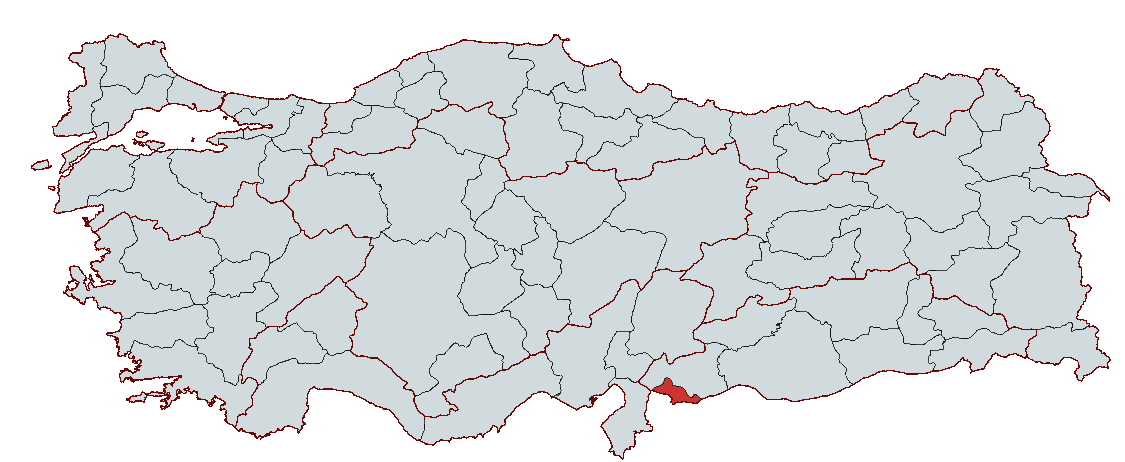
Kilis
Country | Türkiye | ||||||||
|---|---|---|---|---|---|---|---|---|---|
Region | Southeastern Anatolia Region | ||||||||
Population | 156739 | ||||||||
Area | 1.521 km² | ||||||||
Climate | Continental Climate | ||||||||
Important Structure | Oylum Höyük Tekye (Mevlevihane) Camii Canbolat Paşa Külliyesi ve Türbesi Ulu Cami Ravanda Kalesi | ||||||||
Governor | Tahir Şahin | ||||||||
Mayor | Hakan Bilecen | ||||||||
Area Code(s) | 348 | ||||||||
License Plate Code | 79 | ||||||||
Kilis is a province located in southeastern Türkiye, bordering Syria, and has served as a home to numerous civilizations throughout history. Due to its strategic location, the city has borne traces of various cultures from the Hittites to the Ottomans and became an economic and cultural center thanks to its position along major trade routes. Its geography, exhibiting transitional characteristics between continental and Mediterranean climates, provides a favorable structure for agriculture and animal husbandry, while its cuisine, resembling that of Aleppo and Antep, offers rich and unique flavors. Kilis is notable for Ravanda Castle, its historic mosques, and traditional handicrafts, and became Türkiye’s 79th province in 1995 after separating from Gaziantep.

Kilis City Center
Kilis is an ancient settlement that has hosted many civilizations throughout history. The earliest human traces in the region date back to the Late Chalcolithic Age (3500–3000 BCE), and excavations at Oylum Höyük indicate the presence of an advanced settlement during this period. According to Hittite sources, Kilis was under the control of the Kingdom of Aleppo around 1460 BCE and later came under the dominion of powerful civilizations such as the Assyrians, Persians, and the Kingdom of Macedonia. After the death of Alexander the Great in 323 BCE, the region fell under the rule of the Seleucids and was conquered by the Roman Empire in 64 BCE, where it was known as “Ciliza sive Urmagiganti.”
Following the division of the Roman Empire in 395 CE, Kilis became part of the Byzantine territories and was attached to the Byzantine Theme of Syria along with Aleppo. In 636 CE, during the caliphate of Umar, the region was conquered by Islamic armies under the command of Abu Ubayda ibn al-Jarrah and changed hands repeatedly between the Arabs and Byzantines over a long period. During the Abbasid era, Turkic tribes were settled in this region, which was designated as frontier towns (Avasım). During the Crusades in the 11th century, Kilis briefly came under the control of the County of Edessa before being captured by the Artuqids, then the Ayyubids and Mamluks. Under the Mamluks, Kilis developed as an important trade center alongside Anazarba, Azez, and Ravanda.
Ottoman rule began on 24 August 1516 following Yavuz Sultan Selim’s campaign against the Mamluks at the Battle of Marj Dabiq, and Kilis was incorporated into Ottoman territory. Although it did not hold the status of a sanjak during the Ottoman period, the city remained a significant trade center. In the 19th century, it became a kaza center under the Aleppo Vilayet. Between 1831 and 1839, Kilis came under the administration of Kavalalı Mehmet Ali Pasha, the Egyptian governor, and after the Ottoman Empire reestablished its authority, it gained kaza status in 1854 and municipal status in 1863.

Ravanda Castle
Following the First World War, under the terms of the Armistice of Mudros signed on 30 October 1918, Kilis was occupied by British forces on 6 December 1918. On 29 October 1919, the region was transferred to French control, and the occupation continued. Resistance movements emerged through local organizations such as Cemiyet-i İslamiye and Kuvayı Milliye. In 1920, resistance continued along the Ayıntap-Kilis line under the leadership of Şahin Bey and Sakıp Bey. Following the signing of the Ankara Agreement on 20 October 1921, the French began withdrawing from the region, and Kilis was fully liberated from occupation on 7 December 1921. During the Republican period, Kilis was administered as a kaza under Gaziantep until it became Türkiye’s 79th province by law on 6 June 1995.
Kilis is a province located in southeastern Türkiye on the Syrian border. It lies between 36°40′ and 37°35′ north latitudes and 36°30′ and 37°45′ east longitudes. It is bordered by Gaziantep to the east, Syria to the south, and again by Gaziantep to the west and northwest. With an area of approximately 1,521 km², it is one of Türkiye’s smallest provinces by surface area.
Kilis’s topography consists mostly of rolling plains, hills, and valleys. The Kilis Plain is one of the province’s most important agricultural areas, particularly suitable for olive, grape, and cereal cultivation. The plateaus in the north are an extension of the Gaziantep Plateau and are surrounded by mountain ranges extending in an east-west direction. One of Kilis’s highest points, Kartal Tepe (850 m), is among its notable elevations. Although there are no major rivers within the province’s boundaries, there are seasonal dry streambeds. Near the Syrian border, water sources such as the Afrin River and Sabun Suyu Creek are found.
Kilis has a climate with transitional characteristics between Mediterranean and continental climates. Summers are hot and dry, while winters are cold and rainy. Summer temperatures can reach up to 40°C, while winter temperatures often fall below 0°C. The annual average temperature ranges between 16–18°C, and annual precipitation is approximately 500–700 mm.
One of the most distinctive features of the climate is the dominance of dry conditions during summer months, making irrigation essential for agricultural activities. Although snowfall occasionally occurs in winter, snow depth is generally low and does not remain on the ground for long. Spring and autumn seasons are short, while summer is long and dry.
These climatic conditions have made olive cultivation, viticulture, and cereal farming the dominant agricultural activities in Kilis. Additionally, the province’s geographic proximity to Syria has had a significant impact on its cultural and economic relations.
As of 2023, Kilis has a total population of 156,739. The majority of the population is concentrated in the provincial center, Kilis Central District, where 133,225 people reside. The population distribution by district is as follows:
Kilis is one of Türkiye’s smallest provinces and has a low population density. Population growth rates have fluctuated over time, with temporary demographic shifts occurring especially due to the Syrian civil war. It is known that a significant number of Syrian refugees reside in the province.

Kilis Ulu Mosque
In the past, Kilis was one of the provinces that sent significant numbers of migrants to Gaziantep and larger metropolitan areas. Due to limited employment and educational opportunities, the youth population has tended to move toward major cities. However, since 2011, due to the Syrian civil war, a reverse migration trend has occurred, and Kilis has undergone a major demographic transformation due to the influx of refugees from Syria.
The urbanization rate is high, with the majority of the population living in the provincial center. In rural areas, agriculture and animal husbandry remain important sources of livelihood.
Kilis is one of the provinces with an average level of education. Kilis 7 December University is the province’s only higher education institution and makes significant contributions to regional educational activities. Due to limited employment opportunities, the local economy remains economically dependent on external sources. Overall, Kilis is a small city with low population density that has historically both sent and received migrants. Particularly due to its proximity to the Syrian border, factors such as war, trade, and migration play a crucial role in shaping its demographic balance.
Kilis’s economy is based on agriculture, animal husbandry, trade, and border economy. Due to its proximity to the Syrian border, trade and border crossing activities play a decisive role in the province’s economy. Traditionally, Kilis has had an economy based on agriculture, and although it has recently begun to develop in the industrial and trade sectors, it remains largely dependent on agriculture and animal husbandry.
Kilis’s geography, with characteristics of both Mediterranean and continental climates, is suitable for the production of olives, grapes, cereals, and legumes. Kilis olives and the products derived from them—Kilis Oil Olives and Kilis Olive Oil—are among the province’s most important agricultural products and are recognized as geographical indication products. Viticulture is also a major livelihood source; grape must is used in the production of pekmez, pestil, and sucuk. Additionally, cereals such as lentils, wheat, and barley are widely cultivated.
Animal husbandry, particularly small livestock farming (sheep and goat rearing), is common in rural Kilis. Poultry farming and beekeeping are also practiced, though not developed at an industrial scale.
Kilis has limited industrial capacity. Although it has an Organized Industrial Zone (OSB), industrial development has been relatively slow due to its proximity to major industrial centers like Gaziantep. In the province, industry based on agriculture—such as olive oil production, flour and feed mills, and grape processing facilities—is dominant.
Trade and border economy hold great importance in Kilis’s economy. The Öncüpınar Customs Gate is one of the most important border crossings between Türkiye and Syria and previously facilitated substantial trade with Syria before the civil war. However, the outbreak of the Syrian conflict significantly reduced this trade, and the border economy adopted a different structure. In recent years, various incentives and regulations have been introduced to support border trade.
The service sector in Kilis has developed primarily through retail trade and small-scale enterprises. Although the province has high gastronomic tourism potential, it has not been adequately exploited. Kilis cuisine attracts attention with unique dishes such as Kilis Tava, oruk, lebeniye, and ekşili malhıta. Ravanda Castle, historic mosques, and caravanserais have the potential to attract visitors, but infrastructure development in these areas remains limited.
Although Kilis is a city marked by structures reflecting Ottoman and Islamic culture, historic castles, mosques, and traditional architecture from centuries of hosting various civilizations, it has not developed sufficiently as a tourism destination. However, its cultural heritage and unique cuisine serve as important assets for local and regional tourism.
Ravanda Castle: One of Kilis’s most important historical structures, Ravanda Castle is located near Musabeyli District and was used as a strategic point during the Crusades. The castle retained its importance during the Byzantine, Ayyubid, Mamluk, and Ottoman periods and played a role in regional defense. Today, parts of its walls and structures are still visible.
Oylum Höyük: One of Kilis’s oldest settlement areas, Oylum Höyük dates back to 3500 BCE. Archaeological excavations have uncovered remains from various civilizations spanning from the Chalcolithic Age to the Ottoman period. The site is an important destination for history and archaeology enthusiasts.
Although Kilis has limited potential in terms of natural beauty, it is a notable area for agricultural tourism, distinguished by its grape vineyards and olive groves. Especially during olive harvest seasons, tours related to olive and olive oil production can be organized. Additionally, nature walks and photography activities can be conducted in the rural areas south of Kilis.
Kilis has been a stage for various cultural interactions throughout history and has developed a distinct identity shaped by the synthesis of Ottoman and Arab cultures. Its cultural structure places significant importance on traditional crafts such as carpet and kilim weaving, copperwork, wood carving, and stonework.
Kilis cuisine is a unique culinary tradition influenced by both Turkish and Arab cuisines. Although it shares similarities with the cuisines of Gaziantep and Aleppo, it distinguishes itself with its own distinctive flavors. Meat, bulgur, olive oil, and spices are central to Kilis dishes.

Kilis Tava
Kilis Valiliği. "Şehrimiz." Accessed February 15, 2025.http://www.kilis.gov.tr/sehrimiz.
Ministry of Culture and Tourism. "Kilis Genel Bilgiler." Accessed February 15, 2025.https://www.kulturportali.gov.tr/turkiye/kilis/genelbilgiler
Tuncel, Metin. "Kilis." *TDV İslâm Ansiklopedisi.* Accessed February 19, 2025.https://islamansiklopedisi.org.tr/kilis.
Türkiye İstatistik Kurumu. "Adrese Dayalı Nüfus Kayıt Sistemi Sonuçları 2024." Accessed February 15, 2025.https://data.tuik.gov.tr/Bulten/Index?p=Adrese-Dayali-Nufus-Kayit-Sistemi-Sonuclari-2024-53783

Kilis
Country | Türkiye | ||||||||
|---|---|---|---|---|---|---|---|---|---|
Region | Southeastern Anatolia Region | ||||||||
Population | 156739 | ||||||||
Area | 1.521 km² | ||||||||
Climate | Continental Climate | ||||||||
Important Structure | Oylum Höyük Tekye (Mevlevihane) Camii Canbolat Paşa Külliyesi ve Türbesi Ulu Cami Ravanda Kalesi | ||||||||
Governor | Tahir Şahin | ||||||||
Mayor | Hakan Bilecen | ||||||||
Area Code(s) | 348 | ||||||||
License Plate Code | 79 | ||||||||
Henüz Tartışma Girilmemiştir
"Kilis (Province)" maddesi için tartışma başlatın
History
Geography
Climate
Population
Economy
Agriculture and Animal Husbandry
Industry and Trade
Service Sector and Tourism
Tourism
Historical and Cultural Sites
Historic Mosques and Religious Structures:
Historic Caravanserais and Baths:
Natural and Alternative Tourism
Culture
Cuisine
Notable Kilis Dishes
Desserts and Snacks
Beverages and Local Products