

Bu içerik Türkçe olarak yazılmış olup yapay zeka ile otomatik olarak İngilizceye çevrilmiştir.
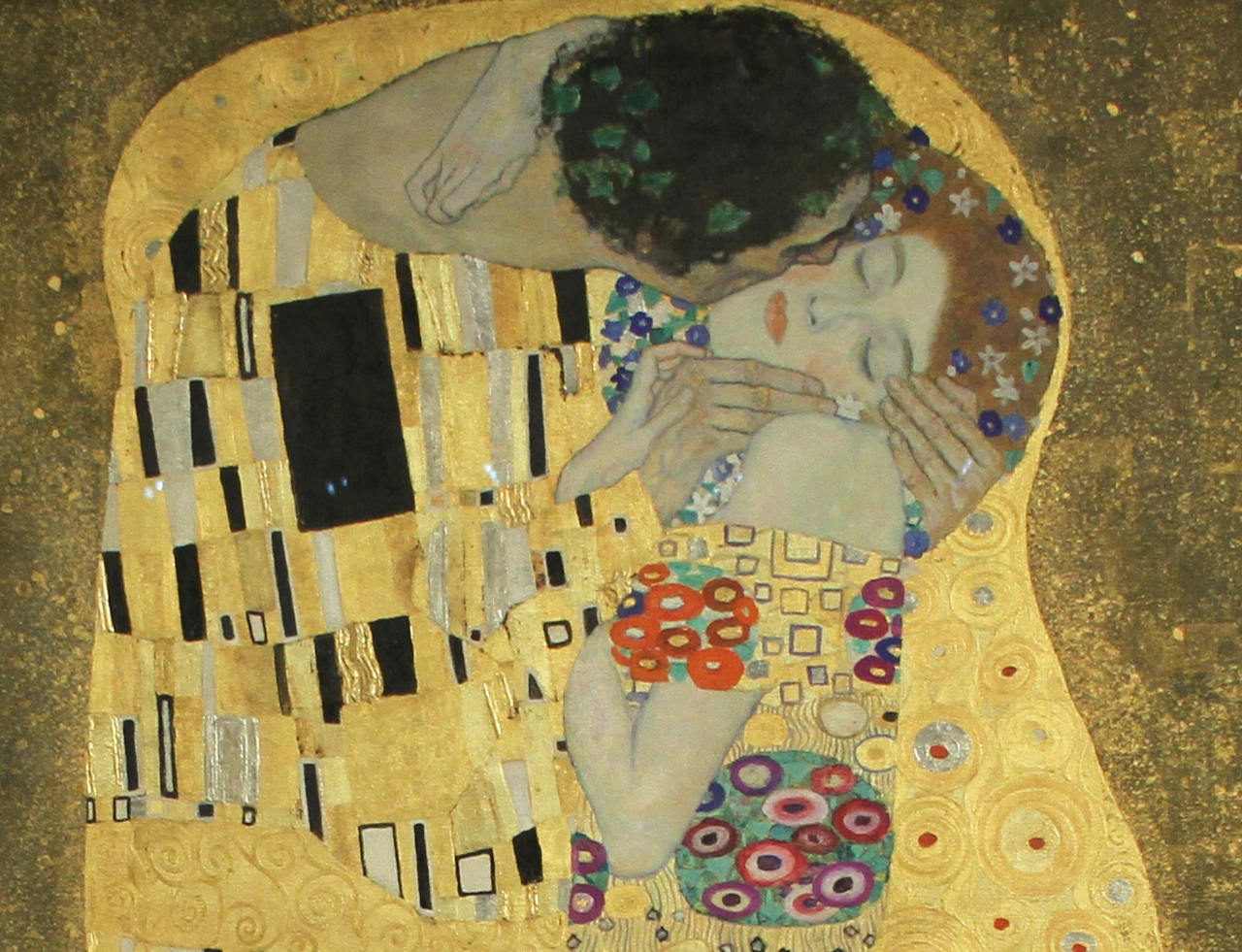
The Kiss is a painting by Austrian artist Gustav Klimt, created between 1907 and 1908, and is regarded as one of the most famous and extensively interpreted masterpieces of the Vienna Secession. Executed in oil paint and gold leaf on canvas, the work is currently held in the collection of the Belvedere Palace in Vienna. The painting is considered the pinnacle of Klimt’s “Golden Period” in his artistic career.

The Kiss, Gustav Klimt
Founded in 1897, the Vienna Secession was a movement advocating the liberation of modern art from academic traditions. Gustav Klimt was among its founding members and served as its first president. From this period onward, Klimt abandoned traditional perspective in favor of flat surfaces, dense ornamentation and symbolic expression. The Kiss is regarded as one of the most mature examples of this new aesthetic approach.
Klimt’s 1903 journey to Ravenna in Italy marked a decisive turning point in his art. Influenced by the mosaics of San Vitale and Galla Placidia, the artist began to favor compositions with golden backgrounds from this time onward. This phase in art history is known as his “Golden Period.” The Kiss stands as the most accomplished work of this period, both technically and symbolically.
The painting depicts two figures entwined within an abstract space surrounded by gold. The male figure embraces the woman and kisses her face with his hands, while the female figure is portrayed with closed eyes and a relaxed, yielding body.
The male figure’s clothing is dominated by angular and rigid geometric forms, while the female figure’s attire features rounded, floral motifs. This contrast imparts both visual balance and symbolic depth to the composition.
The Kiss is interpreted not merely as a scene of romantic love but as a symbolic representation of themes such as unity, surrender, spiritual wholeness and transcendence. The golden background elevates the scene into a timeless, sacred dimension, while the figures are presented not as individuals but as embodiments of universal humanity.
The Kiss was completed between 1907 and 1908 and was first exhibited to the public at the 1908 Vienna Art Exhibition. During the exhibition, while debates were still ongoing, the Austrian state purchased the painting. This early acquisition demonstrates that the work was immediately recognized as possessing significant official and artistic value.
Gustav Klimt’s The Kiss is regarded as one of his most mature works, celebrated for its formal richness, symbolic expression and decorative structure based on gold ornamentation. The painting embodies the aesthetic ideals of the Vienna Secession and holds the status of one of the universal icons of modern art history. Today, it is among the most widely recognized paintings in both academic studies and popular culture.

Henüz Tartışma Girilmemiştir
"Kiss (Painting)" maddesi için tartışma başlatın
Vienna Secession Movement and Klimt’s Artistic Position
The Emergence of the Golden Period
Composition and Formal Characteristics
Symbolic Meaning and Interpretive Layers
First Exhibition of the Work
Place in Art History and Contemporary Significance