

+1 Daha

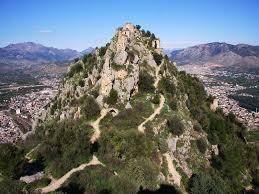
Location | Kozan district Turkey Adana province | ||||||||
|---|---|---|---|---|---|---|---|---|---|
Altitude | ~400 meters above sea level | ||||||||
Construction Period | Foundations date to antiquity; main use during the Middle Ages | ||||||||
Historical Users | Ottomans Crusaders Armenian Kingdom Byzantines Romans | ||||||||
Architectural Feature(s) | 44 towers church ruins cisterns inner and outer walls | ||||||||
Function(s) | administrative center Military base | ||||||||
Kozan Castle, located in the Kozan district of Adana province in southern Turkey, is a significant historical structure that has survived from the Middle Ages to the present. It has been inhabited since antiquity and underwent various restorations and uses during the Crusader and Armenian periods, making it a layered cultural heritage site. This study aims to examine the historical development, architectural features, and strategic importance of Kozan Castle within an academic framework.
The area where Kozan Castle is situated was once part of ancient Cilicia. According to Strabo, this region was a strategic transit point in antiquity. The city of Kozan was known as Sis during the Roman and Byzantine periods, becoming a prominent military outpost during the Byzantine era. However, the castle gained real significance during the medieval period.
In the late 11th century, during the Crusades, Frankish forces and later the Armenian Kingdom of Cilicia took control of the region and extensively utilized the castle. In 1198, King Leo I of the Armenian Kingdom declared Sis (now Kozan) as his capital, turning the castle into a political and administrative center.
During the Ottoman period, the castle gradually lost its administrative function but continued to serve a local security role. Today, it stands as an important archaeological and cultural heritage site and is open to tourism.
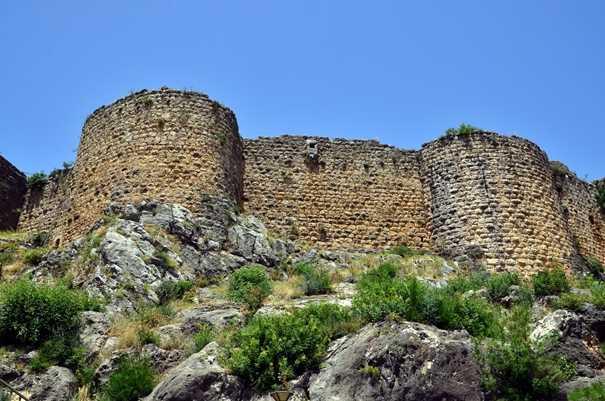
Kozan Castle (Adana Provincial Directorate of Culture and Tourism)
Kozan Castle is perched on a steep hill approximately 400 meters above sea level, offering significant observational and defensive advantages. The plan of the castle adapts to the natural topography and is irregular in shape. With approximately 44 towers, the castle is distinguished by its size and complex internal structure.
Various structures exist within the castle: cisterns, church remnants, dungeons, and administrative buildings. The remains of churches and palaces from the Armenian period provide important insights into medieval Armenian architecture. The masonry work features a mix of basalt and limestone using spolia techniques.
The castle is divided into two main parts: the inner and outer castle. The inner castle was used for administrative and military purposes, while the outer castle included residential and defensive walls. Underground cisterns were built to meet water needs, and these can still be observed today.
Kozan Castle is located at the southern foothills of the Taurus Mountains, at the crossroads of routes connecting the Mediterranean to Central Anatolia. Throughout history, it served as a control point for both commercial and military routes. Its elevation allowed for a wide field of view over the surrounding valleys and passes.
During the Armenian Kingdom period, the castle played a crucial role in defense, particularly in conflicts with the Mamluks. Towers, embrasures, and internal corridors in the castle reflect the defensive strategies of the time.
Kozan Castle has been partially restored and is open to visitors. Excavation and conservation works are carried out under the supervision of the Ministry of Culture and Tourism, aiming to reveal the historical layers of the site. However, the structure has suffered significant deterioration due to erosion, earthquakes, and human intervention.
It is crucial that restoration continues in accordance with scientific principles, and that the site's carrying capacity is respected during tourism activities to preserve this cultural heritage.
Kozan Castle is not merely a military structure but a multi-layered settlement reflecting traces of different civilizations. Hosting influences from the Roman, Byzantine, Armenian, Crusader, and Ottoman periods, the castle deserves in-depth study from historical, architectural, and strategic perspectives. As such, it holds a significant place in Turkey's inventory of cultural heritage.
Edwards, Robert W. The Fortifications of Armenian Cilicia. Washington, D.C.: Dumbarton Oaks Research Library and Collection, 1987. Accessed May 19, 2025. Erişim: https://www.doaks.org/resources/publications/books/the-fortifications-of-armenian-cilicia
Mutafian, Claude. Le royaume arménien de Cilicie: XIIe-XIVe siècle. Paris: CNRS Éditions, 1993. Accessed May 19, 2025. https://openlibrary.org/books/OL890994M/Le_royaume_arménien_de_Cilicie
Strabo. Geographica. Translated by Horace Leonard Jones. Loeb Classical Library, 1917. EAccessed May 19, 2025. https://www.loebclassics.com/view/LCL049/1917/volume.xml
T.C. Kozan Kaymakamlığı. “Tarihi Kozan (Sis) Kalesi.” Kozan District Governorate Official Website. Published June 26, 2019. Accessed May 19, 2025.
T.C. Kültür ve Turizm Bakanlığı. “Kozan Kalesi.” Türkiye Kültür Portalı. Last updated February 21, 2025. Accessed May 19, 2025. https://www.kulturportali.gov.tr/turkiye/adana/gezilecekyer/kozan-kalesi

Location | Kozan district Turkey Adana province | ||||||||
|---|---|---|---|---|---|---|---|---|---|
Altitude | ~400 meters above sea level | ||||||||
Construction Period | Foundations date to antiquity; main use during the Middle Ages | ||||||||
Historical Users | Ottomans Crusaders Armenian Kingdom Byzantines Romans | ||||||||
Architectural Feature(s) | 44 towers church ruins cisterns inner and outer walls | ||||||||
Function(s) | administrative center Military base | ||||||||
Henüz Tartışma Girilmemiştir
"Kozan Castle" maddesi için tartışma başlatın
Historical Background
Architectural Features
Strategic Location and Defense
Current State and Conservation Efforts
Bu madde yapay zeka desteği ile üretilmiştir.