

Bu içerik Türkçe olarak yazılmış olup yapay zeka ile otomatik olarak İngilizceye çevrilmiştir.
+2 Daha
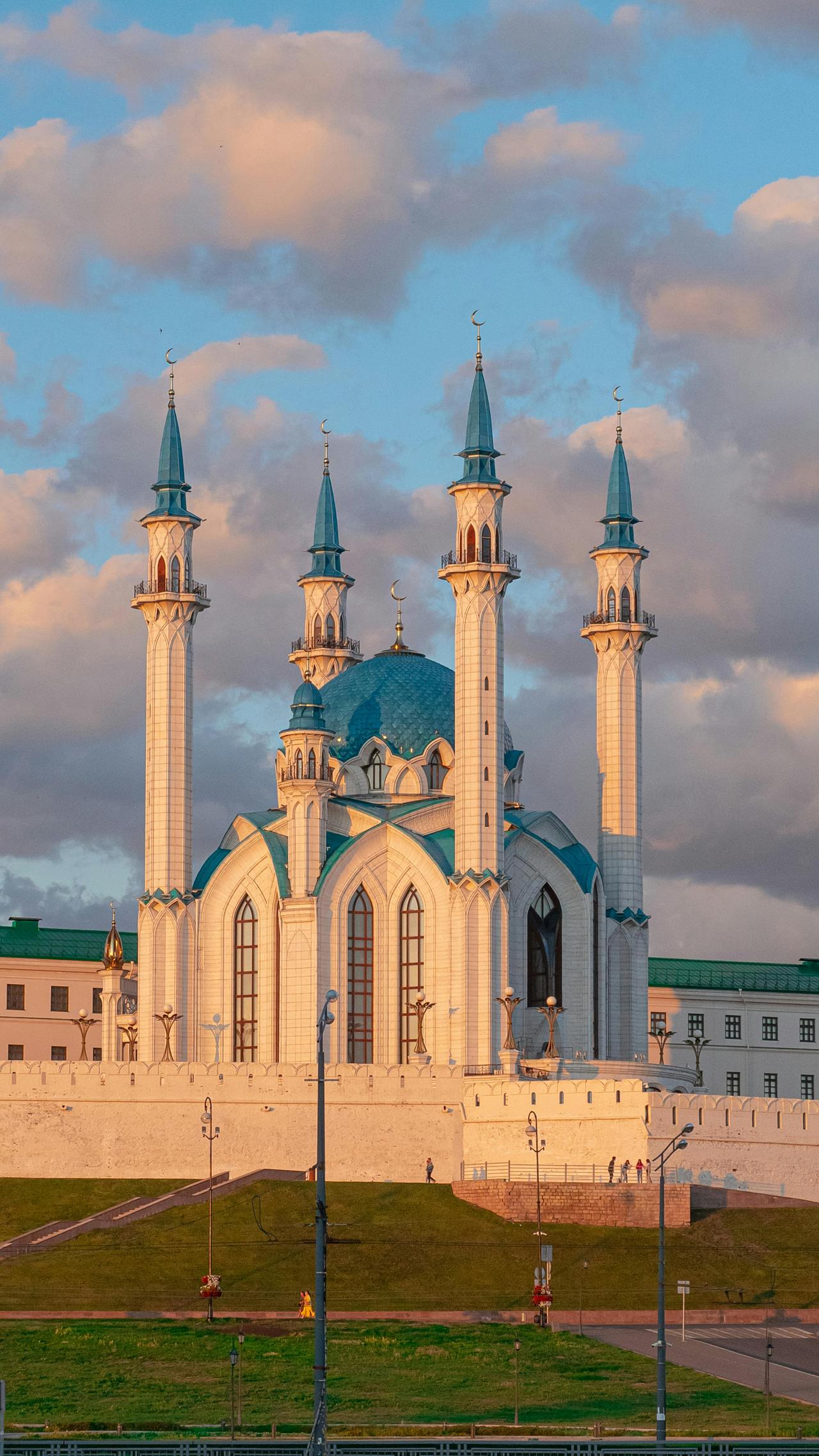
Kul Şerif Camii is a mosque located within the Kazan Kremlin in Kazan, the capital of Tatarstan. The structure is named after Kul Şerif, a religious and state figure who lived during the 16th century in the Khanate of Kazan. The current mosque was built in memory of the original main mosque destroyed during the 1552 siege of the Khanate of Kazan by Russian Tsar Ivan IV. Historical records indicate that during this siege, Kul Şerif and his students participated in the city’s defense; following the siege, the Khanate of Kazan ceased to exist and mosques and madrasas in the region were destroyed.
Throughout history, the Tatar people never forgot Kul Şerif or the mosque, and his scholarly contributions and service to Islam have been remembered. After Tatarstan regained its autonomy in 1996, it was decided to rebuild the mosque, with financial support provided by Tatar Muslims and many Islamic countries around the world. After extensive efforts, Kul Şerif Camii was opened for worship in 2005, on the 1000th anniversary of the founding of Kazan.
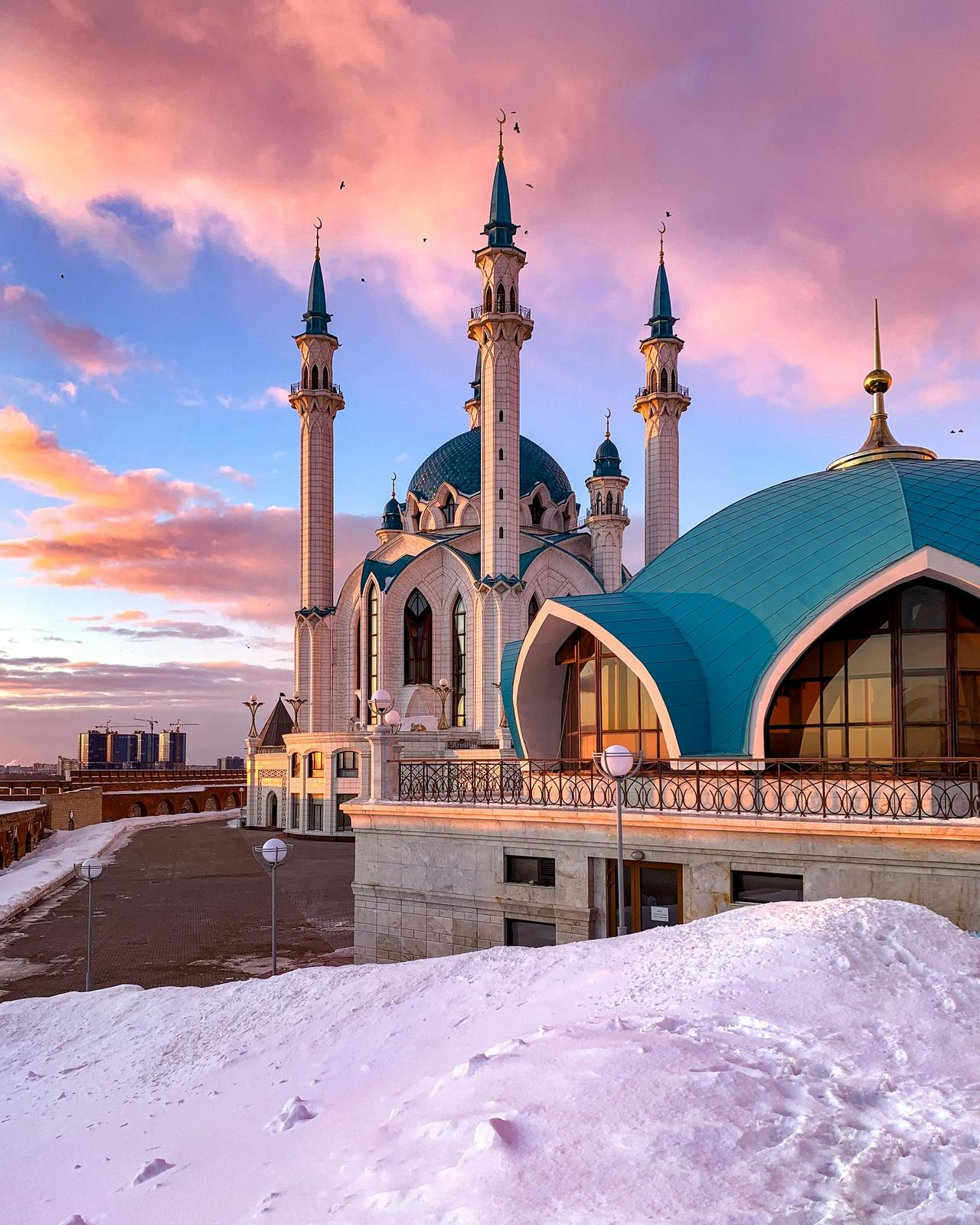
Kul Şerif Camii (Pexels)
Kul Şerif Camii is planned on two platforms due to the topography of the area. The upper platform is used for religious ceremonies, while the lower platform serves visitors to the museum. The mosque’s courtyard has a capacity to accommodate up to 6,000 people during holiday prayers.
The main section of the mosque features four primary minarets, each 55 meters high; in addition, two smaller and two decorative minarets complete the architectural harmony. The interior decoration was carried out by the ODAK Group, with the symbolic motif of “Bismillah” forming the foundation of the architectural composition.
Aesthetically, the structure is enriched with traditional Islamic elements, Ottoman influences, and Baroque details. This blend reflects classical Islamic architecture while also bearing traces of diverse cultural influences.
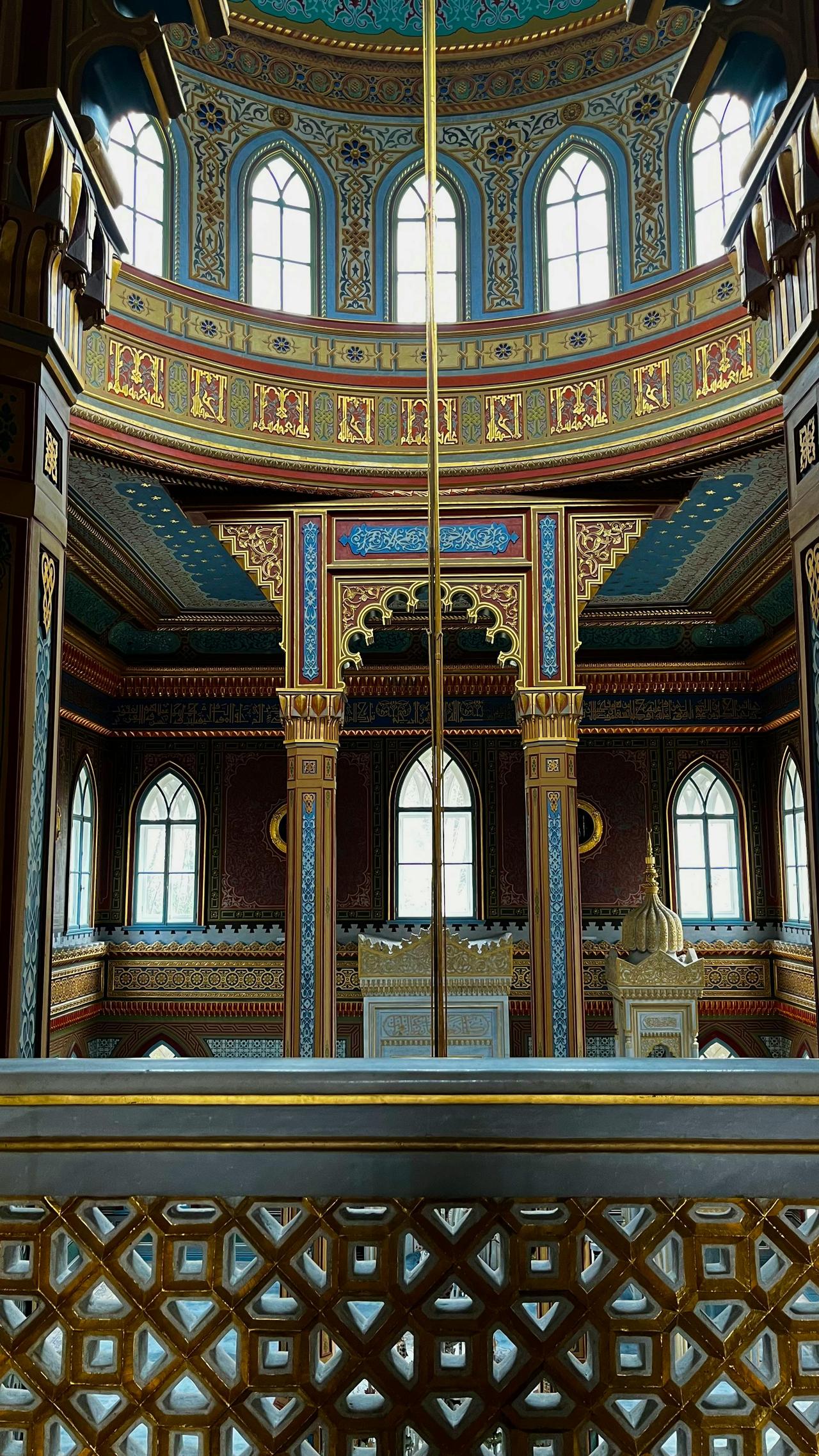
Kul Şerif Camii(Pexels)
One of the mosque’s artistic symbols is the tulip. The tulip motif, common in Eastern cultures, frequently appears in Tatar national patterns and represents rebirth and development. The tulip is also the official symbol of the Directorate of Religious Affairs for Muslims in Russia, the CIS, and Eastern Europe. In Sufism, the tulip symbolizes the existence and oneness of God, while among the Tatar people it is viewed as a symbol of rebirth and progress.
In addition to tulip motifs, the interior decoration features intricate ornamental details that draw attention. These artistic elements reinforce Kul Şerif Camii’s status as both a religious and cultural symbol.
Kul Şerif Camii is one of the most prominent structures within the Kazan Kremlin and forms a defining part of the city’s skyline. The mosque, with its minarets visible both by day and night, is an important symbol of Islamic identity and cultural heritage in Tatarstan. Its spacious courtyard serves both as a place of worship and a museum area, while the upper level is especially crowded during religious holidays.
In addition to being a spiritual center for the Muslim community in Tatarstan, the mosque is also a significant attraction for regional tourism due to its historical, artistic, and architectural value.
Kul Şerif Camii (Diyanet Digital)

Henüz Tartışma Girilmemiştir
"Kul Şerif Camii" maddesi için tartışma başlatın
Architectural Features
Symbols and Artistic Elements
Contemporary Significance