

Bu içerik Türkçe olarak yazılmış olup yapay zeka ile otomatik olarak İngilizceye çevrilmiştir.
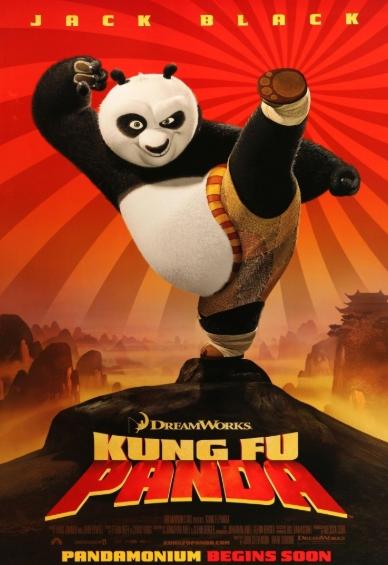
Kung Fu Panda (2008)
Director(s) | John Stevenson Mark Osborne | ||||||||
|---|---|---|---|---|---|---|---|---|---|
Producer(s) | Melissa Cobb | ||||||||
Screenplay(s) | Glenn Berger Jonathan Aibel | ||||||||
Music(s) | John Powell Hans Zimmer | ||||||||
Release Date(s) | 6 June 2008 | ||||||||
Duration | 92 minutes | ||||||||
Language(s) | English | ||||||||
Genre | Family Comedy Martial Arts Animation | ||||||||
Budget(s) | ~130 million dollars | ||||||||
Box Office Revenue | 631.7 million dollars | ||||||||
Kung Fu Panda is an American 3D computer-animated martial arts comedy film produced by DreamWorks Animation and distributed by Paramount Pictures in 2008. Directed by Mark Osborne and John Stevenson, the film tells the story of a fantastical version of ancient China populated by anthropomorphic animals. It follows Po, a kung fu enthusiast who is unexpectedly chosen as the Dragon Warrior and must defend the Valley of Peace against a dangerous enemy. As the first film in the Kung Fu Panda series, it achieved major success.
Kung Fu Panda Film Trailer (SGNTV)
Kung Fu Panda follows the adventures of Po, a clumsy and overweight panda who lives in the Valley of Peace and is an ardent fan of kung fu. Po works at his father Mr. Ping’s noodle restaurant and dreams of becoming a kung fu master, but his physical limitations and lack of self-confidence stand in his way. One day, a ceremony is held at the valley’s kung fu temple to select the legendary Dragon Warrior. Master Oogway unexpectedly chooses Po as the Dragon Warrior, shocking the Furious Five (Tigress, Crane, Mantis, Viper, and Monkey) and their master, Master Shifu. Po’s selection coincides with the threat posed by Tai Lung, a powerful snow leopard who has escaped from prison and seeks to seize the Dragon Scroll, said to grant unlimited power to its reader. Reluctantly, Shifu begins training Po, and as Po discovers his potential, he learns self-confidence, perseverance, and the true essence of kung fu. The story reaches its climax when Po faces Tai Lung in an epic battle, ultimately unlocking his inner strength to save both himself and the valley.

Scene from Kung Fu Panda (IMDB)
Kung Fu Panda explores themes of self-confidence, destiny, determination, and inner strength. Po’s transformation from a clumsy, insecure panda into the Dragon Warrior emphasizes the importance of discovering one’s own potential and overcoming prejudice. The film conveys the message that “the secret to specialness is being yourself,” illustrating that inner power comes not from external rewards but from personal belief. Philosophical lines by Master Oogway, such as “Yesterday is history, tomorrow is a mystery, but today is a gift,” reinforce the themes of living in the moment and trusting the flow of fate. Friendship and solidarity are highlighted as the Furious Five gradually come to accept Po. Inspired by Chinese martial arts culture, the film also addresses values such as discipline, respect, and balance. Tai Lung’s greed and anger demonstrate how talent, when misdirected, can become destructive, while Po’s humorous and humble approach underscores the power of a modest heart. Critics praised the film’s entertaining tone and profound messages, particularly applauding its ability to instill values such as self-esteem and courage in children.
Kung Fu Panda was released in the United States on June 6, 2008, and achieved significant commercial success worldwide. Produced with a budget of approximately $130 million, the film earned $631.7 million globally at the box office, with $215.4 million in the United States and $416.3 million in international markets. It became one of the highest-grossing animated films of 2008 and opened strongly in the U.S. with $60.2 million during its opening weekend. The film also attracted great interest in Türkiye, becoming a popular family film with approximately 800,000 viewers. Screened at the Cannes Film Festival, it laid the foundation for the Kung Fu Panda franchise through its critical and commercial success. Associated video games, toys, and other merchandise further expanded its economic impact.
The production of Kung Fu Panda took place at DreamWorks Animation’s studio in California. Directors Mark Osborne and John Stevenson drew inspiration from Chinese martial arts and the wuxia genre to design the film. The screenplay was written by Jonathan Aibel and Glenn Berger, while the story was developed by Ethan Reiff and Cyrus Voris. Production began in October 2004, and extensive research was conducted to accurately portray Chinese culture. The animation team worked on Chinese landscapes, architecture, and martial arts choreography; kung fu sequences were designed with guidance from real martial arts experts. The visual design stood out with the lush green scenery of the Valley of Peace and the mystical atmosphere of the temple. The music was composed by Hans Zimmer and John Powell, with orchestral scores that added dynamism to the kung fu scenes receiving particular acclaim. The film was produced using 3D technology and delivered high-quality visuals by the animation standards of its time. Production was completed with a budget of approximately $130 million and premiered at the Cannes Film Festival on May 26, 2008.
The film won 25 awards and received 38 nominations. Major awards and nominations:
Beyazperde. "Kung Fu Panda." Accessed July 4, 2025. https://www.beyazperde.com/filmler/film-45889/
Box Office Mojo. "Kung Fu Panda - Gişe Hasılatı." Accessed July 4, 2025. https://www.boxofficemojo.com/title/tt0441773/?ref_=bo_se_r_1
IMDb. "Kung Fu Panda - Genel Bilgi." Accessed July 4, 2025. https://www.imdb.com/it/title/tt0441773/?ref_=tt_ov_ql_1
IMDb. "Kung Fu Panda - Görsel 1." Accessed July 4, 2025. https://www.imdb.com/it/title/tt0441773/mediaviewer/rm3096332288/?ref_=tt_ov_i
IMDb. "Kung Fu Panda - Görsel 2." Accessed July 4, 2025. https://www.imdb.com/it/title/tt0441773/mediaviewer/rm3045440256/?ref_=tt_ph_2
IMDb. "Kung Fu Panda - Oyuncular ve Ekip." Accessed July 4, 2025. https://www.imdb.com/it/title/tt0441773/fullcredits/?ref_=tt_ov_ql_1
IMDb. "Kung Fu Panda - Ödüller." Accessed July 4, 2025. https://www.imdb.com/it/title/tt0441773/awards/?ref_=tt_awd
IMDb. "Kung Fu Panda - Özet." Accessed July 4, 2025. https://www.imdb.com/it/title/tt0441773/plotsummary/?ref_=tt_stry_pl
YouTube. "Kung Fu Panda - Resmi Fragman." April 11, 2008. Accessed July 4, 2025. https://youtu.be/L19lDEcEXtg?si=Pt2DnYeUjW6dfPu7

Kung Fu Panda (2008)
Director(s) | John Stevenson Mark Osborne | ||||||||
|---|---|---|---|---|---|---|---|---|---|
Producer(s) | Melissa Cobb | ||||||||
Screenplay(s) | Glenn Berger Jonathan Aibel | ||||||||
Music(s) | John Powell Hans Zimmer | ||||||||
Release Date(s) | 6 June 2008 | ||||||||
Duration | 92 minutes | ||||||||
Language(s) | English | ||||||||
Genre | Family Comedy Martial Arts Animation | ||||||||
Budget(s) | ~130 million dollars | ||||||||
Box Office Revenue | 631.7 million dollars | ||||||||
Henüz Tartışma Girilmemiştir
"Kung Fu Panda (Film)" maddesi için tartışma başlatın
Plot
Themes
Box Office Performance
Production Process
Characters and Voice Cast
Awards and Nominations