
+1 Daha

Location | Adana Türkiye | ||||||||
|---|---|---|---|---|---|---|---|---|---|
Establishment | Founded as the Adana Museum of Antiquities in 1924 | ||||||||
First Museum Director | Halil Kâmil Bey (“Alyanak”) | ||||||||
First Museum Location | Cafer Ağa Madrasa (near Taşköprü) | ||||||||
Current Building | Greek Orthodox Church built in 1845 by the Greek Orthodox community | ||||||||
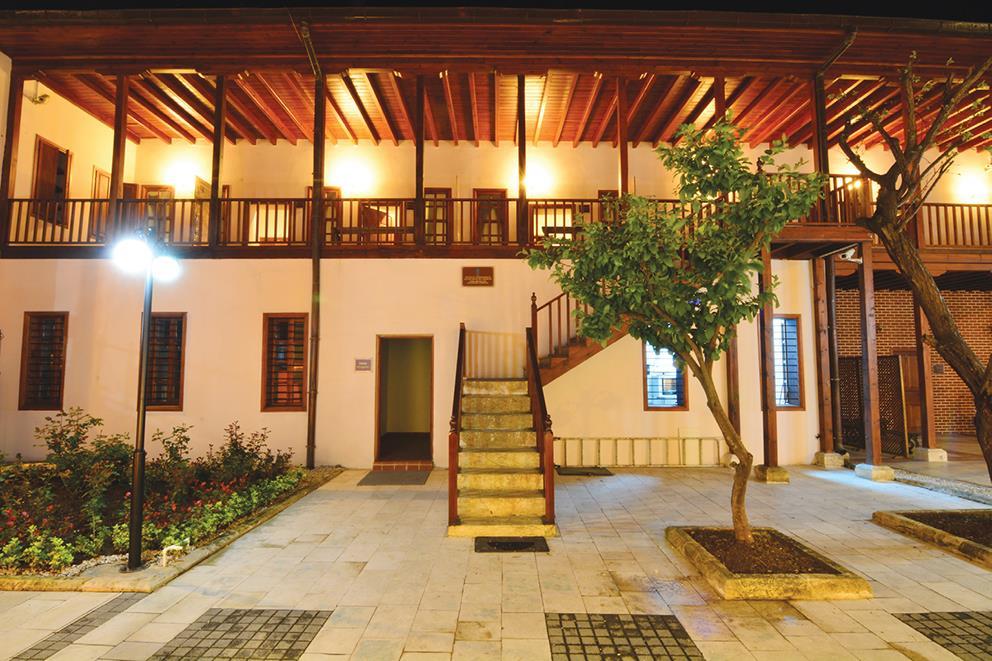
Kuruköprü Memorial Museum and Traditional Adana House is one of the significant structures reflecting Adana’s historical, cultural, and architectural heritage. Serving both as a museum complex and a cultural landmark, it has fulfilled various functions from the past to the present.

Kuruköprü Memorial Museum and Traditional Adana House (Türkiye Turizm Portalı)
The Tanzimat Edict, proclaimed in 1839, granted new rights to non-Muslim communities within the Ottoman Empire. Among these were the rights to build places of worship and to organize religious communities. During this period, as in many parts of Anatolia, several churches were built in Adana. One of them, the Adana Greek Orthodox Church, was constructed in 1845 by the Greek Orthodox community.
The building has a rectangular plan oriented east–west on the exterior, and a three-naved basilica layout on the interior. Above the rectangular entrance door on the southwest façade, a triangular pediment contains a sun (light) symbol. The iron double-winged door is divided into square and rectangular panels, each decorated with floral motifs. Between the entrance and the upper arch, column capital-style ornaments are visible. The Greek inscription above the western door confirms the church’s construction date as 1845.
Museological activity in Adana began in 1924 with the establishment of the “Ancient Artifacts Museum.” The first museum director was Halil Kâmil Bey, known by the nickname “Alyanak.” Initially housed in the Cafer Ağa Madrasa, the collection was later moved to the Greek Church of Adana after the madrasa became unsuitable for use.
In 1937, under Museum Director A. Rıza Yalgan, the institution gained ethnographic artifacts, establishing the Ethnography Museum alongside the existing Archaeology Museum. He also initiated Türkiye’s first open-air museum concept here.
From 1950 onward, the structure operated under the name “Adana Museum.” In 1972, with the relocation of the Archaeology Museum to a new facility, the building was repurposed as a storage depot. Following restoration efforts in 1983, it reopened as the Ethnography Museum.
In 2008, due to a major restoration launched by the Ministry of Culture and Tourism, the ethnographic collection was transferred to the Adana Archaeology Museum. Restoration began in 2013 and concluded in 2015. On April 7, 2017, the building was reopened to the public under its current name: Kuruköprü Memorial Museum and Traditional Adana House, as part of a mass opening ceremony.
The Kuruköprü Memorial Museum and Traditional Adana House is a multi-layered heritage site that embodies Çukurova’s archaeological and ethnographic legacy, integrating religious, cultural, and civic architectural elements. It transforms Adana’s historical identity into a visual and documentary experience, offering visitors a unique journey into the past.
Türkiye Tourism Encyclopedia. “Kuruköprü Memorial Museum and Traditional Adana House.” June 30, 2025. https://turkiyeturizmansiklopedisi.com/kurukopru-anit-muzesi-ve-geleneksel-adana-evi.
Culture Portal. “Adana Ethnography Museum.” Culture Portal – Places to Visit. June 30, 2025. https://www.kulturportali.gov.tr/turkiye/adana/gezilecekyer/adana-etnografya-muzesi.
Republic of Türkiye Ministry of Culture and Tourism, Adana Provincial Directorate. “Adana Kuruköprü Memorial Museum and Traditional Adana House.” Official Website of the Adana Provincial Directorate of Culture and Tourism. June 30, 2025. https://adana.ktb.gov.tr/TR-236369/adana-kurukopru-anit-muzesi-ve-geleneksel-adana-evi--ad-.html.
Republic of Türkiye Ministry of Culture and Tourism. “Adana Kuruköprü Memorial Museum and Traditional Adana House.” Museum Detail Page. June 30, 2025. https://muze.gov.tr/muze-detay?SectionId=ADK01&DistId=MRK.
Turkish Museums. “Adana Kuruköprü Memorial Museum and Traditional Adana House.” Turkish Museums. June 30, 2025. https://www.turkishmuseums.com/museum/detail/1924-adana-kurukopru-anit-muzesi-ve-geleneksel-adana-evi/1924/1.
Location | Adana Türkiye | ||||||||
|---|---|---|---|---|---|---|---|---|---|
Establishment | Founded as the Adana Museum of Antiquities in 1924 | ||||||||
First Museum Director | Halil Kâmil Bey (“Alyanak”) | ||||||||
First Museum Location | Cafer Ağa Madrasa (near Taşköprü) | ||||||||
Current Building | Greek Orthodox Church built in 1845 by the Greek Orthodox community | ||||||||
Henüz Tartışma Girilmemiştir
"Kuruköprü Memorial Museum and Traditional Adana House" maddesi için tartışma başlatın
Tanzimat Edict and the Church's Construction
Architectural Features of the Church
The Beginnings of Museology in Adana
Founding of the Ethnography Museum
Changing Functions of the Building
Restoration and Current Role
Cultural Significance
Bu madde yapay zeka desteği ile üretilmiştir.