


Bu içerik Türkçe olarak yazılmış olup yapay zeka ile otomatik olarak İngilizceye çevrilmiştir.
+1 Daha
Law on Amendments to the Social Services Law and Certain Other Laws is a law adopted and enacted by the Grand National Assembly of Türkiye on 22 April 2026. The law includes reforms regarding the revision of maternity and parental leave durations, the establishment of obligations for social media providers and gaming platforms, the expansion of child protection provisions, and various adjustments to the social services system.
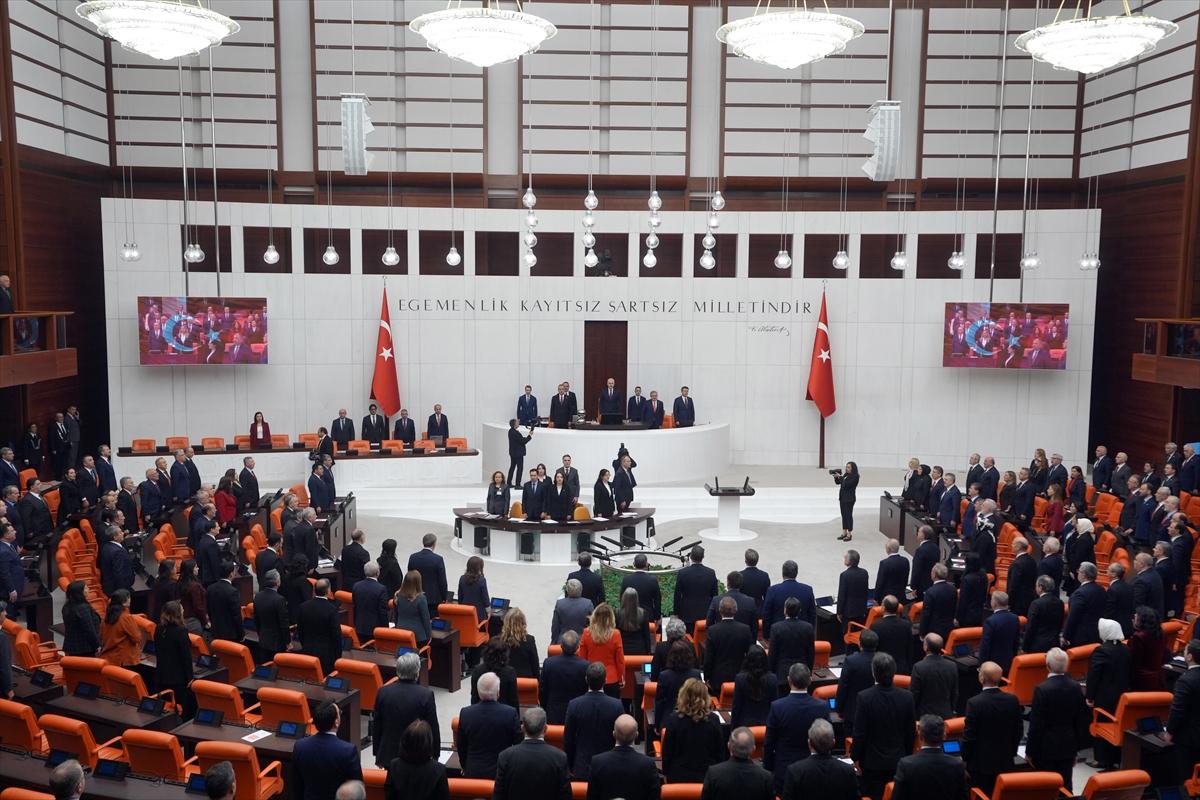
TBMM General Assembly, 23 April 2026 - (Anadolu Agency)
The bill, titled “Bill on Amendments to the Social Services Law and Certain Other Laws,” was placed on the agenda of the Grand National Assembly of Türkiye and adopted into law following deliberations in the General Assembly on 22 April 2026.
The law entails simultaneous amendments to multiple legal frameworks. These amendments cover:
One of the key regulatory areas of the law is the extension of maternity and parental leave durations. Accordingly, amendments have been made to the Civil Servants Law, the Labor Law, the Social Security and General Health Insurance Law, and military personnel regulations.
Under the amendment to the Civil Servants Law, the paid maternity leave period for female civil servants has been increased from 8 weeks to 16 weeks. Female civil servants are now entitled to a total of 24 weeks of maternity leave: 8 weeks before birth and 16 weeks after birth. A female civil servant who provides a medical certificate confirming her fitness to work may, upon request, forgo part of the pre-birth leave period and transfer it to the post-birth period.
Under the amendment to the Labor Law, the paid maternity leave period for female workers has been increased from 8 weeks to 16 weeks. Female workers are entitled to a total of 24 weeks of paid leave: 8 weeks before birth and 16 weeks after birth.
Regulations have been introduced regarding the period during which female workers may continue working before birth, upon medical approval and their request. Female workers are also granted an additional unpaid leave period following the completion of their 24-week (or 26-week in case of multiple pregnancies) paid maternity leave. In addition, the paid leave granted to workers due to their spouse’s childbirth has been extended from 5 days to 10 days.
Amendments to the Turkish Armed Forces Personnel Law, the Coast Guard Command Law, and the Gendarmerie Organization, Duties and Powers Law have increased the paid post-birth maternity leave for female military personnel from 8 weeks to 16 weeks, raising the total paid maternity leave period to 24 weeks. Military personnel who adopt a child up to the age of three are granted 8 weeks of leave from the date of the child’s placement.
According to the transitional provision adopted by the Grand National Assembly of Türkiye, personnel who have already completed their maternity leave under the previous regulations but have not yet fulfilled the new 24-week period as of 1 April 2026 are entitled to additional maternity leave upon application within 10 working days of the law’s entry into force.
The law revises the provision of the “Law on the Regulation of Online Publications and the Fight Against Crimes Committed Through Such Publications,” which had been annulled by the Constitutional Court under the heading “Removal of Content and Blocking of Access.”
Under this framework, social media providers are prohibited from offering services to children under the age of 15 and are required to implement necessary measures, including age verification, to ensure non-provision of such services.
For children aged 15 and above, social media providers must implement measures to provide age-appropriate services. The measures taken by social media providers in this regard must be publicly disclosed on their websites.
Social media providers are required to offer clear, understandable, and user-friendly parental control tools.
These tools must include mechanisms for:
In addition, social media providers are obligated to implement measures to prevent deceptive advertising.
A graduated sanction system has been established for social media providers with daily access in Türkiye exceeding 10 million users:
The advertising ban shall be lifted upon fulfillment of the obligation, and court decisions shall automatically become void. This provision shall enter into force six months after publication in the Official Gazette.
The law adds the definitions of “game,” “game distributor,” “game developer,” and “gaming platform” to the “Law on the Regulation of Online Publications and the Fight Against Crimes Committed Through Such Publications.”
Gaming platforms shall not offer games that have not been properly rated, but may offer such games under the highest age rating category. Gaming platforms are required to provide parental control tools while retaining their obligation to remove un-rated content.
Foreign-based gaming platforms with daily access in Türkiye exceeding 100,000 users are required to appoint a representative in Türkiye and notify the Information and Communication Technologies Authority of the representative’s details, to facilitate communication with the Authority, the Access Providers Union, and judicial or administrative bodies.
Gaming platforms that fail to fulfill their obligations shall be notified by the Information and Communication Technologies Authority.
This provision shall enter into force six months after publication in the Official Gazette.
An amendment to the Child Protection Law stipulates that individuals with a final conviction for the following offenses:
sexual assault, child sexual abuse, sexual intercourse with a minor, production and trafficking of narcotics or stimulants, facilitating the use of narcotics or stimulants, obscenity, prostitution, human trafficking, and intentional homicide,
shall not personally operate or be employed in any workplace where children are concentrated, including schools, nurseries, orphanages, day care centers, children’s clubs, children’s sports schools, internet cafes, e-gaming venues, and similar establishments.
If it is determined that such individuals are operating such workplaces, they shall be granted six months to transfer ownership; if the transfer is not completed within this period, licenses and permits shall be revoked. Employees at such workplaces shall be required to submit their criminal record status to their employer every six months.
Under sanctions, individuals who employ workers in violation of this provision shall be subject to an administrative fine of three times the gross minimum wage per person. If the violation continues, the fine shall be increased to seven times the gross minimum wage.
New definitions have been added to the Social Services Law, including: “Specialized Children’s Home Complex,” “Children’s Home Complex,” “Child Protection Initial Intervention and Assessment Center,” “Specialization,” “Social and Economic Support,” “Protective Family,” and “Central Monitoring System.”
The law mandates protective and preventive measures to support children within their families or among relatives without placing them in institutional care.
The upper limit of social and economic support is capped at the monthly salary of the highest-ranking civil servant (including additional indicators). The amount of support shall be determined based on the child’s age and educational status.
Monthly recurring economic support may be provided for up to two years. One-time temporary economic support may be granted up to twice per year and may reach up to three times the determined amount. Support may be provided to a maximum of two individuals per family. Support shall generally continue until the child reaches 18 years of age; however, for those continuing higher education, this period may be extended up to 25 years of age.
Amendments to the Social Services Law provide for the coverage of voluntary insurance premiums for protective families lacking social security.
Accordingly, the voluntary insurance premiums for spouses of protective families who work less than 30 days per month or do not work full-time shall be covered by adding the amount calculated based on the daily minimum wage base to their monthly payments. State civil servants who become protective families are granted 10 days of optional leave following the child’s placement.
The law specifies concrete conditions for the employment of youth raised under state care.
To benefit from this employment right, individuals must meet all of the following conditions:
One-thousandth of the total filled positions in public institutions and organizations shall be reserved for these individuals, with placements made based on central examination results. The full cost of social security and unemployment insurance premiums for these individuals employed in the private sector shall be covered by the Treasury for five years from the date of employment.
In accordance with constitutional principles, software-supported camera systems shall be installed in residential social service institutions. Personal data collected under this system shall be deleted two years after the recording date unless used as evidence in judicial or administrative investigations.
Such data shall not be shared with any institution, organization, or individual without a court order; however, anonymized data may be used for the improvement of public services and policy development.
Under amendments to the Income Tax Law, donations of food, cleaning supplies, clothing, and fuel to Darülaceze, as well as other donations and assistance, are exempted from income tax.
Parallel amendments to the Corporate Tax Law allow donations and assistance to Darülaceze to be deducted from the corporate tax base.
Monthly income support shall be provided to operators of urban public transport vehicles and private maritime transport services, authorized by municipalities, through the budget of the Ministry of Environment, Urbanization and Climate Change, via municipalities.
Under the amendments concerning Darülaceze, the scope of its activities has been expanded. Darülaceze may now operate outside Türkiye within the framework of relevant legislation, engage in food banking, and provide soup kitchen services to those in need.
The law was adopted by the Grand National Assembly of Türkiye on 22 April 2026.
Certain provisions concerning social media providers and gaming platforms shall enter into force six months after publication in the Official Gazette.

Henüz Tartışma Girilmemiştir
"Law on Amendments to the Social Services Law and Certain Other Laws (2026)" maddesi için tartışma başlatın
General Framework
Revisions to Maternity and Parental Leave
Civil Servants Law
Labor Law
Turkish Armed Forces Personnel Law
Transitional Provisions
Social Media and Digital Platform Regulations
Restrictions for Children Under 15
Parental Control Tools
Sanctions
Regulations on Gaming Platforms
Obligations
Sanctions
Child Protection and Safe Environment Regulations
Regulations in the Field of Social Services
Definition Amendments in the Social Services Law
Social and Economic Support
Protective Family Regulations
Employment of Youth Raised Under State Care
Central Monitoring System and Camera Regulations
Other Regulations
Tax Regulations
Income Support for Public Transport Operators
Darülaceze
Entry into Force