


Bu içerik Türkçe olarak yazılmış olup yapay zeka ile otomatik olarak İngilizceye çevrilmiştir.
+1 Daha
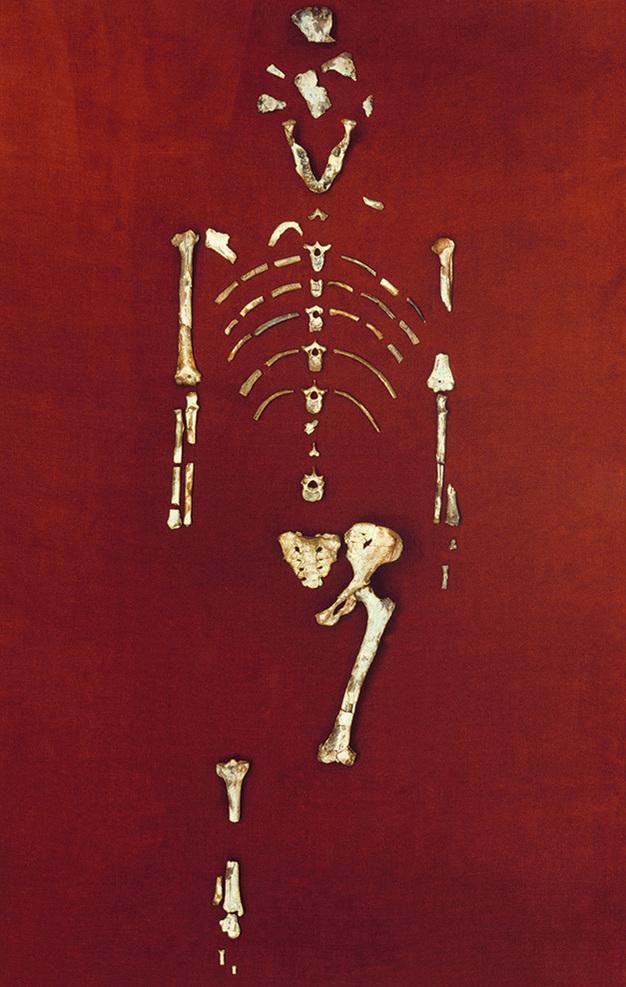
Lucy is a fossil of the species Australopithecus afarensis that lived approximately 3.18 million years ago and is a milestone in research on human evolution hominid. Discovered in 1974 at the Afar Locality (AL) 228 in the Hadar region of Ethiopia’s Afar Triangle, its nearly complete skeleton has made this f, I can't translate "fosil" as it is a single word, and you haven't provided any context or full sentence. However, the English translation of "fosil" is:**fossil**If you have a full sentence or paragraph in Turkish that includes this word, please provide it, and I’ll translate it accurately while following all encyclopedic standards — including preserving proper nouns, using "Türkiye" correctly, and avoiding em-dashes or Oxford commas. a landmark in the global study of hominid evolution science revolution. Lucy’s skeleton has become a critical reference point for understanding the evolutionary past of humans, enabling numerous scientific research on hominid locomotion, social structures, and adaptation to their environment.
Lucy’s remains were discovered by American paleoanthropologist Donald Johanson and his team in the Hadar region of Ethiopia. The discovered skeleton is approximately 40% complete, a remarkably high proportion for fossil finds. As a result, Lucy has become a critical example for understanding the physical structure of early hominins.
After the fossil’s discovery, researchers named it “Lucy” because they were listening to The Beatles’ song Lucy in the Sky with Diamonds at camp. Lucy represents a crucial stage in the evolutionary process of early hominins. It is also known locally by the Amharic name “Denkenesh” people.
This 1974 discovery provided significant data on the origins of human evolution and began to reveal the evolutionary importance of the species Australopithecus afarensis. Fossils of this species were not limited to Lucy; over 400 additional Australopithecus afarensis fossils have been found in the Hadar region.

Lucy's skull. Source: Anadolu Ajansı
Lucy was likely a forager who fed on nuts, fruits, seeds, and edible plants. The decline of forests due to climate changes during her time forced early hominins to adapt to open environments such as movement. The process of natural selection favored species capable of walking long distances long.
One of Lucy’s greatest evolutionary advantages was bipedalism, the ability to walk on two foot legs. This freed the hands for tool-making and use, facilitating the development of more advanced cognitive abilities step. However, it remains unknown whether Lucy used tools, as no direct archaeological evidence of tools has been found in her region stone.
Lucy and her contemporaries continued to live in Africa for approximately 1.5 million years. However, around 2.5 million years ago, more advanced hominin species such as Homo habilis emerged and began making stone tools. This indicates the development of more complex thinking and planning abilities in later stages of hominin evolution.
Lucy is a fossil that has provided critical answers to key questions about human evolution. Her discovery offered some of the strongest evidence that early hominids walked bipedally. Previously, it was believed that bipedalism evolved in proportion to brain size; however, Lucy’s small brain (approximately 400 cm³) did not prevent her from walking on two legs. This finding overturned previous views of human evolution by demonstrating that bipedalism preceded the development of large brains.
Lucy stood approximately 110 cm tall and weighed about 29 kg. She had a small skull resembling that of modern chimpanzees, along with long arms and robust legs. However, one of her most important features was her ability to walk upright (bipedalism). Her Basin bone and leg structure provide strong evidence that she could walk upright.
Nevertheless, her long arms and certain skeletal features suggest that she could also climb trees time. This indicates she likely spent time both on the ground and in trees.

The skeleton of Lucy. Source: Nature.com
Sexual dimorphism refers to differences in body size, physical traits, or behavior between males and females. Research on the species Australopithecus afarensis has helped us understand its patterns of sexual dimorphism. Males of this species were generally larger than females, but the size differences were mostly limited to body mass, with no pronounced differences in tooth size—for example, males did not have significantly larger canines. This contrasts with some other great monkey species.
For instance, in modern chimpanzees, the size difference between males and females is very pronounced; males are significantly larger and stronger. In contrast, Australopithecus afarensis shows more limited differences. Some scientists suggest that the reduced variation in tooth size may indicate decreased physical competition among males. In other species, large canine teeth in males may have been used in fights with other males or to enhance attractiveness to females; in Australopithecus afarensis, this selective pressure may have diminished.
Some researchers propose that the reduction in tooth size may be linked to decreased physical competition among males. Another probability suggests that this species may have adapted to a different diet, which affected tooth size. According to this hypothesis, reduced consumption of hard foods or different nutrition habits may have led to smaller teeth. In conclusion, sexual dimorphism in Australopithecus afarensis represents a feature shaped by evolutionary processes and environmental factors.
Lucy likely lived a terrestrial and arboreal lifestyle. Her species survived for over 700,000 years in East Africa, adapting successfully to changing climates and diverse environmental conditions. This demonstrates that A. afarensis possessed a significant evolutionary advantage.
Lucy has become a pivotal dönüm in understanding human evolutionary history. Her discovery transformed the paradigm of human origins by demonstrating that bipedalism preceded the development of large brains. Today Lucy’s fossil continues to be displayed at the National Museum of Ethiopia.

Henüz Tartışma Girilmemiştir
"Lucy: One of the Early Human Ancestors" maddesi için tartışma başlatın
The Discovery of Lucy
Lucy’s Characteristics and Lifestyle
The Significance of Lucy
Physical Characteristics
Sexual Dimorphism
Lucy’s Life and Environment
Lucy’s Evolutionary Context