

Bu içerik Türkçe olarak yazılmış olup yapay zeka ile otomatik olarak İngilizceye çevrilmiştir.
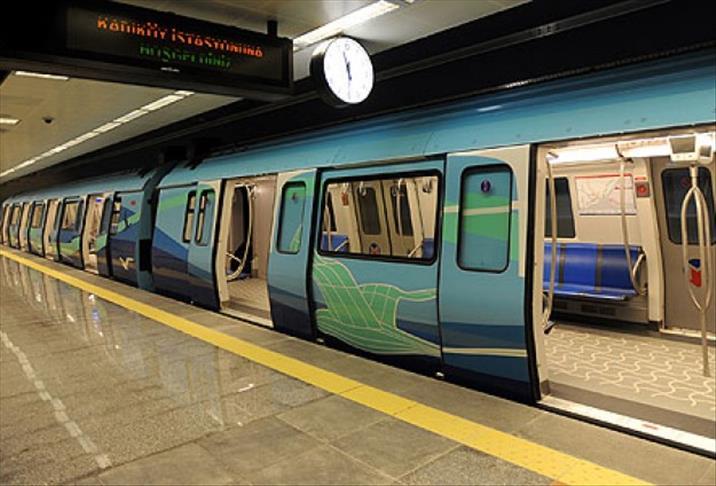
The M4 Kadıköy–Sabiha Gökçen Airport Metro Line is one of the rail systems serving the Anatolian side of Istanbul. Its primary purpose is to begin at Kadıköy, run parallel to the Marmara Sea coastline, and follow the D100 highway route to connect the densely populated areas of the Anatolian side with Sabiha Gökçen International Airport.
The tender process for the M4 Metro Line began on 14 January 2008, and the contract was signed on 6 March 2008, with construction commencing on 21 March 2008. Key milestones in the construction included the delivery of the first train on 11 January 2011, its placement on the rails on 27 January 2011, completion of the tunnels in October 2011, and the activation of the signaling system in March 2012. Trial runs commenced on 8 May 2012. The first and foundational phase of the line, between Kadıköy and Kartal, opened for service on 17 August 2012. At this stage, the line operated over a 21.7 km route with 16 stations. The opening of Ayrılık Çeşmesi Station on 29 October 2013 enabled integration with the Marmaray system. The second extension phase, from Kartal to Tavşantepe, opened on 10 October 2016. Finally, the third phase, extending from Tavşantepe to Sabiha Gökçen Airport, opened on 2 October 2022, providing direct access to the airport. With the completion of this final phase, the total length of the line reached 33.5 km and the number of stations increased to 23.【1】
Traveling on the M4 Kadıköy–Sabiha Gökçen Airport Line (Metro İstanbul)
The M4 Line begins at Kadıköy and follows the alignment of the D100 highway through the Acıbadem area, continuing beneath this major artery all the way to Tavşantepe. Beyond Tavşantepe, it passes through residential areas north of the D100 to reach Sabiha Gökçen Airport. During construction, Tunnel Boring Machines (TBMs) were used between Kadıköy and Kozyatağı and between Kartal and Kaynarca, while the New Austrian Tunnelling Method (NATM) was employed between Kozyatağı and Kartal. The entire line was constructed underground, with station platforms designed to be 180 metres in length. To support operational infrastructure, a depot with a capacity of 52 vehicles (13 train sets) was built between Maltepe and Huzurevi stations, and a maintenance workshop with a capacity of 32 vehicles was established near Maltepe Station.【2】
The M4 Line consists of the following 23 stations, running from Kadıköy to Sabiha Gökçen Airport:

Sabiha Gökçen Airport – Kadıköy Metro Stops (Metro İstanbul)
The total length of the line is 33.5 km, serving 23 stations. A total of 144 vehicles operate in 36 four-car train sets. The one-way journey time is 52 minutes. The M4 Metro Line operates daily from 06:00 to 00:00. During peak hours, service frequency decreases to every 5 minutes, while off-peak intervals extend to every 9 minutes. On certain days, particularly Friday and Saturday nights, additional services run from 00:30 to 05:30 at 30-minute intervals; fares during these night services are charged at a double rate. The line is reported to have a daily passenger capacity of 300,000 and operates 386 trips in one direction per day.【3】 【4】
The M4 Metro Line employs advanced technologies to maintain high levels of passenger safety and system reliability. The signaling system for the line and depot is based on Thales CBTC (Communication-Based Train Control), operating on a continuous communication-based moving block principle. Security monitoring is maintained continuously through a network of 1,281 cameras installed at stations, with security personnel conducting regular checks. Emergency scenarios for smoke management and passenger evacuation have been developed and tested through simulations. Materials used in tunnel construction and equipment selection were chosen to avoid emitting toxic gases and to withstand high temperatures in the event of fire. A fully automated smoke control and evacuation system, compliant with NFPA standards, ensures rapid and safe passenger egress during fire emergencies. Power supply is provided from three separate points to ensure system continuity. In the unlikely event that all three power sources fail, generators located at both ends of the line activate to move trains to the nearest station and enable passenger evacuation. In the extremely rare case that the generators also fail, lighting and electronic control systems can be powered uninterruptedly for up to three hours by uninterruptible power supplies (UPS).
The M4 Metro Line plays a central role in Istanbul’s transportation network by integrating with multiple other public transit modes at numerous points. Key transfer points and connections include:
Anadolu Ajansı. "Kadıköy-Kartal metro hattında indirim uzatıldı." Accessed November 22, 2025. https://www.aa.com.tr/tr/turkiye/kadikoy-kartal-metro-hattinda-indirim-uzatildi/83380
Metro İstanbul. "Gece Metrosu." Metro İstanbul. Accessed November 22, 2025. https://www.metro.istanbul/icerik/Gece-Metrosu
Metro İstanbul. "M4 Kadıköy – Sabiha Gökçen Havalimanı Metro Hattı." Metro İstanbul. Accessed November 22, 2025. https://www.metro.istanbul/Hatlarimiz/HatDetay?hat=M4
Metro İstanbul. "M4 Kadıköy-Sabiha Gökçen Havalimanı Hattında Yolculuk." YouTube. Accessed November 22, 2025. https://www.youtube.com/watch?v=ApoZHrEc-Ng&t=1s
[1]
Metro İstanbul, "M4 Kadıköy – Sabiha Gökçen Havalimanı Metro Hattı," Metro İstanbul, erişim tarihi: 22 Kasım 2025, https://www.metro.istanbul/Hatlarimiz/HatDetay?hat=M4
[2]
Metro İstanbul, "M4 Kadıköy – Sabiha Gökçen Havalimanı Metro Hattı," Metro İstanbul, erişim tarihi: 22 Kasım 2025, https://www.metro.istanbul/Hatlarimiz/HatDetay?hat=M4
[3]
Metro İstanbul, "Gece Metrosu," Metro İstanbul, erişim tarihi: 22 Kasım 2025, https://www.metro.istanbul/icerik/Gece-Metrosu
[4]
Metro İstanbul, "M4 Kadıköy – Sabiha Gökçen Havalimanı Metro Hattı," Metro İstanbul, erişim tarihi: 22 Kasım 2025, https://www.metro.istanbul/Hatlarimiz/HatDetay?hat=M4

Henüz Tartışma Girilmemiştir
"M4 Kadıköy - Sabiha Gökçen Airport Metro Line" maddesi için tartışma başlatın
History and Development Phases
Route and Technical Structure
Station List
Operations and Capacity
Security, Safety and Technology
Integration and Transfer Points