


Bu içerik Türkçe olarak yazılmış olup yapay zeka ile otomatik olarak İngilizceye çevrilmiştir.
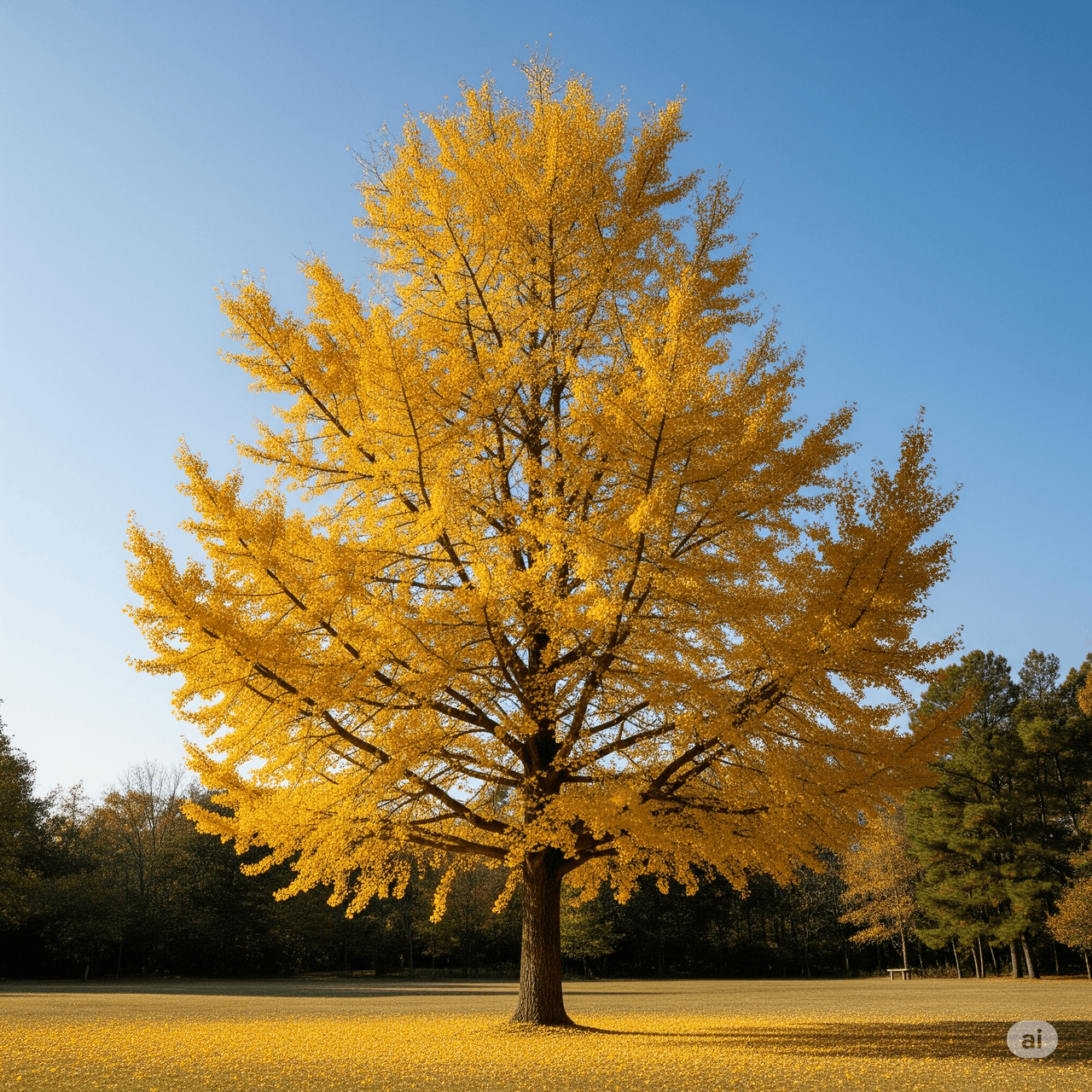
Mabet Ağacı (Ginkgo biloba) is a plant recognized as one of the oldest tree species in the world and notable for its unique genetic structure. This species exhibits distinct morphological and physiological characteristics compared to other trees and possesses a deep evolutionary history extending back approximately 270 million years, based on fossil records.
Mabet Ağacı holds significant importance in plant systematics due to its leaf structure, reproductive mode, and metabolic processes. It is also the subject of multidisciplinary research due to its medicinal applications and its role in cultural history.

Ginkgo Biloba (Generated by Artificial Intelligence.)
Ginkgo biloba is the sole surviving species within the class Gymnospermae and belongs to its own unique family, Ginkgoaceae. This tree typically grows to a height of 20–35 meters and is recognized by its broad, fan-shaped leaves. The dichotomous venation pattern and lobed margins of the leaves are distinctive morphological traits of the species.
Ginkgo is a dioecious plant; female individuals produce seeds while male individuals produce pollen. When mature, the seeds develop a fleshy outer layer containing compounds such as butyric acid. These compounds can be unpleasant in odor and taste and may limit seed dispersal by animals.
The root system of Ginkgo is deep and robust, contributing significantly to the species’ resilience under harsh environmental conditions. The tree exhibits prominent annual growth rings that allow for age estimation. The bark is thick and fissured; it is smoother in younger individuals but becomes thicker and darker with age.

Ginkgo biloba Leaves (Pixabay)
Ginkgo biloba utilizes the C3 photosynthetic pathway and contains high levels of chlorophyll in its leaves. Leaf fall occurs in autumn, a phase marked by reduced metabolic activity and energy storage. The plant’s metabolism is particularly rich in antioxidant compounds; secondary metabolites such as flavonoids, terpenoids, and polyphenols not only protect the plant against environmental stress but also attract attention in medical research.
The tree demonstrates high tolerance to environmental stressors. Its resistance to air pollution, drought, and soil contamination enables its widespread use as an ornamental plant in urban environments. Ginkgo is especially more resilient to high ozone levels than many other plant species.
Ginkgo biloba is regarded as a “living fossil” among extant plant species. This designation reflects its minimal morphological and genetic changes over time. Fossil records confirm that Ginkgo has existed on Earth since the Permian period. Genetic studies conducted in the 20th century confirmed its placement within Gymnospermae and demonstrated that it constitutes its own distinct phylogenetic lineage.
While modern populations occur naturally only in limited regions of China, human activity has widely disseminated the species through botanical gardens and cultivation across the globe. This situation is of critical importance for the conservation of genetic diversity and the long-term survival of the species.
Ginkgo biloba naturally thrives in moist, well-drained soils within temperate climate zones. It is commonly found in forest understory environments and along riverbanks. This species is not selective regarding soil pH or mineral content and exhibits broad ecological tolerance. However, high humidity and elevated temperatures can negatively affect its growth rate and overall health.
Ginkgo has limited dispersal potential due to its seeds, and the fleshy outer layer restricts seed dispersal to animal vectors. Consequently, its natural spread remains largely dependent on human intervention. Ecologically, it serves as an important carbon sink and is valued in urban areas as a supportive element for improving air quality due to its tolerance of environmental pollution.
The International Union for Conservation of Nature (IUCN) classifies Ginkgo biloba as “Endangered.” Its natural populations are limited and face threats from habitat degradation, climate change, and loss of genetic diversity. Conservation strategies include protecting natural habitats, ensuring sustainable management of genetic resources, and supporting cultivation programs.
Botanical gardens and arboreta play a vital role in preserving Ginkgo’s genetic diversity and raising public awareness. Additionally, various countries support conservation projects through legal protections, recognizing its cultural and ecological significance.

Henüz Tartışma Girilmemiştir
"Mabet Ağacı (Ginkgo biloba)" maddesi için tartışma başlatın
Morphological Characteristics
Physiology and Metabolism
Evolutionary Continuity and Phylogenetic Position
Ecology and Habitat
Conservation Status and Sustainability