

Bu içerik Türkçe olarak yazılmış olup yapay zeka ile otomatik olarak İngilizceye çevrilmiştir.
Project Type | National Warship Development Program | ||||||||
|---|---|---|---|---|---|---|---|---|---|
Production Site | Türkiye | ||||||||
Initiating Institution | Command of the Naval Forces | ||||||||
Coordination | Presidency of Defense Industries (SSB) | ||||||||
User | Turkish Naval Forces | ||||||||
Primary Objective | Warship Design and Production with National Capabilities | ||||||||
Core Platforms | Ada Class Corvette Istif Class Frigate Hisar Class Open Sea Patrol Vessel (OSPV) TF-2000 Air Defense Warship | ||||||||
First Ship | TCG Heybeliada (F-511) | ||||||||
Main Domestic Systems | ADVENT ATMACA GÖKDENİZ MİDLAS CENK AKREP | ||||||||
Prime Contractors | ASFAT STM | ||||||||
Major Industrial Stakeholders | ASELSAN HAVELSAN ROKETSAN TAİS | ||||||||
Export Countries | Pakistan Ukraine Malaysia Indonesia Romania | ||||||||
MİLGEM (Millî Gemi) Project is a naval warship program initiated to meet the operational requirements of the Turkish Naval Forces Command using national capabilities, encompassing the design, construction, system integration, and development of warships. Under MİLGEM, platforms are being developed for different mission classes such as corvettes, frigates, offshore patrol vessels, and air defense destroyers; the project is fundamentally based on the use of local and national solutions for warfare management systems, sensors, weapon systems, and other critical platform components.
National Power Strong Türkiye - National Ship Project (TRT News)
MİLGEM Project was launched with the aim of designing, constructing, integrating systems, and commissioning surface warships required by the Turkish Naval Forces Command using national capabilities. 【1】 The project aims to develop platforms capable of fulfilling missions such as anti-submarine warfare, surface warfare, air defense, reconnaissance, surveillance, patrol, target detection and identification, maritime surveillance, Exclusive Economic Zone enforcement, protection of critical coastal facilities and maritime infrastructure, and naval gunfire support. In addition to ship classes, the project emphasizes the national development and integration of critical components such as warfare management systems, sensors, weapon systems, electronic warfare systems, communications, and navigation systems.
The scope of the project extends beyond the mere production of warships to include design activities, classification services, model testing, main propulsion system integration, platform system integration, procurement of construction and outfitting materials, harbor and sea acceptance tests, and integrated logistics support processes. The project also aims to support the national defense industry and enhance the knowledge, experience, and infrastructure of private shipyards in the field of military shipbuilding. 【2】 In line with this approach, MİLGEM has been structured as a project focused on developing maritime platforms for diverse mission needs and establishing a sustainable national shipbuilding ecosystem.
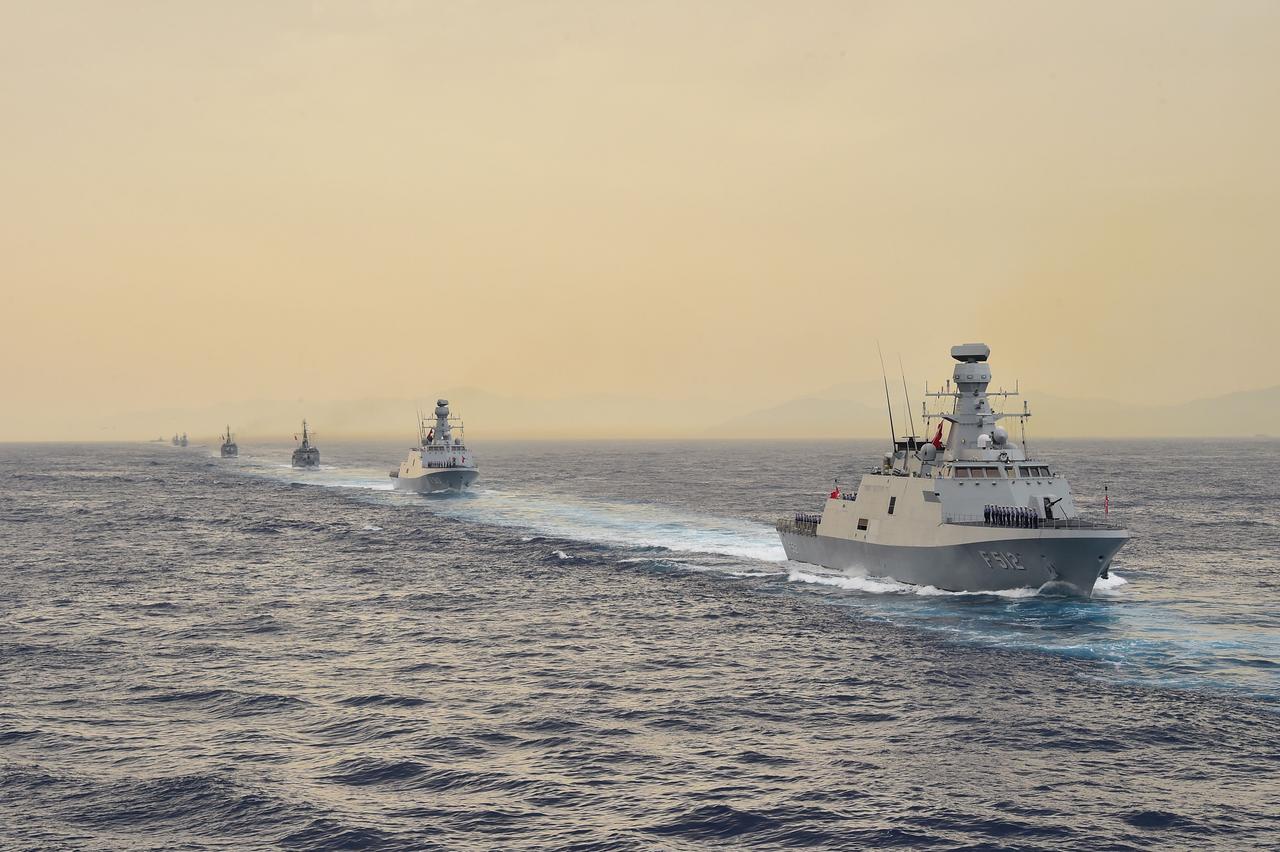
TCG Büyükada (F-512) ve Savaş Gemileri Filosu (T.C. Millî Savunma Bakanlığı Deniz Kuvvetleri Komutanlığı)
Efforts to meet the Turkish Naval Forces’ surface platform requirements using national capabilities took shape in the late 1990s through matured planning.【3】 Accordingly, the MİLGEM Project was officially launched on 15 February 2000 by a decision of the Defense Industry Executive Committee.【4】 The foundation of the project lies in designing, constructing, and developing critical systems domestically to meet the operational needs of the Turkish Naval Forces. This approach established a comprehensive program not only to create a new ship platform but also to carry out warship design, platform engineering, and production processes entirely within the country. The emergence of the project was driven by the need to develop warships and their critical systems independently of foreign sources. Within this context, an integrated approach was adopted, emphasizing the national development of both ship platforms and the systems and other critical components used on them.
The design and construction process of the MİLGEM Project was carried out progressively under contracts signed between the Defense Industry Presidency and STM. In 2006, the first contract was signed covering the design of the prototype ship and the procurement of platform construction and outfitting materials and services. The contract was renewed in 2007 to include additional design, construction, and outfitting activities for the prototype, and further revised in 2009 to incorporate the second ship into the program. In line with the project’s expansion, the third and fourth ships were included in the contract scope in 2014, and the procurement and integration of the main propulsion system were added to the project responsibilities.【5】
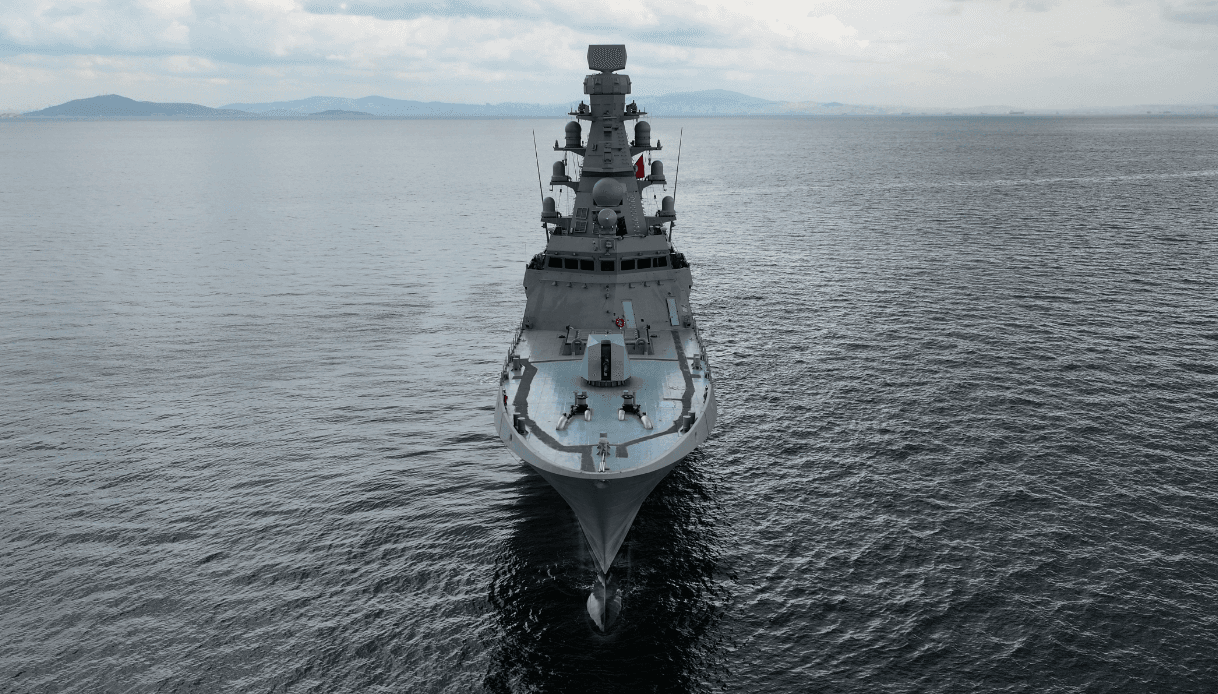
TCG İstanbul (F-515) Gemisi (T.C. Cumhurbaşkanlığı Savunma Sanayii Başkanlığı)
Within the project, ship design, classification services, model testing, system integration, procurement of construction and outfitting materials, and testing processes were conducted simultaneously. Following the development of the Ada Class corvettes as the first product, the same engineering infrastructure was used to develop the Istif Class frigates. A procurement contract for the fifth MİLGEM ship, TCG İstanbul (F-515), was signed on 12 April 2019.【6】 The serial production program was subsequently expanded; a contract for the sixth, seventh, and eighth ships was signed on 6 April 2023, and a decision made in 2024 increased the number of Istif Class frigates in the project to eight.【7】 This process marked the transition of MİLGEM from a prototype development phase to a serial production program.
The MİLGEM Project is implemented through a production model based on shared responsibilities among government institutions, prime contractors, shipyards, and defense industry firms. Coordination of the project is provided by the Presidency of Defense Industries (SSB), while the Naval Forces Command defines operational requirements and technical specifications. STM assumes responsibility for ship design, preparation of design documentation, system integration, procurement of construction materials, integration of the main propulsion system, testing activities, and integrated logistics support processes.
Under the serial production program, the Anadolu, Sedef, and Sefine shipyards within the TAİS Joint Initiative, along with military shipyards, have been involved in the construction of different ship classes. In the project, ASELSAN, HAVELSAN, ROKETSAN, and various subcontractor firms are involved in the development and production of platform systems, electronic infrastructure, weapon systems, ship equipment, and subcomponents.
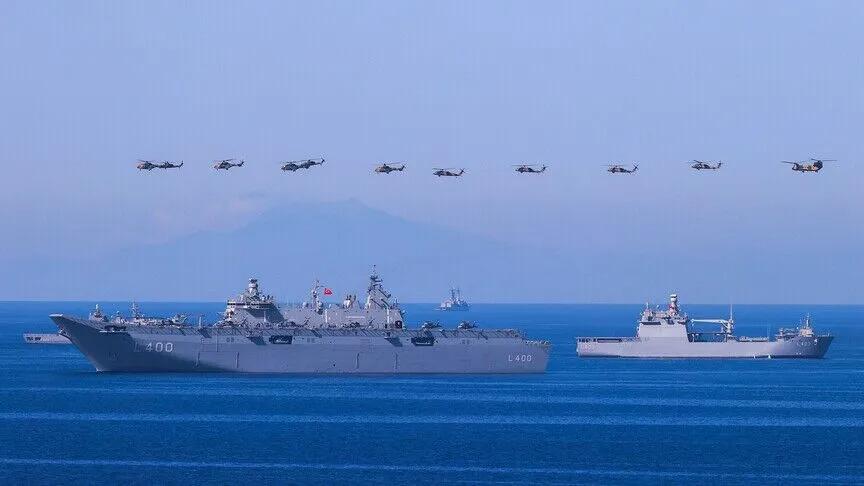
Mavi Vatan Doktrini Kapsamında Türk Donanması (Anadolu Ajansı)
The MİLGEM Project is one of the foundational initiatives for creating the national maritime platforms required by Mavi Vatan, Türkiye’s doctrine for safeguarding its maritime rights and interests. Platforms such as the Ada Class corvettes, Istif Class frigates, offshore patrol vessels, and TF-2000 air defense destroyers, despite their different mission profiles, are developed under the same national engineering approach and support the operational capabilities of the Turkish Naval Forces at multiple levels.
The platforms developed under MİLGEM enable the integrated use of high-local-content sensors, weapons, warfare management, communications, and electronic warfare systems on the same platform. This structure reduces dependency on foreign suppliers and enables maintenance, modernization, and integration of new systems using national capabilities. The engineering expertise, serial ship production, export activities, and technical infrastructure gained through the project have laid the groundwork for developing next-generation maritime platforms. In this context, MİLGEM is positioned as one of the core elements of Türkiye’s national warship development program addressing current and future operational needs of the Turkish Naval Forces.
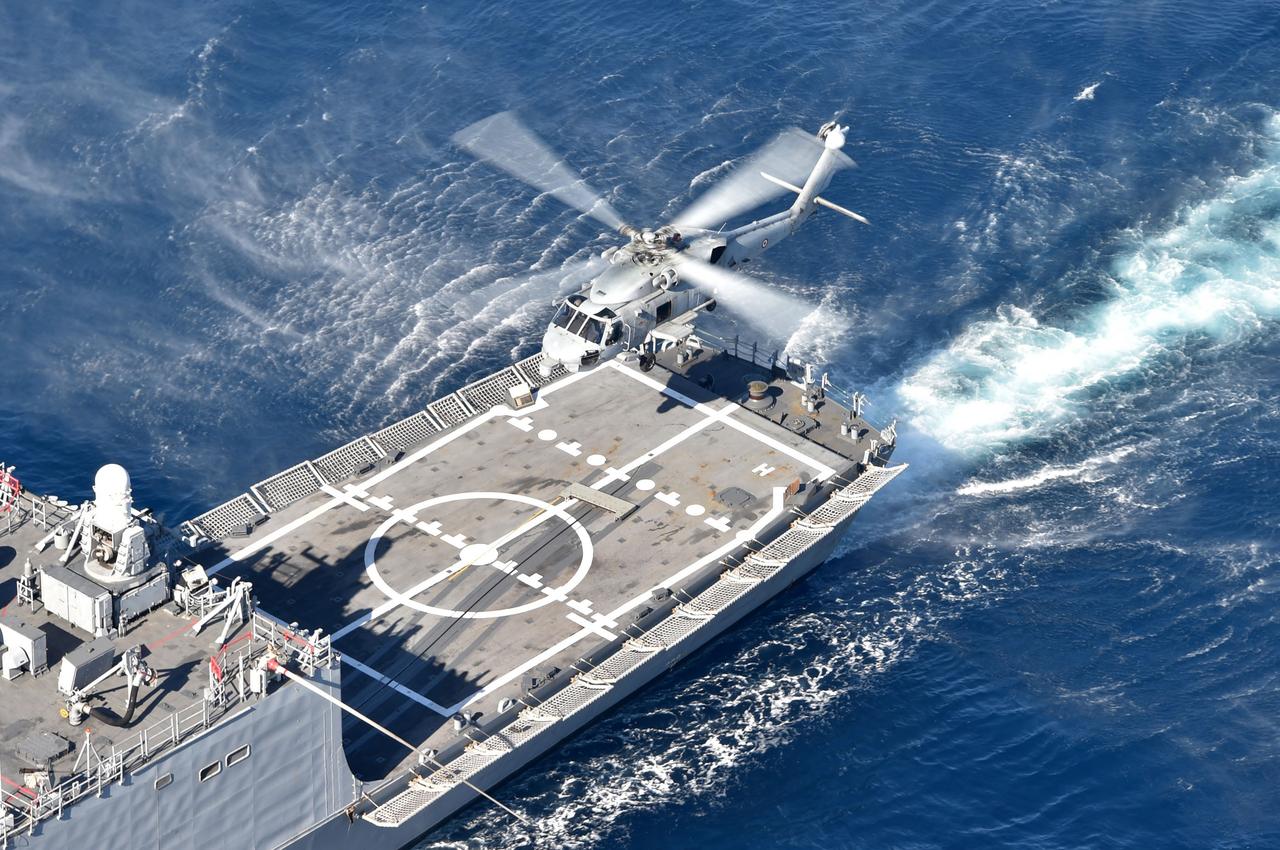
Helikopter Platformuna İniş Yapan Askeri Helikopter (T.C. Millî Savunma Bakanlığı Deniz Kuvvetleri Komutanlığı)
Platforms developed under the MİLGEM Project are designed with a modular and national design philosophy to accommodate diverse mission requirements. The ship platforms incorporate growth capacity to facilitate maintenance and modernization, and feature an infrastructure enabling seamless integration of sensors, weapons, communications, and warfare management systems. In platform design, maritime performance, high maneuverability, prolonged operational endurance, crew living conditions, damage control, and system redundancy are considered holistically. Structural solutions enhancing resistance to fire and damage, vibration and shock absorption measures, a stabilized platform structure, helicopter deck and hangar arrangements, areas suitable for RHIB boats, and an architectural approach allowing future integration of additional sensors and weapon systems constitute the fundamental design features of MİLGEM platforms.
Low observability on MİLGEM platforms is achieved through integrated design practices aimed at reducing radar, infrared, acoustic, and magnetic signatures. The hull and superstructure are designed using a stealth hull form with angled surfaces to minimize radar cross-section, while infrared signature reduction measures aim to lower thermal visibility. The hull structure is engineered to reduce acoustic signature against underwater threats, complemented by systems that limit vibration and noise, and a degaussing system to reduce magnetic signature. Shock-absorbing structural solutions, low probability of intercept radars, laser warning systems, and torpedo countermeasure systems further enhance platform survivability. Through this approach, MİLGEM platforms are designed with a multi-layered low observability architecture to minimize detection probability.
To meet mission-specific mobility and seakeeping requirements, MİLGEM platforms employ a combined propulsion system. The Ada Class corvettes utilize a CODAG (Combined Diesel and Gas) propulsion system operating with two shafts and controllable pitch propellers (CPP). This configuration combines fuel efficiency during economical cruising with the power output required for high-speed maneuvers. Auxiliary diesel generators supply the ship’s electrical power needs, and the implemented system redundancy approach ensures continuity of critical functions. The propulsion system on MİLGEM platforms is configured to provide maneuverability, prolonged endurance at sea, adaptability to various mission profiles, and a foundation for future system upgrades.
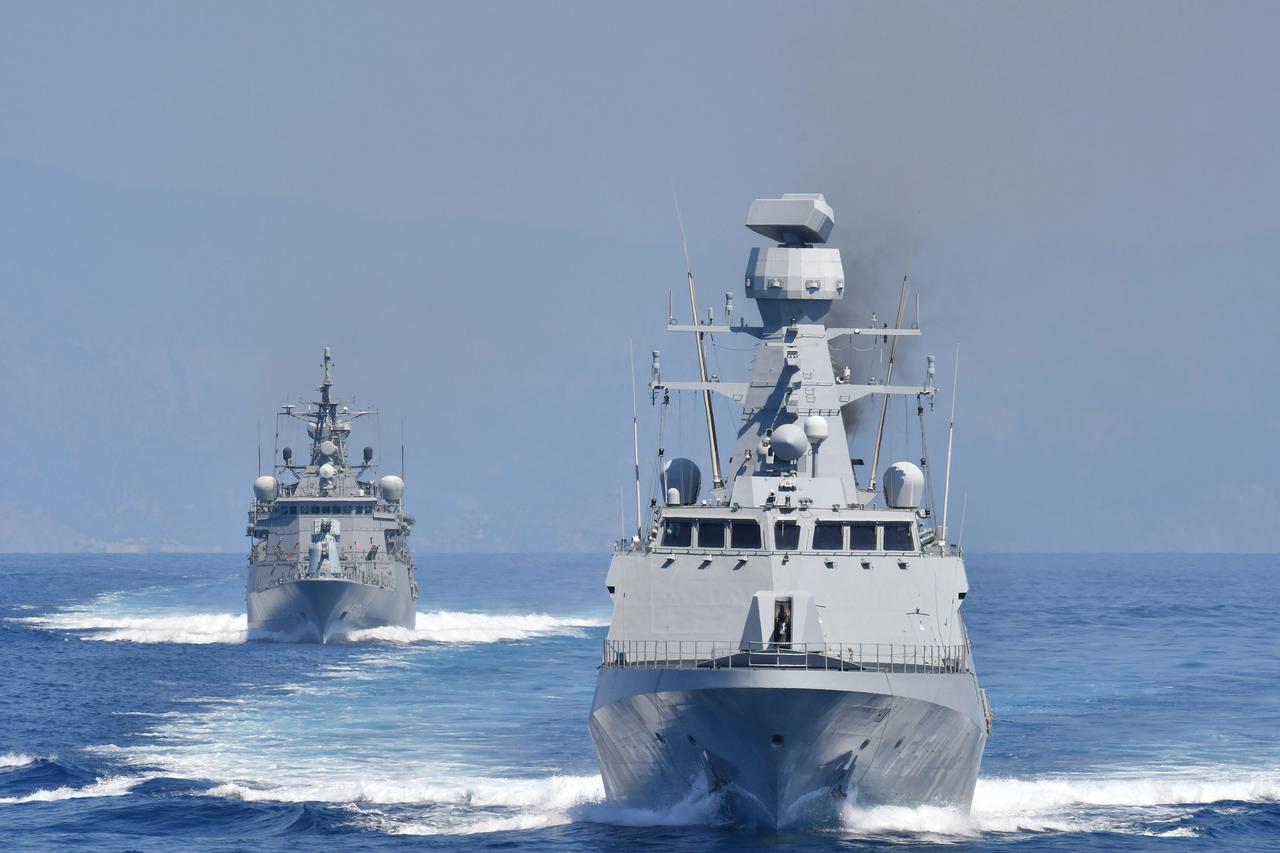
Türk Deniz Kuvvetleri Envanterindeki Gemiler (T.C. Millî Savunma Bakanlığı Deniz Kuvvetleri Komutanlığı)
MİLGEM platforms are designed with seakeeping characteristics enabling continuous operations in diverse sea conditions. The hull structure and platform architecture have been developed to support high maneuverability, seakeeping stability, and long-duration operational requirements. Onboard navigation and communication systems, radars, electronic support systems, and other platform subsystems operate in concert to ensure safe navigation at sea. Fire detection and damage control systems, structural shock and vibration mitigation measures, and system redundancy approaches contribute to platform mission continuity. Designed for long-range patrol, reconnaissance, surveillance, and open-sea missions, MİLGEM platforms are built on a seakeeping capability that allows seamless transitions between economical cruising and high-speed operational profiles.
On MİLGEM platforms, coordination of mission systems, processing of target data, and integration of weapons and sensors are achieved using national warfare management, sensor, and electronic systems. The core warfare management infrastructure of the platform is provided by the ADVENT Warfare Management System. Target detection, tracking, threat assessment, and coordination of weapon systems are conducted through this system. Additionally, three-dimensional search radars, fire control radars, low probability of intercept (LPI) radars, electro-optical sensors, hull-mounted sonar systems, and navigation and communication systems operate together. On Istif Class frigates, this infrastructure has been expanded with next-generation national radar systems such as the CENK-S AESA radar and the AKREP fire control radar.【8】
Electronic warfare and platform protection infrastructure are also among the core system components of MİLGEM. The electronic support system, laser warning system, torpedo detection and countermeasure system, and decoy systems enhance the platform’s threat detection and countermeasure capabilities. Communication and navigation systems enable data sharing and coordination with operational elements, while electronic systems operate in conjunction with other mission systems onboard. The national sensor, warfare management, and electronic infrastructure developed under MİLGEM is used across different platform classes with a common architectural approach and serves as the foundation for system integration in next-generation maritime platforms.
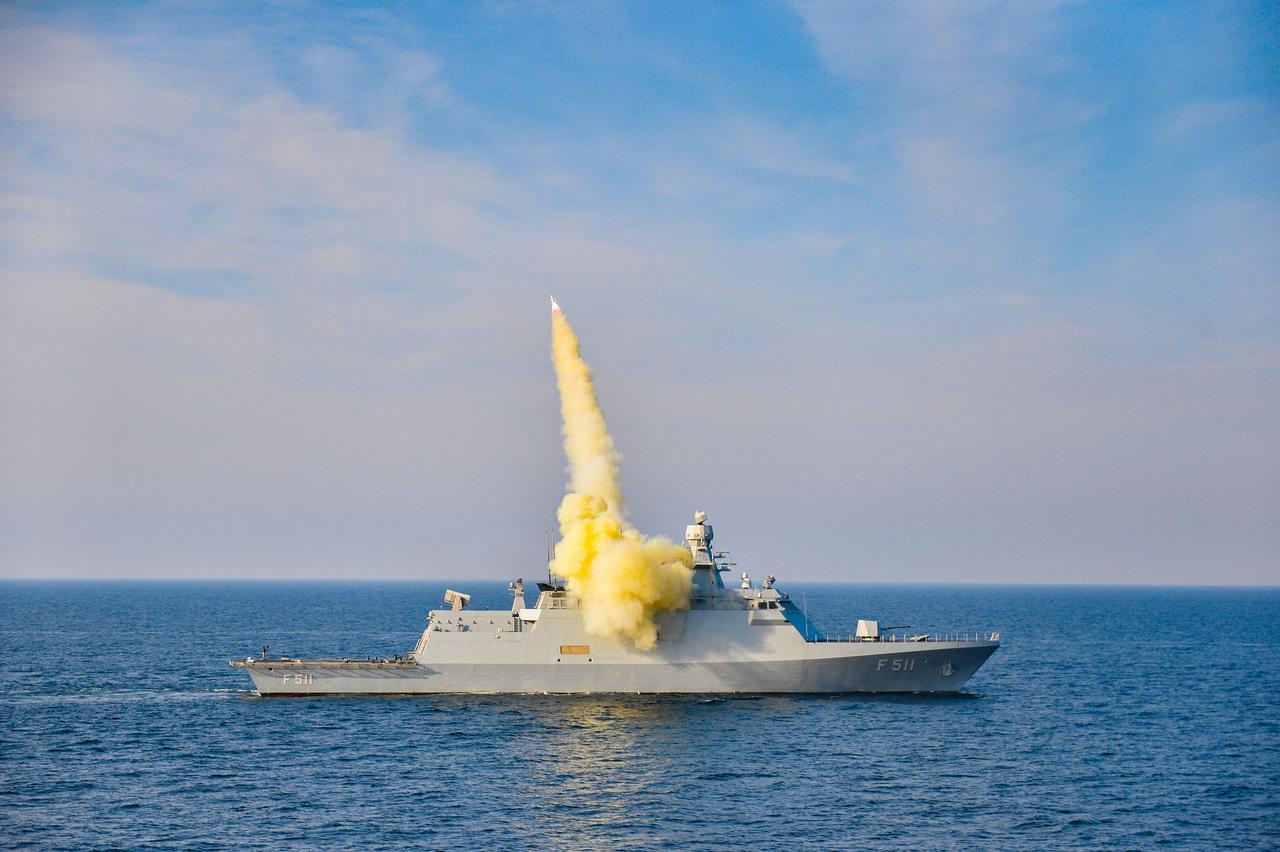
TCG Heybeliada (F-511) Füze Fırlatırken (T.C. Millî Savunma Bakanlığı Deniz Kuvvetleri Komutanlığı)
The national weapon and missile systems used on MİLGEM platforms are configured to meet diverse operational needs against surface, air, and underwater threats. On the platforms, the ATMACA anti-ship missile is employed against surface targets, the Gökdeniz Close-In Air Defense System provides point defense, the MİDLAS National Vertical Launch System enables the use of guided air defense munitions, and main guns and torpedo systems perform their respective roles. On Ada Class corvettes, the anti-ship missile, close-in air defense, and gun systems form the primary weapon components; on Istif Class frigates, the MİDLAS system has expanded air defense capabilities, and next-generation national weapon systems have been integrated onto the platform. These weapon systems, working in conjunction with the national warfare management system and sensor infrastructure, ensure coordinated execution of target detection, tracking, and engagement processes onboard.
The MİLGEM Project encompasses various warship classes developed to meet the diverse operational needs of the Turkish Naval Forces. Under the project, Ada Class Corvettes, Istif Class Frigates, Hisar Class Offshore Patrol Vessels, and TF-2000 Air Defense Destroyer are being developed. These platforms, while possessing different technical characteristics according to mission objectives, are shaped by a national design philosophy, local system integration, and a common platform architecture.
The Ada Class corvettes constitute the first warship class designed and constructed under the MİLGEM Project. Developed primarily for anti-submarine warfare and reconnaissance-patrol missions, these platforms possess multi-role capabilities for detecting, tracking, identifying, and neutralizing surface, underwater, and air threats. Additionally, they are designed to perform maritime surveillance, patrol operations, protection of coastal and critical infrastructure, monitoring of the Exclusive Economic Zone, and naval gunfire support. As Türkiye’s first corvette class designed and built with national capabilities, the Ada Class serves as the foundational platform of the MİLGEM Project.【9】
In platform design, low observability, high maneuverability, operational endurance at sea, and system redundancy are fundamental principles. Thanks to its modular architecture, the Ada Class corvettes also feature growth capacity suitable for integrating new sensors, weapons, and other mission systems.
The Ada Class corvettes have an overall length of 99.56 meters, a waterline length of 91.40 meters, a maximum beam of 14.42 meters, and a draft of 3.85 meters. The platform, with a displacement of approximately 2,400 tons, is equipped with a CODAG propulsion system, two shafts, and controllable pitch propellers (CPP). The corvettes can achieve speeds exceeding 29 knots and have a range of approximately 3,500 nautical miles at economical cruising speed of 15 knots. The ship’s electrical power demand is met by four diesel generators. The platform provides accommodation for 86 personnel; the helicopter deck and hangar are designed to support two S-70B Seahawk helicopters simultaneously, and two RHIB boats are available for operational use.【10】
The mission system infrastructure of the Ada Class corvettes includes a three-dimensional surveillance radar, fire control radars, low probability of intercept (LPI) radars, electro-optical sensors, electronic support systems, laser warning systems, hull-mounted sonar, and torpedo detection and countermeasure systems. The weapon armament consists of an anti-ship missile system, RAM close-in air defense system, main gun, 12.7 mm stabilized machine guns, and decoy systems. Additionally, the hull design with low radar cross-section, infrared signature reduction measures, a degaussing system to reduce magnetic signature, structural solutions to minimize underwater noise, a fire- and damage-resistant platform structure, and a system redundancy approach constitute the fundamental elements of the corvette’s technical infrastructure.【11】
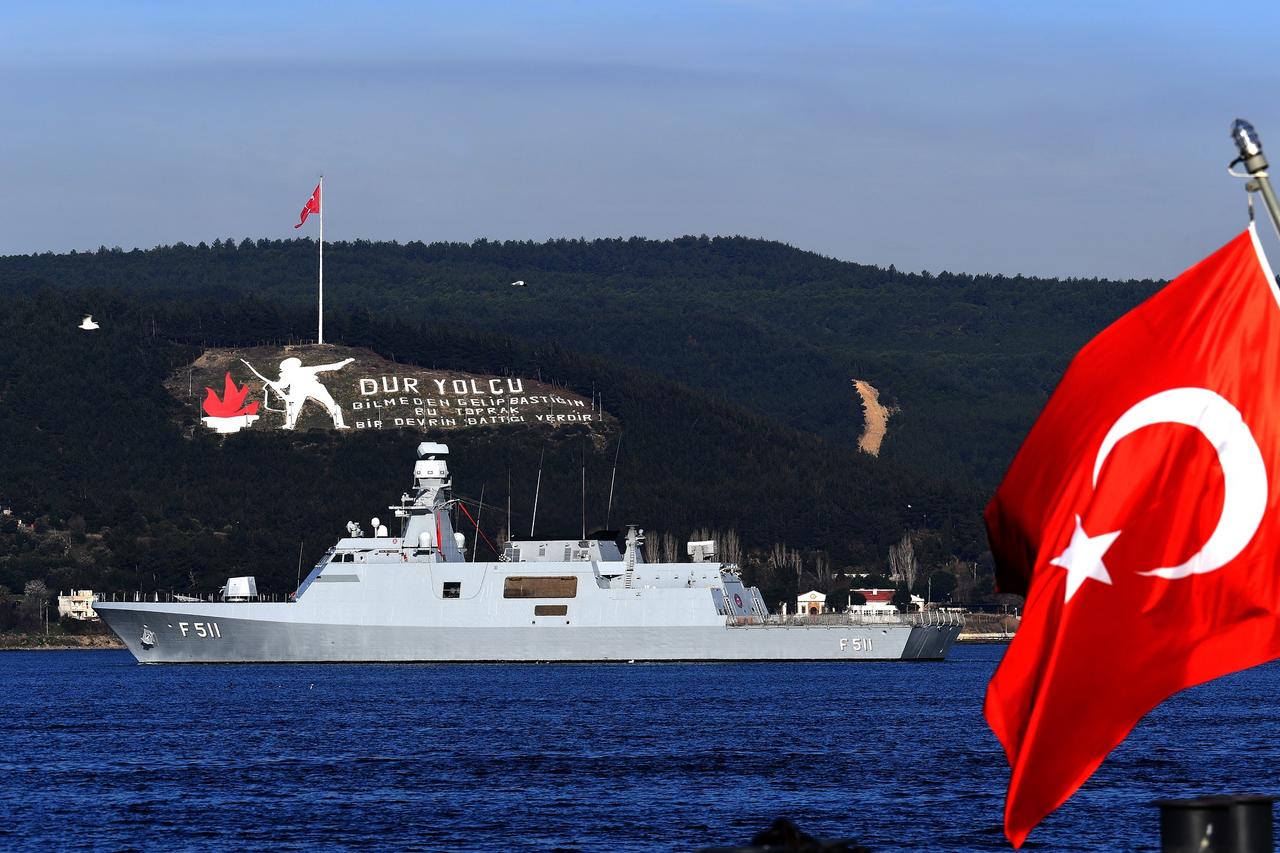
TCG Heybeliada (F-511) Gemisi (T.C. Millî Savunma Bakanlığı Deniz Kuvvetleri Komutanlığı)
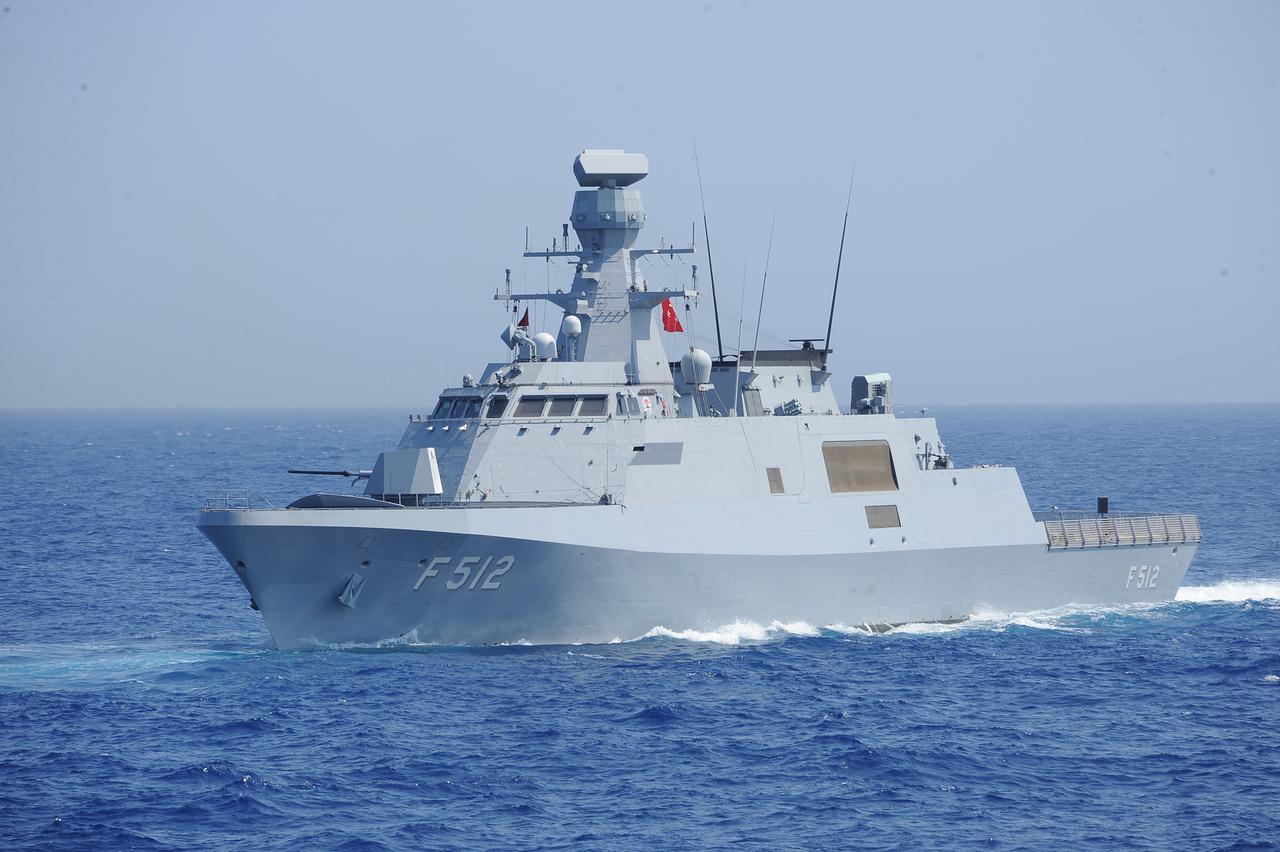
TCG Büyükada (F-512) Gemisi (T.C. Millî Savunma Bakanlığı Deniz Kuvvetleri Komutanlığı)
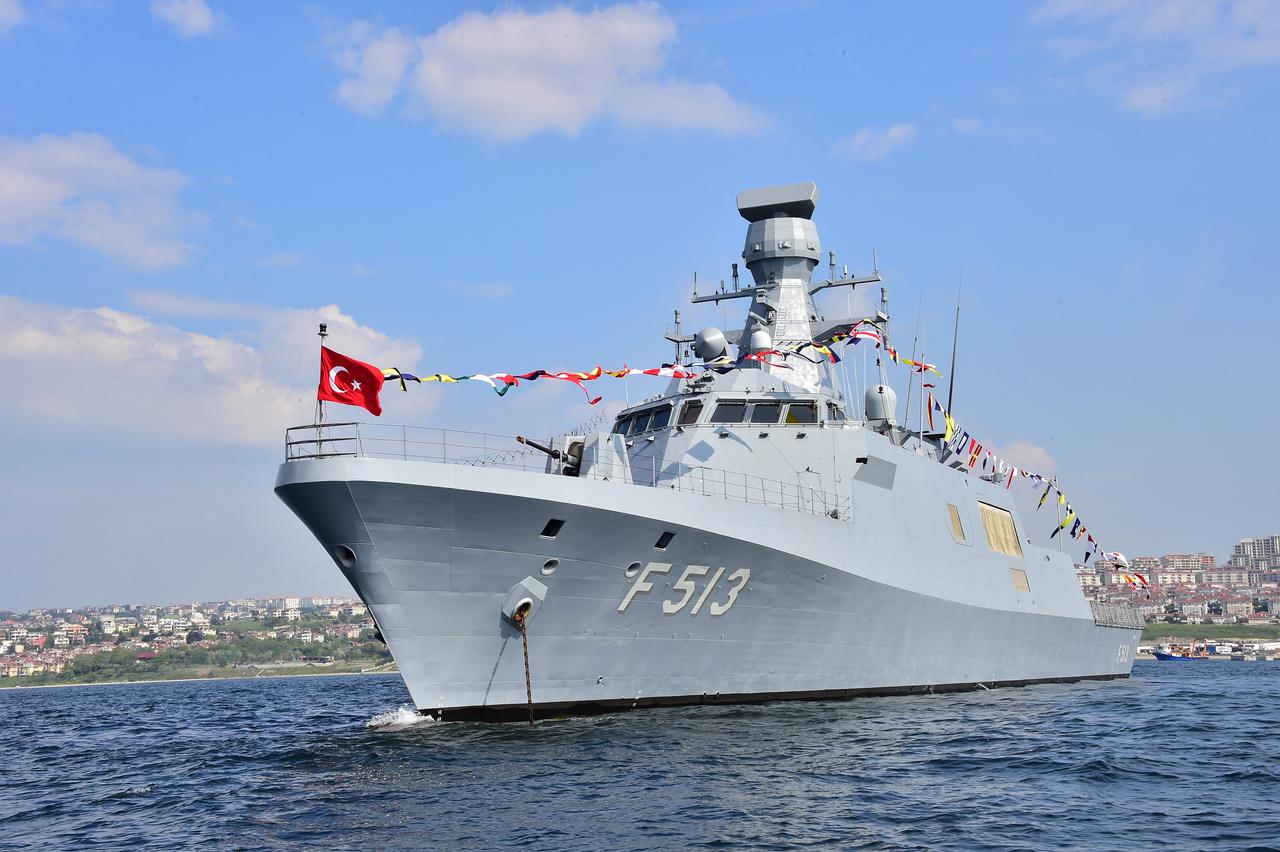
TCG Burgazada (F-513) Gemisi (T.C. Millî Savunma Bakanlığı Deniz Kuvvetleri Komutanlığı)
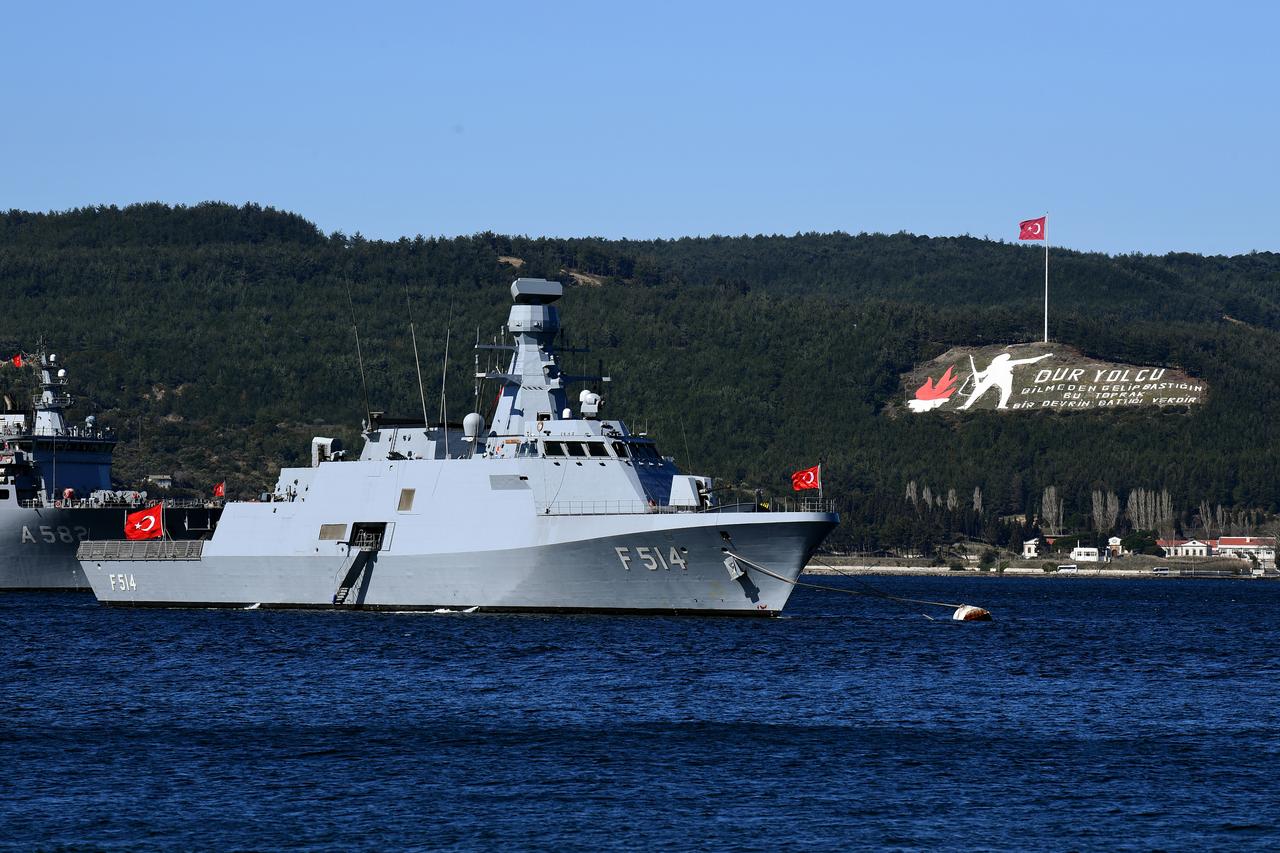
TCG Kınalıada (F-514) Gemisi (T.C. Millî Savunma Bakanlığı Deniz Kuvvetleri Komutanlığı)
The Istif Class frigates are multi-role warships developed under the MİLGEM Project, building upon the design and construction experience gained from the Ada Class corvettes. This class is designed to perform air defense, surface warfare, anti-submarine warfare, and reconnaissance-surveillance missions on a single platform. The Istif Class, based on the hull structure of the Ada Class, has been enhanced with increased weapon, sensor, and mission systems to achieve higher operational capability. The first ship of the class is TCG İstanbul (F-515), with other ships planned for serial production.
The Istif Class frigates are among the platforms where the utilization rate of local and national systems has been increased under the MİLGEM Project. The warfare management system, radars, electronic warfare systems, communication infrastructure, and weapon systems on these ships are largely based on solutions developed in Türkiye. This class represents not only a platform designed to meet the operational needs of the Turkish Naval Forces Command but also a frigate class that demonstrates the advancement of design, production, and system integration capabilities achieved through the project to a higher level.
The Istif Class frigates have been developed with increased platform dimensions and mission load capacity compared to the Ada Class corvettes. The overall length of the class is 113.2 meters, the beam is 14.4 meters, and the displacement is approximately 3,150 tons. The ships use a CODAG propulsion system with one gas turbine and two diesel engines, achieving a maximum speed exceeding 29 knots. The platforms, with a range of approximately 5,700 nautical miles, are designed with living and logistical facilities to support long-duration maritime missions.【17】
On Istif Class frigates, the helicopter deck and hangar, vertical launch system, anti-ship missile system, main gun, close-in air defense system, torpedo system, and electronic warfare and advanced sensor infrastructure are integrated on a single platform. The national warfare management system and other systems are configured to operate in an integrated manner. This technical structure enables the platform to perform air defense, surface warfare, anti-submarine warfare, and reconnaissance-surveillance missions within a multi-role operational concept.
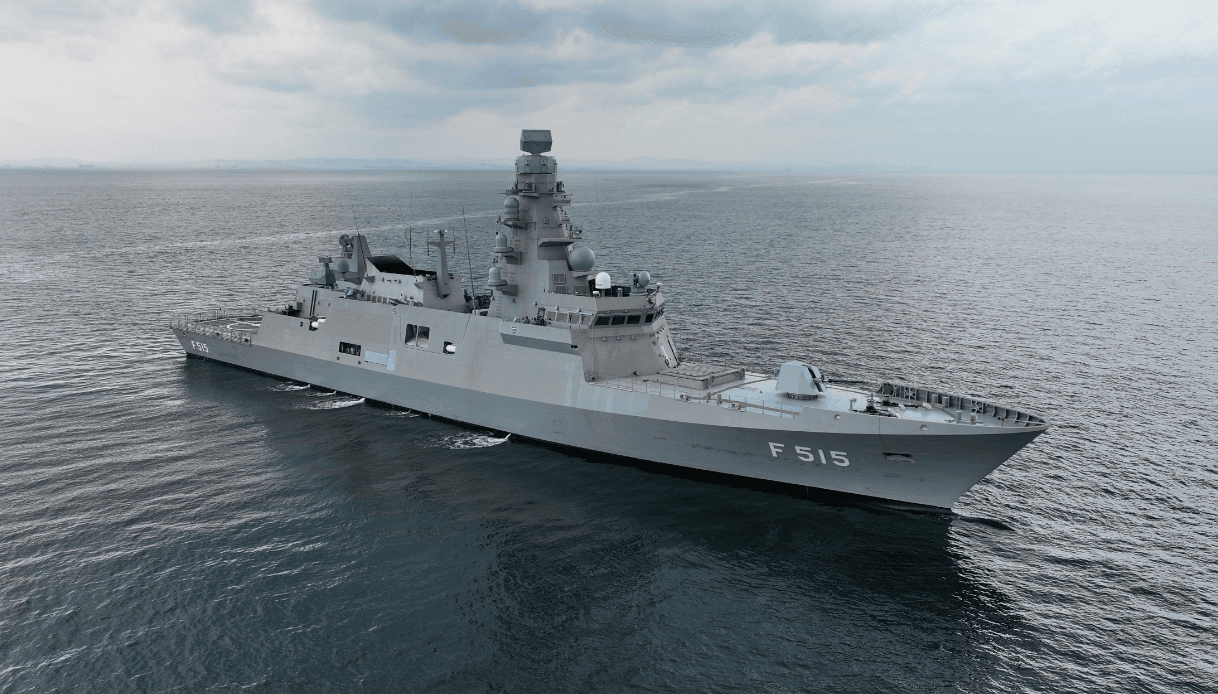
TCG İstanbul (F-515) Gemisi (T.C. Cumhurbaşkanlığı Savunma Sanayii Başkanlığı)
TCG İstanbul (F-515) is the first Istif Class frigate developed under the MİLGEM Project. Construction began on 3 July 2017 at the Istanbul Shipyard Command, and the launch ceremony was held on 23 January 2021.【18】 After completion of harbor and sea acceptance tests, the ship was commissioned into the inventory of the Turkish Naval Forces Command during a ceremony on 19 January 2024. As the first frigate developed after the Ada Class corvettes, TCG İstanbul represents the next phase of the project.【19】
The serial production program is being implemented to ensure the continuity of the design, production, and system integration infrastructure established under the MİLGEM Project. The involvement of public and private sector shipyards and domestic defense industry organizations in ship construction is anticipated, with the goal of continuing the use of national systems developed on the platforms. The program is based on the operational requirements of the Turkish Naval Forces Command for the systematic introduction of next-generation frigates within the planned framework. The procurement contract process for the 6th to 12th ships of MİLGEM has also been initiated.【20】 In the ongoing phases of the program, the construction of next-generation platforms, continued use of local and national subsystems, and enhancement of production capacity are targeted.
Hisar Class Offshore Patrol Vessels (OPV) are next-generation offshore patrol vessels constructed at the Istanbul Shipyard Command under the prime contractorship of ASFAT, in accordance with the requirements of the Turkish Naval Forces Command. The platforms developed under the project are designed to safeguard Türkiye’s maritime rights, interests, and claims. The vessels integrate advanced sensor and weapon systems with design features that provide a low radar cross-section and low underwater acoustic signature. Additionally, they have been developed based on military design standards emphasizing high survivability, shock resistance, and lifetime supportability.
The Hisar Class vessels are planned for use in core missions such as intelligence, surveillance and reconnaissance, search and rescue, counter-terrorism, maritime patrol and special maritime operations, as well as in maritime air operations, electronic and acoustic warfare, land bombardment, defense against asymmetric threats, protection of maritime transport, amphibious operation support, and training activities. The platforms are designed with an on-board ready system capability to enable future integration of required sensors and weapon systems, providing a flexible platform structure adaptable to mission-specific configurations.
The Hisar Class offshore patrol vessels (OPV) have been developed with a platform structure suitable for open-sea missions. The vessels have an overall length of 99.56 meters, a maximum beam of 14.42 meters, a draft of 3.77 meters, and a displacement of approximately 2,300 tons. The platforms feature a CODELOD main propulsion configuration with four diesel engines and two electric motors.【21】 With a maximum speed exceeding 24 knots, the vessels have an economical cruising range of approximately 4,500 nautical miles and an endurance of 21 days at sea. The platforms include a 10-ton class helicopter deck and hangar, two RHIB boats of 7.5 and 5.5 meters in length, and accommodation for 104 personnel.【22】
On Hisar Class vessels, the ADVENT Warfare Management System, Gun Fire Control System, and Link-11/16 Ship Data Distribution System are employed. The sensor infrastructure includes a three-dimensional search radar, search and target detection radar, fire control radar, navigation/LPI radar, electronic support system, sonar, TACAN, and the Ahtapot Sea Eye system. The weapon armament consists of a 76 mm gun and two 12.7 mm machine guns, and the platform is designed to accommodate integration of indigenous surface-to-surface and surface-to-air guided missile systems. Additionally, the design features that reduce radar, magnetic, and acoustic signatures, along with high structural strength, high automation, platform control and monitoring systems, and KBRN protection capabilities, form the fundamental elements of the vessel’s technical infrastructure.【23】
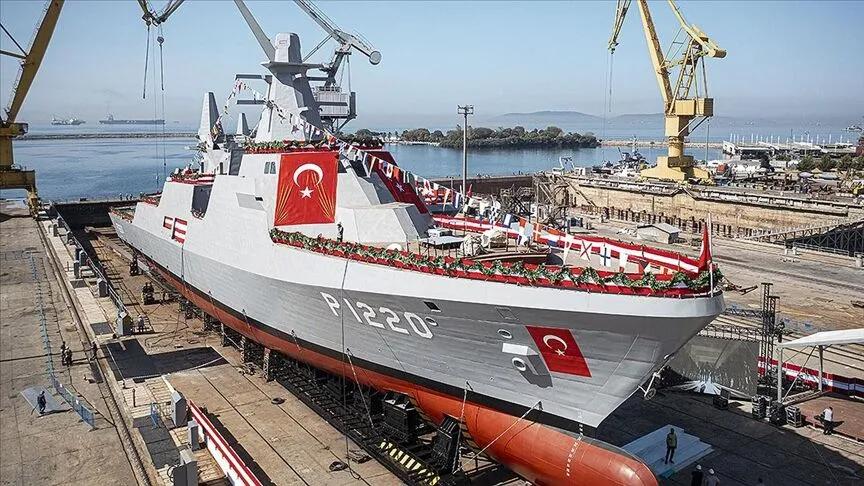
TCG Akhisar (P-1220) Gemisi (Anadolu Ajansı)
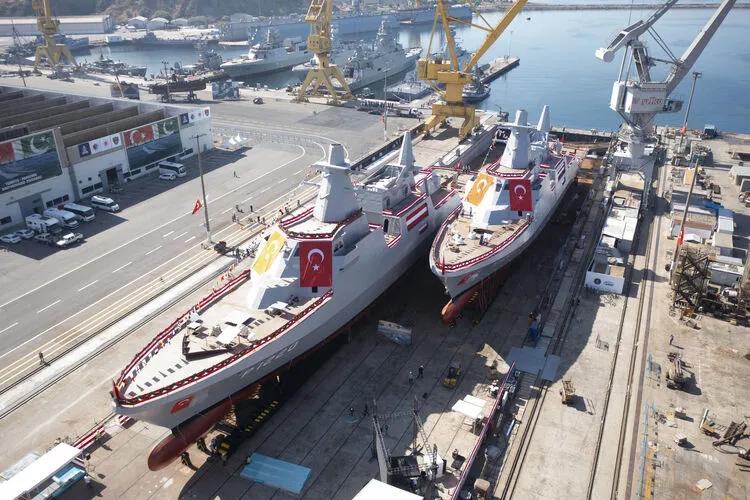
TCG Akhisar (P-1220) ve TCG Koçhisar (P-1221) Gemileri (Anadolu Ajansı)
TF-2000 Air Defense Destroyer is a destroyer-class platform developed under the MİLGEM Project to meet the Turkish Naval Forces’ area air defense requirements. The project is designed as a multi-role warship capable of providing area air defense for task groups and critical maritime assets, as well as conducting missions against surface and specific underwater threats. The ship’s design has been developed with national capabilities and is projected to have a displacement of approximately 8,300 tons, an overall length of 149 meters, and a local content ratio exceeding 85%. The TF-2000 Air Defense Destroyer Phase 2 Contract was signed during IDEF 2025.【25】 Following the contract, construction activities have officially commenced. Block construction activities are ongoing as of 2026, with the ship scheduled for launch in 2028 and delivery in 2031.【26】
The primary mission of the TF-2000 is to provide long-range air defense for task forces, establishing protection against aerial threats. The platform is planned with a 96-cell (32+64) vertical launch system capable of engaging both air and surface targets.【27】 The TF-2000 is planned to serve as a naval component of the Çelik Kubbe air defense architecture.【28】 This platform constitutes the air defense-focused destroyer phase following the corvette and frigate classes of MİLGEM.
The MİLGEM Project has been implemented with the goal of reducing dependence on foreign sources and developing critical platforms using national capabilities. From the Ada Class corvettes to the Istif Class frigates, the utilization rate of local subsystems has been increased, integrating various technologies such as warfare management systems, radars, electronic warfare, communications, and weapon systems onto maritime platforms. This process has contributed to the development of national design and system integration capabilities.
The knowledge and engineering infrastructure acquired under the project have provided the foundation for developing platforms to meet the diverse operational needs of the Turkish Naval Forces. The design, construction, and system integration experience gained through MİLGEM has laid the groundwork for subsequent maritime platform projects and contributed to the advancement of the defense industry’s technical capacity in shipbuilding, production, and integration.
The MİLGEM Project has become one of the initiatives that have introduced Türkiye’s capabilities in warship design and construction to the international market. The platforms and technological expertise developed under the project have formed the basis of defense cooperation with various countries; export and cooperation processes with Pakistan, Ukraine, Malaysia, Indonesia and Romania constitute the core elements of MİLGEM’s export activities. These export initiatives have ensured that MİLGEM platforms are selected by international users.
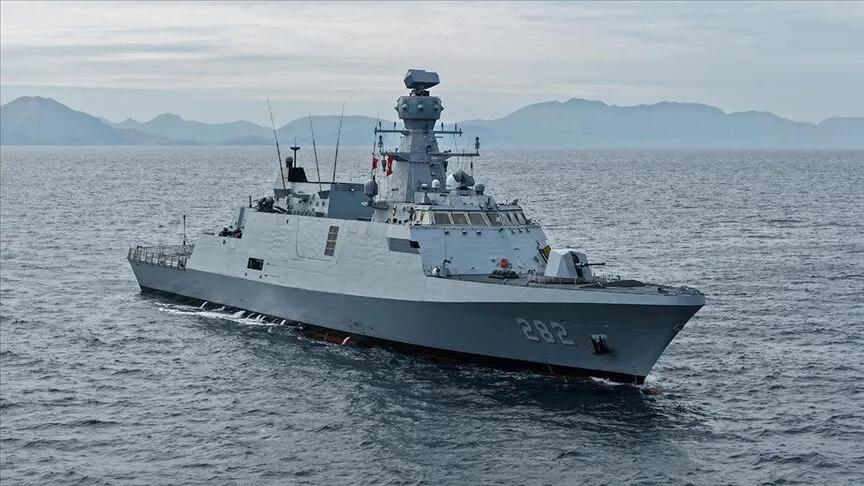
PNS Khaibar (F-282) Gemisi (Anadolu Ajansı)
Pakistan has become the first export customer for platforms developed under the MİLGEM Project. Under a contract signed between Türkiye and Pakistan, the construction of four MİLGEM corvettes for the Pakistan Navy has been agreed upon. The project envisions a shared production model between the two countries, with the first two ships to be built in Türkiye and the remaining two in Pakistan’s Karachi Shipyard. Technical cooperation has also been conducted in the areas of shipbuilding technology, engineering knowledge, and production processes under this model.【29】
The MİLGEM corvettes developed for Pakistan have facilitated the transfer of Türkiye’s design and system integration capabilities abroad. Numerous local systems developed by Türkiye’s defense industry have been used in their construction, and the platforms have been configured to meet the requirements of the Pakistan Navy. The second ship built under the project, PNS Khaibar, was commissioned into the inventory of the Pakistan Navy during a ceremony held in Karachi.【30】
Ukraine’s cooperation under MİLGEM has been developed within a program initiated to supply corvettes to meet the needs of the Ukrainian Navy. Under this program, the construction of two Ada Class corvettes has been agreed upon, with the first ship to be built in Türkiye and subsequent phases to involve Ukraine’s shipbuilding infrastructure. This program stands out as one of the export activities demonstrating that the MİLGEM platform has become a preferred design among international users.
The production process for MİLGEM corvettes for the Ukrainian Navy was initiated following an agreement signed between Türkiye and Ukraine in December 2020. The keel-laying ceremony for the first Ukrainian Ada Class corvette, Hetman Ivan Mazepa (F-211), was held in September 2021, and the ship was launched in October 2022. In March 2023, construction of the second corvette in the program was initiated, and production activities have continued according to the planned schedule.【31】 The first ship reached the sea trials phase in 2024, while the second corvette, Hetman Ivan Vyhovskyi, was launched on 1 August 2024, with delivery planned for 2027.【32】
Malaysia’s cooperation under MİLGEM has been developed under the Royal Malaysian Navy’s Littoral Mission Ship Batch 2 program. A contract has been signed between Türkiye and Malaysia for the supply of three corvettes, with the ships to be produced based on the MİLGEM Ada Class design, tailored to Malaysia’s operational requirements. STM serves as the prime contractor, and construction is being carried out in Türkiye. The first ship of the project, Tunku Laksamana Abdul Jalil (141), was launched on 24 May 2026, and the second ship, Raja Laut (142), was launched on 7 June 2026.【33】 With the ongoing construction of the three-ship project, Malaysia has joined the list of international users of the MİLGEM platform.
Indonesia’s cooperation under MİLGEM has entered a new phase with the signing of the final contract for the export of two frigates. Under the project, led by TAİS and financed by Qatar, the frigates with hull numbers F-519 and F-521 are scheduled for delivery to Indonesia between 2027 and 2028. It has been decided that the frigates with hull numbers F-516 (TCG İzmir), F-517 (TCG İzmit), and F-518 (TCG İçel) will be commissioned into the inventory of the Turkish Naval Forces. The frigates to be delivered to Indonesia will be equipped with sensors developed by ASELSAN, national missiles produced by ROKETSAN, a naval gun manufactured by Machine and Chemical Industry Corporation, and command and control systems developed by HAVELSAN.【34】
Romania’s cooperation under MİLGEM has reached a new milestone with the delivery of the Contraamiral Roman corvette, built under the prime contractorship of ASFAT at the Istanbul Shipyard Command, to the Romanian Naval Forces.【35】 With this delivery, Türkiye has, for the first time in its history, exported a military ship to a member country of NATO and the European Union.【36】 The platform, based on the Hisar Class offshore patrol vessel design, has been incorporated into the inventory of the Romanian Naval Forces for use in reconnaissance, surveillance, patrol, maritime security, and combat missions. This export to Romania has enabled the Hisar Class offshore patrol vessel TCG Akhisar to enter the inventory of a NATO and European Union member country.【37】
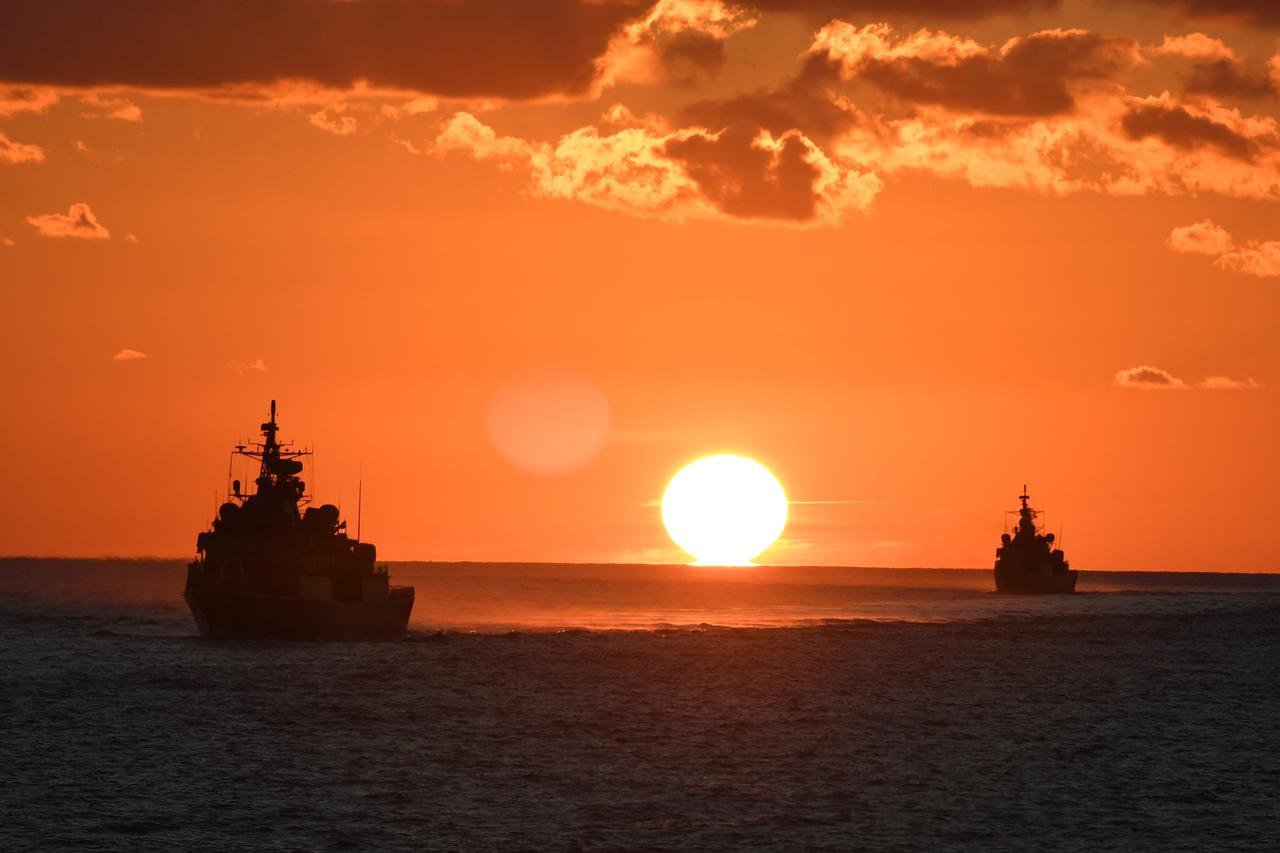
Gün Batımında Seyreden Savaş Gemileri (T.C. Millî Savunma Bakanlığı Deniz Kuvvetleri Komutanlığı)
The future planning of the MİLGEM Project is shaped by the continuation of serial production of existing platforms and the introduction of new ship classes. In this context, the production program for the Istif Class frigates is planned to continue, new groups of Hisar Class offshore patrol vessels are to be constructed, and the construction activities initiated for the TF-2000 air defense destroyer are to be sustained. Simultaneously, efforts to further develop national systems will continue, and export activities targeting international markets for MİLGEM platforms are to be maintained. This process is being carried out to develop new maritime platforms for the Turkish Naval Forces and to ensure the long-term advancement of national shipbuilding capabilities.
ASFAT Askerî Fabrika ve Tersane İşletme A.Ş. "2023 Faaliyet Raporu." ASFAT Askerî Fabrika ve Tersane İşletme A.Ş. Resmî Web Sitesi. pp. 1–22. Accessed August 1, 2026.https://asfat.com.tr/asfat-2023-faaliyet-raporu.pdf
ASFAT Askerî Fabrika ve Tersane İşletme A.Ş. "Açık Deniz Karakol Gemisi (ADKG KATALOG)." ASFAT Askerî Fabrika ve Tersane İşletme A.Ş. Resmî Web Sitesi. pp. 1–2. Accessed August 1, 2026.https://cdn.asfat.com.tr/catalogs/ADKG%20TR%20(2).pdf
ASFAT Askerî Fabrika ve Tersane İşletme A.Ş. "Açık Deniz Karakol Gemisi (ADKG)." ASFAT Askerî Fabrika ve Tersane İşletme A.Ş. Resmî Web Sitesi. Accessed August 1, 2026.https://asfat.com.tr/urunlerimiz/adkg
Anadolu Ajansı. "Açık Deniz Karakol Gemileri ile Türkiye'de İlklere İmza Atıldı." Anadolu Ajansı, September 24, 2023. Accessed August 1, 2026.https://www.aa.com.tr/tr/savunma-sanayisi/acik-deniz-karakol-gemileri-ile-turkiyede-ilklere-imza-atildi/2999754
Anadolu Ajansı. "Deniz Jeopolitiğinde Yeni Stratejik Eşik: Mavi Vatan Yasası." Anadolu Ajansı, May 27, 2026. Accessed August 1, 2026.https://www.aa.com.tr/tr/analiz/deniz-jeopolitiginde-yeni-stratejik-esik-mavi-vatan-yasasi/3949692
Anadolu Ajansı. "Pakistan, Donanma Filosuna Türk Yapımı MİLGEM Sınıfı Korvet Ekledi." Anadolu Ajansı, April 4, 2026. Accessed August 1, 2026.https://www.aa.com.tr/tr/dunya/pakistan-donanma-filosuna-turk-yapimi-milgem-sinifi-korvet-ekledi/3892057
Anadolu Ajansı. "‘Mavi Vatan’a 3 Yeni MİLGEM Geliyor." Anadolu Ajansı, December 22, 2021. Accessed August 1, 2026.https://www.aa.com.tr/tr/ekonomi/mavi-vatana-3-yeni-milgem-geliyor/2454246
Anadolu Ajansı. "‘Milli Korvet’ Heybeliada Ziyarete Açıldı." Anadolu Ajansı, October 29, 2017. Accessed August 1, 2026.https://www.aa.com.tr/tr/turkiye/milli-korvet-heybeliada-ziyarete-acildi/950853
Anadolu Ajansı. “ASFAT'tan Türk ve Romanya Deniz Kuvvetlerine Çifte Teslimat.” Anadolu Ajansı. June 19, 2026. Accessed August 1, 2026.https://www.aa.com.tr/tr/gundem/asfattan-turk-ve-romanya-deniz-kuvvetlerine-cifte-teslimat/3971977
Anadolu Ajansı. “Hedefi 12’den Vuran MİLGEM’e Pakistan Yolu Göründü.” Anadolu Ajansı, October 27, 2025. Accessed August 1, 2026.https://www.aa.com.tr/tr/savunma-sanayisi/hedefi-12den-vuran-milgeme-pakistan-yolu-gorundu/3727471
Anadolu Ajansı. “Türkiye'nin Askeri Denizcilikte Sistematik Dönüşümü: MİLGEM Programı.” Anadolu Ajansı. June 22, 2026. Accessed August 1, 2026.https://www.aa.com.tr/tr/analiz/turkiyenin-askeri-denizcilikte-sistematik-donusumu-milgem-programi/3974296
Haber7. “Türkiye’den Endonezya’ya Tarihi MİLGEM İhracatında İmzalar Atıldı.” Haber7. May 26, 2026. Accessed August 1, 2026.https://ekonomi.haber7.com/foto-galeri/97361-turkiyeden-endonezyaya-tarihi-milgem-ihracatinda-imzalar-atildi
Milli Savunma Üniversitesi Deniz Harp Okulu. “Millî Olarak Dizayn ve İnşa Edilen İlk Türk Korveti MİLGEM Projesi.” *Milli Savunma Üniversitesi Deniz Harp Okulu Resmî Web Sitesi.* Accessed August 1, 2026.https://dho.msu.edu.tr/sayfalar/00_Anasayfa/numpages/page0003.html
STM Savunma Technologies Engineering and Trade Inc. "Ada Sınıfı Corvette." STM Defense Technologies Engineering and Trade Inc. Official Website. Accessed August 1, 2026.https://www.stm.com.tr/tr/ada-sinifi-korvet
STM Savunma Technologies Engineering and Trade Inc. "MİLGEM Ada Class Corvette Project." STM Defense Technologies Engineering and Trade Inc. Official Website. Accessed August 1, 2026.https://www.stm.com.tr/tr/milgem-ada-sinifi-korvet-projesi
STM Savunma Technologies Engineering and Trade Inc. "MİLGEM İstif Class Project (5–12)." STM Defense Technologies Engineering and Trade Inc. Official Website. Accessed August 1, 2026.https://www.stm.com.tr/tr/milgem-istif-sinifi-projesi-5-12
STM Savunma Technologies Engineering and Trade Inc. "Ukrayna Korvet Projesi." STM Defense Technologies Engineering and Trade Inc. Official Website. Accessed August 1, 2026.https://www.stm.com.tr/tr/ukrayna-korvet-projesi
STM Savunma Teknolojileri Mühendislik ve Ticaret A.Ş. "Malezya Kraliyet Donanması Littoral Mission Ship Batch-2 (LMSB2) Projesi." STM Savunma Teknolojileri Mühendislik ve Ticaret A.Ş. Resmî Web Sitesi. Accessed August 1, 2026.https://www.stm.com.tr/tr/malezya-kraliyet-donanmasi-littoral-mission-ship-batch-2-lmsb2-projesi
T.C. Millî Savunma Bakanlığı Deniz Kuvvetleri Komutanlığı. "Atışlar." T.C. Millî Savunma Bakanlığı Deniz Kuvvetleri Komutanlığı Resmî Web Sitesi. Accessed August 1, 2026.https://www.dzkk.tsk.tr/Anasayfa/GaleriDetay/61f4e7c2ade1252b60a6286d
T.C. Millî Savunma Bakanlığı Deniz Kuvvetleri Komutanlığı. "Gemiler." T.C. Millî Savunma Bakanlığı Deniz Kuvvetleri Komutanlığı Resmî Web Sitesi. Accessed August 1, 2026.https://www.dzkk.tsk.tr/Anasayfa/GaleriDetay/61f4e8adade1252b60a6286f
T.C. Ministry of National Defense Navy Command. "Mavi Vatan." T.C. Ministry of National Defense Navy Command Official Website. Accessed August 1, 2026.https://www.dzkk.tsk.tr/Anasayfa/GaleriDetay/61f3ec9cade1250ba8887ac2
T.C. Presidency of Communication. "Denizlerde Gurur Günü." T.C. Presidency of Communication Official Website. Accessed August 1, 2026.https://www.iletisim.gov.tr/turkce/yerel_basin/detay/denizlerde-gurur-gunu
T.C. Presidency of Communication. "Three Ambitious Ships for the Turkish Navy to Be Constructed Starting in 2025 (South Korea)." T.C. Presidency of Communication Official Website. Accessed August 1, 2026.https://www.iletisim.gov.tr/turkce/dis_basinda_turkiye/detay/turkiye-donanmasi-icin-uc-iddiali-gemi-2025-yilinda-insa-edilmeye-baslanacak-guney-kore
T.C. Presidency of Communication. "Turkey Exported a Military Ship to a NATO and EU Member for the First Time (Ria Novosti)." T.C. Presidency of Communication Official Website. Accessed August 1, 2026.https://www.iletisim.gov.tr/turkce/dis_basinda_turkiye/detay/turkiye-ilk-kez-bir-nato-ve-ab-uyesine-askeri-gemi-ihrac-etti-ria-novosti
T.C. Presidency of Defense Industries. "Defense Industry Product Catalog." *T.C. Presidency of Defense Industries Official Website.*, pp. 1–1362. Accessed August 1, 2026.https://www.ssb.gov.tr/savunma-sanayii-urunler-katalogu
T.C. Presidency of Defense Industries. "Mavi Vatan'a Üç Yeni Milgem Geliyor." T.C. Presidency of Defense Industries Official Website. Accessed August 1, 2026.https://www.ssb.gov.tr/haber/mavi-vatana-uc-yeni-milgem-geliyor-dQx7sP
T.C. Presidency of Defense Industries. "Mavi Vatan’a Üç Yeni Milli Fırkateyn Geliyor." T.C. Presidency of Defense Industries Official Website. Accessed August 1, 2026.https://www.ssb.gov.tr/haber/mavi-vatana-uc-yeni-milli-firkateyn-geliyor-aqnAok
T.C. Presidency of Defense Industries. "MİLGEM 5th Ship with 6th–12th Ships Procurement." T.C. Presidency of Defense Industries Official Website. Accessed August 1, 2026.https://www.ssb.gov.tr/proje/milgem-5-gemi-ile-6-12-gemilerin-tedariki
TRT Haber. "Milli Gu Güçlü Türkiye - Milli Gemi Projesi." YouTube, 1:08. Accessed August 1, 2026.https://www.youtube.com/watch?v=3OzZ7GG8RwY
TRT Haber. "SSB’den Hava ve Deniz Savunma Alanında Yeni Stratejik İş Birlikleri." TRT Haber, July 23, 2025. Accessed August 1, 2026.https://www.trthaber.com/haber/savunma/ssbden-hava-ve-deniz-savunma-alaninda-yeni-stratejik-is-birlikleri-914689.html
TRT Haber. “Karadeniz’de ‘MİLGEM’ Damgası.” TRT Haber. December 5, 2025. Accessed August 1, 2026.https://www.trthaber.com/haber/savunma/karadenizde-milgem-damgasi-927911.html
TRT Haber. “MİLGEM'deki Mühendislik Başarısı Dünyada Tek.” TRT Haber. May 12, 2021. Accessed August 1, 2026.https://www.trthaber.com/haber/gundem/milgemdeki-muhendislik-basarisi-dunyada-tek-580169.html
TRT Haber. “Pakistan Donanması'na Türk MİLGEM'i.” TRT Haber. April 5, 2026. Accessed August 1, 2026.https://www.trthaber.com/haber/dunya/pakistan-donanmasina-turk-milgemi-940443.html
Tutak, Eda. “Cumhuriyetin 100. Yılında Türk Deniz Kuvvetleri’nin Dış Politikada Artan Etkisi.” Süleyman Demirel Üniversitesi Vizyoner Dergisi 14, no. 100. Yıl Özel Sayısı (2023): 108–126. Accessed August 1, 2026.https://dergipark.org.tr/en/pub/vizyoner/article/1331739
Türk Silahlı Kuvvetlerini Güçlendirme Vakfı. "Türk Donanması’nın Caydırıcı Gücü: MİLGEM Projesi." Türk Silahlı Kuvvetlerini Güçlendirme Vakfı Resmî Web Sitesi. Accessed August 1, 2026.https://tskgv.org.tr/savunmasanayiigundem/turk-donanmasinin-caydirici-gucu-milgem-projesi
Yeni Şafak. "TF-2000 Hava Savunma Muhribi 2028’de Denize İnecek." Yeni Şafak, May 7, 2026. Accessed August 1, 2026.https://www.yenisafak.com/ekonomi/tf-2000-hava-savunma-muhribi-2028de-denize-inecek-4821867
[1]
Türk Silahlı Kuvvetlerini Güçlendirme Vakfı, “Türk Donanması’nın Caydırıcı Gücü: MİLGEM Projesi,” Türk Silahlı Kuvvetlerini Güçlendirme Vakfı Resmî Web Sitesi, Son Erişim: 1 Ağustos 2026, https://tskgv.org.tr/savunmasanayiigundem/turk-donanmasinin-caydirici-gucu-milgem-projesi
[2]
Anadolu Ajansı. "‘Mavi Vatan’a 3 Yeni MİLGEM Geliyor." Anadolu Ajansı, December 22, 2021. Accessed August 1, 2026.
[3]
T.C. Cumhurbaşkanlığı İletişim Başkanlığı, “Türkiye Donanması İçin Üç İddialı Gemi 2025 Yılında İnşa Edilmeye Başlanacak (Güney Kore),” T.C. Cumhurbaşkanlığı İletişim Başkanlığı Resmî Web Sitesi, Son Erişim: 1 Ağustos 2026, https://www.iletisim.gov.tr/turkce/dis_basinda_turkiye/detay/turkiye-donanmasi-icin-uc-iddiali-gemi-2025-yilinda-insa-edilmeye-baslanacak-guney-kore
[4]
Milli Savunma Üniversitesi Deniz Harp Okulu, “Millî Olarak Dizayn ve İnşa Edilen İlk Türk Korveti MİLGEM Projesi,” Milli Savunma Üniversitesi Deniz Harp Okulu Resmî Web Sitesi, Son Erişim: 1 Ağustos 2026, https://dho.msu.edu.tr/sayfalar/00_Anasayfa/numpages/page0003.html
[5]
Türk Silahlı Kuvvetlerini Güçlendirme Vakfı, “Türk Donanması’nın Caydırıcı Gücü: MİLGEM Projesi,” Türk Silahlı Kuvvetlerini Güçlendirme Vakfı Resmî Web Sitesi, Son Erişim: 1 Ağustos 2026, https://tskgv.org.tr/savunmasanayiigundem/turk-donanmasinin-caydirici-gucu-milgem-projesi
[6]
STM Savunma Teknolojileri Mühendislik ve Ticaret A.Ş., “MİLGEM İstif Sınıfı Projesi (5–12),” STM Savunma Teknolojileri Mühendislik ve Ticaret A.Ş. Resmî Web Sitesi, Son Erişim: 1 Ağustos 2026, https://www.stm.com.tr/tr/milgem-istif-sinifi-projesi-5-12
[7]
STM Savunma Teknolojileri Mühendislik ve Ticaret A.Ş., “MİLGEM İstif Sınıfı Projesi (5–12),”
[8]
STM Savunma Teknolojileri Mühendislik ve Ticaret A.Ş., “MİLGEM İstif Sınıfı Projesi (5–12),”
[9]
STM Savunma Teknolojileri Mühendislik ve Ticaret A.Ş., “MİLGEM Ada Sınıfı Korvet Projesi,” STM Savunma Teknolojileri Mühendislik ve Ticaret A.Ş. Resmî Web Sitesi, Son Erişim: 1 Ağustos 2026, https://www.stm.com.tr/tr/milgem-ada-sinifi-korvet-projesi
[10]
STM Savunma Teknolojileri Mühendislik ve Ticaret A.Ş., “Ada Sınıfı Korvet,” STM Savunma Teknolojileri Mühendislik ve Ticaret A.Ş. Resmî Web Sitesi, Son Erişim: 1 Ağustos 2026, https://www.stm.com.tr/tr/ada-sinifi-korvet
[11]
STM Savunma Teknolojileri Mühendislik ve Ticaret A.Ş., “Ada Sınıfı Korvet,”
[12]
Anadolu Ajansı. "‘Milli Korvet’ Heybeliada Ziyarete Açıldı." Anadolu Ajansı, October 29, 2017. Accessed August 1, 2026.https://www.aa.com.tr/tr/turkiye/milli-korvet-heybeliada-ziyarete-acildi/950853
[13]
Milli Savunma Üniversitesi Deniz Harp Okulu, “Millî Olarak Dizayn ve İnşa Edilen İlk Türk Korveti MİLGEM Projesi,” Milli Savunma Üniversitesi Deniz Harp Okulu Resmî Web Sitesi, Son Erişim: 1 Ağustos 2026, https://dho.msu.edu.tr/sayfalar/00_Anasayfa/numpages/page0003.html
[14]
Eda Tutak, “Cumhuriyetin 100. Yılında Türk Deniz Kuvvetleri’nin Dış Politikada Artan Etkisi,” Süleyman Demirel Üniversitesi Vizyoner Dergisi 14, no. 100. Yıl Özel Sayısı (2023): 118, https://dergipark.org.tr/en/pub/vizyoner/article/1331739
[15]
T.C. Cumhurbaşkanlığı Savunma Sanayii Başkanlığı, “Savunma Sanayii Ürün Kataloğu,” T.C. Cumhurbaşkanlığı Savunma Sanayii Başkanlığı Resmî Web Sitesi, syf. 262, Son Erişim: 1 Ağustos 2026, https://www.ssb.gov.tr/savunma-sanayii-urunler-katalogu
[16]
T.C. Cumhurbaşkanlığı Savunma Sanayii Başkanlığı, “Savunma Sanayii Ürün Kataloğu,” syf. 262
[17]
STM Savunma Teknolojileri Mühendislik ve Ticaret A.Ş., “MİLGEM İstif Sınıfı Projesi (5–12),” STM Savunma Teknolojileri Mühendislik ve Ticaret A.Ş. Resmî Web Sitesi, Son Erişim: 1 Ağustos 2026, https://www.stm.com.tr/tr/milgem-istif-sinifi-projesi-5-12
[18]
T.C. Cumhurbaşkanlığı Savunma Sanayii Başkanlığı, “Savunma Sanayii Ürün Kataloğu,” T.C. Cumhurbaşkanlığı Savunma Sanayii Başkanlığı Resmî Web Sitesi, syf. 263, Son Erişim: 1 Ağustos 2026, https://www.ssb.gov.tr/savunma-sanayii-urunler-katalogu
[19]
STM Savunma Teknolojileri Mühendislik ve Ticaret A.Ş., “MİLGEM İstif Sınıfı Projesi (5–12),” STM Savunma Teknolojileri Mühendislik ve Ticaret A.Ş. Resmî Web Sitesi, Son Erişim: 1 Ağustos 2026, https://www.stm.com.tr/tr/milgem-istif-sinifi-projesi-5-12
[20]
T.C. Cumhurbaşkanlığı Savunma Sanayii Başkanlığı, “MİLGEM 5. Gemi ile 6–12. Gemilerin Tedariki,” T.C. Cumhurbaşkanlığı Savunma Sanayii Başkanlığı Resmî Web Sitesi, Son Erişim: 1 Ağustos 2026, https://www.ssb.gov.tr/proje/milgem-5-gemi-ile-6-12-gemilerin-tedariki
[21]
ASFAT Askerî Fabrika ve Tersane İşletme A.Ş., “Açık Deniz Karakol Gemisi (ADKG),” ASFAT Askerî Fabrika ve Tersane İşletme A.Ş. Resmî Web Sitesi, Son Erişim: 1 Ağustos 2026, https://asfat.com.tr/urunlerimiz/adkg
[22]
ASFAT Askerî Fabrika ve Tersane İşletme A.Ş., “Açık Deniz Karakol Gemisi (ADKG KATALOG),” ASFAT Askerî Fabrika ve Tersane İşletme A.Ş. Resmî Web Sitesi, syf. 2, Son Erişim: 1 Ağustos 2026, https://cdn.asfat.com.tr/catalogs/ADKG%20TR%20(2).pdf
[23]
ASFAT Askerî Fabrika ve Tersane İşletme A.Ş., “Açık Deniz Karakol Gemisi (ADKG KATALOG),” syf. 2
[24]
ASFAT Askerî Fabrika ve Tersane İşletme A.Ş., “2023 Faaliyet Raporu,” ASFAT Askerî Fabrika ve Tersane İşletme A.Ş. Resmî Web Sitesi, syf. 11, Son Erişim: 1 Ağustos 2026, https://asfat.com.tr/asfat-2023-faaliyet-raporu.pdf
[25]
TRT Haber, “SSB’den Hava ve Deniz Savunma Alanında Yeni Stratejik İş Birlikleri,” TRT Haber, 23 Temmuz 2025, Son Erişim: 1 Ağustos 2026, https://www.trthaber.com/haber/savunma/ssbden-hava-ve-deniz-savunma-alaninda-yeni-stratejik-is-birlikleri-914689.html
[26]
Yeni Şafak, “TF-2000 Hava Savunma Muhribi 2028’de Denize İnecek,” Yeni Şafak, 7 Mayıs 2026, Son Erişim: 1 Ağustos 2026, https://www.yenisafak.com/ekonomi/tf-2000-hava-savunma-muhribi-2028de-denize-inecek-4821867
[27]
T.C. Cumhurbaşkanlığı İletişim Başkanlığı, “Türkiye Donanması İçin Üç İddialı Gemi 2025 Yılında İnşa Edilmeye Başlanacak (Güney Kore),” T.C. Cumhurbaşkanlığı İletişim Başkanlığı Resmî Web Sitesi, Son Erişim: 1 Ağustos 2026, https://www.iletisim.gov.tr/turkce/dis_basinda_turkiye/detay/turkiye-donanmasi-icin-uc-iddiali-gemi-2025-yilinda-insa-edilmeye-baslanacak-guney-kore
[28]
Yeni Şafak, “TF-2000 Hava Savunma Muhribi 2028’de Denize İnecek,” Yeni Şafak, 7 Mayıs 2026, Son Erişim: 1 Ağustos 2026, https://www.yenisafak.com/ekonomi/tf-2000-hava-savunma-muhribi-2028de-denize-inecek-4821867
[29]
Anadolu Ajansı, “Hedefi 12’den Vuran MİLGEM’e Pakistan Yolu Göründü,” Anadolu Ajansı, 27 Ekim 2025, Son Erişim: 1 Ağustos 2026, https://www.aa.com.tr/tr/savunma-sanayisi/hedefi-12den-vuran-milgeme-pakistan-yolu-gorundu/3727471
[30]
Anadolu Ajansı, “Pakistan, Donanma Filosuna Türk Yapımı MİLGEM Sınıfı Korvet Ekledi,” Anadolu Ajansı, 4 Nisan 2026, Son Erişim: 1 Ağustos 2026, https://www.aa.com.tr/tr/dunya/pakistan-donanma-filosuna-turk-yapimi-milgem-sinifi-korvet-ekledi/3892057
[31]
Eda Tutak, “Cumhuriyetin 100. Yılında Türk Deniz Kuvvetleri’nin Dış Politikada Artan Etkisi,” 118.
[32]
STM Savunma Teknolojileri Mühendislik ve Ticaret A.Ş., “Ukrayna Korvet Projesi,” STM Savunma Teknolojileri Mühendislik ve Ticaret A.Ş. Resmî Web Sitesi, Son Erişim: 1 Ağustos 2026, https://www.stm.com.tr/tr/ukrayna-korvet-projesi
[33]
STM Savunma Teknolojileri Mühendislik ve Ticaret A.Ş., “Malezya Kraliyet Donanması Littoral Mission Ship Batch-2 (LMSB2) Projesi,” STM Savunma Teknolojileri Mühendislik ve Ticaret A.Ş. Resmî Web Sitesi, Son Erişim: 1 Ağustos 2026, https://www.stm.com.tr/tr/malezya-kraliyet-donanmasi-littoral-mission-ship-batch-2-lmsb2-projesi
[34]
Haber7, “Türkiye’den Endonezya’ya Tarihi MİLGEM İhracatında İmzalar Atıldı,” Haber7, 26 Mayıs 2026, Son Erişim: 1 Ağustos 2026, https://ekonomi.haber7.com/foto-galeri/97361-turkiyeden-endonezyaya-tarihi-milgem-ihracatinda-imzalar-atildi
[35]
Anadolu Ajansı. “ASFAT'tan Türk ve Romanya Deniz Kuvvetlerine Çifte Teslimat.” Anadolu Ajansı, June 19, 2026. Accessed August 1, 2026.https://www.aa.com.tr/tr/gundem/asfattan-turk-ve-romanya-deniz-kuvvetlerine-cifte-teslimat/3971977
[36]
T.C. Cumhurbaşkanlığı İletişim Başkanlığı, “Türkiye İlk Kez Bir NATO ve AB Üyesine Askerî Gemi İhraç Etti (Ria Novosti),” T.C. Cumhurbaşkanlığı İletişim Başkanlığı Resmî Web Sitesi, Son Erişim: 1 Ağustos 2026, https://www.iletisim.gov.tr/turkce/dis_basinda_turkiye/detay/turkiye-ilk-kez-bir-nato-ve-ab-uyesine-askeri-gemi-ihrac-etti-ria-novosti
[37]
TRT Haber, “Karadeniz’de ‘MİLGEM’ Damgası,” TRT Haber, 5 Aralık 2025, Son Erişim: 1 Ağustos 2026, https://www.trthaber.com/haber/savunma/karadenizde-milgem-damgasi-927911.html

Project Type | National Warship Development Program | ||||||||
|---|---|---|---|---|---|---|---|---|---|
Production Site | Türkiye | ||||||||
Initiating Institution | Command of the Naval Forces | ||||||||
Coordination | Presidency of Defense Industries (SSB) | ||||||||
User | Turkish Naval Forces | ||||||||
Primary Objective | Warship Design and Production with National Capabilities | ||||||||
Core Platforms | Ada Class Corvette Istif Class Frigate Hisar Class Open Sea Patrol Vessel (OSPV) TF-2000 Air Defense Warship | ||||||||
First Ship | TCG Heybeliada (F-511) | ||||||||
Main Domestic Systems | ADVENT ATMACA GÖKDENİZ MİDLAS CENK AKREP | ||||||||
Prime Contractors | ASFAT STM | ||||||||
Major Industrial Stakeholders | ASELSAN HAVELSAN ROKETSAN TAİS | ||||||||
Export Countries | Pakistan Ukraine Malaysia Indonesia Romania | ||||||||
Henüz Tartışma Girilmemiştir
"MİLGEM Project" maddesi için tartışma başlatın
Project Objective and Scope
History
Origin of the Project and the National Ship Requirement
Design, Contracting, and Construction Phases
Industrialization Model and Project Stakeholders
Mavi Vatan Doctrine and the Strategic Role of MİLGEM
Design Philosophy and Low Observability (Stealth)
Design Approach and Architectural Features
Low Observability (Stealth) Features
Propulsion and Seakeeping Performance
Propulsion (Engine) System and Performance
Seakeeping and Maritime Characteristics
Local and National Systems Used in MİLGEM
Warfare Management, Sensor, and Electronic Systems
National Weapon and Missile Systems
MİLGEM Project Classes and Ships
Ada Class Corvettes
General Characteristics
Technical Specifications
Ada Class Ships
Istif (I) Class Frigates
General Characteristics
Technical Specifications
TCG İstanbul (F-515)
Serial Production Program
Hisar Class Offshore Patrol Vessels (OPV)
General Characteristics and Purpose of Use
Technical Specifications
Hisar Class Ships
TF-2000 Air Defense Destroyer
Local Content Ratio and Contributions to the Defense Industry
Export Activities
Pakistan
Ukraine
Malaysia
Indonesia
Romania
Future Perspective