

+2 Daha

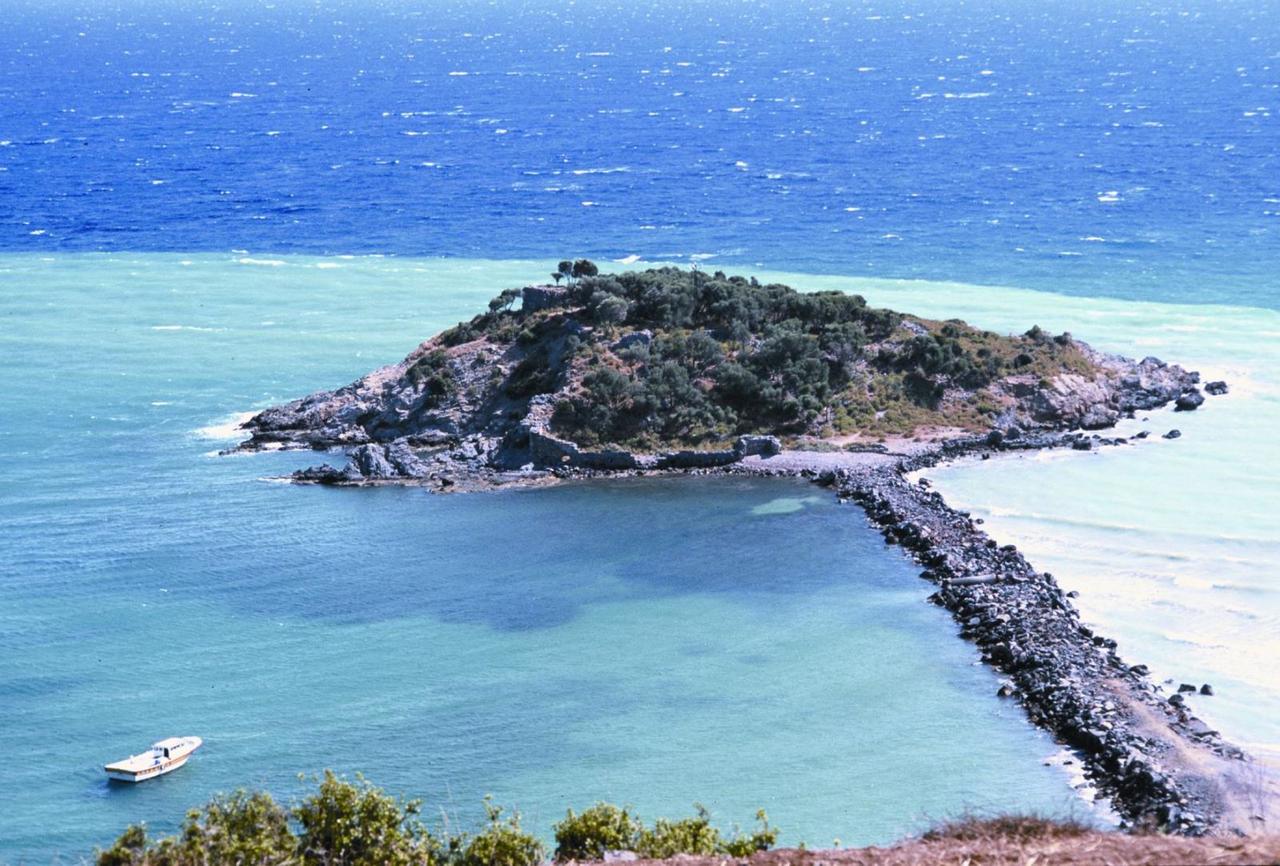
Republic of Türkiye Ministry of Culture and Tourism. "Nagidos Ruins – Mersin." Türkiye Culture Portal. Accessed June 21, 2025. https://www.kulturportali.gov.tr/turkiye/mersin/gezilecekyer/nagidos-nagidussa.
Location | Bozyazı Coast Anamur Mersin Türkiye | ||||||||
|---|---|---|---|---|---|---|---|---|---|
Foundation Period | 5th–4th Century BCE | ||||||||
Founder(s) | Immigrants from Rhodes and Samos | ||||||||
Historical Period | Classical – Hellenistic | ||||||||
Nagidos Ancient City is an ancient city located about 25 km southwest of Anamur district in Mersin province, Türkiye on the southern coast of Bozyazı. The ancient settlement is positioned opposite a small islet called Nagidussa (today known as Bozyazı Island). The area where the city once stood is currently used as a residential zone and has been largely destroyed from an archaeological perspective.
The city became an important settlement center in the 4th century BCE and demonstrated its regional power especially from the 5th century BCE onward through coin minting. This coinage indicates the period when the settlement gained political independence. However, in the 3rd century BCE, it came under the rule of the Seleucids and was merged with the neighboring city of Arsinoe.

Nagidos Ancient City (Türkiye Kültür Portalı)
The city became a significant settlement in the 4th century BCE and demonstrated its regional power through coin minting beginning in the 5th century BCE. This coinage is seen as evidence of the settlement's political independence during that period. However, in the 3rd century BCE, the Seleucids took control of the city and merged it with the neighboring city of Arsinoe.
Nagidos is believed to have been founded by immigrants from the islands of Rhodes and Samos, indicating a connection to Hellenistic colonial settlements. However, there is also evidence suggesting that the site may have been used by local populations dating back to the Late Bronze Age.
Excavations and surface surveys have revealed that the city was surrounded by fortification walls, cisterns, and various architectural remains. Many of these structures now lie beneath modern buildings. Between 1991 and 1994, investigations documented a flat coastal area containing public buildings and what is likely to have been the agora.
Ancient remains have also been found on Nagidussa Island, suggesting that the island may have served as a military garrison or a refuge. Additionally, it is thought to have supported the city’s harbor function.
Nagidos held a strategic position along the east-west maritime trade routes of the Mediterranean. In this context, the city served as a stopover point for goods transported from the Eastern to the Western Mediterranean. Numerous amphora fragments and coin findings in the area indicate that Nagidos functioned as an active port in maritime trade.
In the 4th century BCE, the city acted as an independent city-state and was heavily influenced by Hellenic culture during this time. The city’s coinage features both Hellenic and local symbols, reflecting this cultural interaction. With its incorporation into the Seleucid domain in the 3rd century BCE, Nagidos lost its political independence.
Due to the construction of modern residences over the ancient site, much of the archaeological remains have been destroyed. However, the surviving architectural traces and surface finds still offer limited insight into the city’s layout and historical significance. Excavations began in 1991 and have continued intermittently over the following years.
Mersin University. “NAGIDOS Antik Kent Kazıları.” Official Website of Mersin University. Accessed June 21, 2025. https://mersin.edu.tr/haberler/327428/index.html.
Republic of Türkiye Ministry of Culture and Tourism. "Bozyazı Excavation Report." Accessed June 21, 2025. https://testsite.ktb.gov.tr/Eklenti/9760,10bozyazipdf.pdf?0.
Republic of Türkiye Ministry of Culture and Tourism. "Nagidos Örenyeri - Mersin." Türkiye Culture Portal. Accessed June 21, 2025. https://www.kulturportali.gov.tr/turkiye/mersin/gezilecekyer/nagidos-nagidussa.

Republic of Türkiye Ministry of Culture and Tourism. "Nagidos Ruins – Mersin." Türkiye Culture Portal. Accessed June 21, 2025. https://www.kulturportali.gov.tr/turkiye/mersin/gezilecekyer/nagidos-nagidussa.
Location | Bozyazı Coast Anamur Mersin Türkiye | ||||||||
|---|---|---|---|---|---|---|---|---|---|
Foundation Period | 5th–4th Century BCE | ||||||||
Founder(s) | Immigrants from Rhodes and Samos | ||||||||
Historical Period | Classical – Hellenistic | ||||||||
Henüz Tartışma Girilmemiştir
"Nagidos Ancient City" maddesi için tartışma başlatın
Historical Significance
Foundation and Colonial Character
Archaeological Findings
Economic and Commercial Structure
Political and Cultural Interactions
Current State of the Ruins
Bu madde yapay zeka desteği ile üretilmiştir.