


Bu içerik Türkçe olarak yazılmış olup yapay zeka ile otomatik olarak İngilizceye çevrilmiştir.
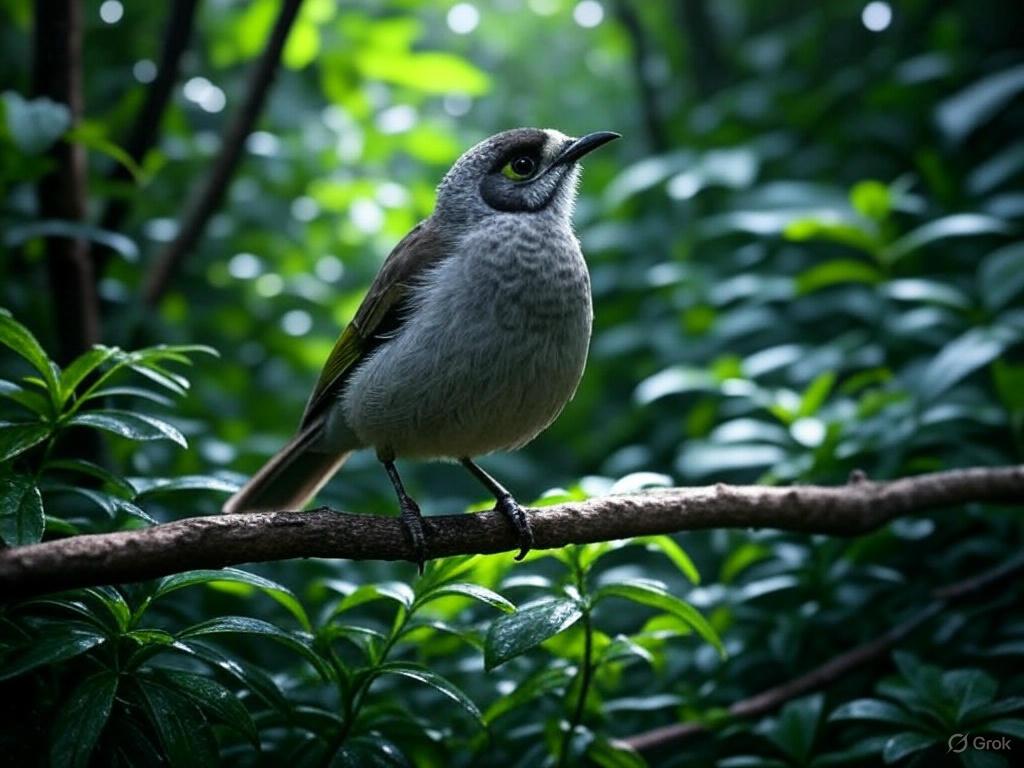
Noisy Scrub-bird (Atrichornis clamosus) is a bird species endemic to western Australia and critically endangered. The species was once thought to have gone extinct in the 1960s but was rediscovered in 1961. This rediscovery marked a crucial turning point for its conservation and survival. However, it remains under significant threat with a very limited population.
Size and Weight: The Noisy Scrub-bird measures approximately 19 to 23 cm in length and weighs between 25 and 58 grams. Like other scrub-bird species, it has short, powerful legs. Its body structure is adapted to life in harsh environments, enabling rapid movement across the ground.
Color and Plumage: Its feathers are predominantly brown and reddish tones. Males typically display a pattern of black, olive green and white on the neck, while females lack this pattern. Their plumage provides effective camouflage, helping them remain hidden among forest floors and dense undergrowth.
Habitat: The Noisy Scrub-bird is found only in the forested and adjacent shrubland areas around Two Peoples Bay in the Albany region of eastern Western Australia. This area provides the dense undergrowth essential for the species’ survival and has few other bird species or predators.
Habitat Selection: The species inhabits dense shrublands and moist forested areas. It shelters in deep shadows between trees and shrubs and forages for food close to the ground in thick undergrowth. These habitats offer protection from predators and concealment.
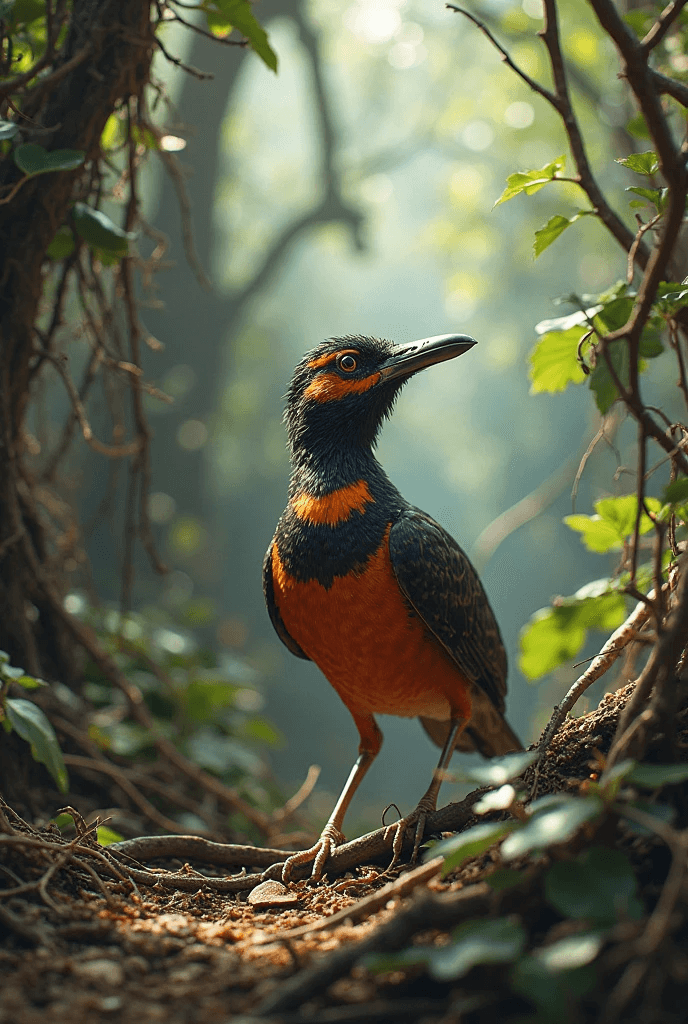
Image of the Noisy Scrub-bird. (Generated by Artificial Intelligence)
Vocalization: One of the most distinctive features of the Noisy Scrub-bird is its vocalization. Males produce loud, high-pitched calls, especially during the breeding season, to attract females and establish territory. These calls serve not only to attract mates but also to defend territory against other males.
Behavior: The species is largely sedentary. It rarely flies and primarily forages on the ground. When fleeing from predators or other threats, it runs swiftly into dense shrubs. Due to limited flight capability, it relies heavily on ground-based movement.
Diet: The Noisy Scrub-bird primarily feeds on insects, spiders and small invertebrates such as ants. It may also consume certain fruits. While foraging on the forest floor within shrublands, it moves actively at ground level, silently navigating between vegetation to capture prey.
Reproductive Behavior: The female builds a nest within dense shrubland, typically placing it about 30 cm above the ground in an area defended by the male. She lays one or two eggs. After mating, the male actively defends the territory to protect the offspring.
Mating: Males announce their territories during the breeding season by producing distinctive calls that demonstrate their dominance. The ability of males to communicate with females through vocalizations and to attract mates is a critical behavior for successful reproduction.
Conservation Status: Classified as Endangered by the IUCN, the Noisy Scrub-bird is also protected by the Australian government. The species faces threats due to its slow reproductive rate and restricted range. Its population can only increase through active conservation efforts.
Threats: The main threats to the species include habitat loss, wildfires, invasive predators (particularly cats and foxes) and low genetic diversity. Habitat degradation significantly reduces the species’ chances of survival.
Conservation Efforts: The Australian government and local conservation groups have implemented several measures to protect the species. These include control of invasive predators, fire management and habitat protection initiatives aimed at increasing population numbers. In addition, monitoring and research programs are underway to enhance the species’ genetic diversity.

Henüz Tartışma Girilmemiştir
"Noisy Scrub-bird (Atrichornis clamosus)" maddesi için tartışma başlatın
Physical Characteristics
Habitat and Distribution
Behavior and Vocalization
Diet
Reproduction
Conservation Status and Threats