

Bu içerik Türkçe olarak yazılmış olup yapay zeka ile otomatik olarak İngilizceye çevrilmiştir.
+2 Daha
Name(s) | North American B-25 Mitchell | ||||||||
|---|---|---|---|---|---|---|---|---|---|
Category | Medium Bomber | ||||||||
Origin(s) | USA (North American Aviation) | ||||||||
Engine(s) | 2 x Wright R-2600-92 Twin Cyclone radial engines | ||||||||
First Flight(s) | 19 August 1940 | ||||||||
Crew | 5-6 | ||||||||
Length(s) | 16.1 m | ||||||||
Wingspan | 20.6 m | ||||||||
Maximum Speed | 443 km/h | ||||||||
Maximum Takeoff Weight | 11700 kg | ||||||||
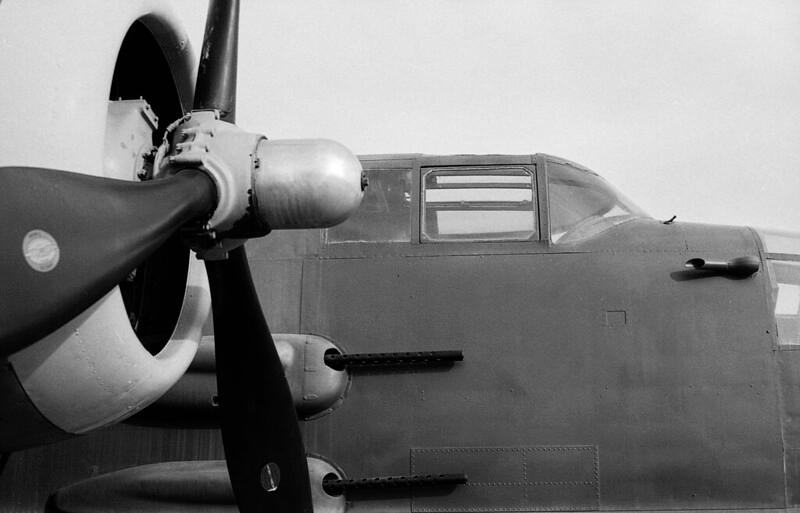
North American B-25 Mitchell is a twin-engine medium bomber named in honor of American aviation pioneer General William "Billy" Mitchell and was used by the Allies throughout World War II. The B-25 earned a reputation as a "versatile" and "reliable" platform due to its wide range of roles, evolving from its initial level bombing mission to becoming a heavily armed ground-attack gunship. Nearly 10,000 (9,816 delivered to the USAAF) B-25s were produced by North American Aviation (NAA) by the end of the war.

North American B-25 Mitchell (Flickr)
The design of the B-25 began in 1939 in response to a U.S. Army Air Forces requirement for a medium bomber capable of carrying a 3,000 lb bomb load, flying at 300 mph, and achieving a range of 2,000 miles. The first prototype flew in August 1940.
B-25 Mitchell Grumpy (Fight to Fly Studio)
The B-25 is renowned for its ruggedness and high power-to-weight ratio, which enabled effective operations at low altitudes and in demanding conditions.

North American B-25 Mitchell (Flickr)
The B-25 saw service on nearly every major theater of war, from the Pacific to the Mediterranean and the China-Burma-India theater.
The B-25’s variants continuously enhanced its strike capabilities:
B-25 Mitchell Medium Bomber (ZenosWarbirds)
Unlike some other medium bombers such as the B-26 Marauder, the B-25 survived postwar due to its durability and ease of operation. After the war, B-25s were modified for training and VIP transport roles under designations such as TB-25L and remained in service with the USAF until the late 1950s. Today, approximately 45 B-25s remain airworthy worldwide and are displayed in aviation museums.
American Airpower Museum. "North American B-25 'Mitchell.'" Accessed October 20, 2025. https://www.americanairpowermuseum.com/north-american-b-25-mitchell/
American Heritage Museum. "Douglas SBD-5 Dauntless." American Heritage Museum. Accessed October 20, 2025. https://www.americanheritagemuseum.org/aircrafts/douglas-sbd-5-dauntless/
DTIC (Defense Technical Information Center). "B-25 Gunships in the Pacific: Lessons in Innovation, Risk, and Alliance." DTIC (Defense Technical Information Center). Accessed October 20, 2025. https://apps.dtic.mil/sti/trecms/pdf/AD1147798.pdf
Fight to Fly Studio. "B-25 Mitchell Grumpy." YouTube. Accessed October 20, 2025. https://www.youtube.com/watch?v=ak3Ajf0BIJ4
Flickr. "Douglas SBD Dauntless fotoğrafı." Accessed October 20, 2025. https://www.flickr.com/photos/falcon_33/52554530514
Hornby Hobbies - Airfix. "B-25 Mitchell operating under desert skies." Accessed October 20, 2025. https://uk.airfix.com/community/blog-and-news/workbench/b-25-mitchell-operating-under-desert-skies
Hurlburt Field. "B-25J Mitchell." Hurlburt Field. Accessed October 20, 2025. https://www.hurlburt.af.mil/About-Us/Fact-Sheets/Fact-Sheets/Article/204591/b-25j-mitchell/
Lone Star Flight Museum. "North American B-25 Mitchell." Accessed October 20, 2025. https://lonestarflight.org/fly/north-american-b-25-mitchell/
National Museum of World War II Aviation. "North American B-25 Mitchell." National Museum of World War II Aviation. Accessed October 20, 2025. https://www.worldwariiaviation.org/aircraft/north-american-b-25-mitchell
National Museum of the United States Air Force. "North American B-25B Mitchell." National Museum of the United States Air Force. Accessed October 20, 2025. https://www.nationalmuseum.af.mil/Visit/Museum-Exhibits/Fact-Sheets/Display/Article/196310/north-american-b-25b-mitchell/
Naval History and Heritage Command. "Doolittle Raid: B-25B 'Mitchell' Bombers." Naval History and Heritage Command. Accessed October 20, 2025. https://www.history.navy.mil/content/history/museums/nmusn/explore/photography/wwii/wwii-pacific/turning-the-japanese-tide/1942-april-18-doolittle-raid-on-japan/b-25b-mitchell-bombers.html
Royal Canadian Air Force. "B-25 North American Mitchell - Historical Aircraft." Royal Canadian Air Force. Accessed October 20, 2025. https://www.canada.ca/en/air-force/services/aircraft/b-25.html
Scribd. "North American B-25 Mitchell." Accessed October 20, 2025. https://www.scribd.com/document/410652147/North-American-B-25-Mitchell
Simple Flying. "Legendary: The Versatility of the North American B-25 Mitchell In WW2." Accessed October 20, 2025. https://simpleflying.com/versatility-north-american-b-25-mitchell-ww2/
The Collings Foundation. "North American B-25 Mitchell." The Collings Foundation. Accessed October 20, 2025. https://www.collingsfoundation.org/aircrafts/north-american-b-25-mitchell/
The National WWII Museum. "North American B-25 Mitchell." The National WWII Museum. Accessed October 20, 2025. https://www.nationalww2museum.org/visit/museum-campus/us-freedom-pavilion/warbirds/north-american-b-25-mitchell
The National WWII Museum. "The Chopping Block: The Fate of Warplanes after WWII." The National WWII Museum. Accessed October 20, 2025. https://www.nationalww2museum.org/war/articles/chopping-block-fate-warplanes-after-wwii
Vaster, Clemens. "Douglas SBD Dauntless." Flickr. Accessed October 20, 2025. https://www.flickr.com/photos/clemensv/9334869595/in/photolist-fdTDvv-2oxZ51A-2o55Xsp-fdTE4x-fe8VSd-fe8TiJ-fe8UwE-fdTCxt-fe8UVq-2rnQ6jW-2oxZkV4-2pvcyxN-2koQCqK-2koUw77-GsFS8g-FbAHj3-2hqHbk8-f58otK-f58kfZ-2o53cvt-qLBBfg-FGabu3-2o53cz6-27qsXGA-2o53cAo-2o55Xom-NDDMKX-2nsLGTK-2rnQ2Pt-2hHSP4e-Ggcu9U-27hiMFm-biHWm6-2n76Fvg-2ik5dPx-2koV83A-dmrNNs-2ecpdWf-Ggcua5-RZCxWH-eUkidX-8bjk6M-2hqHbpb-2ebx8jd-GQMtx2-2ik5dMo-8bjk2F-FYBdx7-fCRv3P-2jHw3W8
Warbirds of Glory. "b-25 design analysis - The Restoration of B-25J 44-30733 Sandbar Mitchell." Warbirds of Glory. Accessed October 20, 2025. https://www.warbirdsofglory.org/design.asp
Warfare History Network. "What Made the B-25 Mitchell Bomber so Legendary." Accessed October 20, 2025. https://warfarehistorynetwork.com/article/what-made-the-b-25-mitchell-bomber-so-legendary/
Wings Aviation Museum. "B25 Mitchell 43-36140 Cockpit." Wings Aviation Museum. Accessed October 20, 2025. https://www.wingsmuseum.co.uk/our-work/aircraft-restoration/b25-mitchell-43-36140/

Name(s) | North American B-25 Mitchell | ||||||||
|---|---|---|---|---|---|---|---|---|---|
Category | Medium Bomber | ||||||||
Origin(s) | USA (North American Aviation) | ||||||||
Engine(s) | 2 x Wright R-2600-92 Twin Cyclone radial engines | ||||||||
First Flight(s) | 19 August 1940 | ||||||||
Crew | 5-6 | ||||||||
Length(s) | 16.1 m | ||||||||
Wingspan | 20.6 m | ||||||||
Maximum Speed | 443 km/h | ||||||||
Maximum Takeoff Weight | 11700 kg | ||||||||
Henüz Tartışma Girilmemiştir
"North American B-25 Mitchell" maddesi için tartışma başlatın
Development and Design Features
Technical Specifications and Powerplant
Operational History and Key Missions
Variants and Armament Evolution
Postwar Legacy