
Bu içerik Türkçe olarak yazılmış olup yapay zeka ile otomatik olarak İngilizceye çevrilmiştir.
+2 Daha
Location | Skopje Left bank of the Vardar River North Macedonia | ||||||||
|---|---|---|---|---|---|---|---|---|---|
Establishment | 1 April 1924 | ||||||||
Number of Works | More than 7,000 | ||||||||
Covered Period | Prehistoric Age (50,000 BCE) – End of the Ottoman Period (early 20th century) | ||||||||
Current Building Opening | 2014 | ||||||||
International Achievement | 7th place in the 2015 European Museum Academy | ||||||||
First Center | Kurşunlu Han (1924–1945) | ||||||||
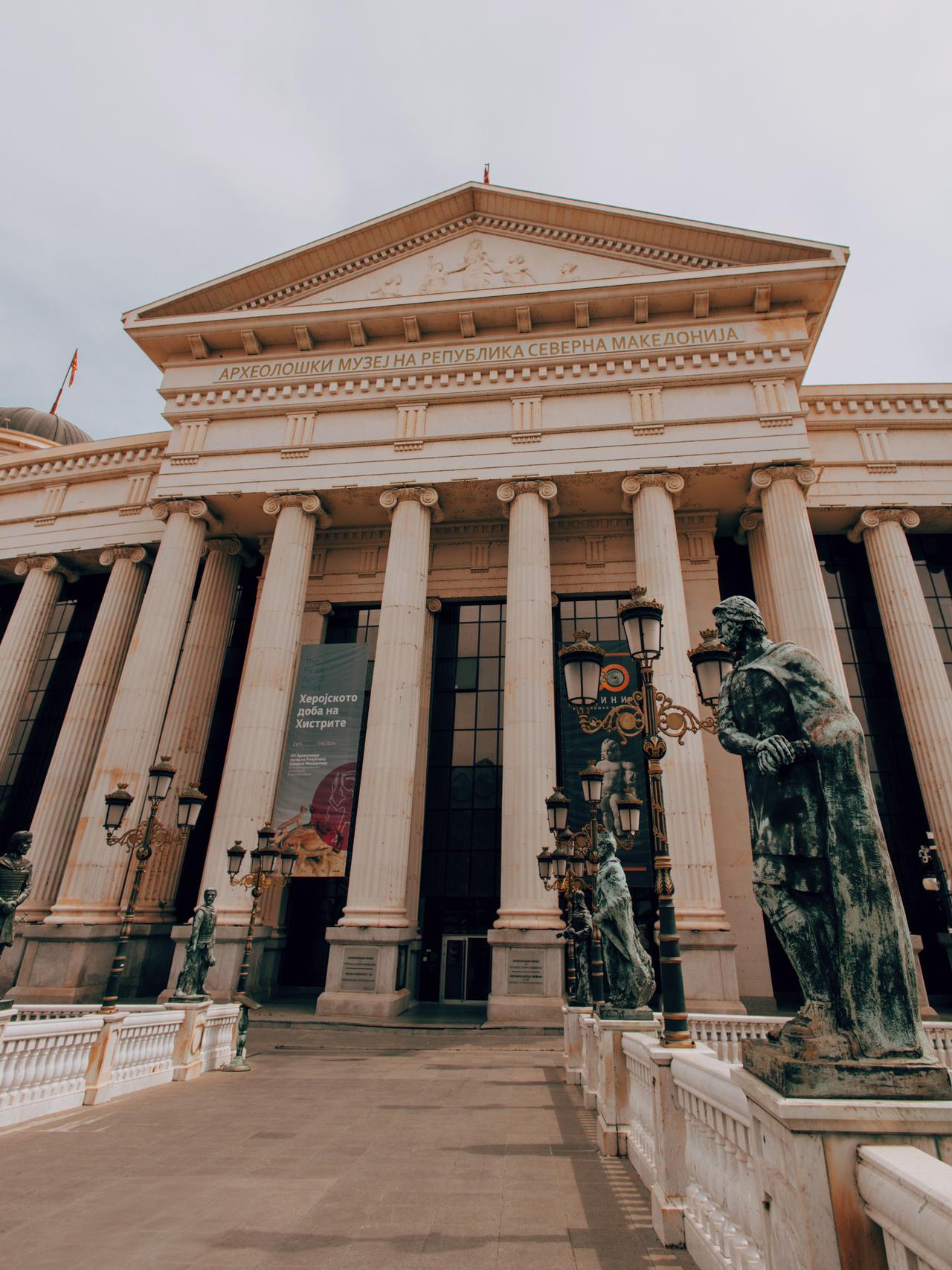
The Archaeological Museum of North Macedonia is the national archaeological museum responsible for researching, preserving, documenting, and exhibiting archaeological cultural heritage from the territory of North Macedonia. Located on the left bank of the Vardar River next to the historic Stone Bridge in the capital Skopje, the museum houses more than 7,000 archaeological artifacts spanning a historical period from the Prehistoric Age to the end of the Ottoman era. The collections are organized into specialized fields including Prehistoric Archaeology, Classical Archaeology, Medieval and Ottoman Archaeology, Numismatics, Anthropology, and the Lapidarium. A significant portion of the museum’s collection has been officially registered as culturally significant assets under legislation dedicated to the protection of North Macedonia’s cultural heritage.
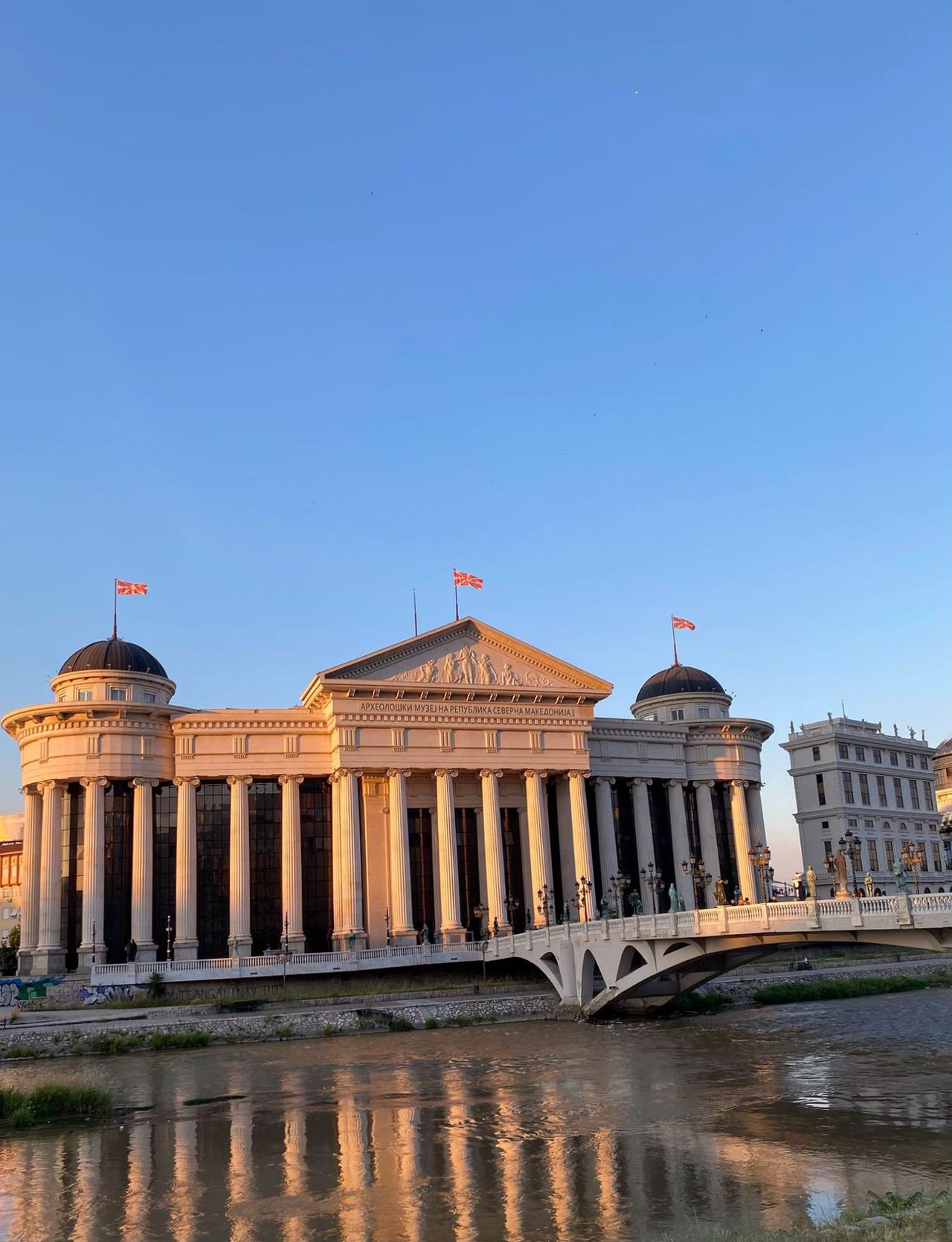
Kuzey Makedonya Arkeoloji Müzesi (Kaynak: İlayda Seray Akkaya)
The institutional foundations of the Archaeological Museum of North Macedonia were laid in 1920 with the establishment of the first archaeological collection within the Faculty of Philosophy in Skopje. The institution formally completed its establishment on 1 April 1924 as the History-Archaeology Museum, headquartered in the Kurshumli Han and encompassing the Museum of the Vardar Banovina and the Collection of Stone Artifacts. Between 1926 and 1934, ancient inscriptions, statues, reliefs, and architectural elements obtained through field surveys, accidental finds, and archaeological excavations were gathered and documented at Kurshumli Han. In the 1930s, these stone artifacts were exhibited in the courtyard of the han. Throughout its historical development, the institution operated under the name “Museum of Southern Serbia” and during the Second World War (1941–1944) continued its activities as the “National Museum of Skopje,” headquartered at Kurshumli Han.【1】
After the Second World War, in 1945, the institution was reorganized into three distinct specialized departments: Archaeology, Ethnography, and Medieval Studies. As part of museum reorganization during the period of the Federal People’s Republic of Yugoslavia, the institution separated from the structure of the National Museum of Skopje and gained the status of an independent national Archaeological Museum. The museum operated from 1945 to 1963 in a former military barracks building located within Skopje Fortress. During this period, in 1949, the collection of stone artifacts was documented and studied by Borka Dragojević-Josifovska following the establishment of the Museum of Macedonian Archaeology; in 1953, excavations were conducted at the ancient city of Stibera in the village of Čepigovo. The first permanent Lapidarium exhibition, prepared by Borka Josifovska in the converted stable section of Kurshumli Han, opened to the public in 1955.【2】
Following damage to the barracks building during the 1963 Skopje earthquake, the museum continued its activities in barracks buildings within Kurshumli Han from 1963 to 1977. Upon the opening of the newly constructed museum complex in 1976, the institution relocated there and carried out its operations at this site until 2014. In 2012, a legal framework was established to formally designate the institution as the “National Institution of the Archaeological Museum of North Macedonia,” affirming its status as the country’s primary archaeological institution. After more than thirty years, the museum was transferred in 2014 to a new building on the left bank of the Vardar River. In 2015, the institution was ranked seventh among European museums in an evaluation by the European Museum Academy.【3】
The main service building of the Archaeological Museum of North Macedonia is located in the city center of the capital Skopje, on the left bank of the Vardar River, immediately adjacent to the historic Stone Bridge (Kameni Most), at the address of Key Dimitar Vlahov. This monumental museum structure, situated along the riverbank, consists of three main exhibition levels designed to guide visitors along a chronological and thematic axis. On an exhibition area exceeding one thousand square meters, thousands of original archaeological cultural artifacts spanning from the Prehistoric Age to the end of the Ottoman period are displayed.
The ground floor (Prizemje) houses the museum entrance, information desk, museum shop, elevators, and social areas, as well as three primary exhibition units. This level includes the Anthropology exhibition area displaying anthropological finds, the Numismatics cabinet exhibiting rare metal coins, and the on-site Collection of Stone Artifacts (Lapidarium). These sections accessible from the ground floor provide visitors with their first comprehensive overview of the museum’s thematic and interdisciplinary collections.
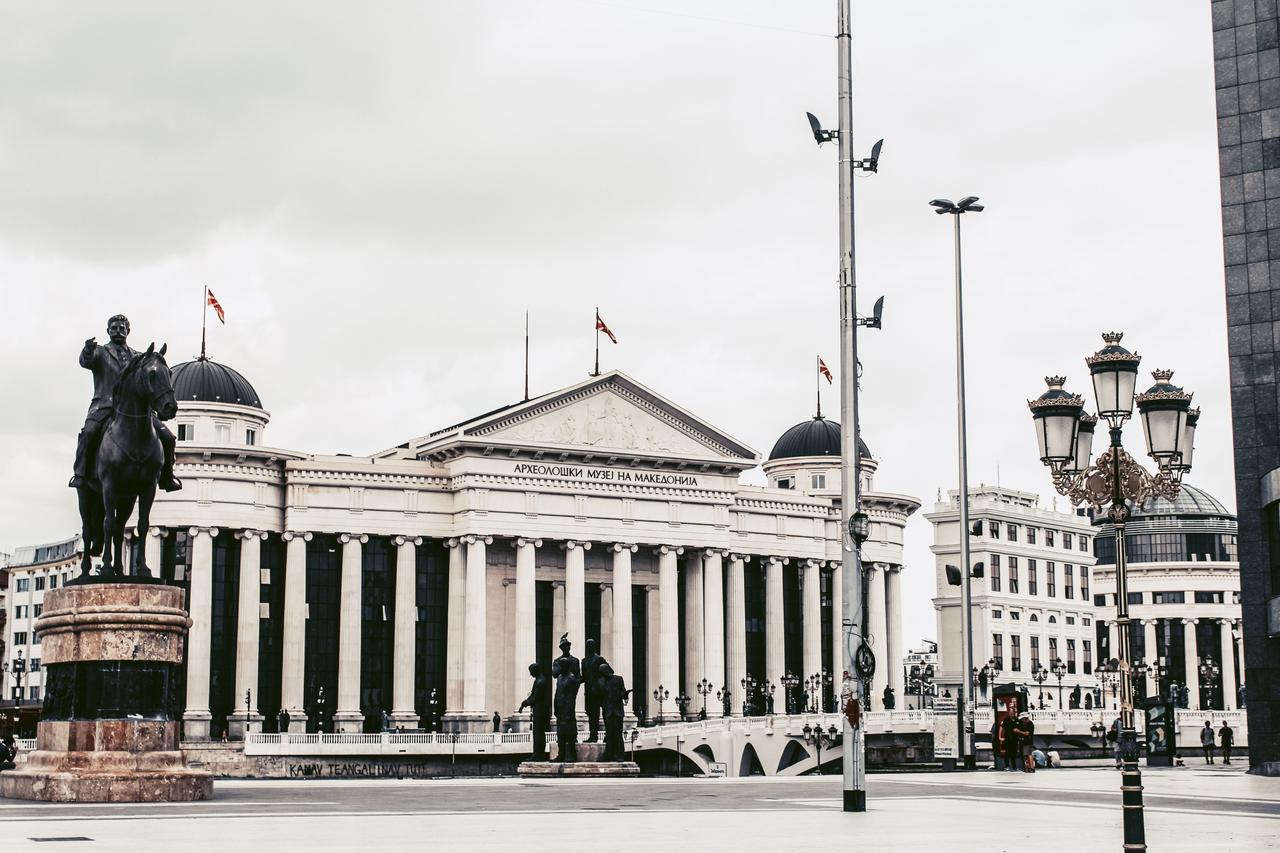
Kuzey Makedonya Arkeoloji Müzesi (Melike A.)
The first floor (Prv kat) is divided into exhibition halls arranged chronologically, covering a broad historical range from the Stone Ages to the Classical and Ottoman periods. On this floor, prehistoric collections from the Paleolithic (dating back to 50,000 BCE), Neolithic, Chalcolithic, Bronze, and Iron Ages are exhibited. Continuing along the same exhibition axis are halls dedicated to the Archaic, Classical, Hellenistic, and Roman periods, as well as an Ottoman period hall covering the era from the 15th century to the early 20th century.【4】
The second floor (Vtor kat) is dedicated to exhibitions on Late Antiquity and Medieval archaeology. This level features exhibition units representing the Late Antiquity period (4th to 6th centuries), the Early Medieval period (5th to 10th centuries), and the High and Late Medieval periods (11th to 15th centuries). Vertical access between floors is provided by elevators and staircases, and the spatial design meets technical standards ensuring accessibility for visitors with disabilities.【5】
Kurshumli Han, one of the historic Ottoman architectural monuments in Skopje, has functioned since 1924 as the primary space for collecting, documenting, and exhibiting stone artifacts. Ancient inscriptions in Greek and Latin, stone statues, reliefs, and architectural elements recovered from surface surveys and archaeological excavations conducted between 1926 and 1934 were gathered in this building and displayed in its courtyard during the 1930s. The collection of stone artifacts preserved through wartime and institutional transitions was scientifically examined and cataloged by Borka Dragojević-Josifovska following the establishment of the Museum of Macedonian Archaeology in 1949.【6】
The first permanent Lapidarium exhibition, developed by Borka Josifovska as curator, opened to the public in 1955 in the converted stable section of Kurshumli Han, following the discovery of the Gymnasium and the Temple of Tyche during excavations at the ancient city of Stibera (Čepigovo). The stable space was divided into sections according to typologies of special stone monuments, inscriptions, and reliefs, and dedicated exhibition areas were created for major ancient cities such as Scupi, Stobi, Styberra, and Heraclea Lyncestis. Although the han suffered serious damage in the 1963 earthquake and the Lapidarium section remained in poor condition, it continued to house the largest collection of stone artifacts in the Balkans. In the 1982 permanent exhibition reorganization and in a new Lapidarium exhibition opened in 2001 under the curatorship of Dr. Slavica Babamova in the ground floor cells and courtyard of the han, approximately 140 stone artifacts were displayed according to chronological and micro-regional criteria.【7】
Following the relocation of the main museum building to the Vardar River bank in 2014, the collection of stone artifacts at Kurshumli Han became an integral part of the Archaeological Museum of North Macedonia’s Lapidarium. In a comprehensive project conducted in 2017 and 2018 in the rear courtyard of the Kurshumli Han stable, the inventory of stone objects collected over nearly a century was updated, their physical condition was assessed, and conservation-restoration needs were identified. The ultimate goal of this multi-year project is to re-establish a modern and permanent Lapidarium exhibition space within the Kurshumli Han stable, presenting stone monuments to both specialists and visitors.【8】
The administrative and scientific leadership of the Archaeological Museum of North Macedonia is headed by the Director, a position currently held by Dr. Slavica Babamova, who completed her doctorate in history at the National Institute of History at “Saints Cyril and Methodius” University in Skopje in 2026. Director Babamova specializes in epigraphy, ancient stone sculptures, prosopography, and the history of ancient Macedonia and has managed field research and stone artifact conservation projects at archaeological sites including Golemo Gradishte, Stobi, Isar-Marvinci, and Skopje Fortress. The governing body of the institution, the Board of Directors, convenes under the chairmanship of Lenche Jovanova; its members include Dr. Marina Onchevska Todorovska, Mila Shurbanoska, and Irena Kolishtrkoska Nasteva.【9】
The museum’s administrative operations are managed by the General Administrative Affairs, Legal Affairs, and Human Resources Sector, with Natasha Skenderska serving as advisor for international cooperation. The museum’s external communication and public relations activities are directed by Lidija Ilkovska-Janusheva within the Marketing and Public Relations unit. Scientific and technical work within the museum is carried out by six main specialized departments: Prehistoric Archaeology, Classical Archaeology, Medieval and Ottoman Archaeology, Interdisciplinary Research, Conservation and Restoration, and Museum Documentation.【10】
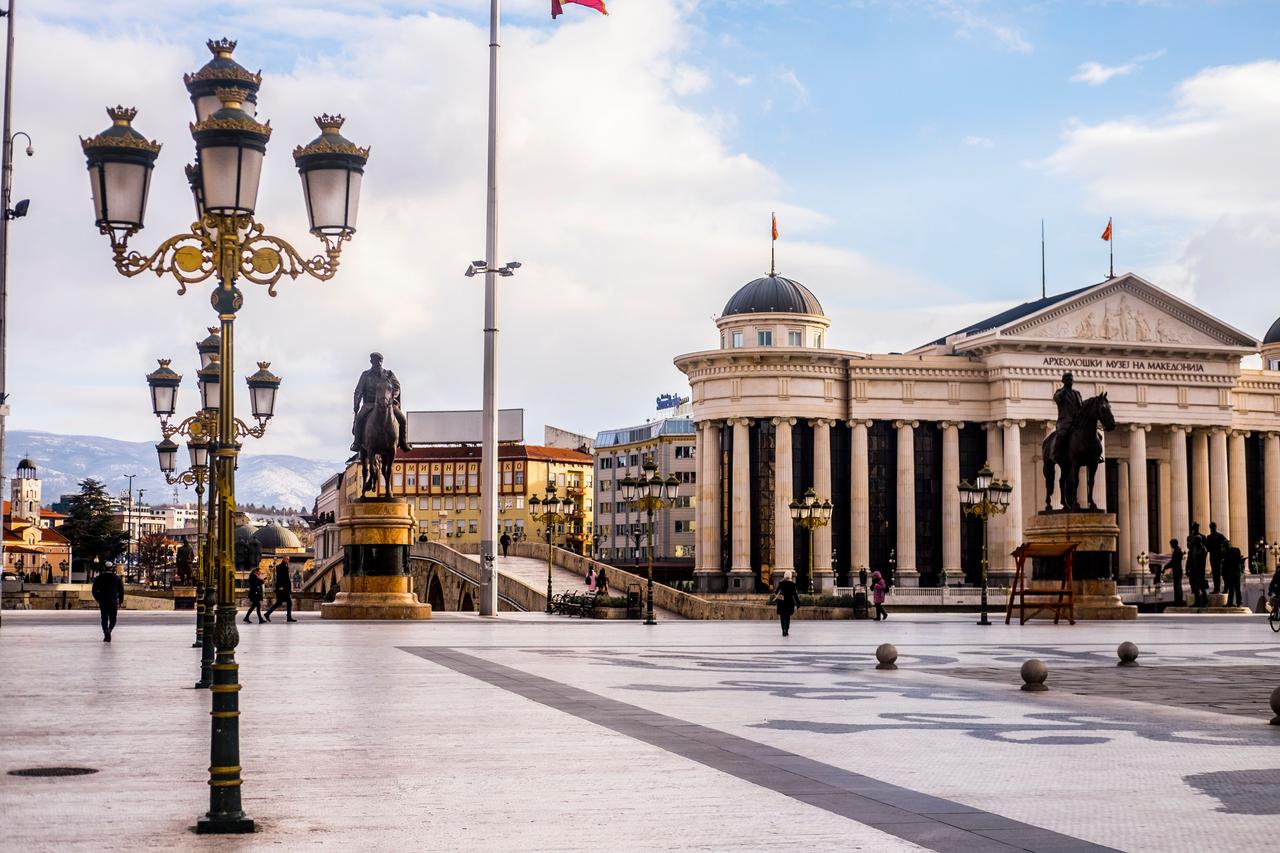
Kuzey Makedonya Arkeoloji Müzesi (Tamas Marton)
Within these specialized departments, curatorial advisors, senior curators, and curators specialize in Paleolithic, Neolithic, Bronze Age, and Iron Age periods, as well as the Archaic, Classical, Hellenistic, Roman, and Late Antiquity periods, and the Medieval and Ottoman eras. Additionally, epigraphers, numismatists, physical anthropologists, archaeozoologists, specialist restorers, and chemistry technicians are employed within the interdisciplinary research and conservation units, and field projects are conducted in collaboration with external research archaeologists.【11】
The Prehistoric Archaeology Department is a specialized unit encompassing five integrated collections that cover the longest chronological period in human history. The artifacts within this department directly reflect the 7,000-year cultural development and qualitative changes in human settlement patterns in North Macedonia from the Neolithic to the Iron Age. The earliest material remains of human presence are preserved in the Paleolithic Collection, dated chronologically to the Late Middle Paleolithic period (circa 50,000 BCE). These earliest tools, manufactured from various raw materials, document the presence of early human settlements in the region.【12】
Neolithic ceramics, occupying a special place among material culture remains, demonstrate the production technologies and aesthetic sensibilities of the developed Neolithic period. The belief systems and abstract thought of Neolithic and Chalcolithic (Eneolithic) populations are exhibited through anthropomorphic and zoomorphic cult altars, clay cult objects, and human and animal figurines. House-shaped cult altars and “Great Mother” idols recovered from Neolithic settlements such as Tumba Madzari are key archaeological elements defining the religious rituals of the period. Finds from the Bronze Age Collection (circa 2nd millennium BCE) reveal transformations in social structures and raw material usage in the region.【13】
Within the department’s scientific research, archaeological remains associated with the Paeonian (Paionia) communities hold particular significance. Within the Iron Age cultural sphere, this group is distinguished by a unique category of jewelry, votive objects, and metal artifacts known as “Macedonian-Paeonian bronzes.” These bronze objects, characterized by distinctive formal features, document the technical level of mining and craftsmanship in the region during the Iron Age. The department’s staff includes senior curators and archaeologists specializing in Paleolithic, Neolithic, Bronze Age, and Iron Age studies.【14】
The Classical Archaeology Department collects, documents, scientifically examines, and exhibits archaeological cultural heritage from the territory of North Macedonia spanning the broad historical period from the Classical Period (mid-5th century BCE) to the end of Antiquity (6th century CE). This historical era encompasses the region’s integration processes with the Mediterranean cultural sphere, situated at the intersection of Eastern and Western civilizations. Accordingly, the department’s collections include thousands of artifacts representing the material culture of the Archaic, Hellenistic, Roman, and Late Antique periods.【15】
The military and political expansion under King Alexander III of Macedon (Alexander the Great) initiated a significant transformation in urbanization and artistic concepts in the region. In the subsequent historical period, the area served as a strategic transit route between the eastern and western provinces of the Roman Empire, facilitating the development of Roman urban administration, architecture, and trade networks. With the advent of Early Christianity, a new phase emerged in religious architecture and the production of religious objects, forming the cultural foundation transmitted into the Medieval period. The artifacts within this department document these civilizational transitions and collective memory through concrete evidence.【16】
Marble statues, votive stelae, ceramic vessels, glass artifacts, bronze objects, and jewelry displayed in the Classical Archaeology collections illustrate the technological sophistication of the period. The research and exhibition units under this department are divided into chronological and thematic specializations: Archaic Period, Classical Period, Hellenistic Period, Roman Period, and Late Antiquity. Each historical sub-period is managed by qualified curators and specialist archaeologists.
The Medieval and Ottoman Archaeology Department examines the social, political, and cultural development of human communities from the end of Late Antiquity to the early 20th century. This period, marked by more rapid social transformations than previous eras, corresponds to a dynamic historical phase characterized by frequent changes in political dominance, religious institutions, and administrative structures in the region. The department preserves both material and intangible cultural heritage by analyzing archaeological excavation finds alongside written documents.【17】
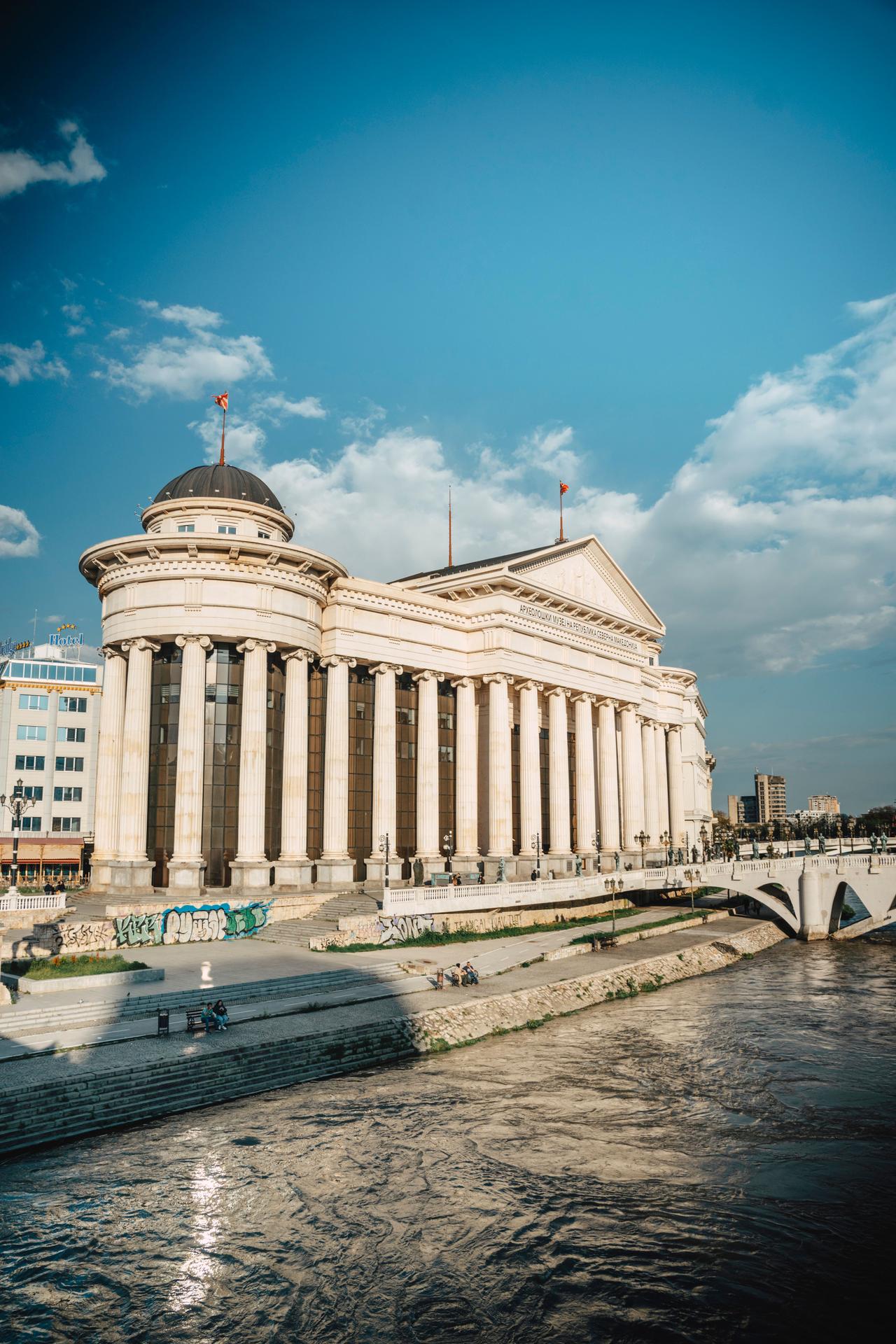
Kuzey Makedonya Arkeoloji Müzesi (Musa Ortaç)
The department’s chronological and thematic sub-specializations are divided into five main phases: Early Byzantine, Early Medieval, Mature Byzantine, Late Medieval, and Ottoman Period. The Early Medieval Collection (5th to 10th centuries) documents migration movements into the region and the development of early religious architecture. The High and Late Medieval Collection (11th to 15th centuries) includes remains of religious and secular architecture, ceramics, metal jewelry, and everyday objects from the Byzantine and feudal periods.【18】
The Ottoman Period Collection (15th century to early 20th century) consists of materials representing the Ottoman administrative structure, urban settlement patterns, trade networks, and socio-cultural life in the region. Exhibits from this period include everyday objects, ceramic productions, metal artifacts, and religious and secular architectural elements. The department employs curators specializing in Medieval archaeology, Early Medieval studies, the Ottoman period, and the 19th–20th centuries.【19】
The Interdisciplinary Research Department is a specialized unit responsible for examining, documenting, and storing objects obtained from archaeological excavations and surface surveys using specialized scientific methodologies, laboratory analyses, and interdisciplinary techniques. The department’s scope covers an exceptionally broad chronological range from the Prehistoric Age to the end of the Medieval Period and comprises four main sub-collections: Epigraphy and Stone Sculpture, Numismatics, Anthropology, and Archaeozoology.【20】
The Epigraphy and Stone Sculpture Collection includes ancient inscriptions in Greek and Latin, funerary stelae, votive inscriptions, monumental stone statues, reliefs, and architectural elements. Epigraphic analyses based on these inscriptions investigate administrative structures, prosopography, religious cults, and provincial history of the ancient period. The Numismatics Cabinet (Ancient and Medieval Numismatics) preserves and catalogs coinage ranging from prehistoric barter objects to coins issued by ancient Greek, Roman, Byzantine, and Medieval states.【21】
The Anthropology Collection examines human skeletal remains and paleopathological materials from archaeological sites using physical anthropology methodologies. These analyses determine the age, sex, diseases, dietary habits, and life expectancy of ancient populations. The Archaeozoology Collection subjects animal bones and organic remains recovered from excavations to species identification, thereby documenting the economy, animal husbandry practices, and environmental conditions of the period. The department employs specialist epigraphers, numismatists, physical anthropologists, and archaeozoologists in permanent research positions.【22】
The Conservation and Restoration Department is the technical and scientific unit responsible for preserving the physical and chemical integrity of movable archaeological cultural heritage within the Archaeological Museum of North Macedonia and other cultural institutions nationwide. In laboratory-based conservation and restoration procedures, objects made of metal, ceramic, glass, and stone that have deteriorated due to prolonged subterranean burial are stabilized and their original structures preserved. Intervention processes are carried out in accordance with international conservation ethics and scientific standards.【23】
The department’s technical staff includes restorers-conservators specialized in fine arts and chemistry technicians. Secondary functions of the laboratory include producing scientific replicas and exhibition models of high-quality artifacts from the museum’s collection. Additionally, the institution actively exchanges experience and knowledge with national and international museum laboratories, conservation centers, and institutes in the fields of restoration, conservation, and material analysis.【24】
The Museum Documentation Department is the unit responsible for maintaining legal, administrative, and scientific inventories of all archaeological acquisitions, scientific projects, and institutional activities of the Archaeological Museum of North Macedonia. The department’s core documentation archive includes the Accessions Register, Book for Inventory of Museum Objects, Deaccessions Register, Book for Exhibitions, Index Cards, and Catalog Records.【25】
In addition to primary documentation, the department maintains storage records for objects not owned by the museum but temporarily held, as well as newspaper and periodical archives, and records of promotional and institutional events. Furthermore, the department archives excavation reports, site drawings, photographic collections, technical maps, and written notes regarding the archaeological context of artifacts. The department is managed by the Head of Museum Documentation.【26】
Golemo Gradishte, located near the village of Konjuh close to Kratovo, is a fortified Late Antique settlement constructed between the late 5th century BCE and early 6th century CE within the Roman province of Dardania. The settlement, covering 17 hectares, consists of a high acropolis surrounded by the Kriva River, a broad terrace on the northern slope, and a narrow area on the southern slope. It constitutes the largest and most extensively researched 6th-century settlement in Northeastern Macedonia. Archaeological research conducted on the acropolis between 1998 and 2004 uncovered city gates, streets, staircases, residential buildings constructed on foundations carved into the bedrock, public buildings, and a large water reservoir. Areas previously identified as monastic cells on the southwestern cliffs of the hill are also included in the research zone.【27】
Systematic excavations on the northern terrace of Golemo Gradishte since 2005 have revealed two large residential complexes. In addition to a multi-functional building with storage rooms and workshops surrounding an inner courtyard, an elite residential complex featuring a colonnaded courtyard, kitchen area, and large rooms has been identified. Between these two residential structures, a monumental basilica measuring 35 by 15 meters, with an eastern apse and a baptistery (piscina), has been uncovered. Archaeological research at Golemo Gradishte has been conducted since 1998 as an international research project in collaboration between the Archaeological Museum of North Macedonia (formerly the Archaeology Department of the National Museum of Macedonia) and Gettysburg College in Pennsylvania, United States.【28】

Kuzey Makedonya Arkeoloji Müzesi (Reyhan Alioğlu)
Systematic excavations at the ancient city of Stibera near the village of Čepigovo were initiated in 1953 under the direction of Dushanka Vuchkovich-Todorovikj. The 70th anniversary of archaeological activities at the Stibera site, where the Gymnasium and the Temple of the goddess Tyche were discovered, was commemorated in 2023.【29】 The museum’s field and research network also includes the prehistoric settlement of Tumba Madzari and the archaeological site of Arheo Park Brazda.
Specialists and management of the Archaeological Museum of North Macedonia conduct archaeological surface surveys and conservation projects at strategic ancient cities and regions throughout the country. In this context, surface surveys have been carried out in the Tikveš and Bregalnica regions, and excavation projects have been conducted at the archaeological sites of Stobi, Isar-Marvinci, and Skopje Fortress. Conservation projects aimed at in-situ preservation of stone artifacts, such as the Roman thermal spa (sanatorium) at Bansko near Strumica, are also managed by the institution’s specialists.【30】
The Archaeological Museum of North Macedonia features a permanent exhibition concept encompassing more than 7,000 original archaeological cultural artifacts spanning from the Prehistoric Age to the end of the Ottoman period. On an exhibition area exceeding one thousand square meters, rare artifacts documenting the material and spiritual development of the region are presented chronologically. In addition to the permanent exhibition, the institution organizes special and temporary exhibitions dedicated to specific archaeological sites and commemorative anniversaries. In this context, the jubilee exhibition “Trebenishte 1918–2018” was held from March to August 2019. Additionally, on 25 May 2023, a special exhibition titled “Stibera – 70 Years of Archaeological Excavations” was opened to commemorate the 70th anniversary of excavations at the ancient city of Stibera. The interpretation of the exhibited collections is supported by expert museum guided tours included in admission tickets for individual and group visits.
In line with the museum’s educational and social accessibility policies, educational corners within the museum building and practical, creative workshops are conducted at the Tumba Madzari Neolithic village site.【31】
The museum implements cultural heritage projects for youth under the European Heritage Days initiative, jointly organized by the Council of Europe and the European Union, and the international initiative “Young European Heritage Makers.” Under this framework, young participants engage with archaeological artifacts from the museum’s collections using storytelling methods to develop awareness of cultural heritage.
The Archaeological Museum of North Macedonia is open to visitors six days a week, from 10:00 to 18:00, except on Mondays. Ticket sales at the museum entrance are available until 17:00. Admission ticket prices for the permanent exhibition are categorized separately for citizens of North Macedonia and foreign visitors.
The museum building is equipped with architectural infrastructure and elevator systems that ensure accessibility for visitors with physical disabilities and permits the entry of guide/service dogs. The institution collaborates with civil society organizations to provide tailored activities for individuals with autism spectrum disorder, ADHD, physical, intellectual, hearing, and visual impairments, and offers tactile images and relief artworks for visually impaired visitors.【32】
A., Melike. “Stunning view of Skopje's archaeological museum with statues and lamp posts.” Pexels. Accessed September 21, 2026.https://www.pexels.com/photo/white-concrete-building-under-white-sky-7378292/
Alioğlu, Reyhan. “Majestic neoclassical architecture featuring columns at the Skopje Museum in North Macedonia.” Pexels. Accessed September 21, 2026.https://www.pexels.com/photo/archaeological-museum-of-macedonia-from-the-bridge-of-civilizations-17154049/
Archaeological Museum of the Republic of North Macedonia. "Archaeological Museum of the Republic of North Macedonia." Accessed September 21, 2026.https://amm.org.mk/en/archaeologicalmuseum-of-the-republic-of-north-macedonia/
Archaeological Museum of the Republic of North Macedonia. "Archaeological Sites." Accessed September 21, 2026.https://amm.org.mk/en/archaeological-sites/
Archaeological Museum of the Republic of North Macedonia. “About Us.” Accessed September 21, 2026.https://amm.org.mk/en/about-archaeological-museum-of-the-republic-of-north-macedonia/
Archaeological Museum of the Republic of North Macedonia. “Department of Antiquity.” Accessed September 21, 2026.https://amm.org.mk/en/department-of-antiquity/
Archaeological Museum of the Republic of North Macedonia. “Department of Conservation and Restoration.” Accessed September 21, 2026.
Archaeological Museum of the Republic of North Macedonia. “Department of Interdisciplinary Studies.” Accessed September 21, 2026.
Archaeological Museum of the Republic of North Macedonia. “Department of Medieval Archaeology and Ottoman Period.” Accessed September 21, 2026.https://amm.org.mk/en/department-of-medieval-archaeology-and-ottoman-period/
Archaeological Museum of the Republic of North Macedonia. “Department of Museum Documentation.” Accessed September 21, 2026.
Archaeological Museum of the Republic of North Macedonia. “Department of Prehistoric archaeology.” Accessed September 21, 2026.
Archaeological Museum of the Republic of North Macedonia. “Golemo Gradishte, Konjuh.” Accessed September 21, 2026.https://amm.org.mk/en/golemo-gradishte-konjuh/
Archaeological Museum of the Republic of North Macedonia. “Kurshumli An.” Accessed September 21, 2026.https://amm.org.mk/en/kurshumli-han/
Archaeological Museum of the Republic of North Macedonia. “Plan your visit.” Accessed September 21, 2026.https://amm.org.mk/en/plan-your-visit/#plan
Bilgiç, Emre. “Grand architecture of the Archaeological Museum in North Macedonia.” Pexels. Accessed September 21, 2026.
European Heritage Days. "Inspired by Archaeological Museum of Republic of North Macedonia." 2019. Accessed September 21, 2026.https://www.europeanheritagedays.com/European-Heritage-Makers-Week/4a8d1/Inspired-by-Archaeological-Museum-of-Republic-of-North-Macedonia
Macedonian Tourism Board. “Archaeological Museum of Republic of North Macedonia.” Accessed September 21, 2026.https://mtb.org.mk/business/archaeological-museum-of-republic-of-north-macedonia/
Marton, Tamas. “City square with the Archaeological Museum, statues, and street lamps in Skopje, North Macedonia.” Pexels. Accessed September 21, 2026.
North Macedonia Timeless. “The Archaeological Museum of Republic of North Macedonia.” Accessed September 21, 2026.
Ortaç, Musa. “Stunning view of neoclassical Skopje architecture by the river on a sunny day.” Pexels. Accessed September 21, 2026.https://www.pexels.com/photo/neoclassical-architecture-in-skopje-cityscape-31658349/
[1]
Archaeological Museum of the Republic of North Macedonia, “About Archaeological Museum of the Republic of North Macedonia,” son erişim: 21 Eylül 2026. https://amm.org.mk/en/about-archaeological-museum-of-the-republic-of-north-macedonia/
[2]
Archaeological Museum of the Republic of North Macedonia, “About Archaeological Museum of the Republic of North Macedonia,”
[3]
Archaeological Museum of the Republic of North Macedonia, “About Archaeological Museum of the Republic of North Macedonia,”
[4]
Archaeological Museum of the Republic of North Macedonia, “Plan your visit,” son erişim: 21 Eylül 2026. https://amm.org.mk/en/plan-your-visit/#plan
[5]
Archaeological Museum of the Republic of North Macedonia, “Plan your visit,”
[6]
Archaeological Museum of the Republic of North Macedonia, “Kurshumli An,” son erişim: 21 Eylül 2026. https://amm.org.mk/en/kurshumli-han/
[7]
Archaeological Museum of the Republic of North Macedonia, “Kurshumli An,”
[8]
Archaeological Museum of the Republic of North Macedonia, “Kurshumli An,”
[9]
Archaeological Museum of the Republic of North Macedonia, “About Archaeological Museum of the Republic of North Macedonia,”
[10]
Archaeological Museum of the Republic of North Macedonia, “About Archaeological Museum of the Republic of North Macedonia,”
[11]
Archaeological Museum of the Republic of North Macedonia, “About Archaeological Museum of the Republic of North Macedonia,”
[12]
Archaeological Museum of the Republic of North Macedonia, “Department of Prehistoric archaeology,” son erişim: 21 Eylül 2026. https://amm.org.mk/en/department-of-prehistoric-archaeology/
[13]
Archaeological Museum of the Republic of North Macedonia, “Department of Prehistoric archaeology,”
[14]
Archaeological Museum of the Republic of North Macedonia, “Department of Prehistoric archaeology,”
[15]
Archaeological Museum of the Republic of North Macedonia, “Department of Antiquity,” son erişim: 21 Eylül 2026. https://amm.org.mk/en/department-of-antiquity/
[16]
Archaeological Museum of the Republic of North Macedonia, “Department of Antiquity,”
[17]
Archaeological Museum of the Republic of North Macedonia, “Department of Medieval Archaeology and Ottoman Period,” son erişim: 21 Eylül 2026. https://amm.org.mk/en/department-of-medieval-archaeology-and-ottoman-period/
[18]
Archaeological Museum of the Republic of North Macedonia, “Department of Medieval Archaeology and Ottoman Period,”
[19]
Archaeological Museum of the Republic of North Macedonia, “Department of Medieval Archaeology and Ottoman Period,”
[20]
Archaeological Museum of the Republic of North Macedonia, “Department of Interdisciplinary Studies,” son erişim: 21 Eylül 2026. https://amm.org.mk/en/department-of-interdisciplinary-studies/
[21]
Archaeological Museum of the Republic of North Macedonia, “Department of Interdisciplinary Studies,”
[22]
Archaeological Museum of the Republic of North Macedonia, “Department of Interdisciplinary Studies,”
[23]
Archaeological Museum of the Republic of North Macedonia, “Department of Conservation and Restoration,” son erişim: 21 Eylül 2026. https://amm.org.mk/en/department-of-conservation-and-restoration/
[24]
Archaeological Museum of the Republic of North Macedonia, “Department of Conservation and Restoration,”
[25]
Archaeological Museum of the Republic of North Macedonia, “Department of Museum Documentation,” son erişim: 21 Eylül 2026. https://amm.org.mk/en/department-of-museum-documentation/
[26]
Archaeological Museum of the Republic of North Macedonia, “Department of Museum Documentation,”
[27]
Archaeological Museum of the Republic of North Macedonia, “Golemo Gradishte, Konjuh,” son erişim: 21 Eylül 2026. https://amm.org.mk/en/golemo-gradishte-konjuh/
[28]
Archaeological Museum of the Republic of North Macedonia, “Golemo Gradishte, Konjuh,”
[29]
Archaeological Museum of the Republic of North Macedonia. “Kurshumli An.”
[30]
Archaeological Museum of the Republic of North Macedonia. “Archaeological Museum of the Republic of North Macedonia.”
[31]
Archaeological Museum of the Republic of North Macedonia. “Plan your visit.”
[32]
Archaeological Museum of the Republic of North Macedonia. “Plan your visit.”

Location | Skopje Left bank of the Vardar River North Macedonia | ||||||||
|---|---|---|---|---|---|---|---|---|---|
Establishment | 1 April 1924 | ||||||||
Number of Works | More than 7,000 | ||||||||
Covered Period | Prehistoric Age (50,000 BCE) – End of the Ottoman Period (early 20th century) | ||||||||
Current Building Opening | 2014 | ||||||||
International Achievement | 7th place in the 2015 European Museum Academy | ||||||||
First Center | Kurşunlu Han (1924–1945) | ||||||||
Henüz Tartışma Girilmemiştir
"North Macedonia Archaeological Museum" maddesi için tartışma başlatın
History and Institutional Development
Service Buildings, Spaces, and the Lapidarium
Main Museum Building on the Vardar River Bank
Kurshumli Han and the Collection of Stone Artifacts
Institutional Structure and Management
Museum Departments and Collections
Prehistoric Archaeology Department
Classical Archaeology Department
Medieval and Ottoman Archaeology Department
Interdisciplinary Research Department (Epigraphy, Numismatics, Anthropology, Archaeozoology)
Conservation and Restoration Department
Museum Documentation Department
Field Research and Archaeological Excavation Projects
Exhibitions and Educational Activities
Visitor Services and Accessibility