

 Son Eklenen:
Bu içerik Türkçe olarak yazılmış olup yapay zeka ile otomatik olarak İngilizceye çevrilmiştir.
Pakistan’s Airstrikes on Afghanistan are cross-border air operations conducted by the Pakistani Armed Forces against eastern and southeastern regions of Afghanistan on 22 February 2026. The strikes targeted Afghanistan’s Nangarhar and Paktika provinces.
The strikes occurred following a ceasefire agreed upon after border clashes between the two countries in October 2025. The Afghan Ministry of Defense characterized the attacks as “a clear violation of national sovereignty international law principles of good neighborliness and Islamic values” and stated that a “proportionate and appropriate response” would be delivered.
Situation in the region after Pakistan’s airstrikes on Nangarhar and Paktika provinces of Afghanistan 22 February 2026 - (Associated Press)
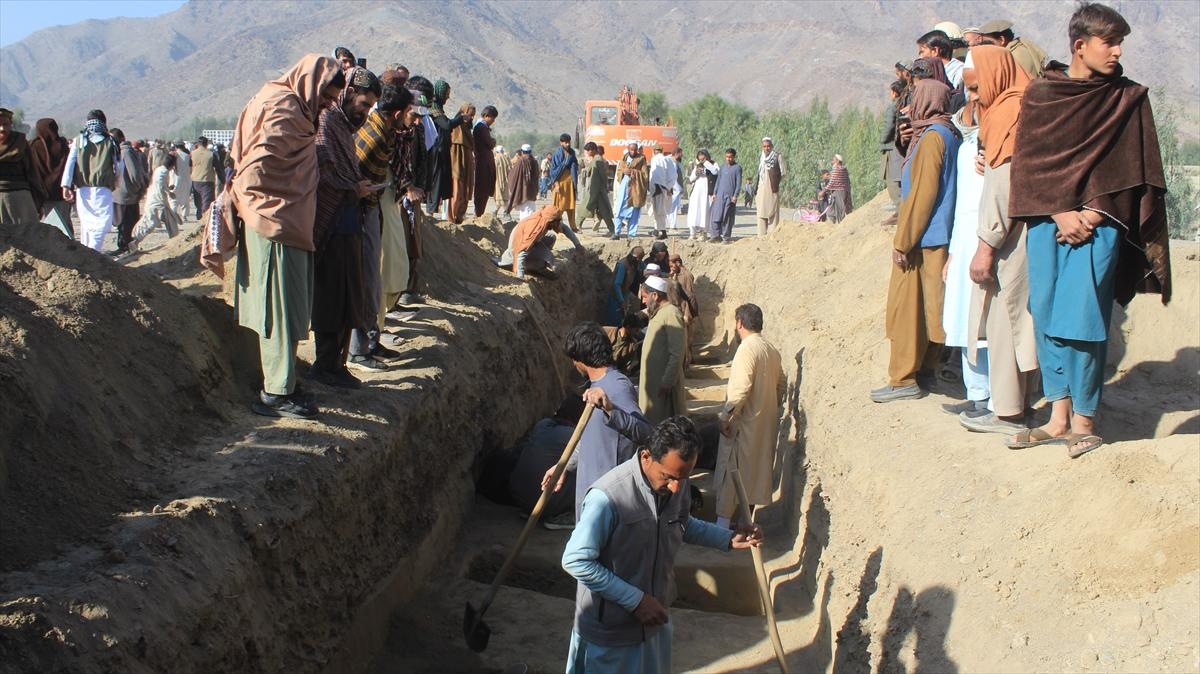
The Afghan Ministry of Defense stated that the strikes targeted civilian areas in Nangarhar province. The attacks particularly affected residential areas in Girdi Kas village of Bihsud district.
Reports indicated that homes were destroyed in the area and search operations were underway among the rubble. Local sources stated that the strike targeted a single family and only five of the 23 family members survived. Local Taliban spokesperson Sayed Taib Hamd confirmed that 18 people from the family were killed.
Afghan officials also reported that a religious center in the area was targeted. The Afghan Ministry of Defense stated that the strikes hit “a religious school and residential buildings.”

Area of Nangarhar Afghanistan after the strikes 22 February 2026 - (Anadolu Ajansı)
The strikes also affected Paktika province. Local sources speaking to Tolo News reported that Pakistani warplanes conducted air strikes on the Barmal region of Paktika. In the districts of Bermal and Urgun a guesthouse and a religious school were targeted. Local officials and residents stated that these buildings were unoccupied at the time of the strikes. It was also reported that homes were destroyed in Balish village of Urgun district.
The Afghan Ministry of Defense confirmed that the attacks in Paktika targeted civilian areas and constituted a violation of Afghanistan’s airspace.
The Afghan Ministry of Defense stated that “numerous civilians were killed and injured” in the strikes on Nangarhar and Paktika provinces.
Mevlevi Fazl Rahman Fayyaz of the Afghan Red Crescent’s Nangarhar regional office stated that 18 people were killed and many others injured as a result of Pakistan’s attack.
Local Taliban spokesperson Sayed Taib Hamd told BBC that 18 people from a single family in Bihsud district of Nangarhar were killed.

Area of Nangarhar Afghanistan after the strikes 22 February 2026 - (Anadolu Ajansı)
Pakistan’s Deputy Interior Minister Talal Chaudhry claimed in an interview with Geo News that “at least 70 militants were killed” in the airstrikes. No evidence has been presented to support Chaudhry’s claim.
Pakistan’s state media reported that the death toll had risen to 80 but no official confirmation of this figure has been provided. According to a report in Dawn newspaper 80 people were killed in the strikes.
Pakistan’s Parliamentary Secretary for Information and Broadcasting Barrister Danyal Chaudhry stated in his remarks that the operation had “successfully neutralized militants involved in attacks on Pakistani territory” and added that “all possible measures were taken to protect innocent lives.”
The Afghan side rejected “Pakistan’s claims of a high number of militants killed”. Taliban government spokesperson Zabihullah Mujahid stated that Pakistan’s claim of 70 militants killed was “not consistent with the facts.”
Pakistan’s Ministry of Information and Broadcasting stated on X that Pakistan had carried out “precision strikes based on intelligence targeting seven terrorist camps and hideouts”. The statement described the operation as “a retaliatory response”.
Pakistan’s Minister of Information and Broadcasting Attaullah Tarar stated that the military had conducted “intelligence-based precision operations.”
Pakistan authorities stated that the strikes targeted Tehreek-i-Taliban Pakistan (TTP) elements referred to by Pakistan as “Fitna al Khawarij” and associated groups. The statement also indicated that members of Islamic State-Khorasan Province (ISKP) were among the targets.

Area of Nangarhar Afghanistan after the strikes 22 February 2026 - (Anadolu Ajansı)
Pakistan’s Ministry of Information and Broadcasting stated that the operation targeted “seven terrorist camps and hideouts belonging to the Pakistan Taliban known as Fitna al Khawarij (FAK) and the Islamic State Khorasan Province.”
Pakistan authorities stated that the operation was conducted in response to recent suicide attacks within the country. The Ministry of Information claimed to possess “conclusive evidence” that the recent attacks were directed by leadership in Afghanistan.
The ministry’s statement said Pakistan expected the interim government in Afghanistan to “fulfill its obligations and prevent its territory from being used by Khwarij and terrorists against Pakistan”. It also emphasized that “the security and safety of the Pakistani people comes first.”
President of Pakistan Asif Ali Zardari stated that the airstrikes were based on the “natural right of the country to defend its people against terrorism.”
Governor of Khyber Pakhtunkhwa Faisal Karim Kundi said in a post on X that “the Pakistani people especially the resilient population of Khyber Pakhtunkhwa stand firmly alongside our armed forces and security institutions in defending our homeland.” He added that “we will not allow forces operating beyond the Afghan border to destabilize our territory”.
The statement also included the assertion that “our sovereignty is non-negotiable and the people of this country stand shoulder to shoulder with the state to protect it at any cost.”
The Afghan Ministry of Defense characterized the strikes as “a clear violation of national sovereignty international law principles of good neighborliness and Islamic values”.
The ministry also stated “We hold the Pakistani military responsible for targeting civilians and religious sites. We will respond with a proportionate and appropriate response when the time comes.” The Afghan Ministry of Foreign Affairs summoned Pakistan’s Ambassador to Kabul to protest the attacks.
The ministry’s statement emphasized that protecting Afghan territory was a “Sharia obligation” and that Pakistan would be held accountable for the consequences of such attacks.
Pakistan authorities stated that the airstrikes of 22 February 2026 were linked to recent attacks within the country. Pakistan’s Ministry of Information and Broadcasting reported that more than 100 lives had been lost in attacks across Pakistan in recent weeks.
Among these attacks was the deadly suicide bombing at a mosque in Islamabad. Pakistani authorities also reported attacks in the Bajaur and Bannu regions in recent weeks.
Al Jazeera. “Afghanistan promises ‘appropriate response’ after deadly Pakistani strikes.” Accessed February 23, 2026. https://www.aljazeera.com/news/2026/2/22/pakistan-carries-out-strikes-in-afghanistan-after-islamabad-suicide-attack
Al Jazeera. “Pakistan Claims at Least 70 Fighters Killed in Strikes Along Afghan Border.” Accessed February 23, 2026. https://www.aljazeera.com/news/2026/2/23/pakistan-claims-at-least-70-fighters-killed-in-strikes-along-afghan-border
Anadolu Ajansı. "Afghanistan Vows Appropriate and Measured Response to Pakistani Strikes." Accessed February 23, 2026. https://www.aa.com.tr/en/asia-pacific/afghanistan-vows-appropriate-and-measured-response-to-pakistani-strikes/3836889/
Anadolu Ajansı. “Afganistan, Pakistan’ın Hava Saldırılarında 18 Kişinin Öldüğünü Açıkladı.” Accessed February 23, 2026. https://www.aa.com.tr/tr/dunya/afganistan-pakistanin-hava-saldirilarinda-18-kisinin-oldugunu-acikladi/3836883/
Associated Press. “Pakistan Launches Border Strikes in Afghanistan After Recent Militant Attack.” YouTube video. Accessed February 23, 2026. https://www.youtube.com/watch?v=LxY1EpDrh8s
BBC News. “Pakistan launches deadly strikes on Afghanistan.” Accessed February 23, 2026. https://www.bbc.com/news/articles/cdxgln3gnd6o
Daily News. "Pakistan Launches Deadly Strikes on Afghanistan." Accessed February 23, 2026. https://dailynews.lk/2026/02/23/breaking-news/956057/pakistan-launches-deadly-strikes-on-afghanistan/
Dawn. “‘National security is non-negotiable’: Parliamentary secretary on Afghanistan strikes.” Accessed February 23, 2026. https://www.dawn.com/news/print/1975156

On 22 February 2026, Pakistan conducted air strikes on Afghanistan's Nangarhar and Paktika provinces. The Afghan Ministry of Defense stated that 18 people were killed in the attacks and that civilian areas had been targeted. Pakistani authorities claimed the operation targeted seven "terrorist camps and hideouts" and resulted in the deaths of at least 70 militants. The Afghan government rejected these claims and declared the strikes a violation of its sovereignty.
Henüz Tartışma Girilmemiştir
"Pakistan's Air Strikes Against Afghanistan (2026)" maddesi için tartışma başlatın
23 Şubat 2026
Scope of the Strikes and Targeted Areas
23 Şubat 2026
Casualties and Injuries
23 Şubat 2026
Pakistan’s Official Statements and Nature of the Operation
23 Şubat 2026
Afghanistan’s Diplomatic and Military Responses
23 Şubat 2026
Security Incidents in Pakistan