


Bu içerik Türkçe olarak yazılmış olup yapay zeka ile otomatik olarak İngilizceye çevrilmiştir.
+2 Daha
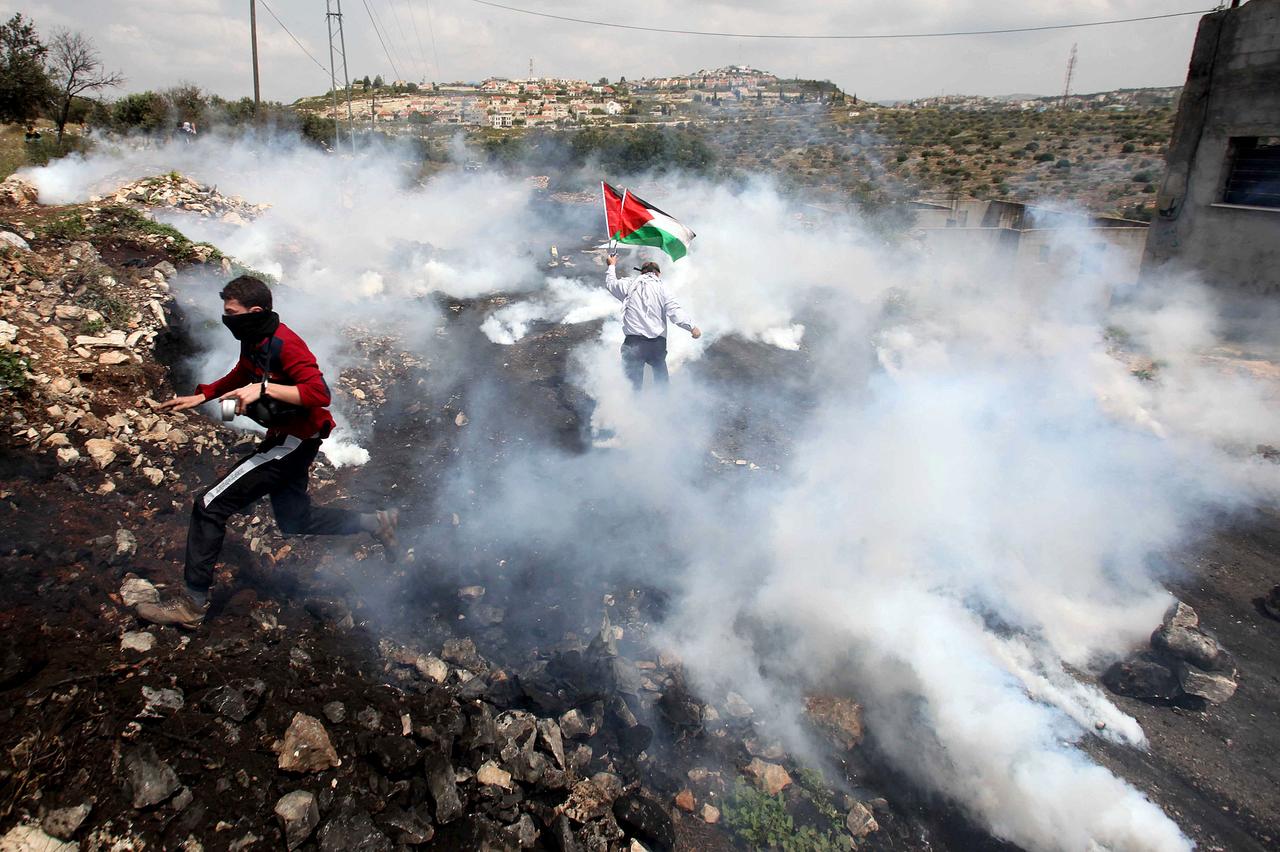
Filistinli Esirler Günü (Anadolu Ajansı)
Palestinian Prisoners’ Day is a national observance held annually on 17 April to draw attention to the conditions of detainees in Israeli prisons and to show support for them. It was officially proclaimed in 1974 by the Palestine National Council. The date was chosen to commemorate the release of Mahmoud Bakr Hijazi on 17 April 1971, following the first prisoner exchange agreement between Israel and Palestinian groups.【1】 At the 20th Arab Summit held in Damascus in 2008, it was decided that this day would be recognized as a day of solidarity across all Arab countries.【2】 Since 1967, approximately one million Palestinians have been detained or arrested by Israeli military and civilian authorities.【3】

Gaza Residents Marching on Palestinian Prisoners’ Day, 2015 (Anadolu Ajansı)
Since the beginning of Israel’s occupation in 1967, approximately one million Palestinians have been detained or arrested at various times.【4】 These figures indicate that a significant portion of Palestinian society has been directly incorporated into the prison system. The prison population fluctuates periodically in response to regional tensions and military operations. According to 2016 data, the total number of prisoners exceeded 7,000,【5】 declined to 6,500 in 2018,【6】 dropped to 5,000 in 2020,【7】 and stood at approximately 4,900 at the beginning of 2023.【8】 Following intensified operations after 7 October 2023, the number of detainees rose rapidly to 9,500 by April 2024,【9】 and exceeded 9,600 by April 2026.【10】
Between October 2023 and April 2026, the number of arrests carried out solely in the West Bank exceeded 16,400.【11】 During the same period, more than 3,000 individuals from the Gaza Strip, including doctors, nurses, teachers, and journalists, were detained.【12】
The number of female detainees has varied over the years. In 2018, the number of female prisoners was 62,【13】 declining to 31 by 2023.【14】 However, after 7 October 2023, there was a significant increase in the number of female prisoners: from 40 up to that date, the number rose to 80 by March 2025.【15】 April 2026 data shows that the total number of female prisoners in Israeli detention facilities has reached 84.【16】 Among the detained mothers are academics, lawyers, doctors, teachers, and journalists. A large proportion of these women are held under administrative detention on grounds of social media activity.
The number of child detainees fluctuates periodically. In 2018, the number of child detainees was 350,【17】 fell to 130 in 2020,【18】 and decreased to 160 in 2023. This figure rose to 200 in 2024,【19】 and returned to 350 by April 2026.【20】 Children aged 12 to 17 are primarily held in the Megiddo and Ofer detention facilities.【21】 Children are subjected to the same physical and psychological treatment as adults during arrest procedures and are denied their fundamental right to education.
Inadequate health conditions and restricted access to medical care have led to an increase in the number of ill prisoners. In 2018, the number of sick prisoners was 1,800,【22】 and was estimated at approximately 700 in both 2020 and 2023.【23】 According to 2026 data, 300 of these prisoners suffer from chronic illnesses and 10 are awaiting medical intervention after being diagnosed with cancer.【24】 Among those whose conditions have deteriorated due to medical neglect is Velid Dakka, a cancer patient who died in 2024 after spending 38 years in prison.【25】
More than 20 Palestinians detained before the 1993 Oslo Accords, described as the “deans of prisoners,” remain incarcerated.【26】 Kerim and Mahir Yunus, having spent over 35 years in prison, are among the longest-serving detainees.【27】 Political leader Mervan Bergusi has been imprisoned for 22 years and was transferred to solitary confinement at the beginning of 2026.【28】
As of early April 2026, the number of detainees classified as “unlawful combatants,” particularly those brought from Gaza, Lebanon, and Syria, was recorded at 1,251.【29】 This figure does not include thousands of Gazans held temporarily in Israeli military camps who have not yet been formally incorporated into the official prison system.
Between 1967 and 2025, the number of Palestinians who died in Israeli prisons reached 300.【30】 Causes of death include systematic torture, medical neglect, and physical violence. The period between October 2023 and April 2025 recorded the highest death rate since 1967, with a total of 64 prisoners losing their lives, 40 of whom were from Gaza.【31】 Among those who died are Musab Adili, a 20-year-old who died on Palestinian Prisoners’ Day in 2025, and Muhyiddin Fehmi Said Necm, a 60-year-old who died in 2025 after 19 years of detention.【32】 Israeli authorities continue to refuse to disclose the identities of dozens of deceased prisoners and to withhold their bodies.
Israel’s legal procedures applied to Palestinian detainees operate through an overlapping structure of military orders and civil laws. Palestinians arrested from the West Bank and Gaza Strip are tried in military courts presided over by military prosecutors and judges rather than civilian courts. Within this system, special legal classifications such as “administrative detention” and “unlawful combatant” form the foundation of judicial proceedings.

Palestinian Prisoners Released via International Red Cross Mediation, 2025 (Anadolu Ajansı)
Administrative detention is a system that allows Israel to detain individuals without bringing specific charges or initiating formal judicial proceedings. Arrests under this system are based on “secret evidence” prepared by military intelligence and inaccessible to both the detainee and their lawyer. The defense is unable to challenge the allegations because it is not informed of their content. Although administrative detention orders initially last between one and six months, they can be renewed indefinitely with the approval of military judges. As of early April 2026, the number of administrative detainees in Israeli prisons reached 3,532, the highest level in recent years.【33】 This number exceeds the total number of convicted prisoners in the prison population.
Another legal category applied particularly to detainees from Gaza, Lebanon, and Syria is “unlawful combatants.” According to 2026 data, the number of detainees classified under this status is recorded at 1,251.【34】 However, this figure does not include thousands of Gazans held temporarily in Israeli military camps who have not yet been formally registered in the official prison system. Detainees under this status are denied the rights afforded to lawful prisoners of war, and their legal proceedings are subject to military authority decisions.
The defense rights of Palestinian detainees are restricted through various administrative regulations. Particularly after October 2023, regulations have allowed prolonged delays in permitting detainees to meet with their lawyers. When visits are permitted, some facilities require them to occur via video communication rather than in person. Detainees are completely isolated from the outside world during interrogation; family visits and independent monitoring are suspended. Military courts largely follow procedures that presume the defendant’s guilt, and appeals are left to the discretion of military judges.
These legal practices contradict fundamental principles of international humanitarian law and human rights law. The Fourth Geneva Convention guarantees the right to fair trial and protection from arbitrary detention for civilians living under occupation. The administrative detention system, due to restrictions on the right to defense and the use of “secret evidence,” is considered a violation of this convention. Furthermore, Article 2 of the Association Agreement between the European Union and Israel stipulates that respect for human rights is a fundamental condition for economic cooperation.【35】 In contrast to the fair trial standards defined by the International Criminal Court and the Rome Statute, Israeli military courts can reach verdicts by simple majority and in some cases completely eliminate the possibility of appeal or clemency.
The living conditions faced by Palestinian detainees in Israeli prisons are described by international human rights organizations and Palestinian prisoner institutions as a “systematic policy of attrition and punishment.” Particularly after October 2023, these conditions have deteriorated to a stage where detainees are deprived of basic humanitarian needs and their physical integrity is seriously threatened.

Funeral of Palestinians Whose Bodies Were Returned by Israel but Could Not Be Identified, 2025 (Anadolu Ajansı)
Detainees held in prisons and detention centers are subjected to methods including beatings, prolonged stress positions, sleep deprivation, and psychological pressure. Reports from 2026 document cases of severe beatings resulting in broken bones, allegations of sexual abuse, and degrading treatment.【36】 In military camps where detainees from Gaza are held, it is reported that prisoners have had their eyes and hands bound for weeks and have been completely cut off from contact with the outside world.【37】
The prison administration’s policy of “medical neglect” is one of the leading causes of detainee deaths. The failure to transfer prisoners suffering from chronic illnesses or requiring cancer treatment to hospitals, or the prolonged delay of their medical care, is described as “silent killing.”
Severe overcrowding, restricted hygiene facilities, and inadequate nutrition in prisons have led to serious health problems.
The practice of solitary confinement has been widely used as a punitive measure against political leaders and detainees classified as “dangerous.” The prolonged isolation of individuals such as Mervan Bergusi is part of this policy. The indefinite suspension of family visits, restrictions on lawyer meetings, and the ban on access to radio, television, or newspapers aim to psychologically break down detainees.
Amnesty International and various UN mechanisms have emphasized that these practices clearly violate the Fourth Geneva Convention and the Convention Against Torture. Although international pressure has increased since 2026 for improved prison conditions and access for independent monitors such as the International Committee of the Red Cross, prison authorities continue to maintain a harsh stance.
The legal regime applied by Israel in the occupied Palestinian territories exhibits a structure known in international literature as a “dual legal system,” in which legal status is determined by nationality and geographic location. Jewish settlers in the West Bank are subject to Israeli civil law and civilian courts, while the Palestinian population in the same region has been subject since 1967 to military orders and military courts that severely restrict fundamental rights.
The pillars of this legal system are the practice of “administrative detention” and the 2026 legislative amendment introducing the death penalty, both key instruments of repression against Palestinians.
Administrative detention is a procedure derived from the British Mandate-era “Emergency Defense Regulations” of 1945 and currently implemented under the authority of Israeli military commanders, allowing Palestinians to be detained without any formal charge or judicial process.
On 30 March 2026, the Israeli Knesset approved a death penalty amendment targeting Palestinian detainees with 62 votes in favor and 48 against. This law is regarded as one of the most comprehensive and radical measures to date that has rendered the treatment of these prisoners controversial under international law.
Israeli Minister of National Security Itamar Ben-Gvir has played a central role in the legislative process of these legal amendments and in the hardening of prison policies.
The “Law on the Incarceration of Unlawful Combatants” is being applied to individuals detained from the Gaza Strip after 7 October 2023.
The legal status of Palestinian detainees is assessed against established norms by international instruments and organizations:
The legal status of Palestinian detainees in Israeli prisons and the practices applied to them are subject to various norms under international humanitarian and human rights law. Particularly the 2026 death penalty amendment and the practice of administrative detention have generated widespread international response and sparked debate regarding their compliance with legal norms.
The protection and judicial procedures for Palestinian detainees are primarily governed by the 1949 Fourth Geneva Convention.
The death penalty law adopted on 30 March 2026 has been the subject of official condemnations at the state and organizational levels on international platforms.
Israel’s detention policies are monitored by various special rapporteurs and committees within the United Nations.
The International Committee of the Red Cross and Amnesty International have reiterated the need to preserve detainees’ contact with the outside world. Since October 2023, calls to Israel’s authorities to resume family visits and grant independent monitors access to all detention facilities — including military camps — have remained at the top of the diplomatic agenda as of 2026.
As of 2026, the issue of Palestinian prisoners has entered a critical phase in terms of both legal developments and humanitarian conditions on the ground. Observed annually on 17 April since 1974, Palestinian Prisoners’ Day has evolved beyond a commemorative observance into a political platform for discussing widespread allegations of rights violations and new legal statuses.
International reactions signal a widening gap between Israel’s domestic law and international humanitarian law. While findings of violations of the Geneva Conventions continue to serve as a diplomatic pressure tool at the United Nations and European Union levels, no concrete sanctions have yet been implemented to alter the enforcement and detention practices on the ground.
In conclusion, the issue of Palestinian prisoners — encompassing allegations of medical neglect, the new death penalty law, and the status of individuals from Gaza classified as “unlawful combatants” — remains one of the most complex and humanitarian-sensitive aspects of the conflict dynamics in the Middle East.
[1]
Al Jazeera. “Palestinian Prisoners’ Day: How Many Palestinians Are in Israeli Jails?” Al Jazeera. Accessed 13 April 2026. https://www.aljazeera.com/news/2024/4/17/palestinian-prisoners-day-how-many-palestinians-are-in-israeli-jails
[2]
Al Jazeera. “What Is Palestinian Prisoners’ Day?” Al Jazeera. Accessed 13 April 2026. https://www.aljazeera.com/news/2023/4/17/what-is-palestinian-prisoners-day
[3]
Anadolu Ajansı. “Palestinian Prisoners’ Day Takes Place in the Shadow of Israel’s Repressive Policies and the Threat of COVID-19.” Anadolu Ajansı. Accessed 13 April 2026. https://www.aa.com.tr/tr/dunya/filistin-esirler-gunu-israilin-baskici-politikalari-ve-kovid-19-tehdidi-golgesinde-geciyor/1808230
[4]
Anadolu Ajansı. “Palestinian Prisoners’ Day Takes Place in the Shadow of Israel’s Repressive Policies and the Threat of COVID-19.” Anadolu Ajansı. Accessed 13 April 2026. https://www.aa.com.tr/tr/dunya/filistin-esirler-gunu-israilin-baskici-politikalari-ve-kovid-19-tehdidi-golgesinde-geciyor/1808230
[5]
Palestinian Centre for Human Rights. “On the Palestinian Prisoners’ Day, PCHR Calls upon the International Community to End the Suffering of Thousands of Palestinian Prisoners.” PCHR. Accessed 13 April 2026. https://pchrgaza.org/on-the-palestinian-prisoners-day-pchr-calls-upon-the-international-community-to-end-the-suffering-of-thousands-of-palestinian-prisoners/
[6]
Anadolu Ajansı. “Israel’s Violations Continue on the 44th Anniversary of Palestinian Prisoners’ Day.” Anadolu Ajansı. Accessed 13 April 2026. https://www.aa.com.tr/tr/dunya/filistin-esirler-gununun-44-yilinda-israilin-ihlalleri-suruyor/1120440
[7]
Anadolu Ajansı. “Palestinian Prisoners’ Day Takes Place in the Shadow of Israel’s Repressive Policies and the Threat of COVID-19.” Anadolu Ajansı. Accessed 13 April 2026. https://www.aa.com.tr/tr/dunya/filistin-esirler-gunu-israilin-baskici-politikalari-ve-kovid-19-tehdidi-golgesinde-geciyor/1808230
[8]
Al Jazeera. “What Is Palestinian Prisoners’ Day?” Al Jazeera. Accessed 13 April 2026. https://www.aljazeera.com/news/2023/4/17/what-is-palestinian-prisoners-day
[9]
BDS Movement. “Israel Holds Over 10,000 Palestinians Captive: Act Now #FreeThemAll.” BDS Movement. Accessed 13 April 2026. https://bdsmovement.net/Israel-Holds-Over-10000-Palestinians-Captive-Act-Now-FreeThemAll
[10]
Palinfo. “Palestinian Prisoners.” Palinfo. Accessed 13 April 2026. https://turkish.palinfo.com/2026/04/06/303212/
[11]
UNA-OIC. “63 Prisoners Killed on Palestinian Prisoners’ Day.” UNA-OIC. Accessed 13 April 2026. https://una-oic.org/tr/Filistin/2025/04/16/Filistinli-Esirler-G%C3%BCn%C3%BC%27nde-63-esir-%C5%9Fehit-edildi./
[12]
BDS Movement. “Israel Holds Over 10,000 Palestinians Captive: Act Now #FreeThemAll.” BDS Movement. Accessed 13 April 2026. https://bdsmovement.net/Israel-Holds-Over-10000-Palestinians-Captive-Act-Now-FreeThemAll
[13]
Anadolu Ajansı. “Israel’s Violations Continue on the 44th Anniversary of Palestinian Prisoners’ Day.” Anadolu Ajansı. Accessed 13 April 2026. https://www.aa.com.tr/tr/dunya/filistin-esirler-gununun-44-yilinda-israilin-ihlalleri-suruyor/1120440
[14]
Al Jazeera. “What Is Palestinian Prisoners’ Day?” Al Jazeera. Accessed 13 April 2026. https://www.aljazeera.com/news/2023/4/17/what-is-palestinian-prisoners-day
[15]
Vision for Political Development. “Palestinian Prisoners: Silent Killing.” Vision for Political Development. Accessed 13 April 2026. https://vision-pd.org/tr/filistinli-esirler-sessiz-oldurme/
[16]
Addameer Prisoner Support and Human Rights Association. “Statistics.” Addameer. Accessed 15 April 2026. https://addameer.ps/statistics
[17]
Anadolu Ajansı. “Israel’s Violations Continue on the 44th Anniversary of Palestinian Prisoners’ Day.” Anadolu Ajansı. Accessed 13 April 2026. https://www.aa.com.tr/tr/dunya/filistin-esirler-gununun-44-yilinda-israilin-ihlalleri-suruyor/1120440
[18]
Anadolu Ajansı. “Palestinian Prisoners’ Day Takes Place in the Shadow of Israel’s Repressive Policies and the Threat of COVID-19.” Anadolu Ajansı. Accessed 13 April 2026. https://www.aa.com.tr/tr/dunya/filistin-esirler-gunu-israilin-baskici-politikalari-ve-kovid-19-tehdidi-golgesinde-geciyor/1808230
[19]
Al Jazeera. “What Is Palestinian Prisoners’ Day?” Al Jazeera. Accessed 13 April 2026. https://www.aljazeera.com/news/2023/4/17/what-is-palestinian-prisoners-day
[20]
BDS Movement. “Israel Holds Over 10,000 Palestinians Captive: Act Now #FreeThemAll.” BDS Movement. Accessed 13 April 2026. https://bdsmovement.net/Israel-Holds-Over-10000-Palestinians-Captive-Act-Now-FreeThemAll
[21]
Palinfo. “Palestinian Prisoners.” Palinfo. Accessed 13 April 2026. https://turkish.palinfo.com/2026/04/06/303212/
[22]
Anadolu Ajansı. “Israel’s Violations Continue on the 44th Anniversary of Palestinian Prisoners’ Day.” Anadolu Ajansı. Accessed 13 April 2026. https://www.aa.com.tr/tr/dunya/filistin-esirler-gununun-44-yilinda-israilin-ihlalleri-suruyor/1120440
[23]
Anadolu Ajansı. “Palestinian Prisoners’ Day Takes Place in the Shadow of Israel’s Repressive Policies and the Threat of COVID-19.” Anadolu Ajansı. Accessed 13 April 2026. https://www.aa.com.tr/tr/dunya/filistin-esirler-gunu-israilin-baskici-politikalari-ve-kovid-19-tehdidi-golgesinde-geciyor/1808230
[24]
Anadolu Ajansı. “Palestinian Prisoners’ Day Takes Place in the Shadow of Israel’s Repressive Policies and the Threat of COVID-19.” Anadolu Ajansı. Accessed 13 April 2026. https://www.aa.com.tr/tr/dunya/filistin-esirler-gunu-israilin-baskici-politikalari-ve-kovid-19-tehdidi-golgesinde-geciyor/1808230
[25]
Al Jazeera. “Palestinian Prisoners’ Day: How Many Palestinians Are in Israeli Jails?” Al Jazeera. Accessed 13 April 2026. https://www.aljazeera.com/news/2024/4/17/palestinian-prisoners-day-how-many-palestinians-are-in-israeli-jails
[26]
Al Jazeera. “What Is Palestinian Prisoners’ Day?” Al Jazeera. Accessed 13 April 2026. https://www.aljazeera.com/news/2023/4/17/what-is-palestinian-prisoners-day
[27]
Anadolu Ajansı. “Israel’s Violations Continue on the 44th Anniversary of Palestinian Prisoners’ Day.” Anadolu Ajansı. Accessed 13 April 2026. https://www.aa.com.tr/tr/dunya/filistin-esirler-gununun-44-yilinda-israilin-ihlalleri-suruyor/1120440
[28]
Al Jazeera. “Palestinian Prisoners’ Day: How Many Palestinians Are in Israeli Jails?” Al Jazeera. Accessed 13 April 2026. https://www.aljazeera.com/news/2024/4/17/palestinian-prisoners-day-how-many-palestinians-are-in-israeli-jails
[29]
Palinfo. “Palestinian Prisoners.” Palinfo. Accessed 13 April 2026. https://turkish.palinfo.com/2026/04/06/303212/
[30]
UNA-OIC. “63 Prisoners Killed on Palestinian Prisoners’ Day.” UNA-OIC. Accessed 13 April 2026. https://una-oic.org/tr/Filistin/2025/04/16/Filistinli-Esirler-G%C3%BCn%C3%BC%27nde-63-esir-%C5%9Fehit-edildi./
[31]
Anadolu Ajansı. “20-Year-Old Palestinian Detained in Israeli Prison Dies on Palestinian Prisoners’ Day.” Anadolu Ajansı. Accessed 13 April 2026. https://www.aa.com.tr/tr/dunya/israil-hapishanesinde-tutulan-20-yasindaki-filistinli-filistinli-esirler-gununde-hayatini-kaybetti/3540888
[32]
Vision for Political Development. “Palestinian Prisoners: Silent Killing.” Vision for Political Development. Accessed 13 April 2026. https://vision-pd.org/tr/filistinli-esirler-sessiz-oldurme/
[33]
Palinfo. “Palestinian Prisoners.” Palinfo. Accessed 13 April 2026. https://turkish.palinfo.com/2026/04/06/303212/
[34]
Palinfo. “Palestinian Prisoners.” Palinfo. Accessed 13 April 2026. https://turkish.palinfo.com/2026/04/06/303212/
[35]
Palestinian Centre for Human Rights. “On the Palestinian Prisoners’ Day, PCHR Calls upon the International Community to End the Suffering of Thousands of Palestinian Prisoners.” PCHR. Accessed 13 April 2026. https://pchrgaza.org/on-the-palestinian-prisoners-day-pchr-calls-upon-the-international-community-to-end-the-suffering-of-thousands-of-palestinian-prisoners/
[36]
BDS Movement. “Israel Holds Over 10,000 Palestinians Captive: Act Now #FreeThemAll.” BDS Movement. Accessed 13 April 2026. https://bdsmovement.net/Israel-Holds-Over-10000-Palestinians-Captive-Act-Now-FreeThemAll
[37]
Palinfo. “Palestinian Prisoners.” Palinfo. Accessed 13 April 2026. https://turkish.palinfo.com/2026/04/06/303212/
[38]
Al Jazeera. “Palestinian Prisoners’ Day: How Many Palestinians Are in Israeli Jails?” Al Jazeera. Accessed 13 April 2026. https://www.aljazeera.com/news/2024/4/17/palestinian-prisoners-day-how-many-palestinians-are-in-israeli-jails
[39]
Vision for Political Development. “Palestinian Prisoners: Silent Killing.” Vision for Political Development. Accessed 13 April 2026. https://vision-pd.org/tr/filistinli-esirler-sessiz-oldurme/
[40]
TRT Haber. “Ofer Prison Administration in Israel Does Not Inform Palestinian Detainees of Suhoor and Iftar Times.” TRT Haber. Accessed 13 April 2026. https://www.trthaber.com/haber/dunya/israilin-ofer-cezaevi-yonetimi-filistinli-tutuklulara-sahur-ile-iftar-vakitlerini-bildirmiyor-935191.html
[41]
Palinfo. “Palestinian Prisoners.” Palinfo. Accessed 13 April 2026. https://turkish.palinfo.com/2026/04/06/303212/
[42]
Anadolu Ajansı. “Palestinian Prisoners Society Demands Release of Administrative Detainee Palestinian Mothers in Israeli Prisons.” Anadolu Ajansı. Accessed 13 April 2026. https://www.aa.com.tr/tr/dunya/filistin-esirler-cemiyeti-israil-cezaevlerinde-idari-tutuklu-filistinli-annelerin-saliverilmesini-istedi/3874033
[43]
Palinfo. “Palestinian Prisoners.” Palinfo. Accessed 13 April 2026. https://turkish.palinfo.com/2026/04/06/303212/
[44]
Palestinian Centre for Human Rights. “On the Palestinian Prisoners’ Day, PCHR Calls upon the International Community to End the Suffering of Thousands of Palestinian Prisoners.” PCHR. Accessed 13 April 2026. https://pchrgaza.org/on-the-palestinian-prisoners-day-pchr-calls-upon-the-international-community-to-end-the-suffering-of-thousands-of-palestinian-prisoners/


Filistinli Esirler Günü (Anadolu Ajansı)
Henüz Tartışma Girilmemiştir
"Palestinian Prisoners Day" maddesi için tartışma başlatın
Numbers and Demographic Distribution
Female Prisoners and Mothers
Child Prisoners
Sick Prisoners
Long-Term Detainees and Political Figures
Classification as Unlawful Combatants
Deaths in Detention
Legal Practices and Administrative Detention
Administrative Detention Practice
Classification as Unlawful Combatants
Trial Procedures and Restrictions on Defense Rights
Relation to International Law and Treaties
Prison Conditions and Human Rights Violations
Systematic Torture and Ill-Treatment
Medical Neglect and the “Silent Killing” Policy
Living Conditions and Human Deprivation
Solitary Confinement and Isolation from the Outside World
International Reactions
Legal Framework: Administrative Detention and the 2026 Death Penalty Amendment
Administrative Detention and the Secret Evidence System
2026 Death Penalty Law and Implementation Amendments
Ministry of National Security and Itamar Ben-Gvir’s Policies
“Unlawful Combatant” Status and Unregistered Detention
Status Under International Law
International Legal Standards and Global Reactions
Geneva Conventions and the Status of Prisoners
Diplomatic Reactions to the 2026 Death Penalty Law
Intervention by International Mechanisms
Humanitarian Organizations’ Appeals
Current Status of the Palestinian Prisoners Issue
International Perception