


Bu içerik Türkçe olarak yazılmış olup yapay zeka ile otomatik olarak İngilizceye çevrilmiştir.
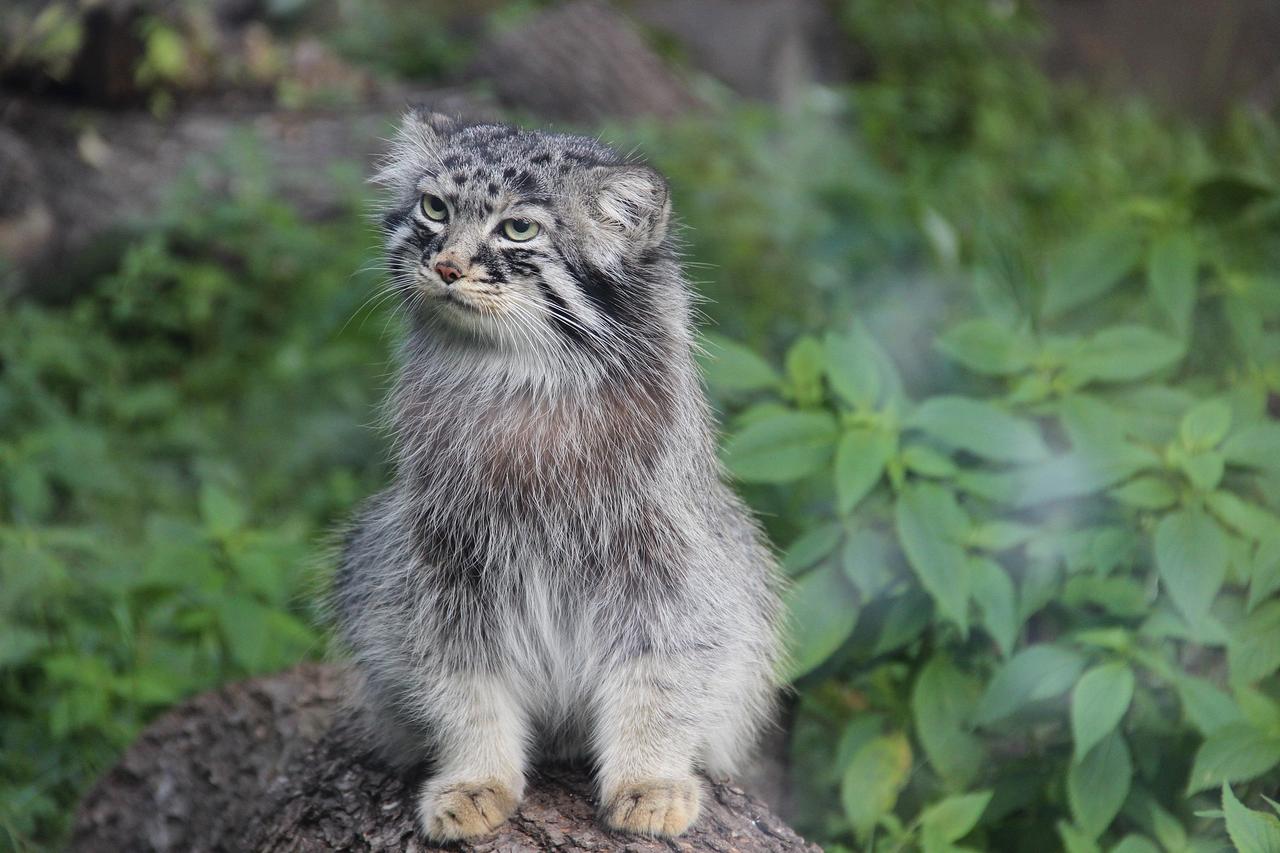
Pallas's Cat (Otocolobus manul)
Kingdom(s) | Animalia | ||||||||
|---|---|---|---|---|---|---|---|---|---|
Division | Chordata | ||||||||
Class | Mammalia | ||||||||
Team(s) | Carnivora | ||||||||
Family | Felidae | ||||||||
Subfamily | Felinae | ||||||||
Genus | Otocolobus | ||||||||
Specie(s) | O. manul | ||||||||
Conservation Status (IUCN) | Near Threatened | ||||||||
The Pallas’s cat (Otocolobus manul) is a small wild cat native to the mountainous steppes of Central Asia. The species was first described in 1776 by the German naturalist Peter Simon Pallas. It is the only member of the genus Otocolobus. Its scientific name, of Greek origin, combines “oto” meaning ear and “kolobos” meaning shortened; this refers to its short, laterally flattened ears.

Pallas’s Cat (Pexels)
Although its appearance resembles that of a domestic cat, it is distinguished by its thicker fur and flattened body structure. Its body length ranges from 46 to 65 cm, and its tail measures 21 to 31 cm. Weight typically falls between 2.5 and 4.5 kg. Its dense, long fur provides high insulation against temperatures as low as -50 °C. The face is broad, and its short, sideways-facing ears help reduce visibility during hunting. Its pupils are round, a feature rare among felids.
The coat color varies from gray to pale reddish or yellowish. The back usually displays 5 to 7 horizontal black stripes, while the tail has black rings and a black tip.
The Pallas’s cat is distributed across the high-altitude steppes and semi-desert regions of Central Asia. It is found particularly in Mongolia, China, Tibet, Kazakhstan, Russia, and certain regions of Iran. Its habitat typically includes rocky and shrub-covered areas between 1,000 and 5,000 meters above sea level. It prefers remote areas with minimal human disturbance and harsh climatic conditions.

Distribution of the Pallas’s Cat (IUCN Red List)
The Pallas’s cat is a solitary and elusive species, primarily active during twilight or at night. During the day, it hides in rock crevices or underground dens. Like other felids, it is territorial and marks its range with scent markings. Its low ear position and slow movements often provide an advantage in avoiding detection by predators. Its hunting strategy involves sudden pounces to capture prey.
The breeding season begins at the end of winter. Gestation lasts between 66 and 75 days, after which females give birth to 2 to 6 kittens in April or May. Kittens remain under maternal care for approximately four months. In the wild, their lifespan is 6 to 8 years, while in captivity they can live up to 11 years.
The Pallas’s cat is an ambush predator. Its diet consists primarily of pikas (Ochotona spp.). It is also known to consume field mice, squirrels, gerbils, birds, reptiles, insects, and occasionally fruit or carrion. It typically attacks its prey with a short, sudden leap from close range.

Pallas’s Cat (Pixabay)
As of 2020, the Pallas’s cat is listed as Near Threatened on the IUCN Red List. Major threats include habitat loss, climate change, illegal hunting, and decline in key prey populations. Populations in Mongolia and China are particularly at risk due to hunting and agricultural expansion. Conservation efforts include population monitoring and public awareness programs in certain regions.
Gözcelioğlu, Bülent. “Pallas Kedisi.” *Bilim ve Teknik Dergisi*, Volume 55, no. 1134 (2022): 82–87. Accessed May 31, 2025. https://e-dergi.tubitak.gov.tr/edergi/yazi.pdf?dergiKodu=4&cilt=55&sayi=1134&sayfa=82&yaziid=46743
Pexels. “Bir Pallas Kedisinin Fotoğrafı JPG.” Pexels. Accessed May 31, 2025. https://www.pexels.com/tr-tr/fotograf/bir-pallas-kedisinin-fotografi-3912757/
Pixabay. "Kedi, Pallas'ın kedisi, Yerel görseli JPG." Accessed May 31, 2025. https://pixabay.com/tr/photos/kedi-pallas%C4%B1n-kedisi-yerel-elle-7763486/
Pixabay. "Manul, Yaz mevsimi, Evcil hayvan görseli JPG." Pixabay. Accessed May 31, 2025. https://pixabay.com/tr/photos/manul-yaz-mevsimi-vah%C5%9Fi-hayvan-kedi-2162660/
Ross, S., Barashkova, A., Dhendup, T., Munkhtsog, B., Smelansky, I., Barclay, D., and Moqanaki, E. 2020. ‘Otocolobus manul.’ The IUCN Red List of Threatened Species. Accessed May 31, 2025. https://dx.doi.org/10.2305/IUCN.UK.2020-2.RLTS.T15640A180145377.en
Smithsonian’s National Zoo & Conservation Biology Institute. “Creature Feature: Meet Grumpy Pallas’s Cat.” Nationalzoo. Accessed May 31, 2025. https://nationalzoo.si.edu/animals/news/creature-feature-meet-grumpy-pallass-cat

Pallas's Cat (Otocolobus manul)
Kingdom(s) | Animalia | ||||||||
|---|---|---|---|---|---|---|---|---|---|
Division | Chordata | ||||||||
Class | Mammalia | ||||||||
Team(s) | Carnivora | ||||||||
Family | Felidae | ||||||||
Subfamily | Felinae | ||||||||
Genus | Otocolobus | ||||||||
Specie(s) | O. manul | ||||||||
Conservation Status (IUCN) | Near Threatened | ||||||||
Henüz Tartışma Girilmemiştir
"Pallas's Cat (Otocolobus manul)" maddesi için tartışma başlatın
Morphological Characteristics
Distribution and Habitat
Behavior and Ecology
Reproduction and Diet
Conservation Status